
2018 Traverse Wipers, Horn and Locks Act Alone: Clear the Water Source Before Replacing the BCM

Quick answer: Multiple body-electrical faults can share water-damaged control electronics. Replacing the wet module without resolving the water source leaves the next module exposed.
Uncommanded wipers, locks and horn activity can make a family car feel possessed. The practical response is to make it safe and look for a shared cause. An articulating camera such as the AUTOOL SVB308 helps with concealed-area inspection. Documenting moisture and establishing electrical damage are different jobs; a dry-looking controller is not automatically a working controller.

In this guide
The cabin can get wet without rain
When cabin moisture is discussed, rain often gets the blame first. Air-conditioning condensate is another route worth considering when the circumstances and inspection support it. Ask whether the wetness followed air-conditioning use, outdoor rain, washing or another event; do not assume those routes are interchangeable.
You can report damp carpet or the timing of electrical behavior without removing trim or reaching under the dashboard. If the vehicle stalls or functions operate without command, seek professional recovery guidance. The source of moisture matters, but resolving the immediate safety problem comes before experimenting with switches to see which strange behavior can be repeated.
One controller can produce a confusing symptom list
Several body functions can depend on shared control electronics. Their simultaneous misbehavior can therefore be more useful as a group than as separate shopping requests for a horn, a wiper motor and a lock actuator.
That does not prove a controller is defective. Supply faults, wiring and exposure still need proper assessment. Ask the technician what connects the complaints and what evidence led to the inspection area. A long symptom list should become an organized relationship map. It should not become a long parts list merely because each symptom has a component associated with its name.
In the published ALLDATA case, the Traverse stalled and developed unwanted horn, wiper, washer, hazard and lock activity. Water was found inside the body controller, with debris obstructing the evaporator drain. Drain clearing, connector attention, BCM replacement and dealer setup restored normal operation. No longer-term leak recurrence record is given.
Treat the drain and the electronics as separate jobs
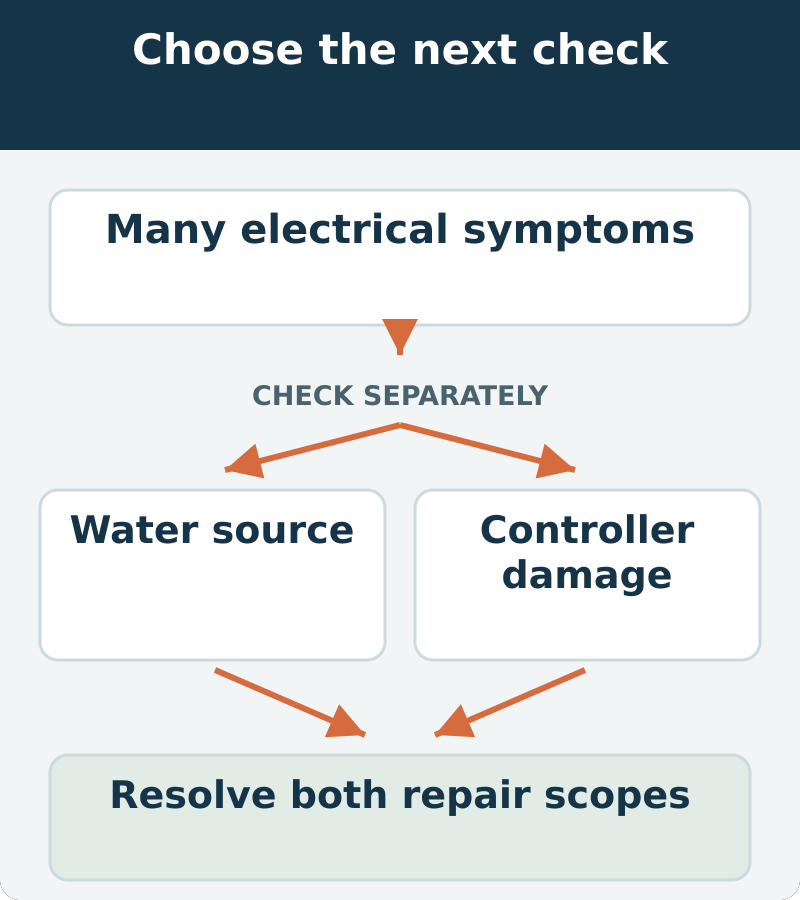
There are two repair objectives: restore the intended water route and restore the affected electronics. Clearing an obstruction cannot reverse every form of electronic damage. Replacing electronics cannot guarantee that water will stop reaching them.
Ask for both objectives on the estimate, with the work needed to meet each. This is particularly useful when different technicians handle drainage, wiring and controller setup. The diagram separates the paths so that neither disappears inside the phrase “BCM replacement.” It is not a literal evaporator or connector drawing, and it should not be used to locate a drain on a different Traverse.
Dry-looking connectors still need assessment
The absence of visible droplets at collection is not an electrical test. A connector may need assessment for contamination or damage even after the surrounding area appears dry. Let the qualified repairer determine what cleaning, repair or replacement is appropriate.
Photographs should identify the affected location and show enough context to connect it to the diagnosis. A camera may help obtain them, but it should not be pushed blindly into powered equipment. Its display and probe can have different water-protection ratings. Most owners do not need to purchase a camera: requesting the workshop’s documented findings is a useful no-purchase alternative.
Programming belongs in the estimate
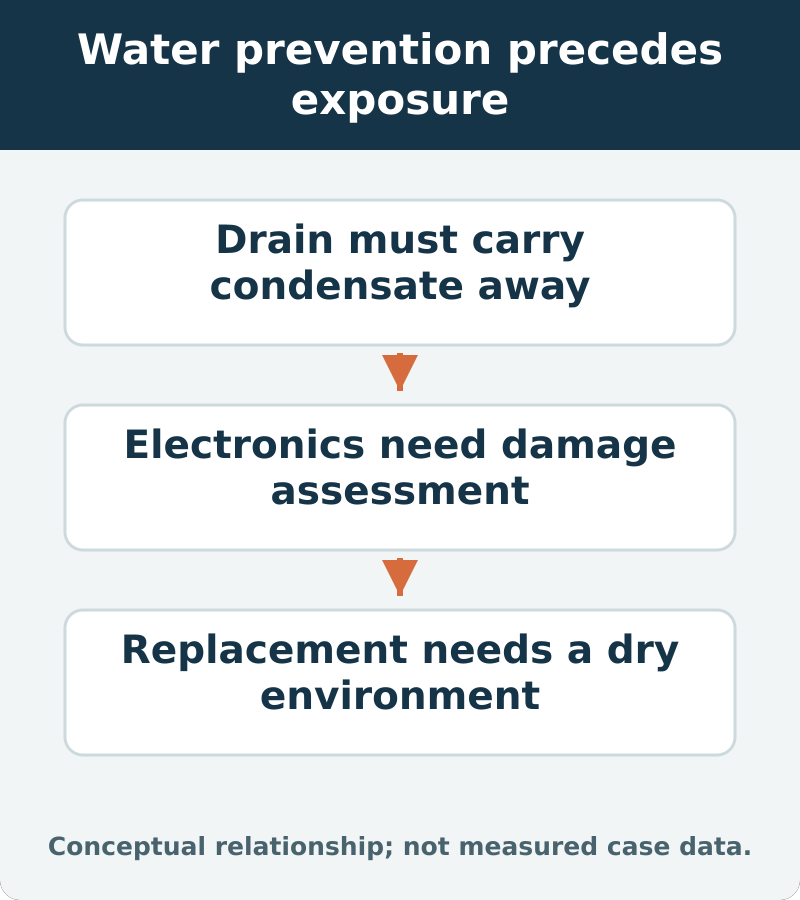
A body-controller quote should specify compatible hardware and the configuration or security work required for the exact vehicle. If another business will complete setup, ask whether that cost and transport are included. A module physically fitted to the car is not necessarily a completed installation.
Avoid comparing quotes only by the replacement part’s description. One may include connector attention, water-source work and setup; another may describe only hardware supply. The useful comparison is the complete scope. The repairer’s explanation should make clear which steps restore function and which reduce the chance of the same exposure affecting the replacement.
Check that normal cooling does not recreate the leak
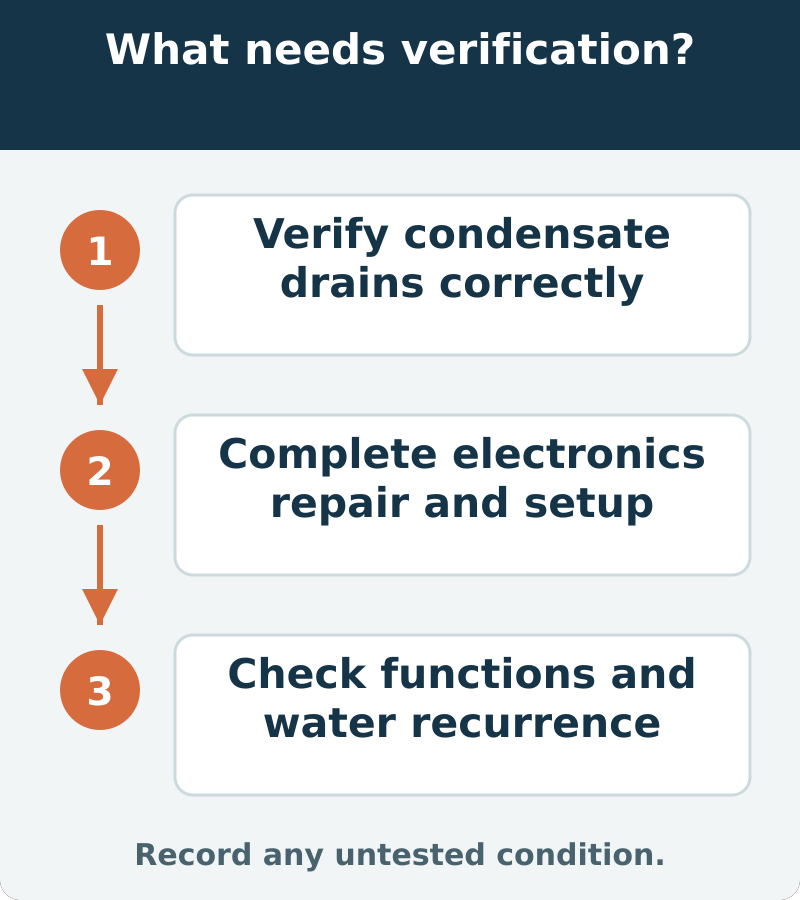
Ask how the shop checked condensate drainage under appropriate operating conditions and confirmed the originally affected functions. These are separate completion records. A normal horn or a dry floor on one occasion alone does not answer both questions.
If moisture or unexpected operation returns, stop using the vehicle when safety is affected and provide the earlier records. Do not keep powering suspect electronics in the hope that they will dry out. The durable lesson is simple: a water-related module repair has a source and a consequence. A good work order deals with both, then verifies the functions that brought the vehicle in.









Comments 0
Questions, fixes, and real-world diagnostic notes from readers.
Be the first to share a diagnostic result or ask a follow-up question.