
2019 Sharan Fans Run After Every Shutdown: Look Beyond Coolant Temperature

Quick answer: A running fan may be responding to a heat-management demand rather than causing the problem. Frequent after-run needs the actual reason checked, not an automatic fan replacement or assumption that every event is DPF regeneration.
The sound is easy to notice after you park; the reason for it is less visible. Describe how often it happens and what the journey was like. A fan working after shutdown is not, by itself, an instruction to replace the fan or disconnect it.
In this guide
Occasional after-run and every-trip after-run are different reports
Start with a pattern rather than a stopwatch verdict. Did the behavior begin recently? Does it follow nearly every journey, or only particular trips? Have there also been temperature warnings, unusual smells, smoke or a change in how the vehicle runs?
You can record those observations after ordinary use without deliberately provoking heat. If there are signs of overheating or another serious problem, stop safely and seek assistance instead of collecting more examples. Do not reach into the fan area: shutdown does not make the fan safe to touch.
The owner’s useful contribution is a reliable description of the pattern. Deciding whether it matches an intended operating strategy requires the correct vehicle information and the conditions under which the fan is being requested.
Coolant temperature is only one heat question
A normal-looking coolant display cannot answer every question about heat elsewhere in the vehicle. Similarly, an exhaust-related explanation needs more than the fact that the fan is running. Different observations describe different areas and operating states.
This is why the investigation should not become a choice between only a bad fan and a hot engine. Ask what information the workshop has about coolant behavior, exhaust-related activity and the control request. A plausible coolant reading may narrow one question while leaving another open.
Avoid turning the word regeneration into an all-purpose reassurance. Whether a regeneration event explains a particular shutdown needs evidence from that vehicle, not an assumption based solely on its being a diesel.
In the Professional Motor Mechanic published case, edd Hunt investigated persistent after-run fans on a Sharan with no stored faults. Routine regeneration history and coolant checks did not explain the pattern. Thermal inspection identified a localized converter-area heat anomaly. Converter replacement stopped the repeated overrun. Internal melting was proposed, not documented by teardown evidence.
Ask what explains the fan demand
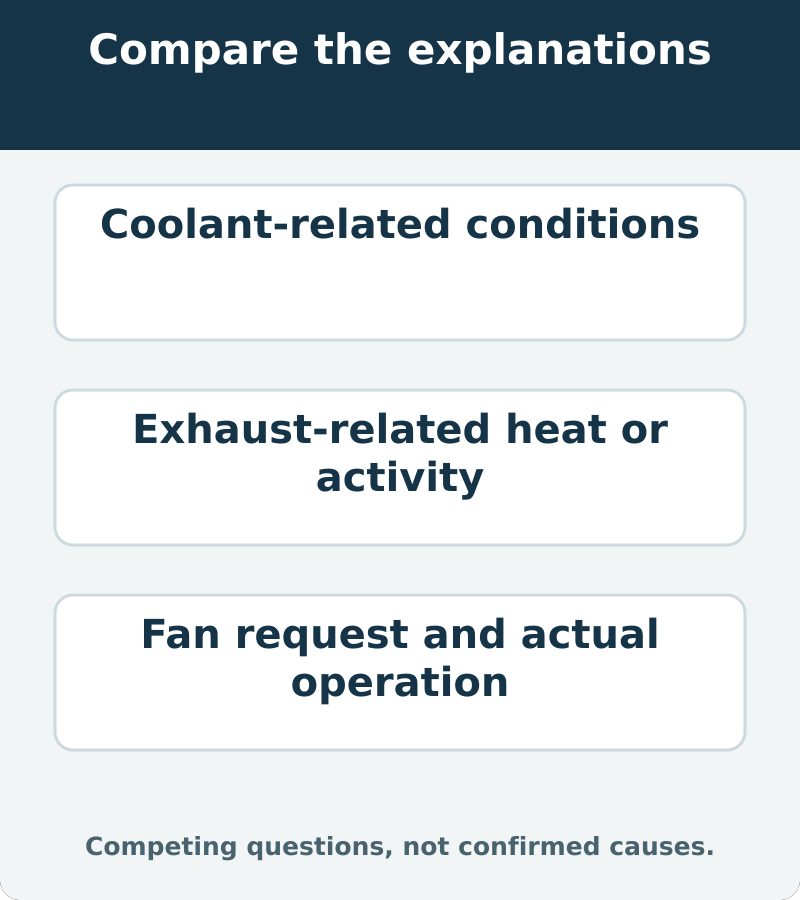
A useful test plan compares explanations with observations that could distinguish them. If routine operating activity is proposed, what record supports it? If excess heat is proposed, where is the evidence and under what conditions was it observed? If the fan control itself is suspected, how does the actual operation compare with the request?
The owner does not need to choose the test equipment. Ask the repairer to explain why the next check can separate the leading possibilities. That keeps the investigation connected to the complaint without demanding a particular replacement.
An absence of stored faults is part of the picture, not a declaration that the behavior is normal. The repeated pattern can still justify investigation when it is not adequately explained.
What a thermal image can and cannot settle
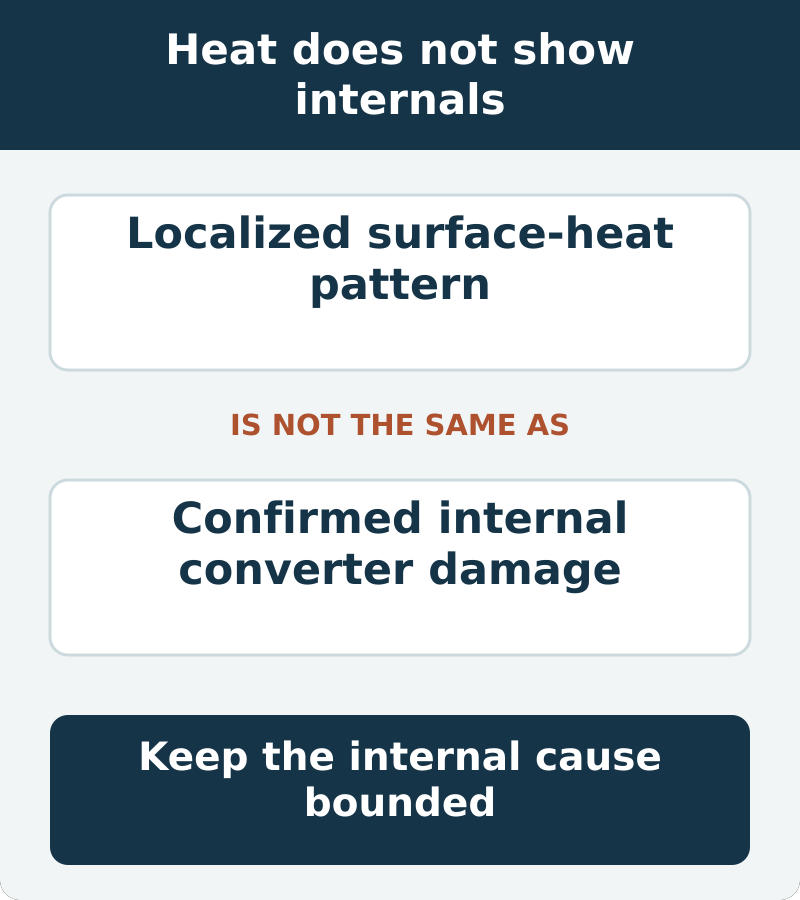
Thermal inspection can identify an area whose surface behavior deserves closer attention. It does not see through a converter and reveal its internal structure. A bright area on an image also needs an explained comparison; color alone is not a universal failure threshold.
If thermal evidence is used to support an estimate, ask which area was observed, what made the pattern abnormal and what other evidence supports the proposed cause. Those questions help distinguish a useful location clue from an unsupported component verdict.
In particular, a suggestion that internal material has melted remains a hypothesis unless the relevant inspection establishes it. Do not let a plausible explanation become a claimed teardown finding. Keep clear of hot exhaust parts and leave the inspection to someone equipped to perform it safely.
Avoid treating fan silence as the repair target
The goal is correct heat management, not simply a quiet car after parking. Unplugging the fan, changing its behavior without diagnosis or suppressing the warning can remove an observable response while leaving the condition behind it unresolved.
For the same reason, do not request a forced regeneration merely because someone has connected fan operation with the exhaust system. The appropriateness of any such procedure depends on the vehicle’s actual condition and service requirements. It is not a generic trial cure for persistent fan noise.
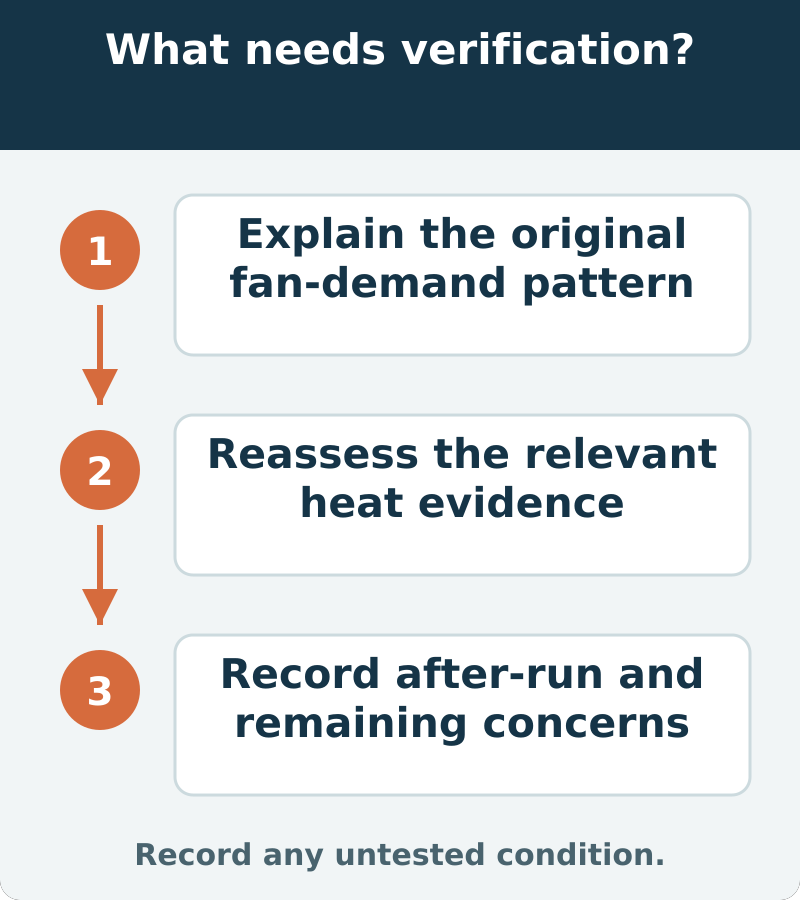
After a repair, ask whether the underlying evidence changed as expected, not just whether the fan happened to be silent once. The final assessment should explain both the original pattern and the reason the repair was considered complete.
Keep the replacement decision tied to this vehicle
This Sharan account supports considering a heat-related explanation beyond coolant alone. It does not establish that every Sharan with after-run fans needs the same exhaust component, or supply a temperature cutoff for ordering one.
Before approving replacement, ask the shop to connect its findings to your specific engine configuration and complaint. The estimate should make clear what has been confirmed and what is still inferred. A surface-temperature observation and a confirmed internal defect are not the same kind of evidence.
Keep a short record of normal journeys after collection and report a recurrence, especially if accompanied by warning signs. That is useful follow-up for your vehicle; it should not be confused with long-term verification in the published case, which does not provide it.







Comments 0
Questions, fixes, and real-world diagnostic notes from readers.
Be the first to share a diagnostic result or ask a follow-up question.