
2015 Audi Q5 P2177: The Useful Clue Was the Fuel Data, Not Another Intake Leak

Quick answer: When the intake checks passed, conflicting fuel information deserved its own test. This Q5 was repaired by replacing a faulty fuel-quality sensor, not by finding a new vacuum leak.
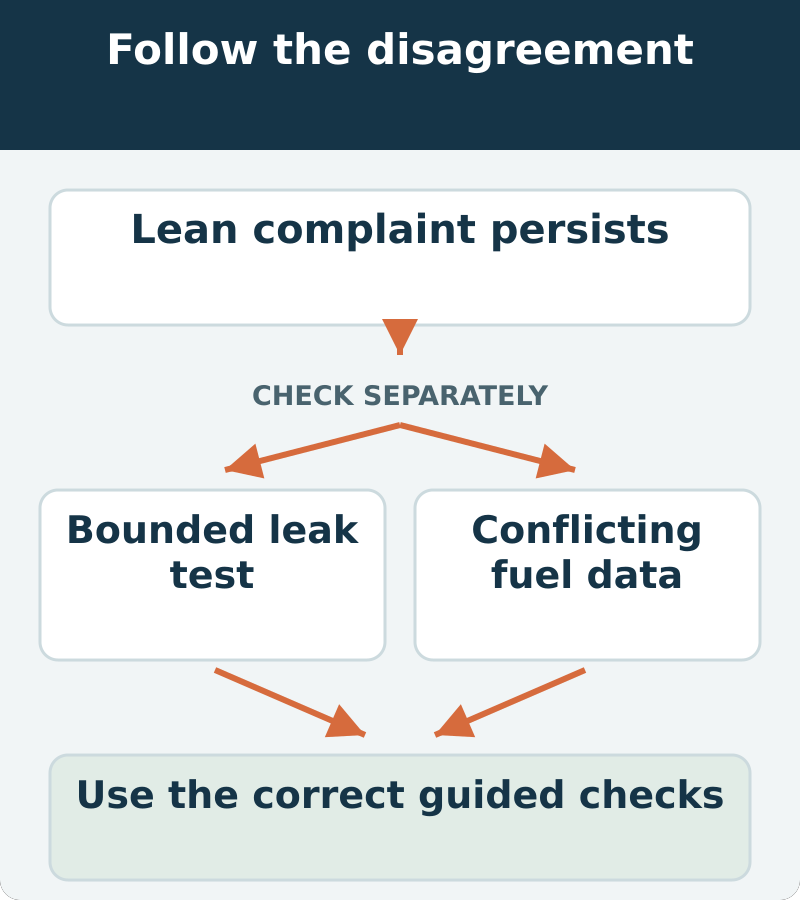
A negative test is useful when it changes the next question. If a lean-code investigation keeps circling back to an intake leak that has not been demonstrated, pause and compare the observations that are supposed to agree. Sometimes the contradiction is more valuable than another run of the same test.
A regulated automotive smoke tester such as the AUTOOL SDT205S can help investigate an appropriately prepared intake-leak branch. It cannot measure fuel composition or prove that a fuel-quality sensor is accurate. Use the pressure, connection method and test boundaries specified for the vehicle.
The case here is a 2015 Q5 with the CPMB 2.0L flex-fuel engine. Other engines need their own information. If your vehicle stalls unexpectedly, stop road experimentation and arrange diagnosis; preserving an event never justifies creating an unsafe one.
In this guide
- Write down the disagreement before clearing it
- What did the negative intake test remove?
- A fuel label and a fuel sample are not the same thing
- Check the sensor path using the correct engine information
- Avoid turning one plausible number into proof
- What should change after a sensor repair?
- If it stalls again, preserve the new event
Write down the disagreement before clearing it
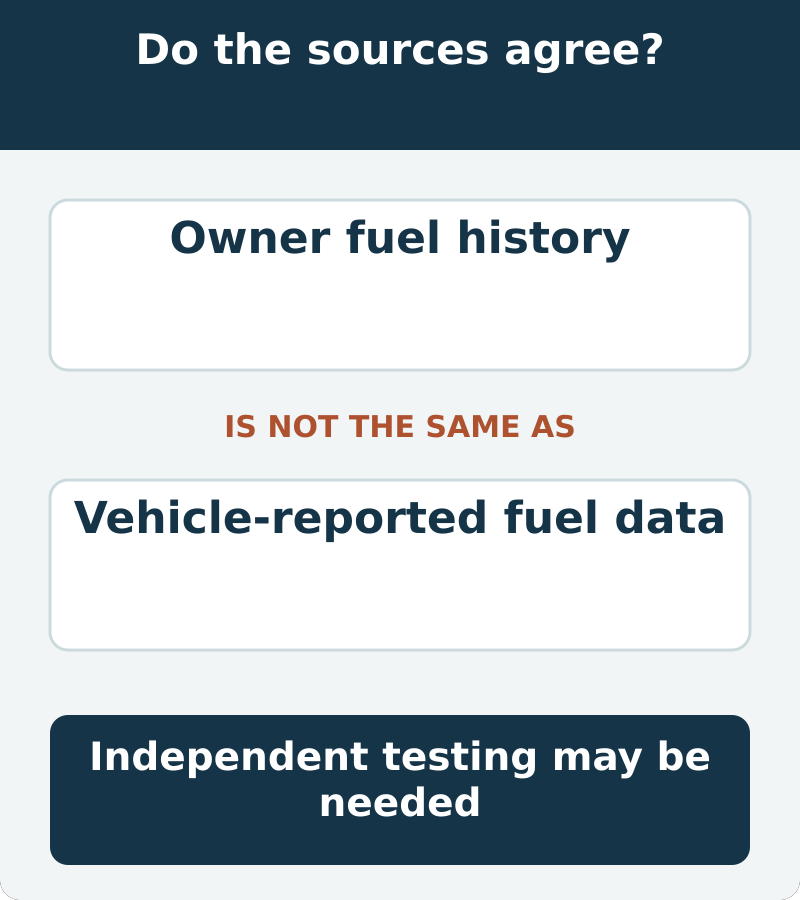
List the observations with their origins: owner history, scan-tool data, physical measurement or the result of a controlled component test. Two similar-looking data fields may not be independent measurements. A value reported by the same system should not automatically be used to certify that system’s accuracy.
In the ALLDATA Q5 report, intake and related checks had not explained P2177 and intermittent stalling. Fuel information conflicted with the owner’s gasoline history. Guided diagnosis identified a faulty fuel-quality sensor; replacement and a road test resolved the complaint. The report does not establish that a fuel sample was contaminated or publish the sensor’s detailed test values.
What did the negative intake test remove?
Ask what was included in the test and under which conditions it was performed. A smoke test can investigate a prepared path; it does not automatically assess every possible air entry, every operating state or every fuel-control input.
That distinction prevents two opposite mistakes. One is treating a negative result as worthless and repeating it indefinitely. The other is declaring the entire engine-management system normal because no smoke was visible. Record the test’s actual boundary and use it to narrow the next step without exaggerating its reach.
A fuel label and a fuel sample are not the same thing
An owner’s receipt is useful history. A scan field is useful information about what the vehicle reports. An appropriate fuel-content test is a different form of evidence. Keep those categories separate when discussing whether the actual fuel matches the system’s representation of it.
Do not diagnose “bad fuel” from a headline, a label or a single plausible percentage. If actual composition needs investigation, have a qualified technician use the approved sampling and testing procedure. Never improvise a test with flame, open household containers or unsafe handling of gasoline.
Check the sensor path using the correct engine information
The technician needs the applicable system description and guided checks for this engine configuration. A component’s name does not establish how it communicates, which terminals are safe to probe or which value constitutes a failure.
Before ordering a sensor, ask which prescribed check it failed and whether the relevant electrical support or connection was assessed. A reading that changes when a connector is moved is a clue to investigate, not immediate permission to replace whichever component is easiest to reach.
No exact pin number, frequency threshold or replacement coding sequence is supplied by the brief case. Those details belong to the current vehicle service procedure, not to a guessed universal recipe.
Avoid turning one plausible number into proof
Plausibility is a useful screen: an obviously impossible value deserves attention. But a plausible value can still be wrong for the actual condition, and two internally related values can disagree in a way that needs explanation.
The shop’s report should connect the diagnosis to the test that resolves the disagreement. Ask, “What result would have sent you down a different branch?” A test with no possible outcome other than the preselected replacement is not doing much diagnostic work.
What should change after a sensor repair?
Plan verification around the complaint and the failed requirement. The relevant data should behave as expected under the applicable checks, and the original drivability concern needs a safe, appropriate evaluation. An empty code list immediately after clearing is not enough by itself.
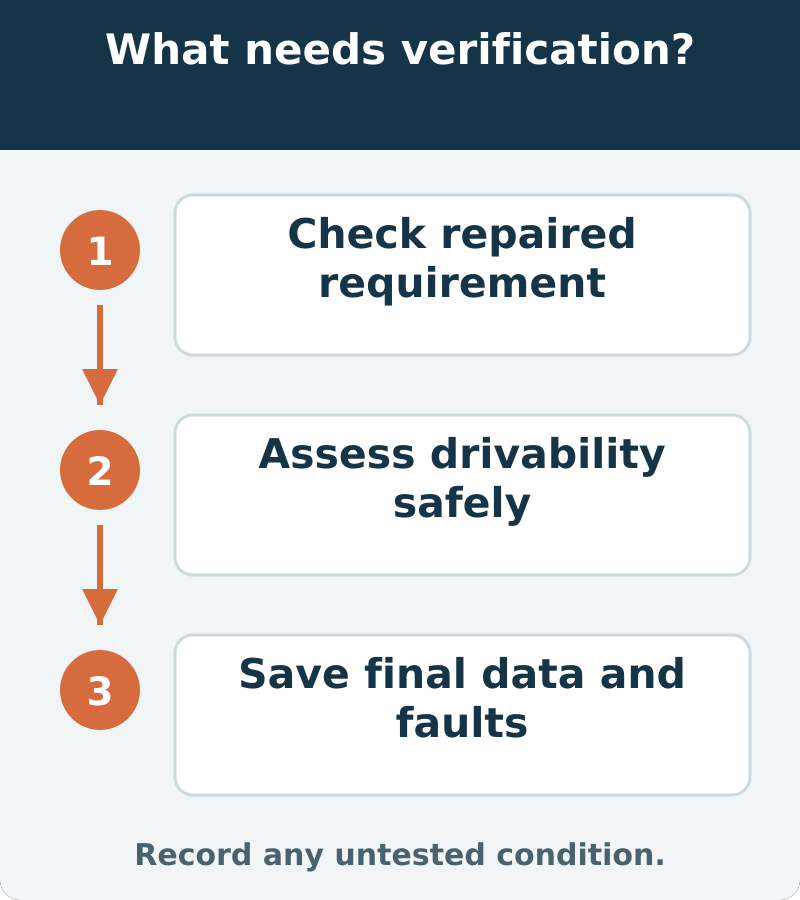
If the source case reports only a road-test result, do not interpret that as a long-term guarantee. For your own vehicle, keep the final test conditions and any remaining limitation on the invoice.
If it stalls again, preserve the new event
Note fuel history, temperature, whether the engine restarted and any changed warnings. Have the shop save the new fault information before intervention when safe. A returning symptom may involve the same path, but it may also supply evidence that was unavailable earlier.
The next investigation should begin with that new evidence—not with an automatic repeat of either the intake test or the sensor purchase.



Comments 0
Questions, fixes, and real-world diagnostic notes from readers.
Be the first to share a diagnostic result or ask a follow-up question.