
2009 Nissan Murano: Why Did a New Belt Walk Off an Aligned Pulley?

Quick answer: Alignment was not the only variable. After several accessory substitutions failed, the correctly specified OEM belt stayed in place in this Murano case.
A new belt starts moving toward the edge of a pulley. The obvious suspects are alignment and tension, but the belt itself is also an application-specific part. Before replacing another accessory, work backward through what was installed and how its fit was verified.
For an awkward inspection angle, an articulating camera such as the AUTOOL SVB308 can help view or record an accessible, stationary area. Use it only with the engine disabled and cool; remove the camera and every loose tool before restarting. It cannot certify belt fit or measure pulley alignment.
This case concerns a 2009 Murano AWD with the VQ35DE 3.5L. A belt walking out of its grooves is a reason to stop running the engine and arrange inspection, not an invitation to push it back into place while the drive is moving.
In this guide
- Stop a walking belt before it becomes debris
- The failed substitutions tell us what not to repeat
- Read the belt application, not just its length
- Static alignment and running tracking answer different questions
- Inspect the whole drive with the engine disabled
- Why the successful belt is not a universal brand ranking
- Make the first cold restart the acceptance test
Stop a walking belt before it becomes debris
Keep hands, clothing and inspection equipment away from rotating accessories. Do not operate the engine repeatedly just to obtain a more dramatic video. A qualified technician can decide how to observe tracking without putting anyone in the drive’s path.
Before disturbing the installation, record the belt label and any safe, stationary view of the routing. Keep the removed belt if it is available. The relationship between old and new parts is often easier to evaluate before labels, packaging and invoices have been discarded.
The failed substitutions tell us what not to repeat
The ALLDATA Murano case describes cold-start belt movement after belt and tensioner replacement. Alignment checks and substitutions of several accessories did not cure it. After mounting, alignment and tension were rechecked, an OEM belt resolved the walking condition.
The report’s subjective description of the earlier belt feeling dry or stiff is not a measurable acceptance specification. Its outcome also cannot establish that every aftermarket belt is unsuitable.
Read the belt application, not just its length
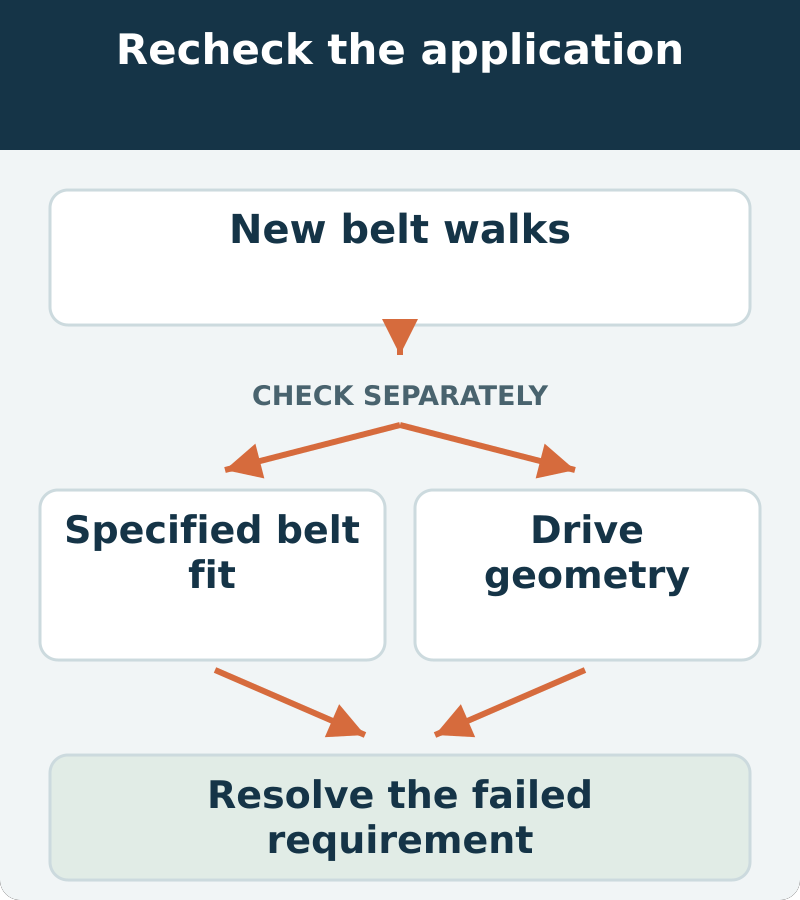
Ask the supplier or shop to verify the part against the exact vehicle configuration. A similar-looking multi-rib belt or an apparently matching length does not replace an application check. Confirm the full part identification, the intended routing and any relevant catalog notes.
If a belt was supplied through a cross-reference, retain both numbers. The useful question is whether the cross-reference is approved for this application—not whether the replacement came from a familiar brand. This makes the discussion testable and gives the supplier enough information to review a possible catalog or supply error.
Static alignment and running tracking answer different questions
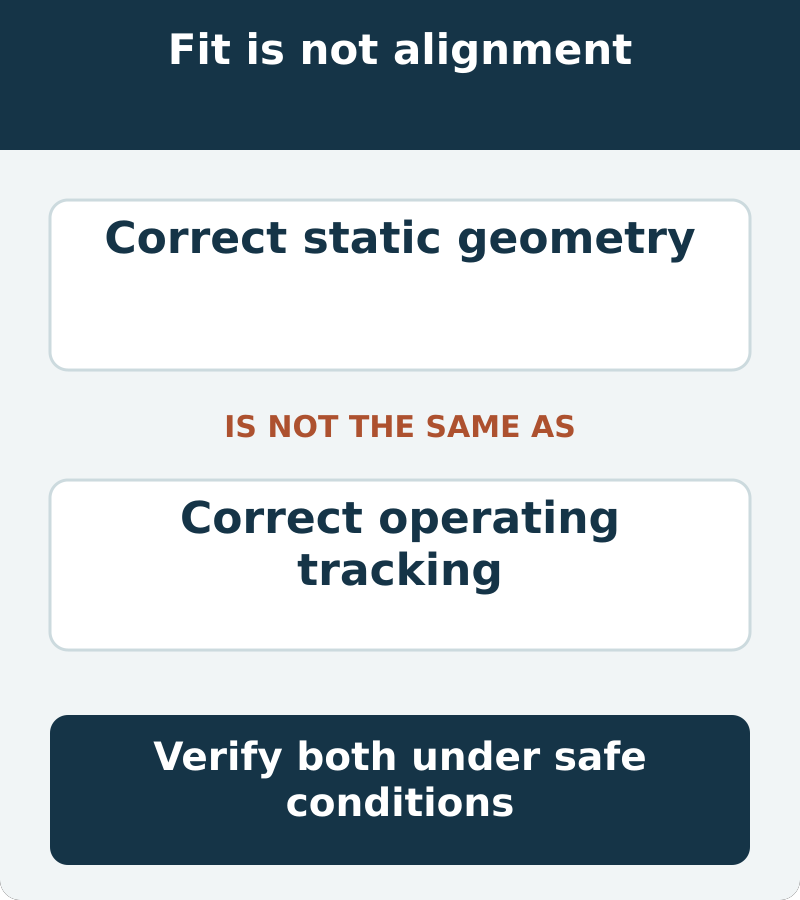
A stationary alignment result describes the setup that was measured. Tracking describes what the belt does when the drive operates. Neither should silently replace the other in the repair record.
If the belt behaves differently cold and warm, preserve that distinction. If a technician needs to observe movement, the test arrangement should maintain a safe exclusion area and keep tools clear. Do not place a handheld inspection camera, mirror or phone near a running belt to obtain a close-up.
Inspect the whole drive with the engine disabled
The appropriate stationary inspection can include routing, groove engagement, pulley condition, accessory mounting and the tensioner’s specified checks. The vehicle procedure determines access and how the tensioner is handled; stored spring force requires care even with the engine off.
Do not import a universal belt-tension number from another engine or try to tune an automatic tensioner as though it were a manually adjusted drive. If the shop reports alignment as correct, ask what was referenced and which components were included. A clear explanation is more useful than the name of the measuring tool alone.
Why the successful belt is not a universal brand ranking
One repaired vehicle establishes an outcome for that installation. It does not compare every available belt under controlled conditions. The practical takeaway is to include part application and the supplied belt in the investigation, rather than treating them as settled because the part is new.
Ask the shop to document the final installed identification. If a supplier reviews the removed item, keep that review separate from the workshop’s observed result. A manufacturing defect, an application error and an installation issue are different explanations; none should be asserted without the evidence needed to distinguish it.
Make the first cold restart the acceptance test
A warm engine that has already run successfully is not a complete substitute for the condition that caused the complaint. Arrange verification after the relevant cold period, with the drive assembled and the work area cleared.
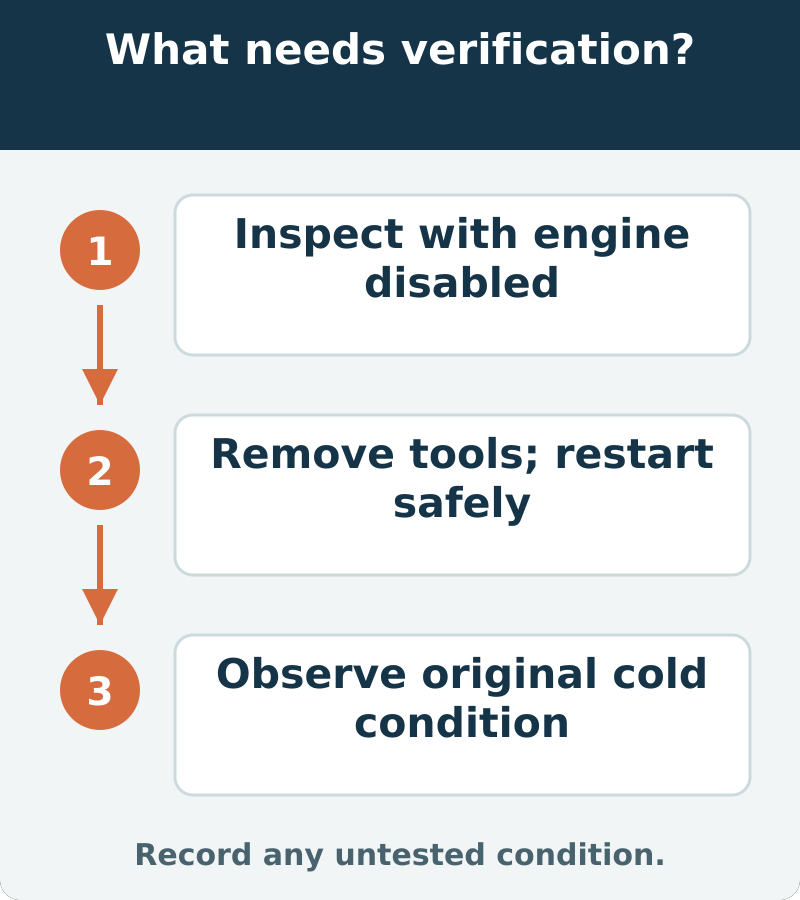
The final record should identify the installed belt, the checks completed and whether tracking remained correct under the original condition. If the cold test has not yet happened, say so. That leaves a useful next appointment instead of an unsupported promise that another new part must have solved it.










Comments 0
Questions, fixes, and real-world diagnostic notes from readers.
Be the first to share a diagnostic result or ask a follow-up question.