
2014 Subaru Forester A/C Quits When Hot: Catch the Clutch at the Moment It Stops

Quick answer: If cooling returns after the car cools down, diagnose the failure while it is present. The key split is whether clutch power disappears or remains.
The air turns warm, then cooling returns after the car rests. The useful question is what stopped working during the hot failure—not whether everything works again after cooldown. If engine overheating accompanies the complaint, address that first.
With safe test connections prepared away from moving parts, a multimeter such as the AUTOOL DM301 can help a technician establish whether clutch supply remains when cooling stops. Never reach toward a running belt to attach leads, tap the clutch or make an adjustment.
This discussion concerns a reported 2014 Forester 2.5L with a conventional belt-driven compressor. Confirm the fitted system before applying its diagnostic split elsewhere.

In this guide
The useful test window is when the air turns warm
An intermittent complaint can disappear during the trip to the workshop or while the car waits outside. Tell the shop roughly how long cooling lasts, what the weather was like and whether airflow from the vents changes as well as temperature.
That last distinction matters to the intake description. Air that still blows strongly but becomes warm is not the same observation as airflow gradually fading. Record what you actually notice rather than using “A/C quits” to cover both.
Arrange a test appointment that allows the relevant condition to be observed safely. A short cold check may establish that the system can work; it does not establish why it stops later.
What the Forester repair actually established
ALLDATA’s Forester account reports correct refrigerant charge, no DTCs and temperature checks that did not support an overheating shutdown. When cooling failed, power remained at the clutch. Excessive clutch air gap was identified; compressor/clutch replacement and recharge were followed by successful workshop and road operation.
That history does not turn every heat-related A/C problem into an air-gap diagnosis. It identifies a useful fork to investigate. The applicable electrical test and mechanical inspection are what determine whether a similar vehicle belongs on that branch.
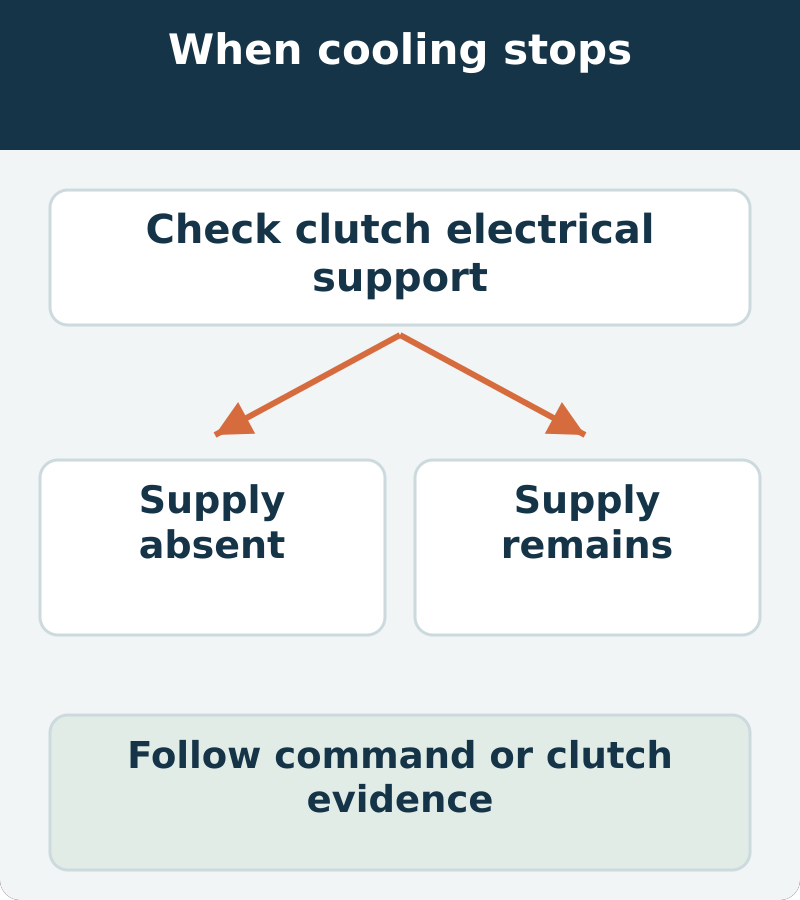
If clutch power disappears, follow the command
Loss of supply directs attention toward why the clutch is no longer being energized. It does not automatically identify the relay or controller as defective. A control system may be responding to an input, or the supply path may fail to carry out a valid command.
Ask the technician to distinguish requested operation from electrical delivery using the actual wiring and diagnostic information. Which state was expected? Which state was observed? At what point did the two stop agreeing?
Do not bypass a relay to make the compressor run. That can defeat protective decisions and erase the very distinction the investigation needs. A missing command is a question to explain, not permission to override it.
If power remains, inspect the clutch safely
A voltage observation is useful only with its conditions and measurement points recorded. The relevant circuit still needs to meet its operating requirements; “there was voltage somewhere” is not a complete loaded-circuit assessment.
Once electrical support is established, the technician can evaluate clutch engagement and the specified mechanical checks. Measurements around a belt drive require a safe service setup. Any gap inspection or adjustment must follow the correct disabled-system procedure.
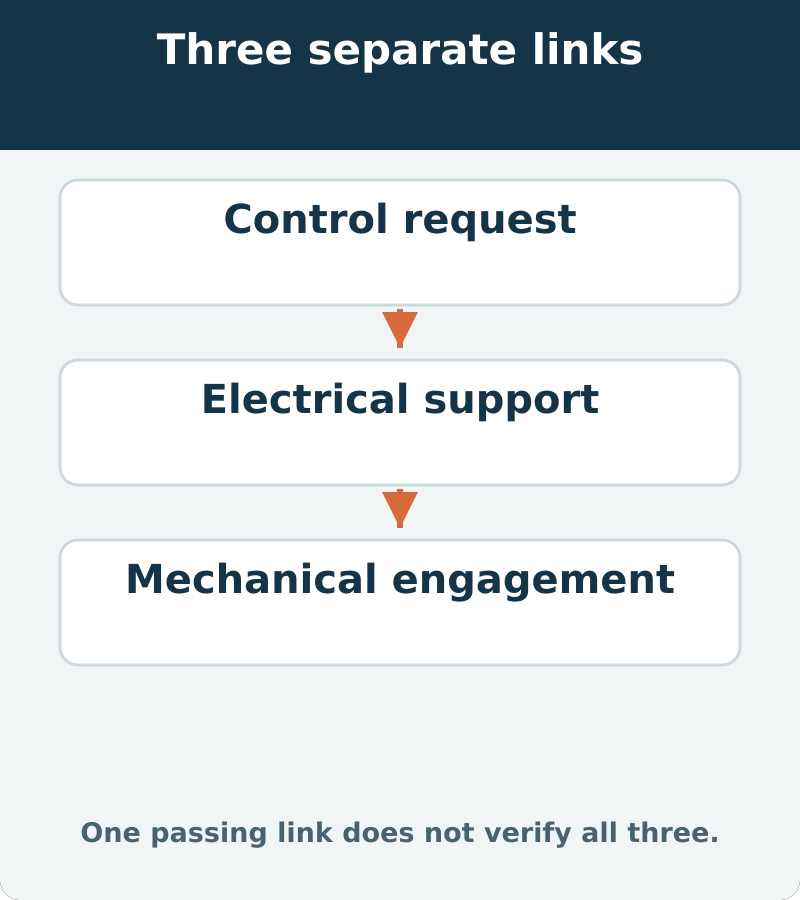
For the owner, ask which result justifies the mechanical conclusion. A hot failure followed by a normal cold test should not be reduced to a guess based on mileage or a familiar model reputation.
Do not turn a diagnosis into an automatic compressor order
Finding a clutch-related problem and deciding the repair scope are separate decisions. The fitted design, available service parts, condition of the assembly and applicable procedure determine whether a particular component can be serviced separately.
The fact that one workshop replaced an assembly does not prove that every similar complaint requires the same order. Ask what the proposed work includes and why that scope is appropriate for the identified system.
Refrigerant work also has its own requirements. A correct diagnosis does not remove the need for qualified recovery, charging and leak-related checks when the repair opens that circuit. Equally, adding refrigerant is not a repair for a demonstrated electrical or clutch-engagement fault.
Compare service proposals on the explanation and included verification, not only the component name. One quotation may include the required follow-up; another may simply promise that a new part should solve the symptom.
Run the final check beyond the old failure point
Plan acceptance around the original complaint. If cooling previously stopped after warming, ask the workshop to assess operation through the relevant period and conditions without creating an overheating event.
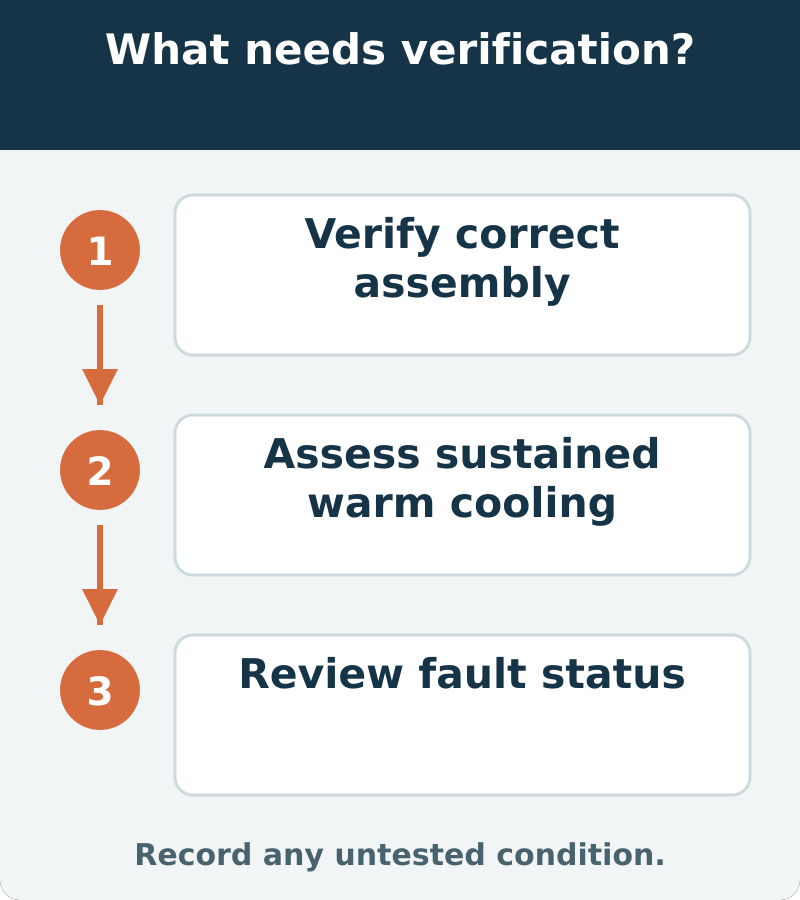
Record what was actually tested: steady airflow, continued cooling and the appropriate system checks are different observations. If weather or appointment time prevented an equivalent check, leave that limitation explicit and agree on a follow-up. The best closing sentence is a defined result under known conditions, not simply “cold when collected.”









Comments 0
Questions, fixes, and real-world diagnostic notes from readers.
Be the first to share a diagnostic result or ask a follow-up question.