
2014 BMW X5 N55 Cold-Start Blue Smoke: Valve Stem Seal Repair Case

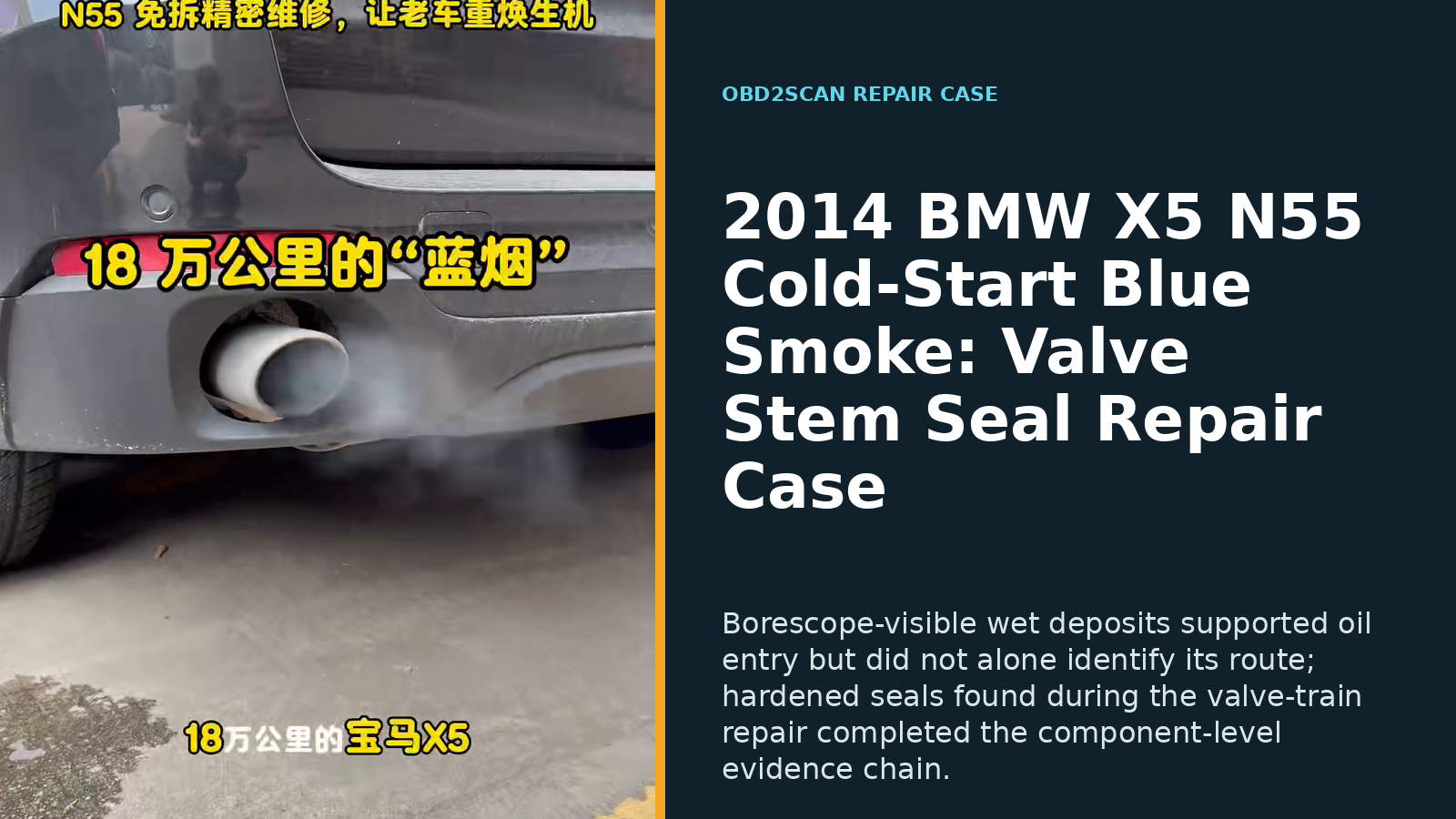
This 2014 BMW X5 F15 with an N55 engine and 180,000 km emitted blue smoke for roughly 10–20 seconds after a cold start and then cleared. Cold-start timing, reported oil use, wet-looking piston-crown deposits, and the hardened seals removed during repair supported oil leakage past the valve stem seals rather than a mileage-based assumption that the whole engine needed rebuilding. The workshop replaced all 24 seals with the cylinder head installed, restored the valvetrain, and then reproduced a cold start after a 12-hour static period with no visible blue smoke.
That closes the immediate symptom, not long-term oil consumption: later repeated cold starts and a follow-up interval are not reported.
Case at a glance
| Item | Case detail |
|---|---|
| Vehicle | 2014 BMW X5 F15, N55 3.0T inline-six; 180,000 km |
| Driver complaint | Blue smoke for about 10–20 seconds after cold start, then clear |
| Reported oil use | About 1 liter per 6,000 km in this case |
| Directional evidence | Cold-start timing and wet-looking piston-crown deposits seen through spark-plug openings |
| Component confirmation | All 24 removed valve stem seals reported hardened and no longer sealing normally |
| Repair | All 24 seals replaced with the cylinder head installed; guide clearance inspected |
| Related work | Necessary intake-valve deposits cleaned; valvetrain and timing-related components restored |
| Immediate verification | Cold start after a reported 12-hour static period showed no visible blue smoke |
| Open follow-up | Longer-term oil consumption and repeated cold starts not reported |
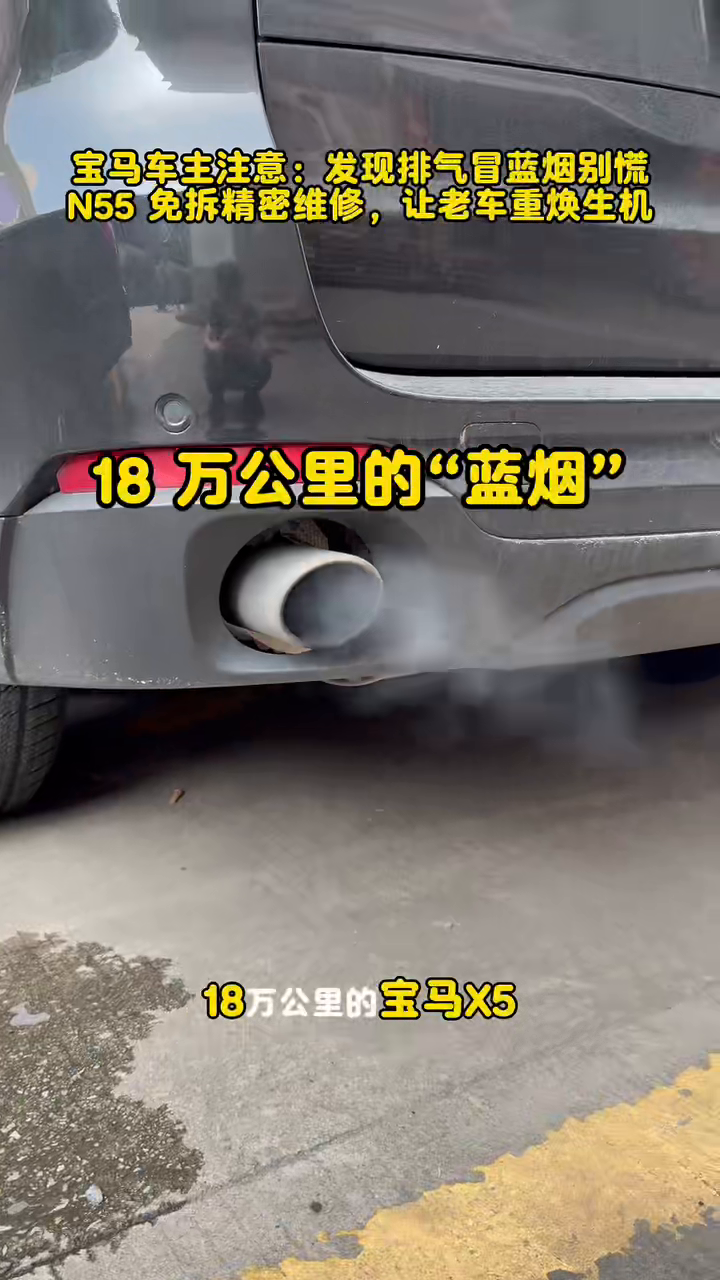
Timing narrowed the oil path without proving a part
Smoke that appears after an engine-off period and then fades can support the idea that oil accumulated before startup. It still does not uniquely identify valve seals. Turbocharger oil paths, crankcase ventilation, rings, cylinder condition, and other faults can produce overlapping symptoms, so another N55 needs its own evidence.
The spark plugs were removed and a borescope view showed wet-looking rather than dry carbon on piston crowns. That observation supported oil reaching the combustion chamber, but it did not show which path the oil used. When a cool, safely prepared engine and access opening are suitable, an AUTOOL SVB305 articulating inspection camera can help view and record confined engine spaces. The source does not say this exact camera was used, and no borescope image alone can separate valve-seal leakage from rings, turbocharger, or ventilation causes or measure valve-guide clearance.
What finally confirmed the seals
Component confirmation arrived during the repair: the 24 removed valve stem seals were reported hardened and unable to retain their normal sealing function. Combined with the startup pattern and wet chamber evidence, that physical condition completed the chain; mileage did not create a replacement rule.
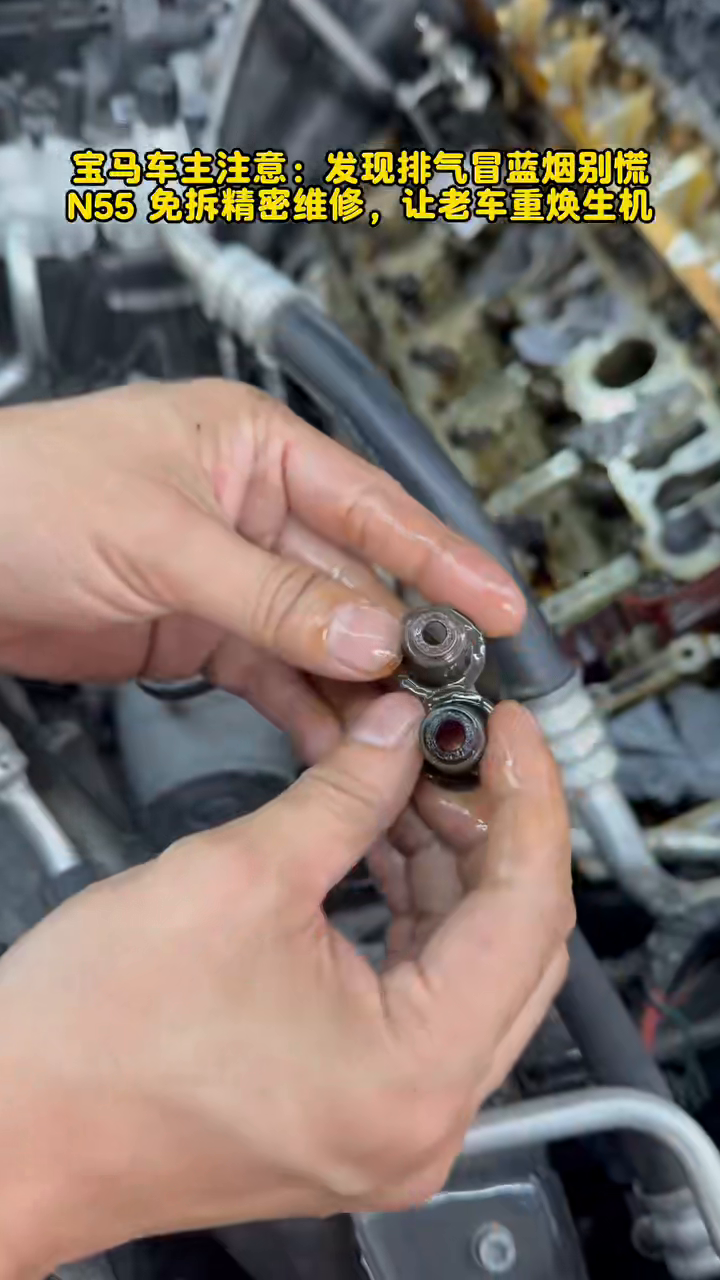
Valve-guide clearance was inspected, but no measurements or full alternative-path test record are published. The conclusion remains case-specific: this pattern, inspection, removed-part condition, repair, and result supported the seals on this X5.
Why this was an R3 repair
The cylinder head remained on the engine, but that did not make the work low risk. The valve cover and camshafts were removed, valve springs were accessed, and compressed air through spark-plug openings was used to support valves. Losing valve support can drop a valve, while an error in timing or valvetrain reassembly can cause severe engine damage.
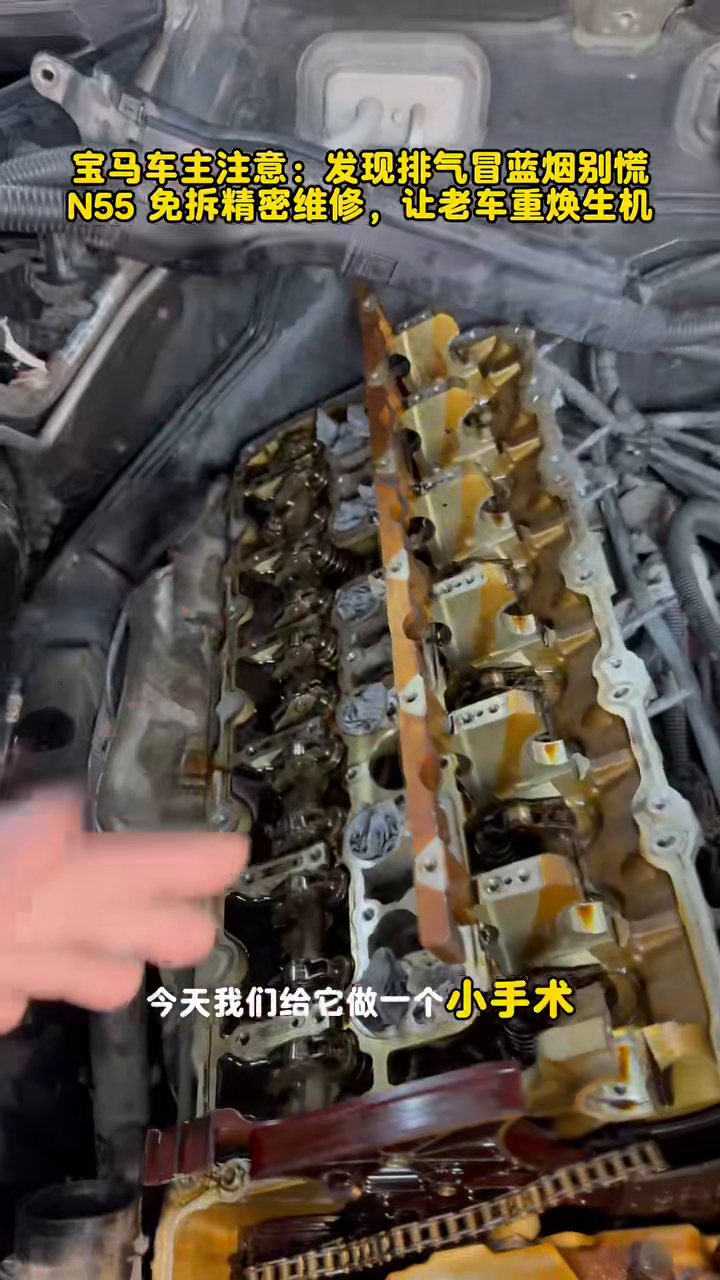
Stop unless the technician has the exact-engine BMW procedure, verified timing position, appropriate holding and spring tools, dependable valve support, and the qualifications to restore the valvetrain. This article intentionally supplies no air pressure, cam timing, installation depth, guide-clearance limit, or tightening value. BMW’s official N55 technical reference explains engine architecture, but exact-VIN service instructions still control the repair.
What was replaced and restored
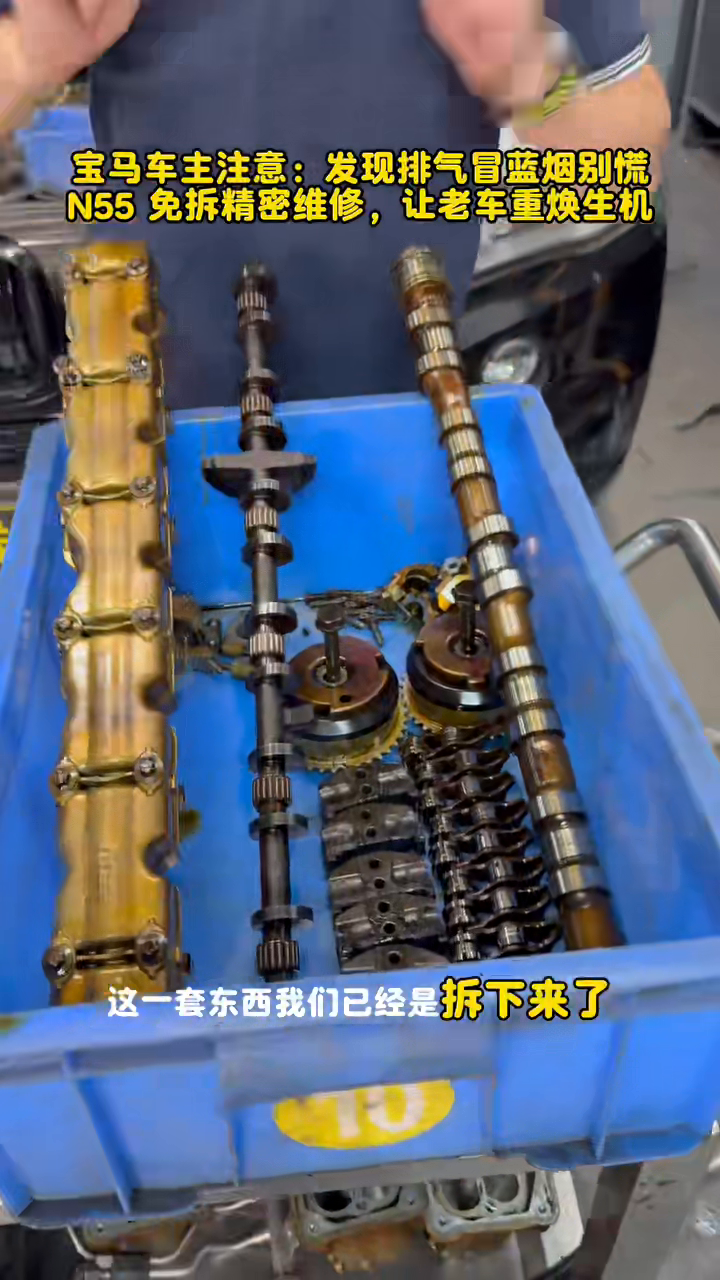
All 24 old seals were removed and replacement seals meeting the selected application were installed. The source also records inspection of valve-guide clearance and necessary cleaning of intake-valve deposits before reassembly. Those are actual related actions, not proof that every N55 at this mileage needs deposit service.
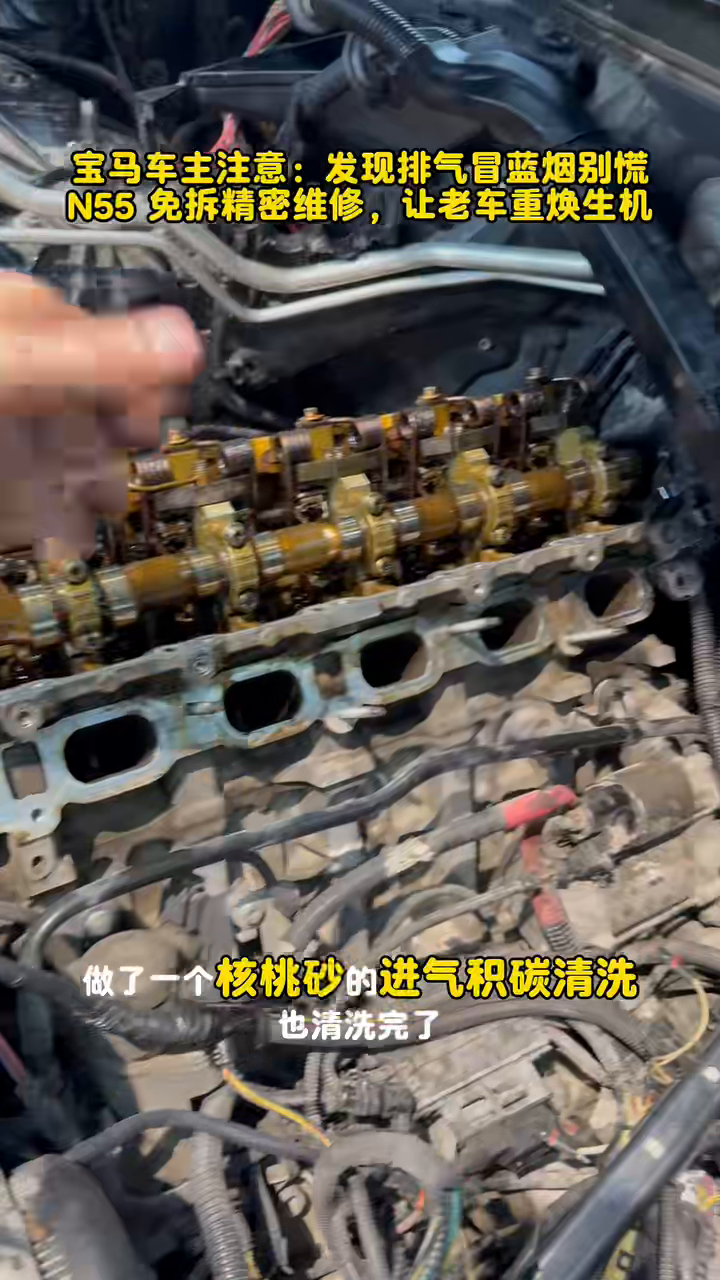
The camshafts, springs, covers, and disturbed interfaces then had to return to their exact specified state. The source does not publish part numbers, seal dimensions, timing-tool setup, fastener values, or a complete reassembly checklist, so none is inferred from the video. A successful first start cannot excuse an uncertain timing or sealing operation.
The same trigger closed the immediate result
The useful verification was not a warm restart immediately after assembly. The vehicle remained static for a reported 12 hours, allowing the repair to be challenged under the same kind of engine-off interval associated with the complaint. On the subsequent cold start, the exhaust showed no visible blue smoke.
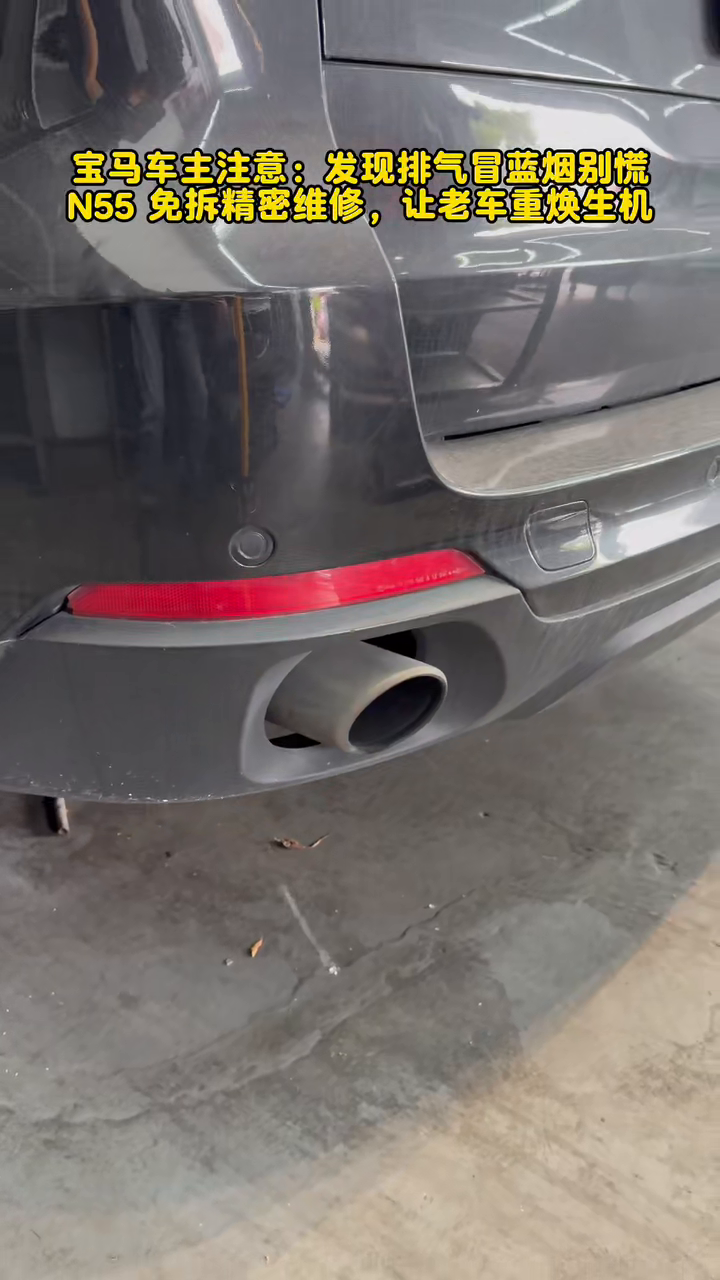
That earns a clear immediate Q10 result because it repeats the original trigger and observes the original symptom. It does not establish that oil use over the next 6,000 km changed, that every later start remained clear, or that unrelated oil paths were repaired. A responsible follow-up would record repeated true-cold starts, oil level with a consistent method, warnings or faults, leaks, and any returning smoke or odor.
What transfers to another blue-smoke diagnosis
Record when smoke starts, how long it lasts, whether it returns under load or deceleration, and how oil level was measured. Inspect for oil-entry evidence, test plausible ventilation, turbocharger, ring/cylinder, and valvetrain paths as the vehicle requires, and avoid treating a wet piston crown as a one-part verdict. If valve seals become the supported repair, use exact-engine procedures and specialist controls, then verify with the same cold-start condition and continue longer-term consumption tracking. The reusable lesson is staged confirmation and matched verification, not “high-mileage N55 equals valve seals.”


Comments 0
Questions, fixes, and real-world diagnostic notes from readers.
Be the first to share a diagnostic result or ask a follow-up question.