
2012 Toyota Sequoia Cold Long Crank: When the Learned Fuel Value Needs Investigation

Quick answer: The fuel in the tank and the ECU’s learned estimate are not interchangeable. This Sequoia improved after a supported reset, but a reset alone is not a universal or necessarily lasting repair.
A vehicle that starts badly cold and runs well warm can make a repair look successful too soon. Preserve the first-start condition and distinguish the fuel actually in the tank from the value the engine controller has learned about that fuel.
Supply pressure may still need to be checked as a separate question. For a compatible low-pressure connection, the AUTOOL PT635 offers a pressure-testing route when its adapter and range match the procedure. It does not measure alcohol content, reset Toyota learned values or replace the required scan-tool function.
This discussion concerns a 2012 Sequoia 4WD with the 3UR-FBE 5.7L flex-fuel engine. Confirm engine, VIN and calibration before applying a bulletin. Stop repeated starting attempts if there is an unsafe fuel smell, abnormal mechanical behavior or another condition requiring immediate inspection.
In this guide
- Keep the vehicle cold long enough to learn something
- What the Sequoia case reported
- Separate actual fuel from a learned estimate
- Why good warm running is not the finish line
- Check the superseding bulletin before repeating a reset
- Use tools for their own part of the question
- Build a cold-start acceptance record
- What to do when the learned value drifts again
Keep the vehicle cold long enough to learn something
Tell the shop whether the fault appears after an overnight stay, another long stop or a particular refueling event. Arrange the appointment so the technician can observe the relevant start before the engine has been warmed by moving the vehicle around the lot.
Record the circumstances without exhausting the battery through repeated experiments. A video from the driver’s normal position may help explain the duration and behavior, but it should not replace the shop’s own measurements. Follow the owner’s manual limits on cranking and allow a professional to assess a persistent starting problem.
What the Sequoia case reported
The ALLDATA case described cold long cranking, P1604/P1605, an elevated learned alcohol value and negative long-term fuel trims. Supply pressure passed, and gasoline use was confirmed. A supported reset followed by further cycles restored cold starting in the reported follow-up.
That is a reported outcome, not proof that resetting is the complete repair for every similar Sequoia. An elevated learned value is not evidence that ethanol has progressively accumulated in the tank; actual fuel composition needs its own check.
Separate actual fuel from a learned estimate
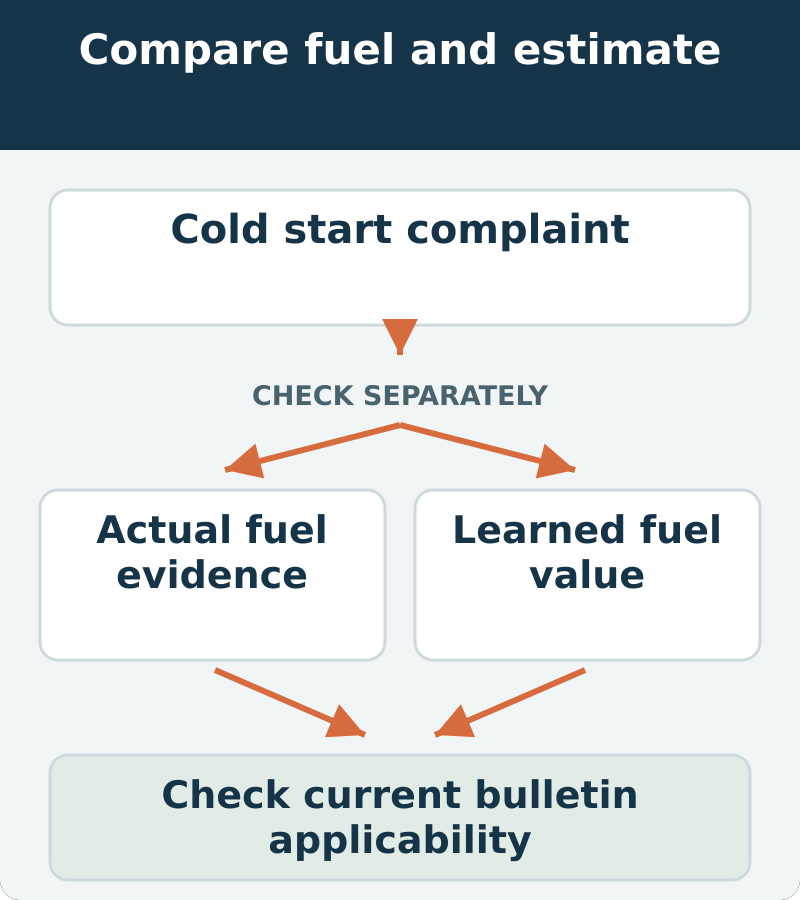
Fuel history is useful, but a receipt and a learned scan value are different kinds of information. If their relationship needs checking, use the vehicle’s approved procedure for assessing actual fuel content and the relevant data.
Do not treat an implausible learned value as permission to drain the tank, add a chemical or disconnect the battery. First establish which value is being viewed, the conditions under which it was recorded and what independent evidence describes the fuel. That creates a testable discrepancy instead of a guess about what must be in the tank.
Why good warm running is not the finish line
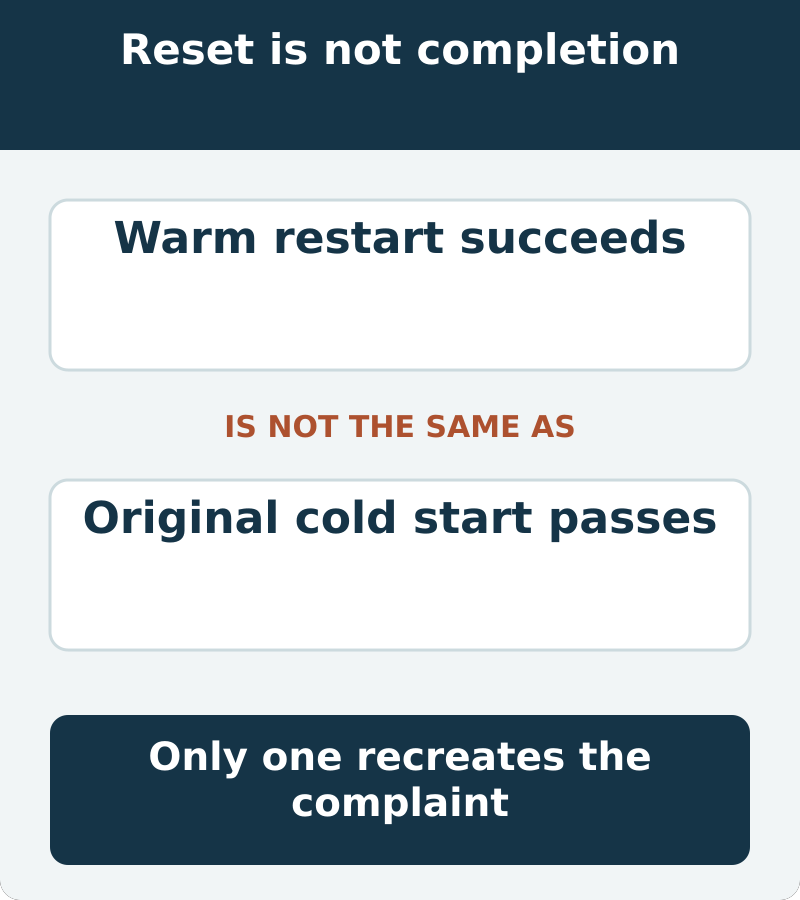
A successful warm restart does not recreate a cold-start complaint. Likewise, an immediately changed learned value after an authorized reset does not demonstrate that the underlying reason for the problem has been corrected.
Agree in advance on the cold observation the shop will repeat. If an overnight stay is needed, it belongs in the schedule and estimate. Avoid collecting the vehicle before the only meaningful acceptance condition has occurred and then treating the next morning’s problem as unexpected evidence.
Check the superseding bulletin before repeating a reset
Toyota’s T-SB-0166-19 supersedes T-SB-0058-13. It addresses qualifying 3UR-FBE Sequoia and Tundra vehicles with the specified symptoms and data conditions. Its procedure includes applicability and calibration checks; for the qualifying repair path, it goes beyond resetting to calibration and fuel-pump work. It also states that the ECM is not to be replaced as part of that procedure.
Have the shop check the current Toyota information and your calibration rather than applying a historical bulletin solely because the model year appears in its range. A vehicle that does not meet the conditions needs the appropriate diagnostic path, not an automatic bulletin repair.
Use tools for their own part of the question
A pressure tester establishes pressure only within its approved connection and range. A scan tool reports data and performs supported functions. An approved fuel-content test addresses another question. Owning one of these does not supply the others.
For learned-value work, confirm exact function coverage before scheduling. The Toyota bulletin specifically says battery disconnection or removing the named fuses does not perform the required learned-value reset. Do not substitute a generic battery-reset trick for a manufacturer procedure, or improvise a calibration update without its required power support and safeguards.
Build a cold-start acceptance record
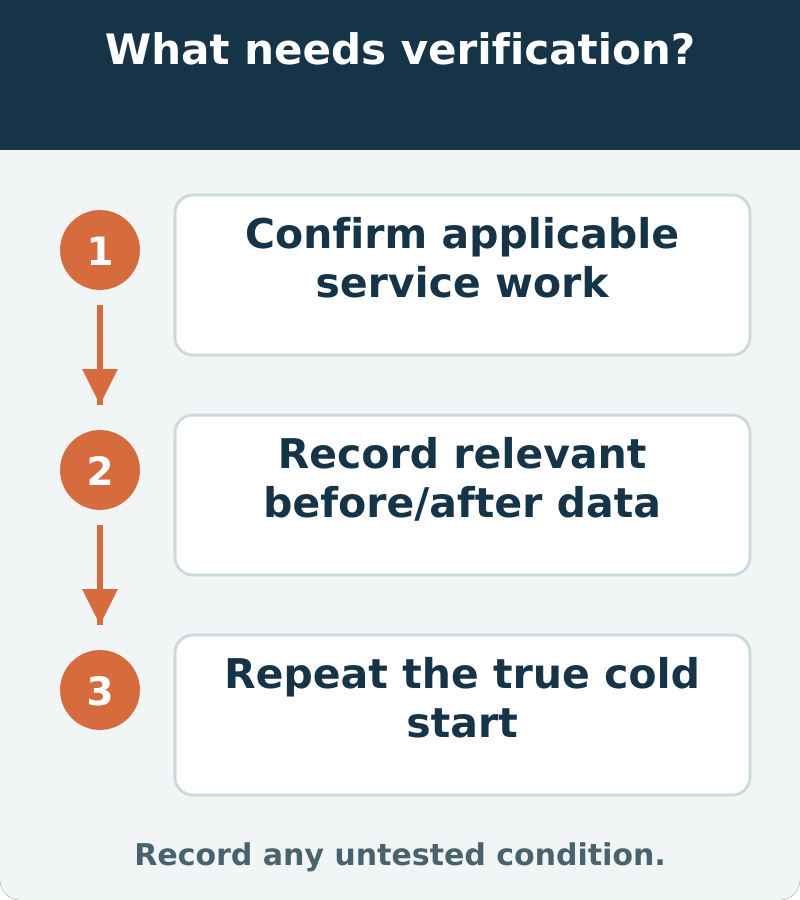
Keep the identified calibration, the service action performed, relevant before-and-after observations and the conditions of the final cold start. Distinguish the recorded test result from a prediction about future starts.
If the shop cannot complete the cold observation before handoff, arrange the follow-up explicitly. “Warm restart normal” can be a valid limited result without being a complete answer to your complaint.
What to do when the learned value drifts again
Preserve the new data and refueling history, then revisit actual fuel, current calibration and the previously completed work. Do not repeatedly erase the evidence and assume another reset is all that is needed.
The lasting value of this case is the comparison it prompts—not a shortcut. A successful anecdote should lead you toward the applicable service information and a verified cold-start result.




Comments 0
Questions, fixes, and real-world diagnostic notes from readers.
Be the first to share a diagnostic result or ask a follow-up question.