2012 Mitsubishi Eclipse P003C: A Good Dipstick Reading Did Not Clear the Oil-Control Valve

Quick answer: Correct oil level is an important first check, but it does not prove that a valve-control passage or actuator is clean and working.
An oil-pressure warning, mechanical noise or severe loss of power requires stopping and professional assessment. Do not continue running the engine to see whether an oil-related control fault clears itself.
When the prescribed inspection reaches a difficult-to-see area, an articulating camera such as the AUTOOL SVB308 can help document accessible surfaces with the engine cool and disabled. A clear image is not a measurement of oil pressure or actuator movement.
In this guide
What the dipstick can answer
The dipstick provides information about the oil level under the specified checking conditions. Visible condition can add an observation. Neither result describes every passage, valve or controlled response inside the engine. The mistake is not checking the level first; it is treating that first check as clearance for the entire oil-dependent function.
For an owner, this explains why “the oil is full” may not end the appointment. Ask what question remains after the level check. The answer should identify a specific control, response or local condition still requiring evaluation, rather than dismissing your observation or suggesting that the dipstick had no value.
The switch reports a response, not a repair order
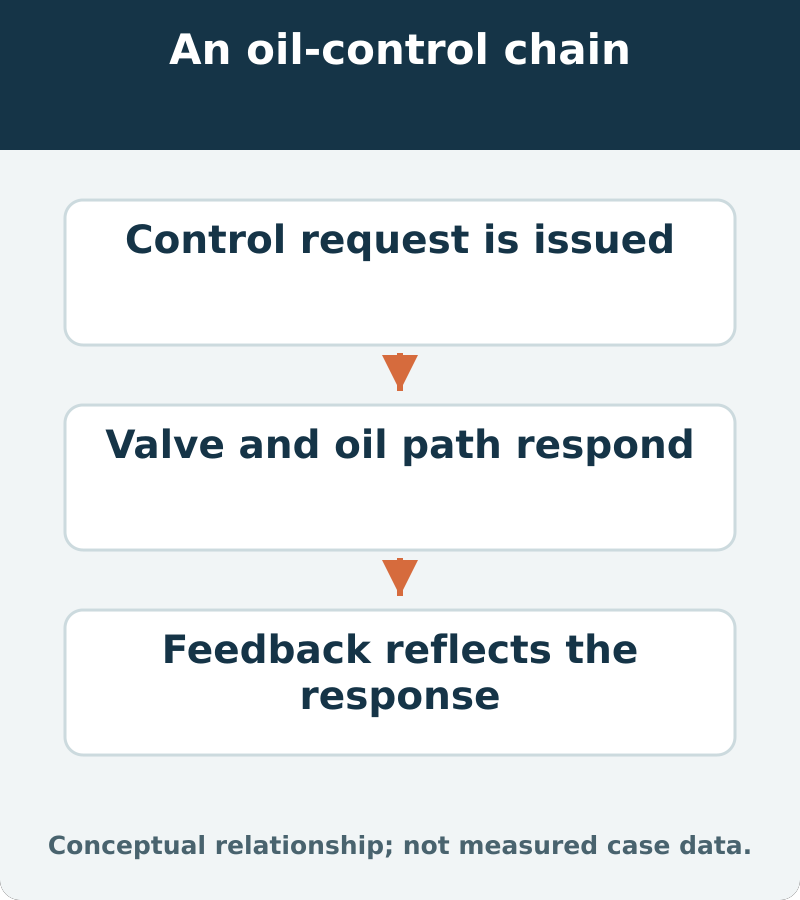
A feedback device gives the controller information about a condition. If the expected indication is absent, several possibilities remain: the condition may not have occurred, the device may not have reported it, or the information may not have reached its destination. The code and parameter need interpretation in that complete chain.
This is why replacing a switch solely because its state looks wrong can miss an upstream problem. The right diagnostic question is whether the reported state agrees with the independently assessed condition, using the vehicle’s specified method. Without that comparison, an absent response is evidence of an unresolved function—not an automatic verdict on the device that reports it.
Look at the local oil-control hardware
In ALLDATA’s Eclipse case, a 2012 2.4L car had reduced power and P003C despite acceptable oil level and apparent condition. An expected pressure-switch state change was missing. Inspection found contamination and corrosion at the oil-control valve. Replacement followed by a road test reportedly resolved the complaint; no pressure trace or contamination origin was supplied.
The useful change in focus was from a general fluid observation to the hardware associated with the affected function. That does not justify dismantling the same area on every vehicle with reduced power. The local inspection belongs after identification and the relevant diagnostic findings establish why it is worth investigating.
Keep electrical and hydraulic questions separate
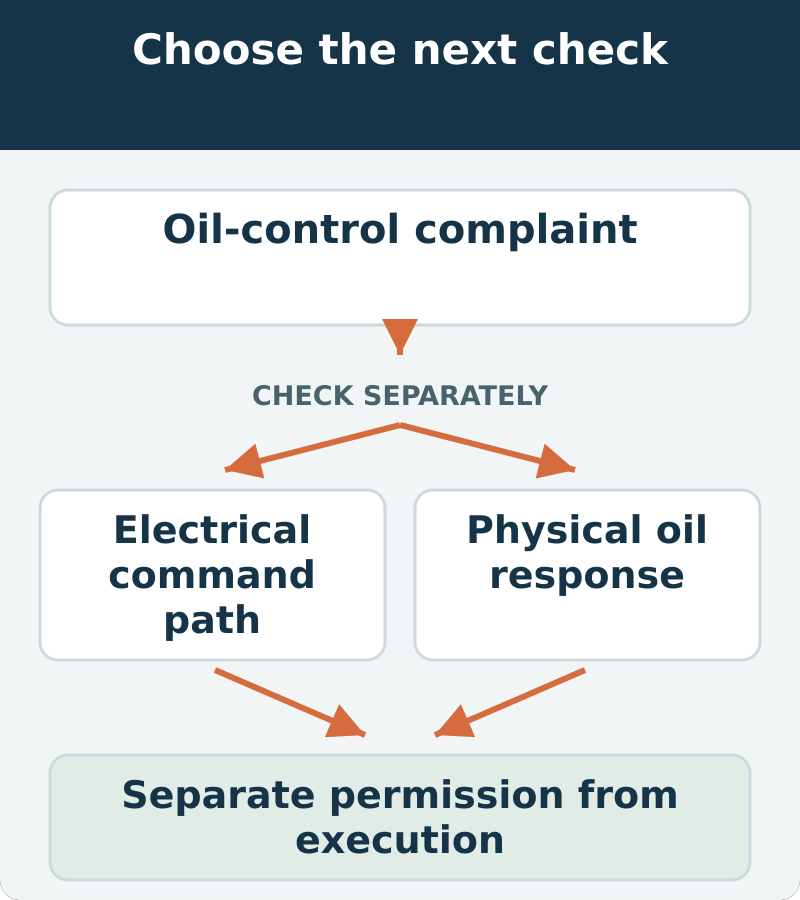
An electrical command and the physical response it is intended to produce are related but distinct. Evidence that one exists does not automatically establish the other. Likewise, a missing feedback state does not reveal which link failed without further checks. Keeping those questions separate makes the estimate and the test record easier to understand.
Ask the technician to label the evidence: what was commanded, what was measured or observed, and what remained inferred? There is no need to invent a universal oil-pressure number or substitute a photograph for a functional test. The engine-specific procedure determines which measurements are meaningful and how they can be made safely.
What contamination changes in the plan
Finding contamination should prompt a discussion about repair scope and recurrence. Is the observed condition confined to the inspected component? Does the applicable service information require further checks? Is there evidence that explains its origin? A replacement may restore operation while some of those questions remain open.
Do not fill the gap by assuming neglect, prescribing an aggressive flush or adding a chemical treatment from a different engine’s story. Bring the available service history and the oil specification used. That information can help the workshop assess the situation, but an incomplete history is not proof of a particular cause. Any additional work should have a reason connected to this engine’s findings.
Verify movement and protect the next oil interval
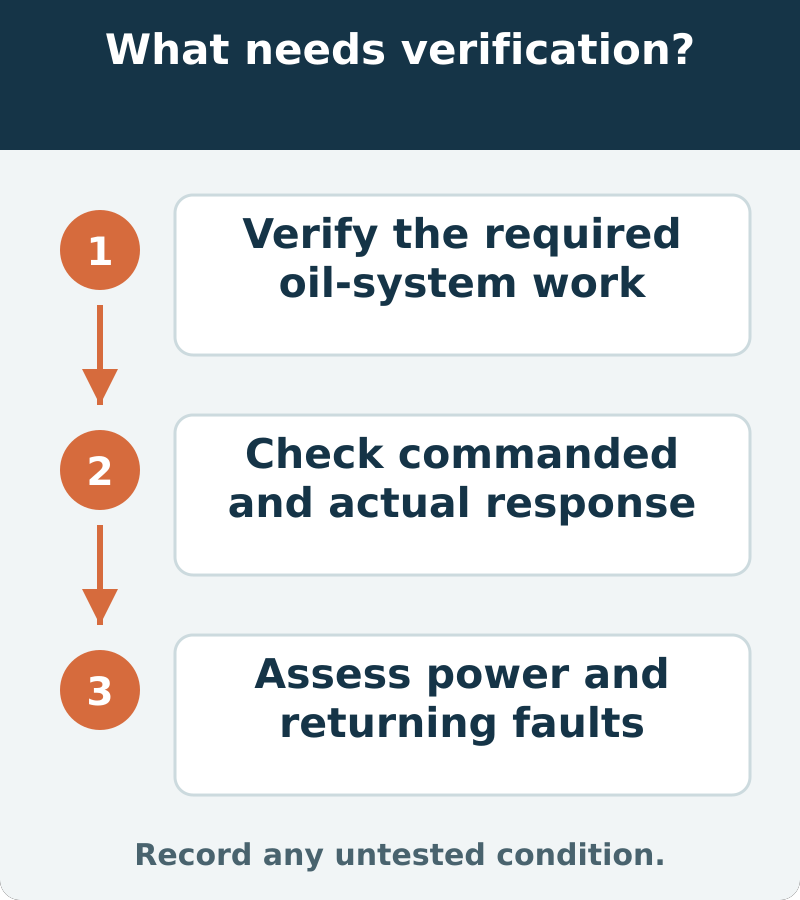
After repair, the relevant control response and fault status should be checked using the permitted procedure, along with the original power complaint. “New valve fitted” describes work completed; it does not describe the result. The handover should explain what operating behavior was verified and whether any further concern remains.
For future maintenance, follow the correct oil specification and service schedule for the vehicle and its use rather than an interval guessed from this case. Keep the inspection findings with the invoice. The lasting lesson is a useful division of labor: the level check establishes a baseline, while local and functional checks determine whether the oil-dependent system actually does its job.








Comments 0
Questions, fixes, and real-world diagnostic notes from readers.
Be the first to share a diagnostic result or ask a follow-up question.