Fuel Injectors Are Clean but Still Uneven? Compare Leakage, Flow, and Spray Pattern

Clean Is Not Matched
“Clean” describes what was done to an injector. It does not prove that six injectors now leak, open, atomize, and flow alike. A useful bench result starts with a baseline, keeps electrical and hydraulic settings identical, and records what changed after each controlled cleaning step.
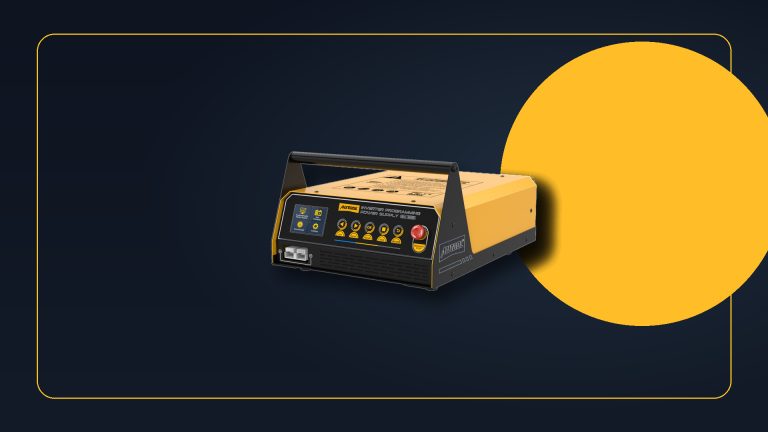
For a set of port or compatible direct injectors, the required capability is simultaneous comparison under repeatable conditions. The AUTOOL CT500 six-injector cleaner and tester is one integrated route for comparing up to six injectors under the same conditions and then ultrasonic-cleaning them. Use approved test and cleaning fluids—not gasoline—and select the correct injector voltage and connection.
A low-pressure bench can compare leakage, flow, and visible spray behavior. It cannot reproduce every engine’s high-pressure GDI rail, combustion chamber, heat, backpressure, driver strategy, or installed fuel trim. The bench result must eventually reconnect to the vehicle.
Quick answer: Clean does not mean matched. Keep rail position and cylinder identity, test every injector with the same fluid, pressure, pulse pattern and duration, compare leakage as well as flow and spray, repeat any outlier, and verify the vehicle-side cause after installation.

In this guide
- Capture a baseline before cleaning
- Run every injector under identical conditions
- Separate leakage, flow, and spray pattern
- Use reverse and ultrasonic cleaning as controlled interventions
- Respect electrical and GDI boundaries
- Decide whether the set is serviceable or merely improved
- Compare injector-bench routes
- Reconnect the bench result to the vehicle
Capture a baseline before cleaning
Label every injector by cylinder and orientation before removal. Record DTCs, trims, misfire counts, balance results, fuel pressure, electrical tests, plug appearance, and the exact operating condition. Inspect rails, seals, filters, tips, deposits, and evidence of water or corrosion. If one cylinder has low compression or an ignition fault, solve or preserve that evidence rather than assigning every misfire to the injector set.
On the bench, verify fluid level, ventilation, power, drain routing, injector adapters, seals, and electrical leads. Determine injector type, nominal resistance or drive requirements, polarity if relevant, and supported test mode from current instructions. A wrong voltage can heat or damage an injector; a leaking adapter can look like injector leakage.
Run the pre-clean tests first. Once ultrasonic or reverse cleaning changes the unit, the original evidence is gone. Photograph spray patterns and record graduated-cylinder volumes, test pressure, pulse width or speed, duration, voltage selection, and fluid temperature where applicable.
Run every injector under identical conditions
Comparison is only valid when each injector receives the same fluid, pressure, electrical drive, pulse sequence, time, and measurement geometry. Mount the set so spray enters the correct tubes without wetting neighboring walls. Confirm the machine is level and each measuring cylinder starts from the same state.
Use the same sequence for the whole set: sealing/leakage, low- or mid-speed response, a specified flow interval, and spray observation. If the bench runs all injectors simultaneously, watch for channel or adapter differences. Swap positions when a single channel consistently reads low; if the low result follows the injector, the injector is implicated. If it stays with the channel, inspect the machine, lead, seal, or measurement tube.
Repeat the baseline once before cleaning when a result is marginal. Repeatability matters more than a precise-looking single milliliter value.
Separate leakage, flow, and spray pattern
These observations answer different questions:
| Test | What to record | What it can reveal |
|---|---|---|
| Closed leakage | Droplet formation and pressure/time state | Seat contamination, wear, damage, adapter leak |
| Flow comparison | Volume or mass over identical cycle | Relative delivery mismatch |
| Spray observation | Cone, jets, distribution, atomization clues | Blocked holes, distorted targeting, poor pattern |
| Electrical check | Resistance/current/response by type | Coil or actuator anomaly, connection fault |
An injector can pass flow quantity and have a distorted spray pattern. Another can look visually attractive yet deliver less volume. A third can flow evenly but leak when closed, producing hot-start or rich-cylinder symptoms. Do not collapse these into a single “pass” because the fluid levels appear close.
Use the vehicle or injector manufacturer’s acceptance criteria when available. Generic percentage rules may be useful for internal screening but should not override an exact specification or matched-set requirement.
Use reverse and ultrasonic cleaning as controlled interventions
Follow the machine and injector instructions for fluid, ultrasonic level, duration, temperature, pulse mode, and any reverse-flow adapter. Do not mix test and cleaning liquids, and do not let contaminated fluid return to the clean reservoir. Replace or filter fluids by the prescribed interval; dirty bench fluid can reintroduce the problem.
Ultrasonic cleaning can loosen deposits around filters and internal passages, but longer is not always better. Excess heat or electrical energizing outside limits can damage coils, insulation, seals, or coatings. Reverse cleaning may remove debris that normal flow pushes against an inlet screen, yet it is appropriate only for supported injector construction.
After each intervention, rerun exactly the baseline sequence. Do not change pressure, pulse program, and cleaning step together; you will not know which change improved the result. The strongest service report shows before and after under identical settings.
Respect electrical and GDI boundaries
Low-impedance, high-impedance, peak-and-hold, saturated, piezo, and solenoid direct injectors do not share one safe drive method. Identify the part number and electrical architecture. If the machine does not explicitly support it, do not connect it because the plug happens to fit.
GDI injectors operate on the engine at high fuel pressure and under combustion conditions. A compatible bench may pulse and observe them with low-pressure test fluid, which is useful for cleaning and relative comparison. It does not prove high-pressure sealing, installed targeting, controller current profile, rail control, or combustion behavior. Specialist ASNU or Carbon Zapp equipment may be the appropriate route for validated GDI service, coding, or deeper measurement.
Never use gasoline in an open bench. Keep ignition sources away, wear eye and hand protection, and manage atomized test fluid and ultrasonic chemicals according to their safety data.
Decide whether the set is serviceable or merely improved
Create a matching board with one row per injector and columns for pre-clean leak, pre-clean flow, pattern, electrical result, cleaning steps, post-clean leak, post-clean flow, and pattern. “Improved from 20% low to 10% low” is not the same as “within the accepted set balance.” An injector that stops leaking but remains poorly targeted may still be unsuitable.
Consider repeatability and measurement uncertainty. Meniscus reading, foam, drain residue, machine level, fluid temperature, and tube differences can create small apparent gaps. Repeat and swap positions before rejecting a costly injector for a borderline result. Conversely, do not hide a large mismatch behind a vague “all sprayed.”
If one unit remains outside the applicable criterion, replacement or specialist service may be justified. If replacement changes flow relative to the old set, decide whether matching the set is necessary for that application. Preserve cylinder identity for installation and later verification.
Compare injector-bench routes
ASNU and Carbon Zapp occupy specialist routes with deeper injector analysis and professional support. LAUNCH CNC605+ provides a familiar six-injector workshop format. MRCARTOOL V310/V311 and FXTUL UNT60 families are visible value alternatives. CT500 fits a general workshop that wants six-way comparison, cleaning, electronic pressure adjustment, and fluid management in one system.
No audited public model-level share dataset establishes a ranking. Compare supported injector types, true pressure range, electrical drive modes, measurement repeatability, tube visibility, reverse-cleaning hardware, filtration, consumables, calibration, service parts, training, and regional support. A lower equipment price is poor value if specialist injectors must be outsourced anyway; a premium bench is unnecessary when the shop handles only occasional conventional port injectors.
Reconnect the bench result to the vehicle
Install new specified seals, filters, spacers, retainers, and pipes where required. Lubricate only with the approved material, use correct orientation and torque, and follow direct-injection pipe replacement rules. Prime the system, inspect for leaks before and after starting, and keep ignition sources controlled.
Restore adaptations only as directed. Repeat the original cold start, hot soak, idle, load, or misfire condition. Compare trims, cylinder contribution, pressure, oxygen response, and plug evidence. A matched bench set that leaves the same one-cylinder misfire points back toward ignition, compression, air, control, or installation.
The useful outcome is not “injectors cleaned.” It is “the pre-clean comparison found one leaking and under-delivering injector; controlled service restored leak tightness and set balance under identical conditions; the installed engine then passed the original hot-start and load test.” That connects process to evidence.