
2009 Chevrolet Suburban P0306: A Collapsed Lifter Hid Behind a Normal-Looking Part

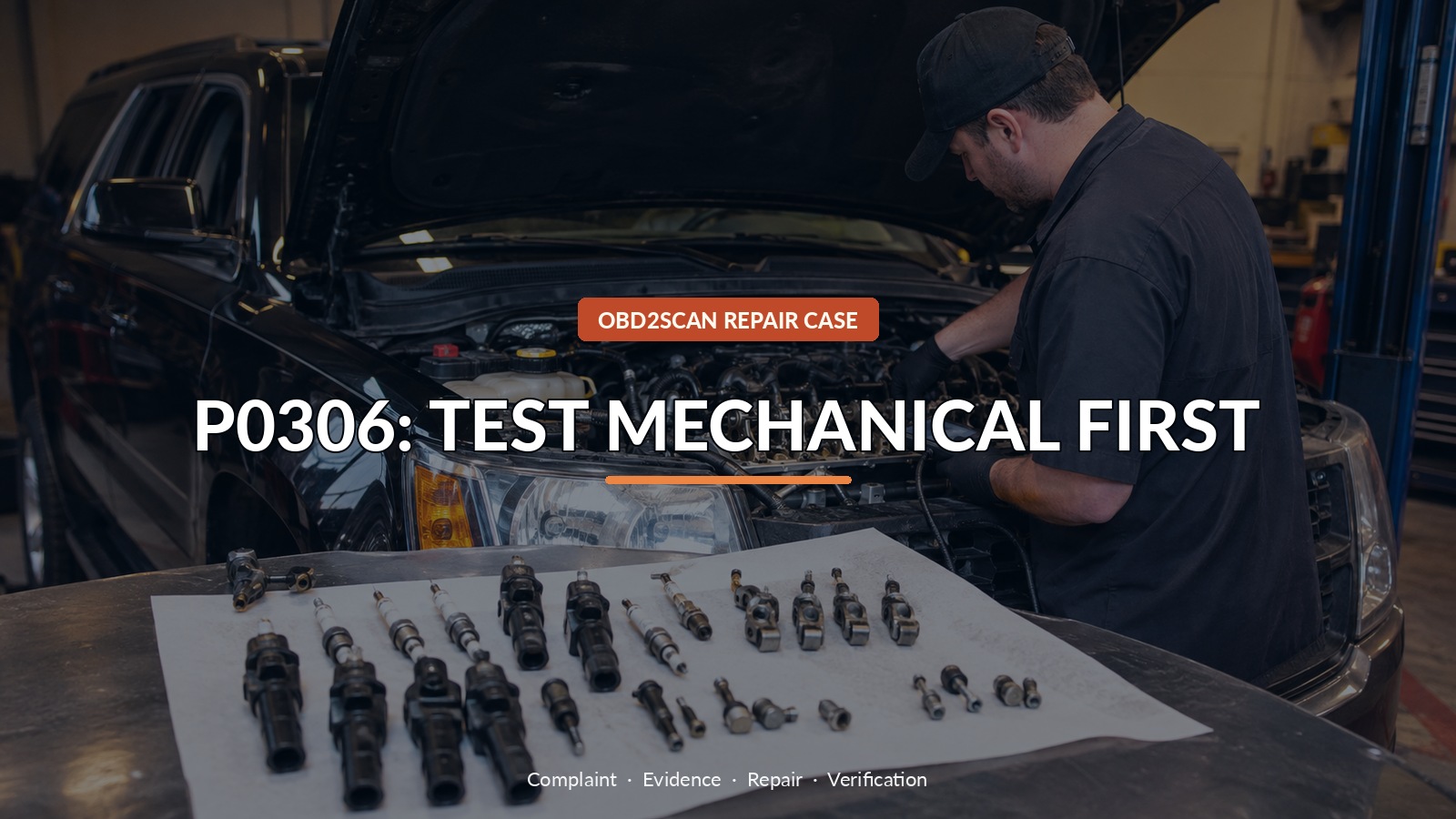
P0306: Test Mechanical First
P0306 named the weak cylinder on this 2009 Suburban, but it did not name a coil. A quick mechanical sequence—relative compression, in-cylinder pressure, and visible rocker movement—showed that cylinder 6’s intake valve was not opening correctly. Teardown confirmed a collapsed intake lifter while the camshaft remained usable.
After the correct access is opened, an articulating camera such as the AUTOOL SVB308 can document reachable rocker, bore, piston-top, or valvetrain evidence. SVB308 can document accessible rocker movement, bore or valvetrain condition after the correct covers or plug are removed; it cannot measure cylinder pressure, see inside a collapsed lifter or decide camshaft condition from a distant image.
This is written like a shop foreman’s decision note: three tests before the valve cover, one confirmed component after it, and objective checks at the end. It does not claim that every 5.3-liter P0306 is a lifter; ignition, fuel, wiring, vacuum, and sealing still have to follow their own evidence.
Quick answer: P0306 named cylinder 6, not a coil. Relative compression, in-cylinder pressure, and rocker travel proved missing intake-valve motion before teardown found a collapsed lifter.
In this guide
- Do not let P0306 order a coil
- Listen to cranking speed before disassembly
- Use relative compression to choose the cylinder
- Read the in-cylinder event, not just peak pressure
- Confirm rocker and valve movement mechanically
- Inspect the lifter and cam separately
- Complete the head and lifter repair
- Verify cranking balance, running pressure and misfire counts
Do not let P0306 order a coil
Save P0306, freeze-frame, fuel trims, and cylinder-specific misfire counts. Inspect the plug and coil connection, but do not order a coil from the code. A fast coil or injector balance check may be appropriate, especially if the misfire moves with a swapped component under controlled conditions. Listen for valvetrain noise and note whether the miss is dead at idle, changes with rpm, or appeared suddenly. Stop extended running when the MIL flashes or raw fuel threatens the catalyst; use short controlled tests instead.
Listen to cranking speed before disassembly
Disable fuel and ignition according to the service procedure, then listen during cranking. A cylinder with low compression changes starter speed each time it passes through compression. Relative compression measures those speed or current variations across all cylinders at once. Use a healthy battery and consistent throttle position. The test does not distinguish a valve from a ring, but it rapidly shows whether the P0306 branch is mechanical enough to justify pressure testing before more spark and fuel parts.
Use relative compression to choose the cylinder
Match the low relative-compression event to cylinder 6 using a reliable synchronization signal. Confirm it repeats. A single noisy clamp trace or weak battery can distort the pattern. If all cylinders are even, return to ignition, fuel, mixture, and control branches. If number 6 is consistently low, use a compression gauge, running compression, leak-down, or in-cylinder pressure as appropriate. The goal is not simply a peak number; it is to understand when the cylinder fills, seals, compresses, and exhausts.
Read the in-cylinder event, not just peak pressure
An in-cylinder waveform can reveal a missing intake event through the vacuum and pressure pattern. Compare valve opening landmarks and peak pressure with a known-good cylinder. In the documented case, number 6 behaved as though the intake valve barely opened. That explains a dead miss even when spark and fuel reach the cylinder: there is not enough fresh charge to burn. Incorrect cam timing could affect several cylinders, while one missing rocker event concentrates attention on that lobe, lifter, pushrod, rocker, valve, or local oil path.
| Quick test | Question answered |
|---|---|
| Coil/injector contribution | Does the fault follow an ignition or fuel component? |
| Relative compression | Is cylinder 6 mechanically different during cranking? |
| In-cylinder pressure | Which part of the breathing/compression cycle is abnormal? |
| Rocker travel | Does the pressure clue correspond to missing valve motion? |
Confirm rocker and valve movement mechanically
Remove the valve cover and compare rocker travel while cranking through an approved remote method. Keep hands, tools, clothing, and the camera clear of moving parts. Check rocker, pushrod, spring, and valve stem condition. Manually verify valve movement only through a controlled method that avoids piston contact. The cylinder 6 intake rocker in this case did not travel like its neighbors, confirming that the pressure evidence represented real valve-motion loss rather than a sensor or interpretation error.
Inspect the lifter and cam separately
Inspect the lifter, its bore, pushrod, rocker, cam lobe, and oiling evidence separately. A collapsed lifter can look ordinary until loaded or disassembled, while a damaged cam changes the repair scope. Here, the intake lifter was the confirmed failure and the camshaft remained acceptable. The repair included all lifters and cylinder-head machine work based on the engine’s condition. Another engine may need a cam or a narrower repair; measure rather than copying the parts list from this case.
Complete the head and lifter repair
Clean all oil and debris paths addressed by the procedure, verify pushrod straightness, install parts with the correct orientation and preload, and follow torque and gasket requirements. Before firing, rotate the engine and observe full, even valve movement. Prime lubrication where specified. A borescope can document accessible surfaces, but it should not be used to declare a cam lobe sound when contact geometry cannot be measured. Correct any injector or plug contamination caused by the prolonged misfire before the final run.
Verify cranking balance, running pressure and misfire counts
Repeat relative compression before starting: the cranking pattern should now be even. Then run the engine while monitoring number 6 misfire counts, fuel trims, noise, and oil pressure. The documented cylinder produced about 173 psia in the final pressure check and no running misfire. Complete a loaded road test, rescan, and inspect for leaks after cool-down. Do not close from an empty code list alone; the same mechanical measurements that justified teardown should demonstrate restored cylinder filling.
The cleanest part of this repair was not the teardown; it was the decision to go mechanical before buying another ignition component. P0306 chose the cylinder, relative compression chose the branch, in-cylinder pressure chose the valve event, and rocker movement justified opening the lifter path. That sequence gives an owner a reasoned repair and gives the shop the same measurements to use when proving the engine is whole again.








Comments 0
Questions, fixes, and real-world diagnostic notes from readers.
Be the first to share a diagnostic result or ask a follow-up question.