
2016 Silverado Chugs After Key-Off: Fuel in the Oil Changed the Investigation

Quick answer: Brief rough run-on is different from an engine whose ignition remains powered. Rich-running evidence and possible fuel dilution need a fuel-and-oil investigation, not another guess at the ignition switch.
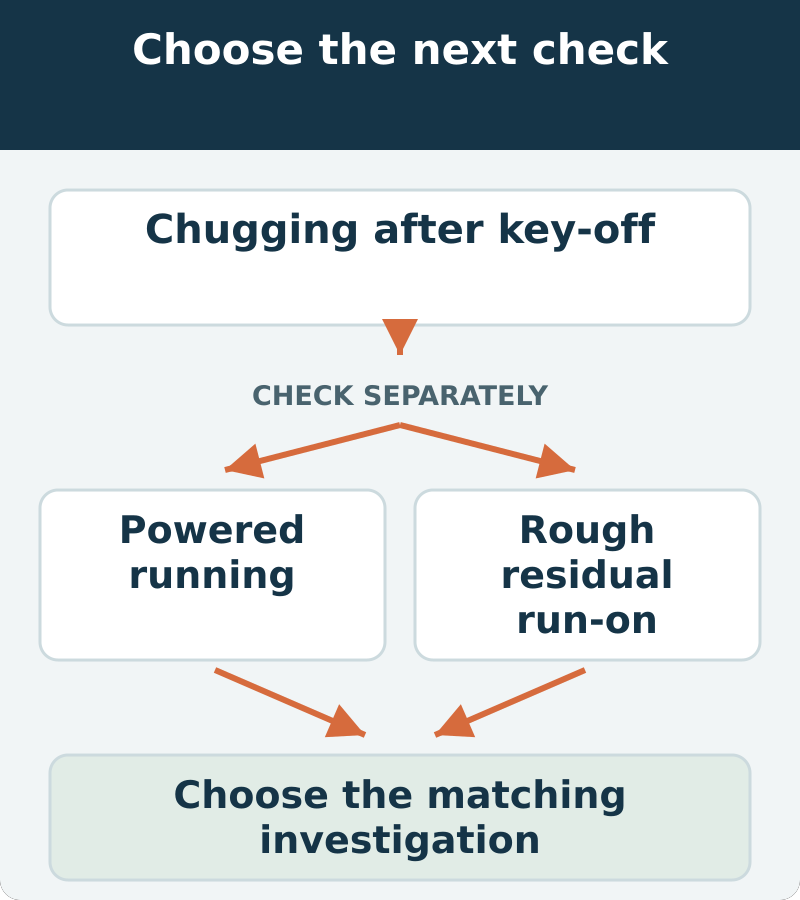
“It keeps running after I switch it off” can describe two quite different events. One engine continues operating normally because it has not shut down as commanded; another briefly chugs and stops. Tell the workshop which one you saw. That small wording difference can change the investigation before anyone orders an ignition-related part.

In this guide
Describe whether it chugs or keeps running normally
Use the sound and sequence you actually noticed. Did the engine continue at a steady idle? Did it stumble for a moment? Were the instruments still powered? Did the event follow a warm journey or occur from the first start? A concise description is more useful than choosing a technical label from a search result.
Do not restart the truck repeatedly to make a recording. If fuel-contaminated oil, abnormal odor or rough running is suspected, obtain advice about stopping operation and recovery. The task is to preserve the existing complaint, not create an owner-run experiment around a potentially unsafe fuel condition.
What negative fuel trim means
Fuel trim is the controller’s mixture correction, not a direct reading of how much fuel is in the oil. A negative correction means the control system is reducing commanded fuel relative to its underlying calculation in that operating context. The cause still needs to be established.
Ask whether the observation affected one bank or both, and under which conditions it was recorded. A number copied without its context is not an estimate for a high-pressure pump. The useful question is what additional evidence connected the rich-running behavior to a particular route. A clear diagnostic explanation should make that connection without treating one scan value as a verdict.
How the crankcase can affect mixture
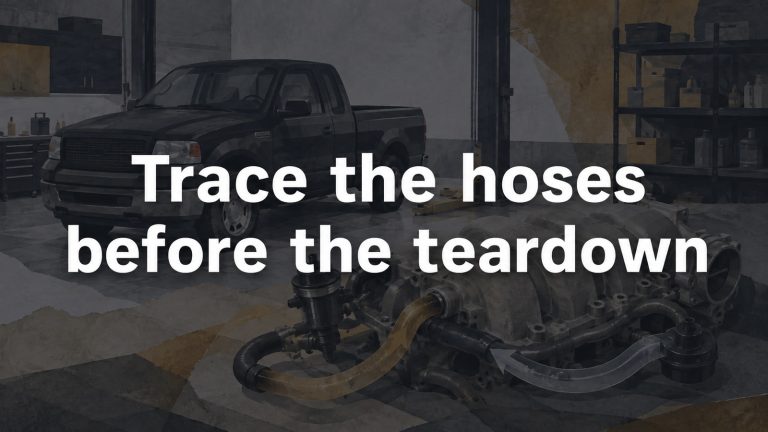
The crankcase and intake are not completely isolated from one another; the ventilation system gives crankcase vapors a route into the engine’s air path. That relationship can matter when a fuel-entry problem is being investigated. It does not mean that every unusual smell or mixture correction originates there.
Leave controlled ventilation-system tests to a qualified repairer following the appropriate procedure. Do not plug a PCV passage, open a fuel connection or lean over an open filler to diagnose the truck by smell. The diagram explains a possible relationship between systems. It is not an instruction to alter ventilation or a picture of measured contamination.
In the published ALLDATA case, the Silverado sometimes chugged after shutdown and had strongly negative fuel trims on both banks. Crankcase fuel-vapor evidence and a controlled PCV assessment redirected diagnosis to the high-pressure pump. Pump replacement, oil/filter renewal and adaptation reset restored running and shutdown. The report provides no laboratory oil analysis.
A fuel-entry repair has an oil consequence
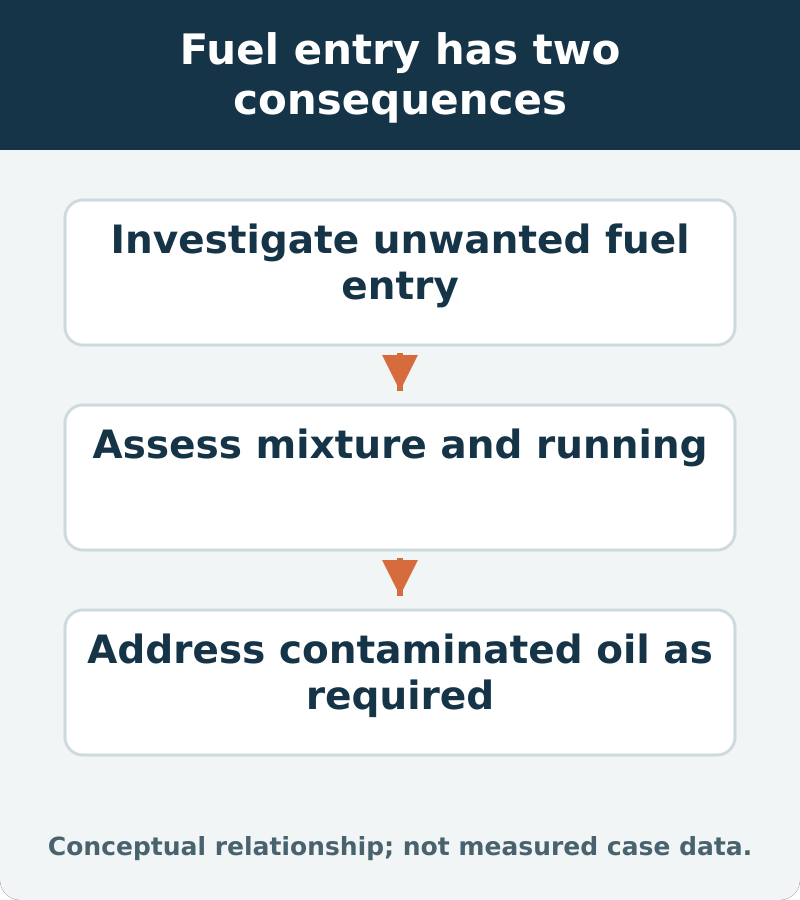
Once unwanted fuel entry into the oil is confirmed and corrected, the condition of the lubricant needs its own service decision. Stopping the entry route and addressing the affected oil are two different work items. Ask how both are covered in the repair plan.
Do not assume an oil change alone removes the source of contamination, or that a new pump automatically restores oil already affected. The exact service requirements belong to the engine and the confirmed condition. Avoid choosing an additive or a flush on the strength of this case. The aim is to restore the specified system, not introduce another variable into it.
What evidence should support the pump decision
A pump estimate should name the evidence that supports the pump decision and distinguish it from other fuel or control concerns. Recent replacement of another pump can be useful history without proving that the earlier work caused the new complaint.
For an owner, three details are especially helpful: what route of unwanted fuel entry was established, what relevant checks excluded alternatives and what service accompanies the replacement. High-pressure fuel work is not a suitable trial-and-error exercise. A second opinion is most useful when it receives those findings, rather than only the statement that the engine runs on after the key is turned off.
Check normal shutdown and the oil follow-up
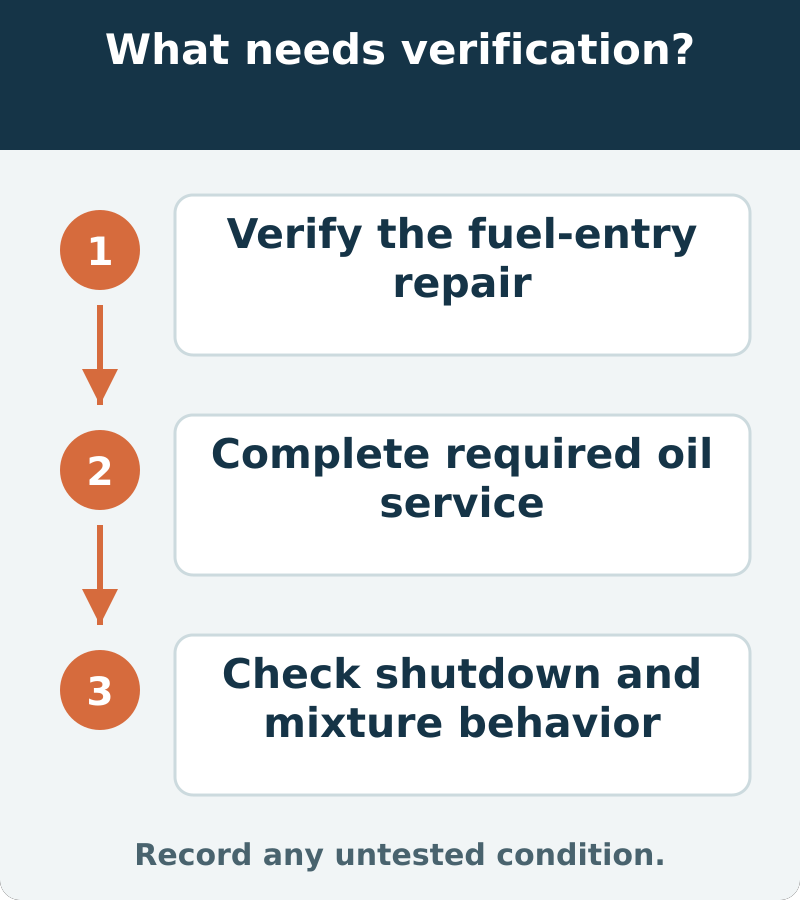
A normal shutdown is an important result, but collection should also include the workshop’s assessment of running behavior and the required oil-related follow-up. Ask what to do if the original symptom or a concern about contamination returns.
Keep the fuel-system and oil-service records together. If a later technician sees a mixture complaint, that combined history explains why lubricant work accompanied a fuel repair. The decision lesson is to describe the event accurately and follow the evidence across connected systems. “Run-on” is a starting description, not a universal diagnosis of an ignition switch, a pump or the control module.









Comments 0
Questions, fixes, and real-world diagnostic notes from readers.
Be the first to share a diagnostic result or ask a follow-up question.