
2010 Toyota Tundra Will Not Shift Into Overdrive: P032D Pointed Back to the Engine

Quick answer: An engine-control fault can restrict transmission operation. This Tundra had rodent-damaged knock-sensor wiring; a transmission complaint did not justify transmission replacement.
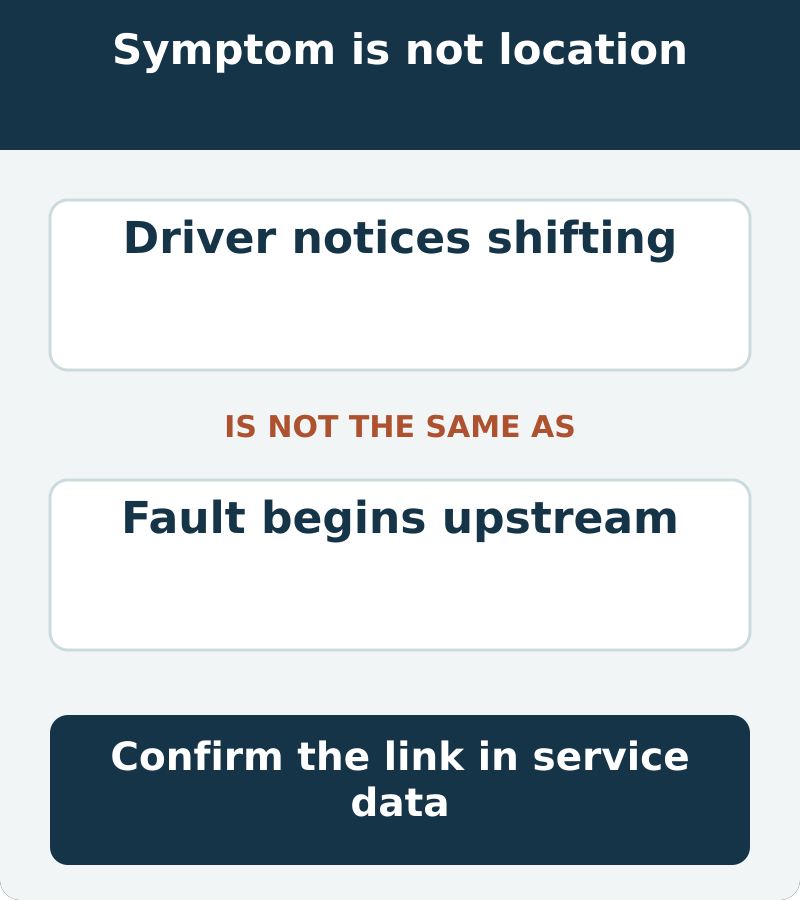
A transmission complaint does not always begin inside the transmission. Before authorizing internal work, ask whether another control-system fault is restricting the behavior you expect. The driver’s symptom and the system that first needs repair can be different.
If the evidence leads to a hard-to-see harness area, an articulating inspection camera such as the AUTOOL SVB308 can help record accessible damage with the engine disabled and cool. A photograph cannot establish electrical continuity or identify a sensor’s operating condition; it is one part of the inspection.
This discussion concerns a reported 2010 Tundra 2WD with the 5.7L 3UR-FE. Do not assume every Tundra code inhibits overdrive, and do not keep driving a truck that has unsafe power loss, abnormal mechanical behavior or worsening warnings simply to check whether it shifts.
In this guide
- Does no overdrive automatically mean a transmission failure?
- Read the engine and traction codes together
- Follow the condition that limited shifting
- Inspect the harness where the evidence leads
- Do not replace a sensor because its name is in the code
- Repair the damage and the opportunity for more damage
- Confirm the gear change, not only an empty code list
Does no overdrive automatically mean a transmission failure?
No. Establish exactly what the vehicle does before giving the complaint a component name. Does it fail to select a gear, slip after selection, or operate in a restricted mode? Those descriptions lead to different tests.
An owner’s useful record includes the operating condition, warning lamps and recent work. Avoid guessing a gear solely from engine sound or comparing road speed with an unrelated truck. The technician can use the appropriate data and service information to define the missing function more precisely.
Read the engine and traction codes together
In ALLDATA’s Tundra case, fourth gear remained available but overdrive did not. P032D and C1201 accompanied engine and traction warnings. Investigation found rodent-damaged knock-sensor wiring. Repairing that wiring was followed by a successful, code-free test drive.
The case supports an engine-side investigation for that combination and configuration. It does not make either code a universal explanation for every shifting complaint.
Follow the condition that limited shifting
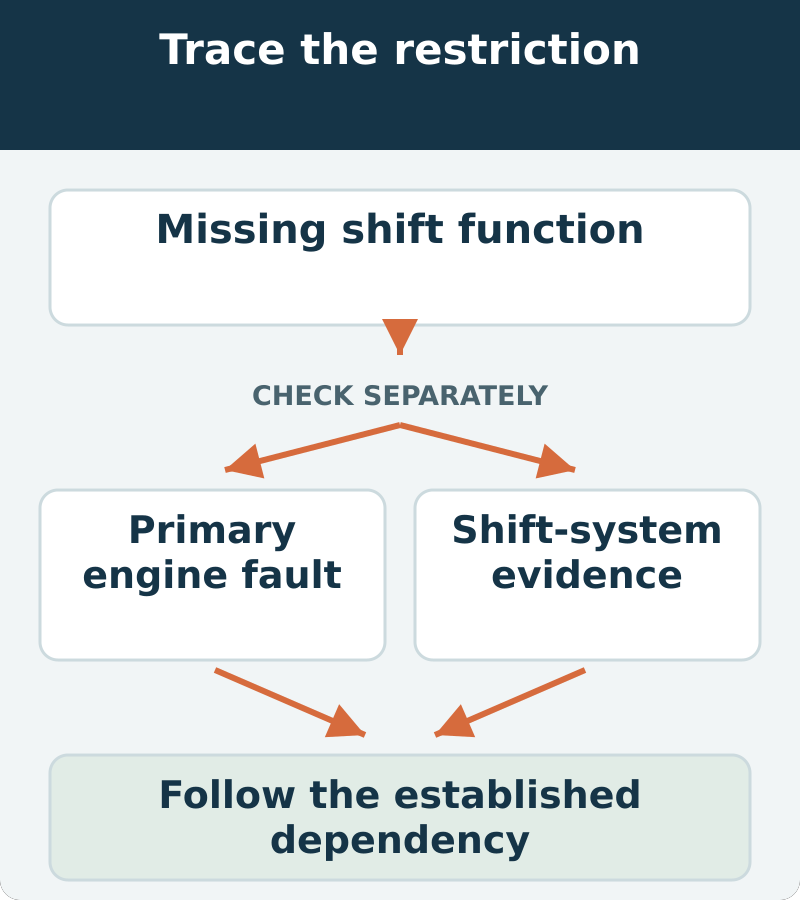
Ask the shop to explain the dependency in the applicable Toyota information: which fault is primary, what restriction it can cause and what evidence shows the restriction is relevant to your symptom. Multiple warnings are not automatically multiple failed assemblies.
This is also why scanning only one system can leave a repair discussion incomplete. Where the vehicle and equipment permit it, the technician should review related control-system information rather than interpreting a transmission complaint in isolation. A communication or control dependency needs to be established, not assumed from the number of dashboard lights.
Inspect the harness where the evidence leads
The correct diagram and access procedure should determine where to inspect. A short case report may omit the details needed to reach a connector safely, and descriptions from another engine are not a substitute.
Keep the engine disabled and cool for close visual work. Do not reach near moving accessories or hot surfaces, and do not dismantle major engine components based on a vague location from an online anecdote. If visibility is limited, a suitable camera can help document an accessible area without pretending to see through parts that still block the view.
Do not replace a sensor because its name is in the code
A circuit-related diagnostic path can involve wiring, terminals, electrical support or the component itself. The prescribed checks distinguish those possibilities. Visible damage is important, but the technician still needs to establish the affected path and verify the repair electrically.
Ask whether the estimate concerns a damaged conductor, connector, sensor or larger harness assembly, and why that scope is appropriate. A clear answer links the proposed part or repair to a failed requirement. It does not rely on the fact that the sensor’s name appears in the scan tool’s description.
Repair the damage and the opportunity for more damage
The harness repair should use the appropriate materials, routing and protection. If animal activity is found, have the accessible surrounding area checked for additional damage. Do not assume a second wire is intact merely because the first visible defect explains a code.
Discuss reasonable prevention and inspection steps with the shop based on what is actually present. This case does not establish a guaranteed repellent or permanent protection method. Keep photographs and the location description with the repair record so a later inspection can compare the same area.
Confirm the gear change, not only an empty code list
The original complaint was an operating limitation. Verification should therefore include the relevant operating behavior under a safe, appropriate test—not just a scan immediately after codes were erased.
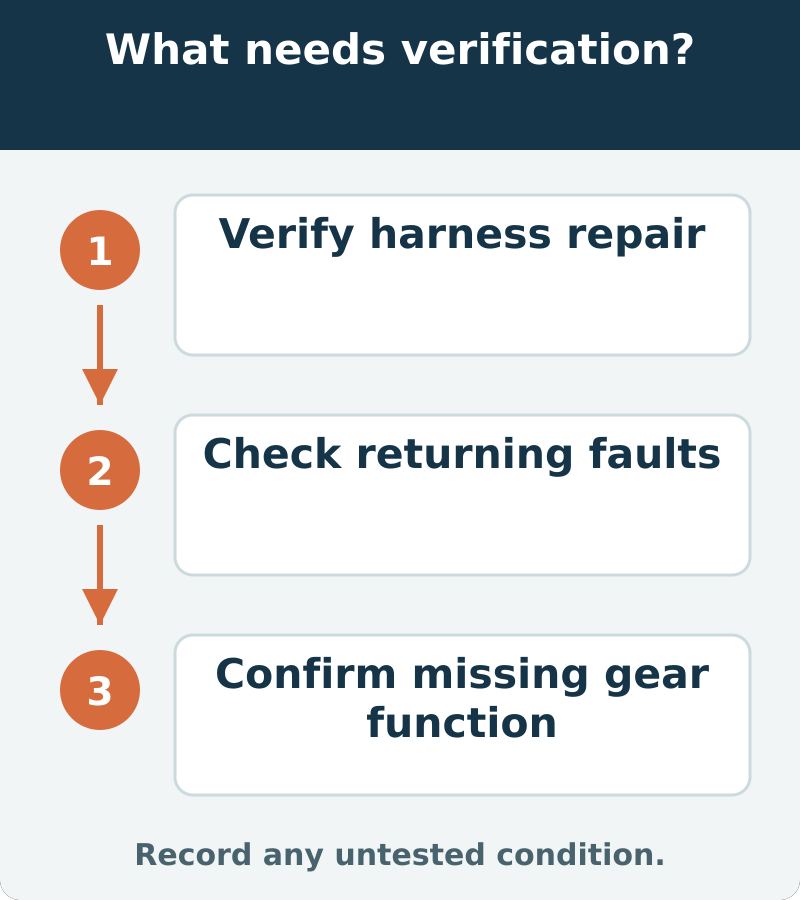
If the engine-side checks pass but the shift complaint remains, that is new evidence requiring continued diagnosis. It is not a reason to insist that this published case must fit. A good case study helps choose the next branch; it does not remove the need to test your truck.


Comments 0
Questions, fixes, and real-world diagnostic notes from readers.
Be the first to share a diagnostic result or ask a follow-up question.