
2008 F-150 Screeches After Engine Replacement: Check Hose Routing Before Removing the Transmission

Quick answer: A noise heard near the bellhousing does not prove the transmission is its cause. After an engine installation, matching hose fittings can conceal incorrect PCV and purge routing.
A routing review can precede a major teardown. An articulating camera such as the AUTOOL SVB308 may help document a safely accessible hidden connection on a cool, disabled engine. It does not identify hose function or measure vacuum; the correct routing information remains essential.
In this guide
A location is a clue, not a teardown instruction
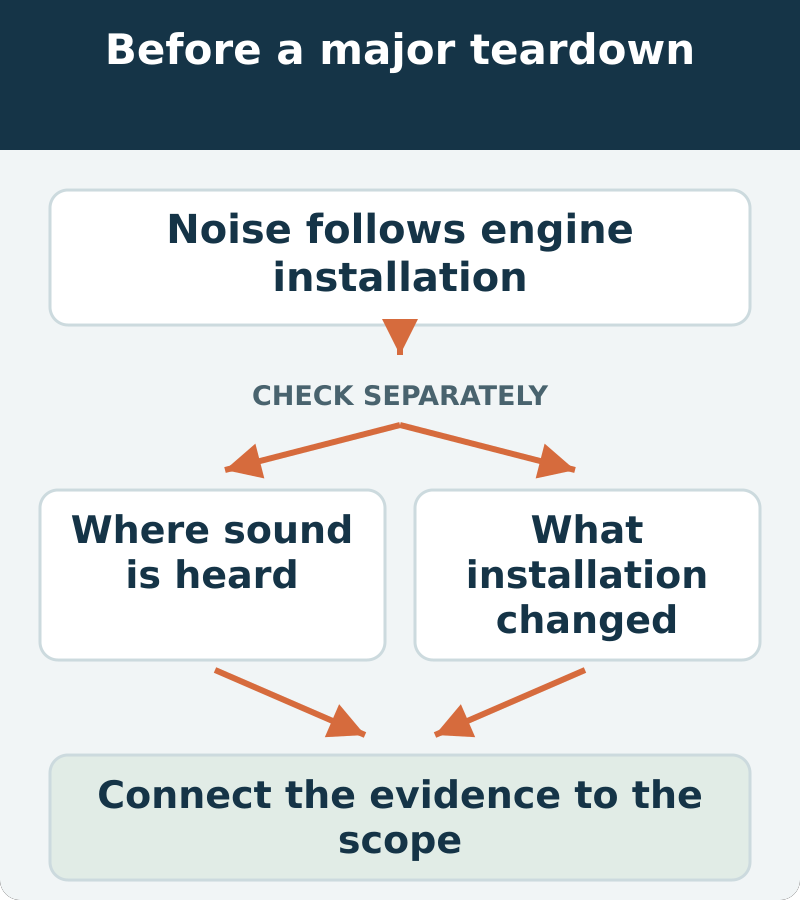
A sound heard near the engine-to-transmission joint is a useful location clue. It does not, by itself, establish that a component inside the transmission has failed. The investigation also needs to consider the conditions that can create or transmit the sound.
If the noise is severe or unexplained, stop unnecessary operation and arrange assessment. Do not crawl under a running pickup to pinpoint it. Tell the shop whether the sound began only after the engine work and whether it appears during idle, shutdown or another ordinary event you already observed.
Before authorizing a major removal, ask what evidence supports that scope and whether the installation items relevant to the noise have been reviewed.
What changed when the engine was installed?
An engine installation disturbs connections as well as the main assembly. That makes a review of the work history useful even when the replacement engine runs. The relevant question is what changed before the noise appeared, not whether a new engine must be inherently defective.
Ask the workshop to check the completed installation against the appropriate information for the fitted engine and vehicle. The review should identify actual discrepancies rather than become a general request to tighten everything. A hose connected firmly to the wrong fitting can remain wrong despite looking secure.
Keep the earlier invoice and any installation notes available. They help distinguish a newly introduced condition from a noise that existed before the engine was replaced.
In the ALLDATA published case, the F-150 developed a recurring screech after a replacement engine was installed. The PCV vacuum and EVAP purge hoses were crossed at similar intake fittings. Restoring their routing stopped the noise. The report attributed the sound to abnormal vacuum acting at the rear seal, without publishing direct seal-pressure measurements.
Matching fittings can hide different jobs
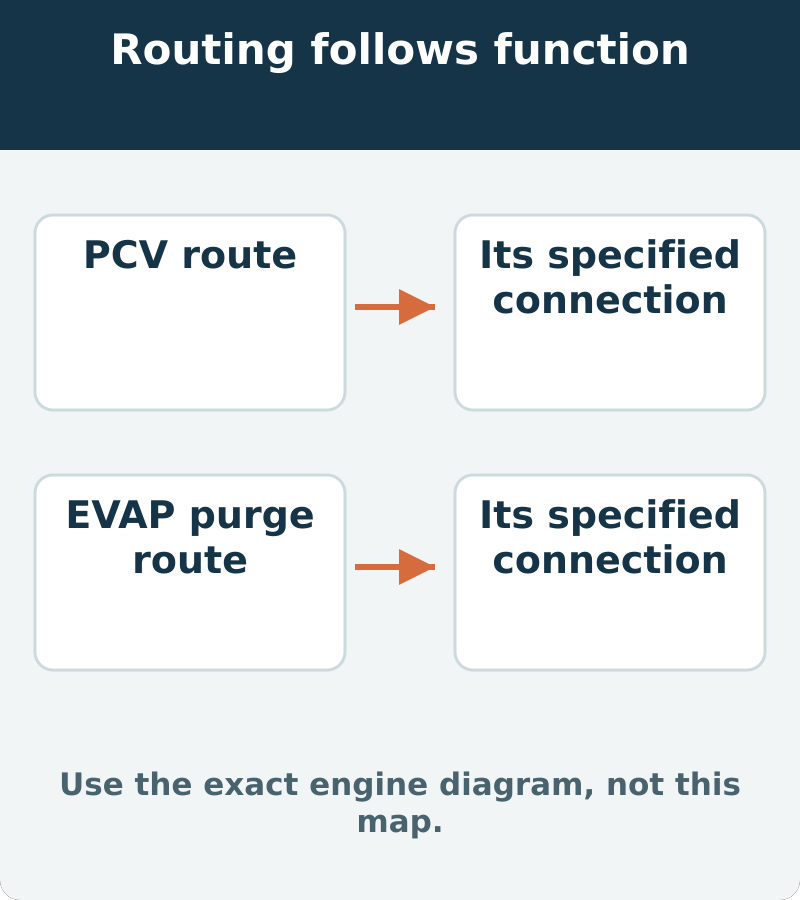
Hoses that carry different vapors or serve different control functions may have fittings that appear interchangeable. Physical compatibility does not establish that two routes are equivalent. The destination and intended function need to match the vehicle’s design.
For the owner, the useful explanation is which route was wrong and what abnormal condition it could create. That is more informative than saying a hose was loose when the finding was actually a connection to the wrong destination.
Do not infer a complete pressure diagnosis from the noise alone. The historical explanation links routing and the reported sound, but does not publish direct seal-pressure measurements. Keep that distinction when discussing possible seal work or further inspection.
Trace the intended routes from the correct diagram
Request a route-by-route comparison with the correct service diagram: identify the hose, identify the intended connection and verify the actual connection. The conceptual map in this article explains why those identities matter; it is not the F-150 installation drawing.
Avoid shortcuts based on hose color, whichever fitting is closest or a photograph of a different intake arrangement. If the engine installation involved transferred components, the workshop should account for the configuration actually fitted.
The inspection needs a cool, disabled engine and safe access. An inspection camera can reveal a connection that is hard to see directly, but the picture still needs interpretation against the correct information. Remove any probe or loose equipment before engine movement or operation.
Do not silence the noise by blocking a hose
Blocking a ventilation or purge-related hose to make a noise stop is not a repair. It changes the system’s operating conditions without establishing that the intended routes and functions have been restored.
The same caution applies to treating one quiet run as proof that every affected component escaped damage. If there is evidence of a remaining leak, continued noise or another abnormal condition, it needs assessment on its own merits. The successful routing correction in the case does not guarantee the condition of every rear seal on another truck.
Ask for the final explanation to separate the confirmed connection error, the rationale for its effects and any additional findings. That keeps a plausible mechanism from expanding into unsupported certainty.
Check shutdown and restart as well as one quiet idle
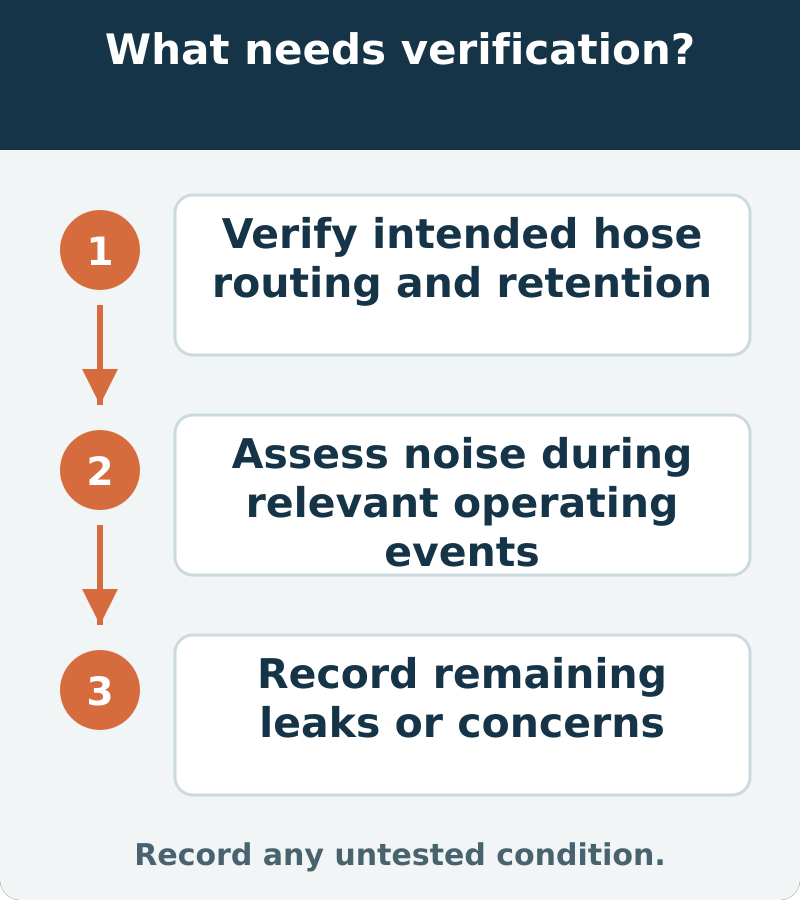
A final check should include the operating events associated with the original complaint, as far as the repairer can assess them safely. If the noise had returned after a stop and restart, one quiet idle is only a partial comparison.
Ask whether the intended routing and retention were verified after correction and whether related leaks or symptoms remained. The record should identify the restored paths and describe the conditions of the assessment, not merely say noise gone.
If the sound persists, keep the investigation open rather than assuming the case’s cure must apply. The transferable lesson is to connect installation history, routing identity and the evidence for a teardown. A sound’s location deserves attention, but the replacement decision needs more than its apparent point of origin.










Comments 0
Questions, fixes, and real-world diagnostic notes from readers.
Be the first to share a diagnostic result or ask a follow-up question.