
2004 Ranger Will Not Select a Gear After Clutch Work: More Bleeding Is Not Always the Answer

Quick answer: Repeated bleeding attempts should trigger a review of the specified method and component orientation. A new master cylinder can still contain trapped air.
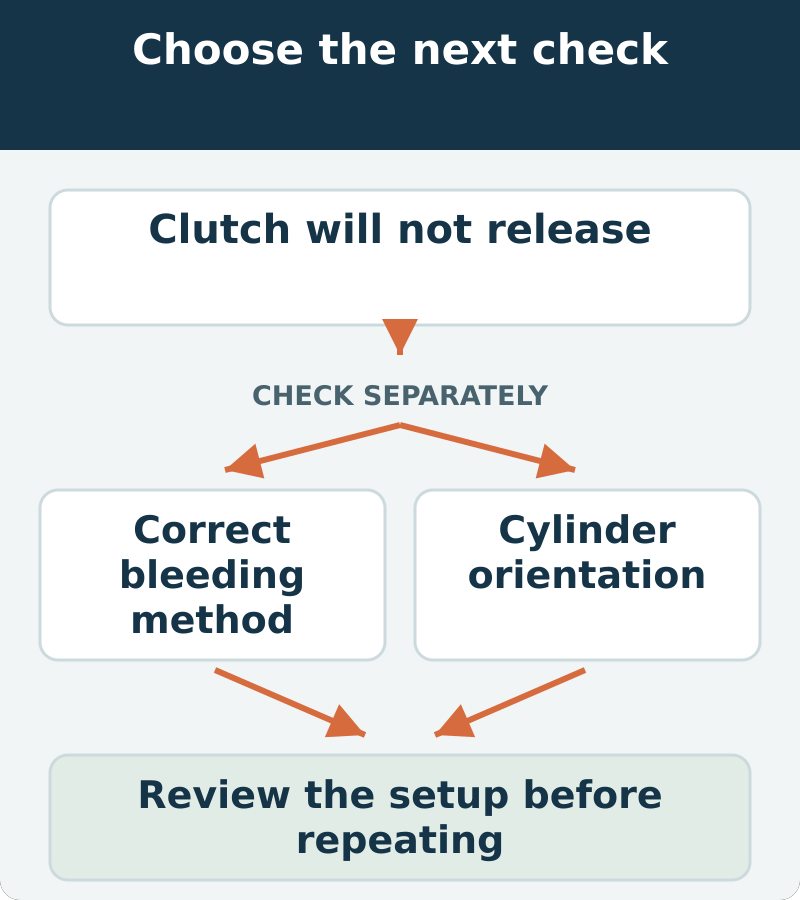
If the truck still refuses a gear after repeated hydraulic bleeding, the next question is not which bleeding device to buy. Ask whether the method suits the installed system and whether air can actually reach the outlet. A new component and several completed attempts can coexist with an unfinished hydraulic job.

In this guide
Stop counting attempts and review the setup
An unsuccessful procedure should produce a new question. Repeating it without changing a relevant condition may simply reproduce the same limitation. Keep a record of what was replaced and which approved procedures were attempted, then review that record against the exact Ranger service information.
The owner does not need to diagnose a trapped pocket from pedal feel. The useful report is whether the clutch releases sufficiently to select a gear and when the problem began. Do not force the lever or start in gear to overcome it. A vehicle that cannot be controlled normally needs a safe recovery and repair plan.
What trapped air changes at the pedal
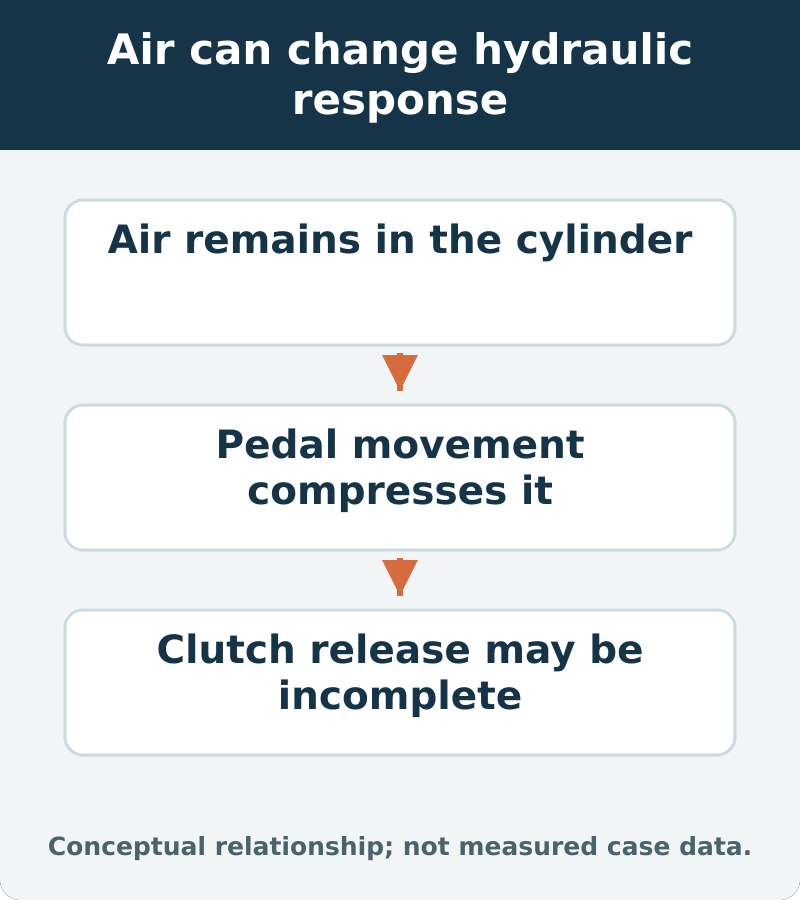
The clutch pedal operates a hydraulic system that must transmit movement to the release mechanism. Air introduces compressibility into a job that depends on controlled fluid displacement. That is why pedal movement alone is not proof of adequate release at the clutch.
This explanation does not identify every soft-pedal or poor-release complaint as trapped air. Leakage, installation and mechanical issues still require assessment. It does explain why replacing a cylinder does not establish that the hydraulic circuit is ready for use. Filling a component and completing the correct bleeding process are related but distinct parts of the repair.
The angle matters to where air collects
Air tends to collect where the arrangement permits a pocket to remain. A method can move fluid without removing every pocket, particularly if component orientation prevents the air from reaching the intended exit. The chamber in the illustration is an abstraction of this idea, not a Ranger master-cylinder section.
Bench bleeding is not a universal instruction to remove and tilt any cylinder. The repairer must follow the correct method for the part and vehicle. This article does not supply fitting positions, fluid specifications or a substitute sequence. The important change in reasoning is from “we bled it again” to “we reviewed where air could remain.”
In the published ALLDATA case, after clutch and master-cylinder replacement, the Ranger would not engage gears despite several bleeding methods. The consultant identified air retention related to the installed master-cylinder angle. Bench bleeding followed by correct reinstallation and final bleeding restored clutch operation. No exact fluid or procedure specification is supplied.
What to ask about the replacement installation
Ask the shop to explain the installation and bleeding requirements in three parts:
| Work item | Useful question |
|---|---|
| Before fitting | Did this component require a preparation step before installation? |
| Installed angle | Does the specified method account for the way the cylinder sits? |
| Final hydraulic service | What procedure and fluid specification govern completion? |
Those questions do not authorize improvised line loosening or a brake-service tool merely because it can move fluid. Equipment compatibility and pressure limits must be established for the clutch system. A list of devices already tried is not the same as a documented correct procedure.
Bleeding and leak inspection are different checks
Removing air and establishing that the circuit is leak-free are different checks. A pedal that improves temporarily may still deserve further inspection; a clean-looking cylinder does not prove every joint is sound. Ask how the workshop assessed the installation rather than judging it only by a brief pedal demonstration.
The same distinction applies to the mechanical clutch work. If hydraulic completion does not restore release, the investigation must remain open. Do not assume that a new clutch makes all mechanical possibilities impossible. The point of reviewing the method is to settle an identifiable requirement, not to protect a favored diagnosis from contradictory evidence.
The useful finish is complete clutch release
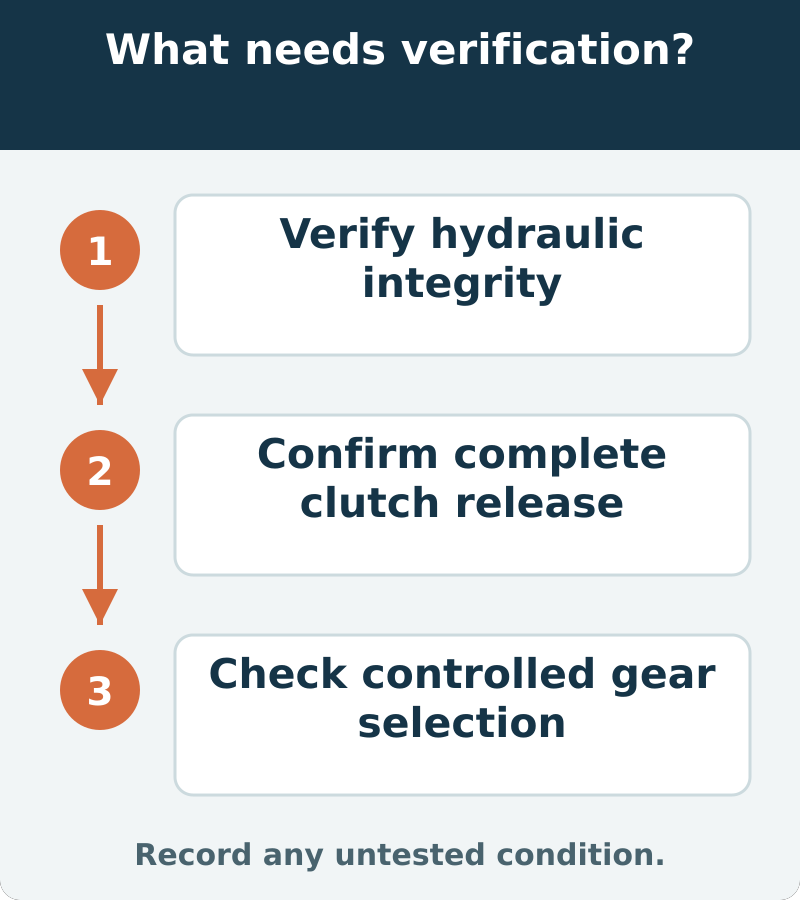
A useful handover confirms complete clutch release, normal selection under the specified checks and no unresolved hydraulic concern. Ask whether the relevant checks were repeated after the final work, and obtain instructions for any returning change in pedal behavior.
Keep the component and procedure details on the invoice. If another repairer becomes involved, knowing exactly what was installed is more helpful than hearing that every bleeding method has been tried. This Ranger’s lesson is about stopping unproductive repetition. When a process fails several times, inspect its assumptions and setup before spending more money on another tool or another part.








Comments 0
Questions, fixes, and real-world diagnostic notes from readers.
Be the first to share a diagnostic result or ask a follow-up question.