
2017 Genesis G80 Will Not Crank in the Cold: Preserve the Temperature Clue

Quick answer: If the starter is silent cold and works warm, a warm-shop pass can miss the fault. Arrange a cold-state diagnosis before replacing another battery.
Do not bypass a starter relay, repeatedly force starting attempts or bench-run an unsecured starter. Hot cables or battery distress require immediate professional assessment.
The electrical baseline includes battery support and voltage loss along the starting path. An AUTOOL DM301 can support voltage measurements; do not route starter current through a handheld meter.

In this guide
Book the car for the condition that fails
Tell the workshop that temperature is part of the complaint before arranging the appointment. If the car is driven in after it finally starts, the opportunity to observe the failure may already be gone. An overnight booking can be more valuable than another immediate warm restart.
Agree on where the car will be kept and who will make the first attempt. Record whether it was outdoors or sheltered, how long it sat and what happened during the failed attempt. The owner does not need to remain outside in uncomfortable conditions to collect evidence. The point is to preserve the vehicle’s relevant state safely.
No crank is different from cranking without a start
“Would not start” covers two substantially different events. In a no-crank event, the starter does not turn the engine as expected. In a crank/no-start event, the engine turns but does not begin running. That distinction determines which requirements the technician investigates first.
Useful details include silence, a click, repeated clicking, unusually slow rotation or a brief partial turn. Mention what the dashboard did, but do not treat working lamps as proof that the starting circuit had adequate electrical support. Different loads ask different things of the vehicle’s power supply.
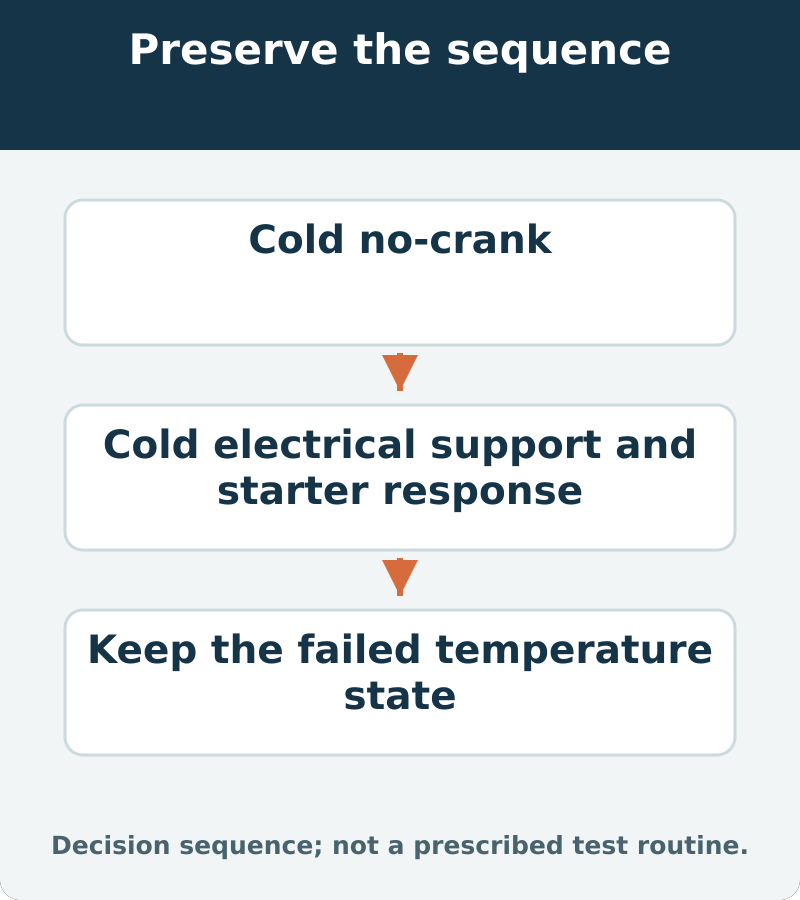
The useful result came before warming up
ALLDATA’s 2017 G80 account describes an outdoor cold no-crank that disappeared in warmer conditions. The new battery passed testing. A removed starter failed a cold bench test, and replacement was reported to solve the complaint. Two body-system codes were also cleared, but the report did not establish that the starter caused both of them.
The lesson is not that every cold starting problem needs a starter. It is that a component test should address the state in which the complaint exists. A warm result may be accurate while answering a narrower question than the owner needs answered.
Separate battery support from starter response
The starting chain includes available battery energy, connections that deliver it, permission to operate and the starter’s ability to turn the engine. A failure anywhere along that chain can end with a similar complaint from the driver’s seat.
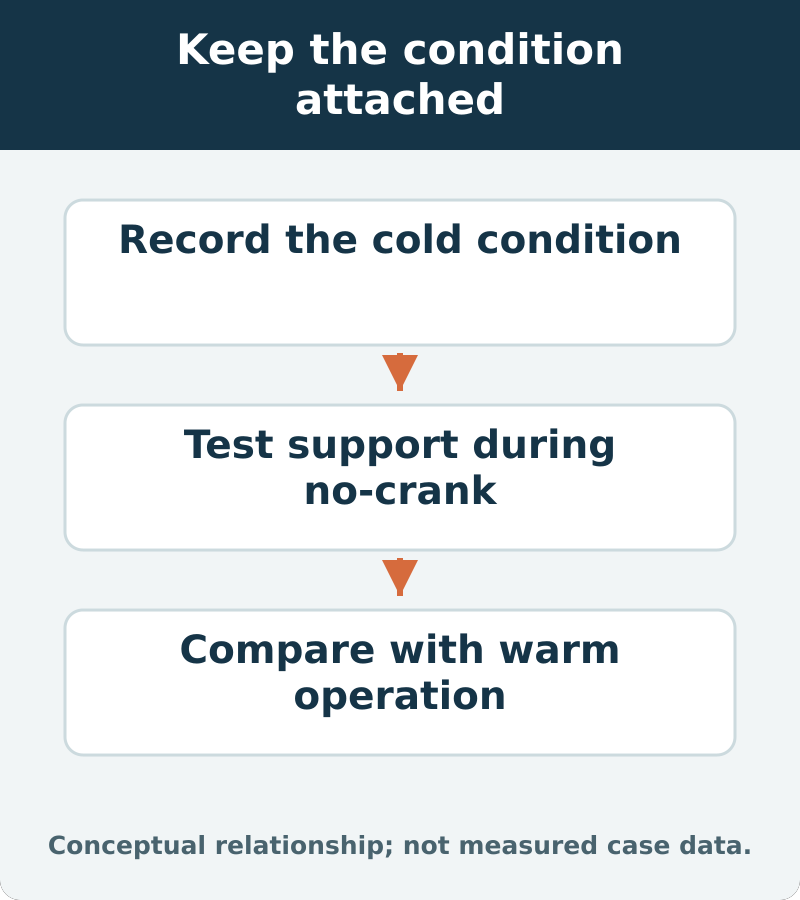
Ask the workshop to distinguish those links in its findings. For example, a satisfactory battery assessment does not automatically clear the cables, and a starter that does not move is not internally condemned until its operating requirements are considered. If a removed-component test is needed, ask whether it reproduced the relevant cold condition and how that result affected the repair decision.
What the unrelated codes still deserve
Stored codes can be helpful without explaining the main complaint. They may identify another problem, reflect an earlier event, or require a separate check. Their presence should be recorded rather than either ignored or automatically converted into a second parts list.
Ask which codes are current, which return under the relevant conditions and whether any affect safety systems. A repair that restores cranking does not by itself establish that every body-system fault has been resolved. Keeping those questions separate prevents a successful starting repair from hiding an unfinished, unrelated concern.
A handover that includes another cold start
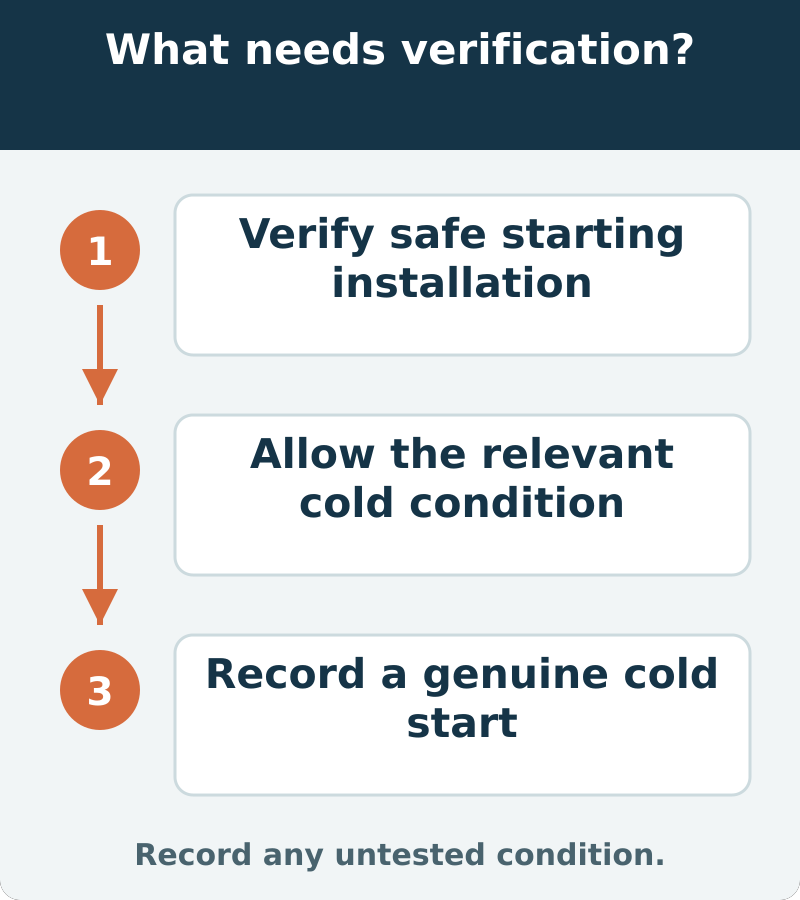
Before collection, agree on a realistic verification opportunity. A workshop cannot promise next week’s weather, but it can state the parked conditions and whether a comparable first start was observed after repair.
If only warm operation has been checked, have that limitation noted and agree what to do if the symptom returns. Keep the initial description and the repair finding together. The next conversation can then begin with a meaningful comparison—same temperature, same sound, same electrical behavior—or with evidence that a different problem has appeared.








Comments 0
Questions, fixes, and real-world diagnostic notes from readers.
Be the first to share a diagnostic result or ask a follow-up question.