
2015 Ford Focus P0137 Returns After a Sensor: Check the Diagram and the Hidden Exhaust Joint

Quick answer: A replaced oxygen sensor does not settle a returning code. Correct circuit identification and exhaust integrity can both matter in the same investigation.
Exhaust components can burn, and an operating engine creates hazardous gases. Do not block the tailpipe, use flammable spray as a diagnostic aid or load an unidentified controller output with a test lamp.
A permitted low-pressure smoke assessment can help locate an exhaust escape. The external-air AUTOOL SDT103 is an option only where its pressure and medium match the specified procedure; hidden areas still require adequate inspection access.

In this guide
A comeback needs an evidence reset
When the same warning returns after a sensor replacement, neither “the new sensor is bad” nor “the first repair was pointless” is a complete diagnosis. Start by separating what changed from what did not. Save the original and current fault information, part identification and any recorded signal observations.
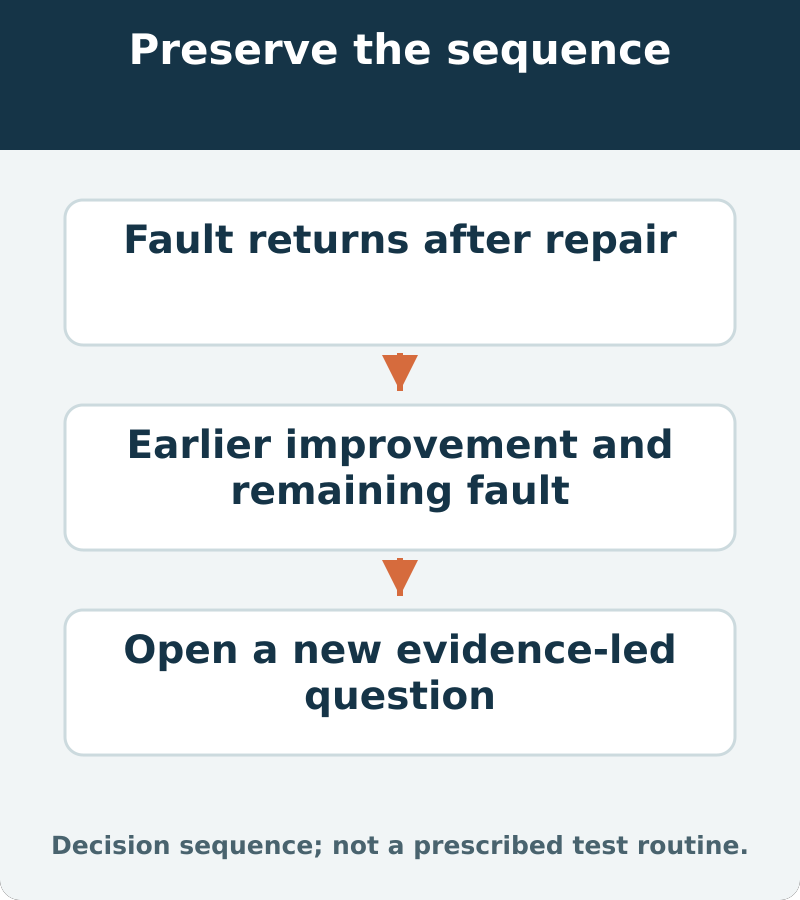
A repeat visit benefits from a specific question: did the earlier intervention correct one function while leaving another problem active? That possibility prevents the discussion from becoming a choice between defending the previous repair and discarding everything learned. The next assessment should retain valid findings while reopening only the conclusions that the returning complaint challenges.
First make sure the diagram matches the car
In Des Davies’ Focus investigation, conflicting wiring information complicated a P0137 comeback on a 2015 1.0L car. Correct identification preceded further rear-sensor work. Heater operation improved, but abnormal behavior remained. A later inspection exposed shielded exhaust leakage, prompting further turbo/manifold/catalyst repair needs; a complete quantified final monitor record was not published.
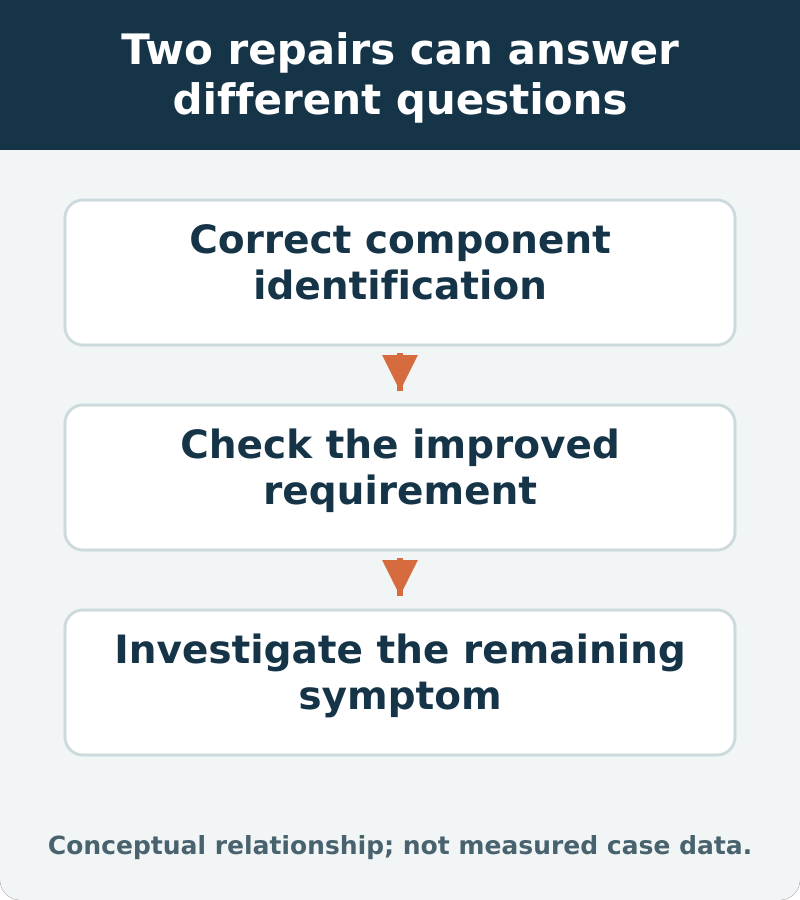
The first important correction was informational. A perfectly careful measurement can be misinterpreted if the technician expects the wrong circuit at that location. Vehicle, engine and component identification should resolve the diagram before tests proceed. Do not compensate for conflicting information by trying several pin assumptions until one produces a plausible-looking number.
A better heater signal can be a partial success
An oxygen sensor’s heating function and the exhaust information it reports are related but different aspects of the assessment. Improvement in one does not automatically establish that the entire measurement system is healthy. The gas reaching the sensor and the remaining circuit conditions still matter.
Ask the workshop to describe the evidence function by function. What did the earlier repair restore? What behavior remains outside the expected pattern for this application? Avoid a universal rule that a rear-sensor trace must always be flat. The relevant operating state and vehicle strategy determine what the technician should expect and which remaining observation needs explanation.
The first leak inspection had an access limit
A leak test can fail to reveal a defect because the tested area, condition or observation access did not cover it. That is different from proving the entire exhaust is sealed. The report should make the test’s coverage visible: which region was assessed and which shielding or access limitations remained.
When a later inspection reaches a previously hidden area, it can add evidence without making the earlier observation dishonest. The useful response is to improve coverage, not simply increase pressure. Access around hot exhaust and turbo components requires the correct safe procedure. An attractive smoke photograph is of little value if the actual suspected region could not be observed.
Authorize the next repair on visible evidence
Further exhaust work can be substantial, so the estimate should connect each proposed operation to the supported finding and the serviceable assembly involved. Request a description or safe inspection record of the localized defect, together with the reason for the replacement scope. Do not approve a large assembly solely because another Focus case ended there.
Also ask whether the proposed work is expected to address the remaining code, a physical leak or both, and how that expectation will be checked. Where the exact outcome is still uncertain, it should be stated before authorization. A credible diagnosis can justify necessary physical repair without promising that every emissions question has already been closed.
Keep the final emissions result separate from the diagnosis
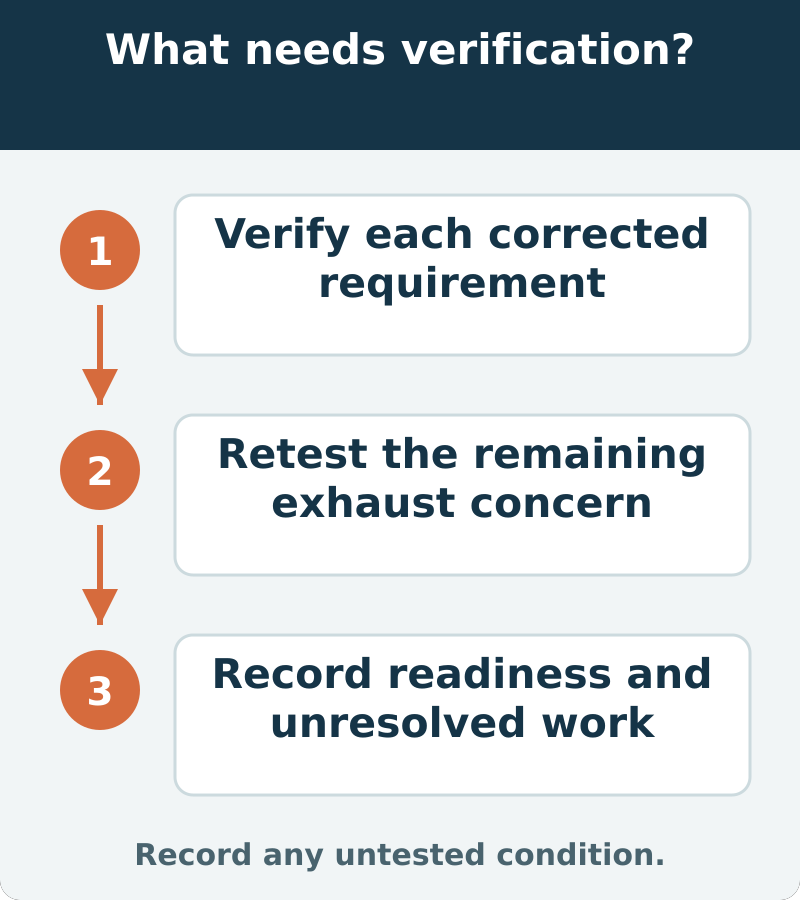
Finding a defect, completing its repair and obtaining a satisfactory emissions-monitor result are separate milestones. The service record should identify which have actually occurred. A clear warning lamp immediately after memory clearing does not establish that the system has reassessed the original fault.
Arrange any remaining evaluation using the applicable procedure rather than a generic road routine. If the warning returns, retain the current data and repair record for reassessment. The useful comeback strategy is to repair the evidence chain as carefully as the hardware: correct identification, adequate test coverage, supported repair scope and a clearly documented final result.









Comments 0
Questions, fixes, and real-world diagnostic notes from readers.
Be the first to share a diagnostic result or ask a follow-up question.