
2011 Kia Sedona Blower Is Dead on Every Speed: Trace the Feed Before Buying Again

Quick answer: When every blower speed is dead, look for a missing shared requirement. Several new downstream parts cannot restore power that never reaches them.
Without dependable windshield clearing, the van may be unsafe to drive in the prevailing conditions. Do not bypass blower protection or apply power to unidentified relay sockets.
Tracing delivery calls for measurements on the correct circuit. A meter such as the AUTOOL DM301 can support appropriate passive voltage checks; measuring a high-current blower circuit requires the proper method, not placing a general meter in its power path.

In this guide
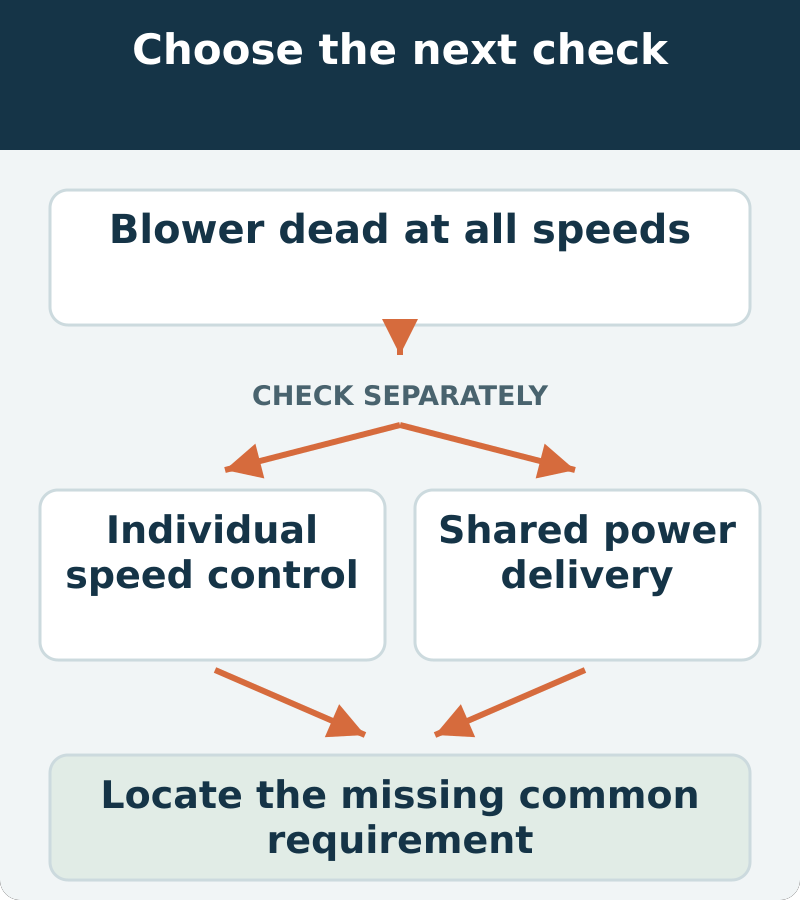
All speeds share some requirements
“No air” can mean several things, so first distinguish a silent blower from airflow that is present but weak or directed elsewhere. The useful pattern in this complaint is that none of the selected speeds produces the expected blower operation. That directs attention toward requirements common to those settings.
It does not prove that the motor is healthy. It means the diagnostic plan should include the shared supply and control relationships, rather than assuming each speed has failed independently. The actual manual-HVAC diagram determines which paths are shared and where a test can most efficiently distinguish a missing feed from a downstream fault.
What the replacement history tells you
ALLDATA’s Sedona report concerns a 2011 3.5L van with manual HVAC. Motor, resistor and control-head substitutions left the blower dead. Testing found that power was not passing through the front blower relay path. Replacing the relay box restored operation. Detailed voltage-drop readings and an internal teardown were not published.
The history is valuable because several changed parts did not change the complaint. Bring their identities and the earlier findings to the appointment. Do not assume the story proves every previous part on your van was unnecessary; incomplete records cannot settle that. What it does justify is asking which shared dependency remains unverified before another downstream purchase.
Follow the actual manual-HVAC diagram
Climate-control variants can change how a blower is supplied and controlled. A diagram for a superficially similar dashboard may therefore lead to the wrong expectation at a relay, resistor or controller. Vehicle and equipment identification belongs at the beginning of the test plan.
Ask the workshop to confirm the relevant HVAC configuration and describe the route it is testing. The explanation need not contain every terminal number. It should show why the chosen point separates the remaining possibilities. A general statement about what “high speed always bypasses” is not a substitute for checking the architecture installed in this particular van.
Test delivery rather than component presence
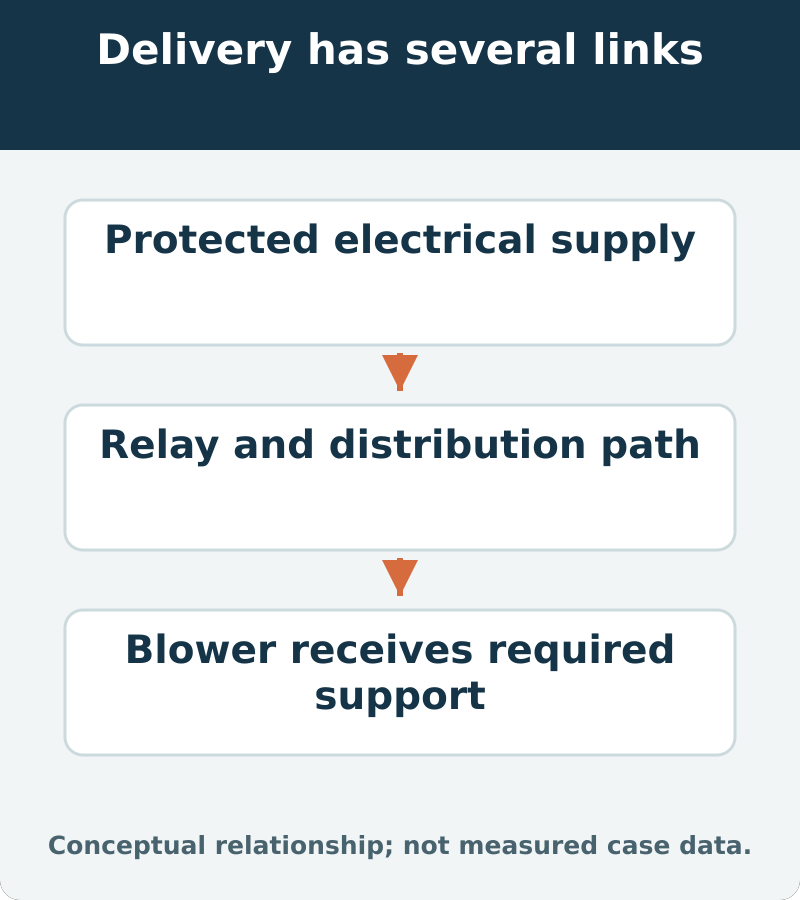
There is an important difference between finding a relay in the box and demonstrating that the required electrical path works. Similarly, an intact fuse does not certify everything beyond it. The useful test evaluates the relevant path in the correct state and, where the procedure requires it, under an appropriate load.
For a customer, a result becomes understandable when the technician identifies what was available before a suspected point and what failed to arrive afterward. That comparison is more informative than a list of components that look normal. It also keeps a high-current circuit assessment away from improvised jumpers that defeat the protection intended to prevent damage.
Why a relay box can be the repair scope
The component named in a diagnosis and the service assembly sold for repair are not always the same size. A fault localized to a path within a box may lead to replacement of a larger assembly, depending on how it is designed and serviced. The estimate should explain that relationship rather than making the larger purchase seem arbitrary.
Ask what finding localized the problem, what service options apply and whether any surrounding damage or cause of recurrence needs attention. A successful box replacement in another case is not sufficient evidence for yours. Nor should an unspecified internal defect be described as a confirmed burned contact or cracked joint when no such inspection was recorded.
Verify airflow and windshield clearing together
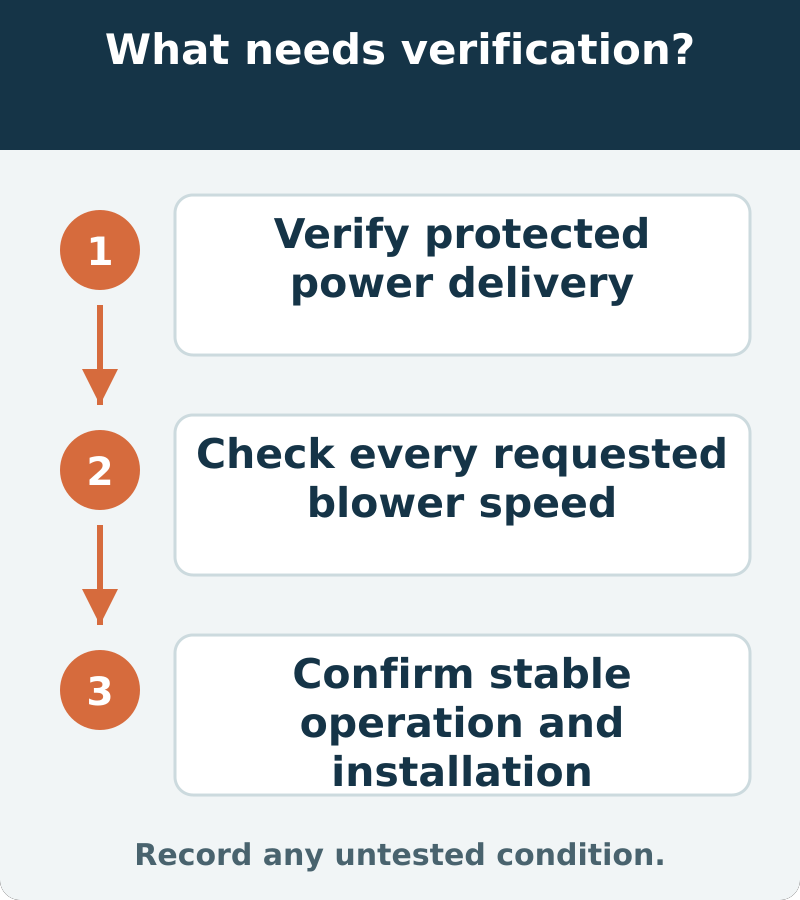
The completed repair should be checked through the applicable fan settings and normal controls. The owner’s practical need also includes getting air where it is needed, particularly for visibility. A motor that now spins is progress, but the handover should address the complete original complaint and the relevant HVAC functions.
If any visibility limitation remains, resolve the safe-use question before driving away. Keep the localized electrical finding and final operating checks with the invoice. The shortest useful lesson from this case is about dependencies: replacing a device cannot restore an upstream requirement that never reaches it, so test the delivery path before repeating the parts order.










Comments 0
Questions, fixes, and real-world diagnostic notes from readers.
Be the first to share a diagnostic result or ask a follow-up question.