
2013 BMW X5 Chassis Knock: Failed Top Mount and Weak Front Dampers

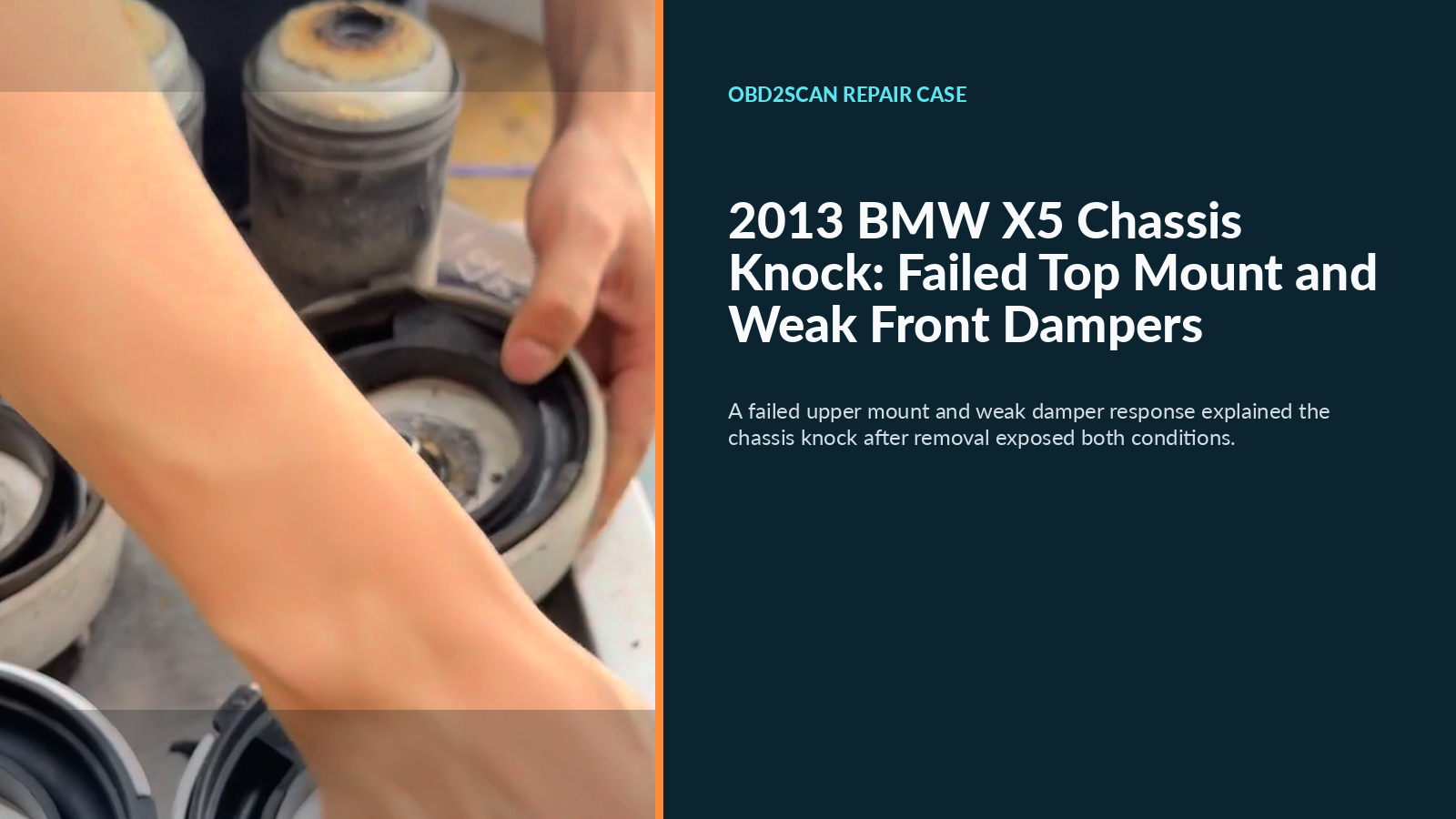
This 2013 BMW X5 arrived with mileage, chassis code, and engine specification not reported. Its owner reported a chassis knock while driving, especially over uneven road surfaces. Inspection confirmed a damaged front shock top mount plus significantly weakened front dampers; the front dampers, damaged top mount, bump stops, and dust boots were replaced, and a post-repair road test found the original knock gone with normal support and rebound restored.
Case at a glance
| Item | This vehicle |
|---|---|
| Vehicle | 2013 BMW X5; engine and chassis code not reported |
| Mileage | not reported |
| Complaint | Impact-type chassis noise while driving, including over uneven roads |
| Confirmed fault | Damaged front damper top mount caused the knock; old front dampers also had significantly degraded damping performance |
| Repair | Replaced the front dampers, damaged top mount, bump stops, and dust boots |
| Restoration | Reassembled and refitted the front damper assemblies, then performed a post-assembly check |
| Verification | Road test: original knock disappeared and support and rebound over undulating surfaces were reported normal |
One noise complaint led to two different decisions
The useful turn in this case was not simply finding a worn suspension assembly. Two findings answered two different questions. The damaged upper mount explained where the impact noise came from. The removed dampers then supplied separate evidence about their ability to control movement, even though their housings did not show an obvious oil leak.
That distinction keeps the parts list honest. The top mount was the confirmed direct source of the knock. Weak damper performance was a second confirmed condition. The bump stops and dust boots were renewed during the same access because they were aged protective components; the available record did not identify either one as the noise’s root cause.
The damaged top mount explained the knock
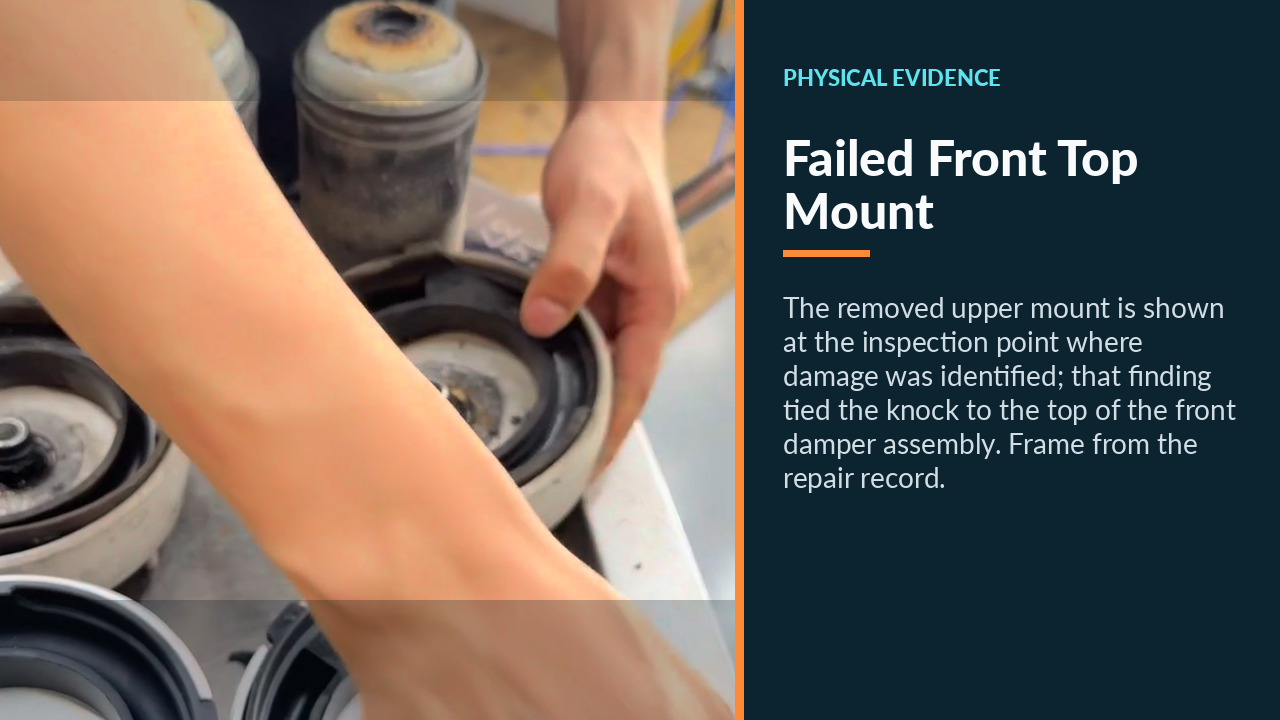
The complaint began with a sound, so the first task was to locate it rather than jump from “chassis noise” to a replacement list. The front damper assemblies were removed for inspection. At the top of an assembly, the upper mount was visibly damaged. Because that mount connects and isolates the upper end of the damper assembly, its damaged condition matched the impact noise heard as the suspension moved over uneven road.
A dry damper body was not a clean bill of health
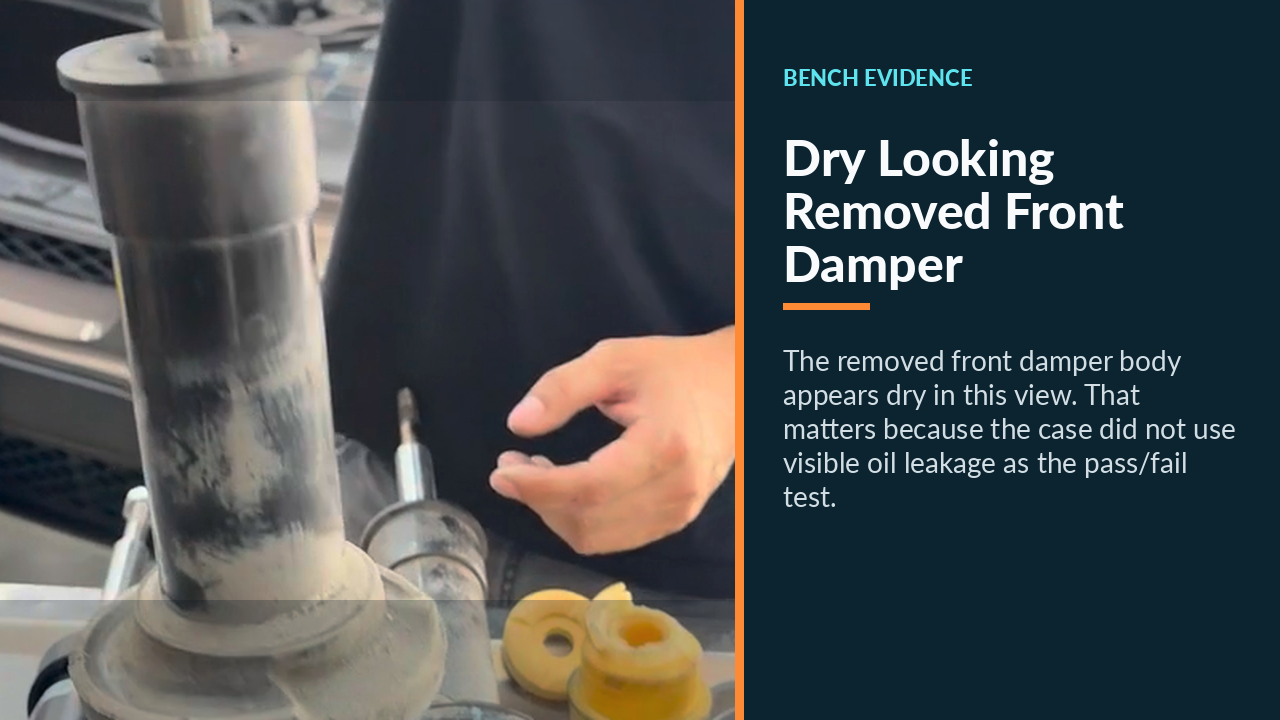
The old front dampers did not show obvious external oil leakage. That observation might tempt an inspection to stop, but a dry housing only answers whether leakage is visible. It says nothing by itself about the resistance being generated inside the unit.
Once removed, the old units showed clearly insufficient resistance when compressed and abnormal rebound behavior. The judgment also used the feel of the units and a left-to-right comparison. The case record makes an important narrow distinction: whether a damper extends by itself can vary with its construction and internal gas pressure, so failure to self-extend was not treated as a standalone verdict. The combined behavior, not one visual sign or one motion, confirmed that damping performance had significantly faded.
The repair kept failed and protective parts separate
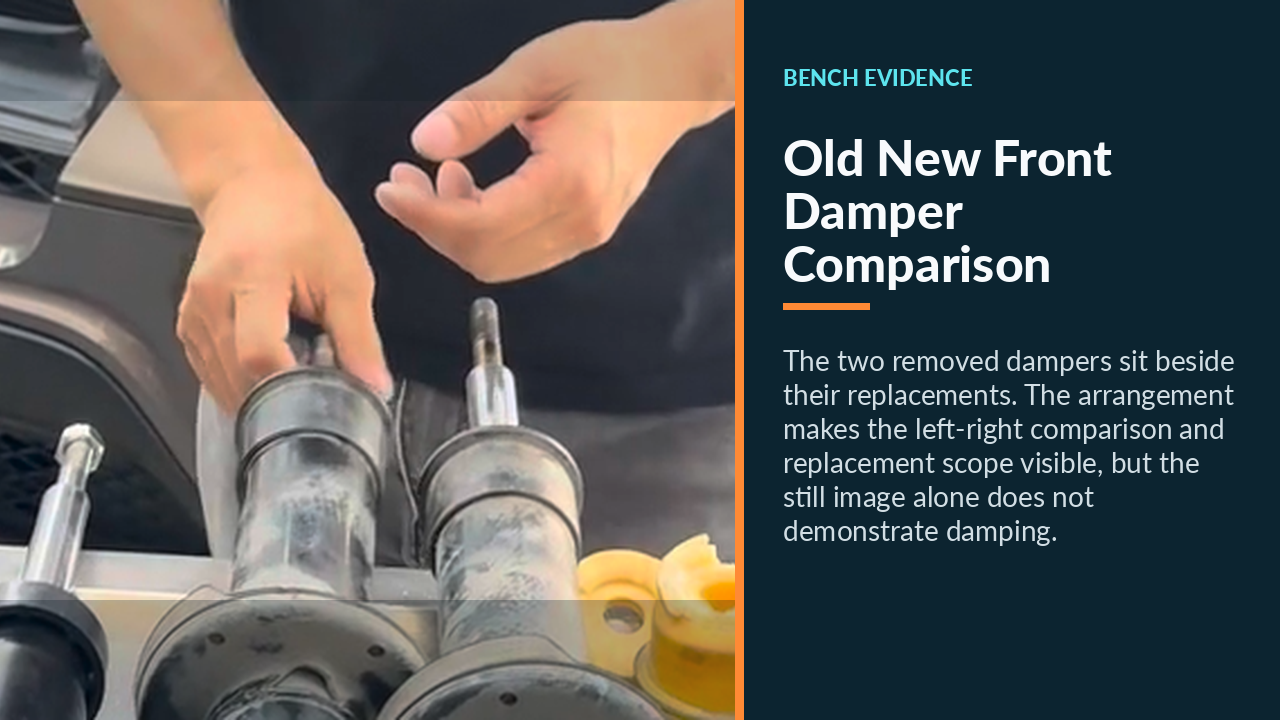
The reported repair replaced the front dampers and the damaged upper mount. The bump stops and dust boots were renewed during the same assembly work. Those latter parts protect the assembly during deep compression and reduce dirt exposure around the rod and seal area, but replacing them at the same time does not turn them into confirmed causes of the original knock.
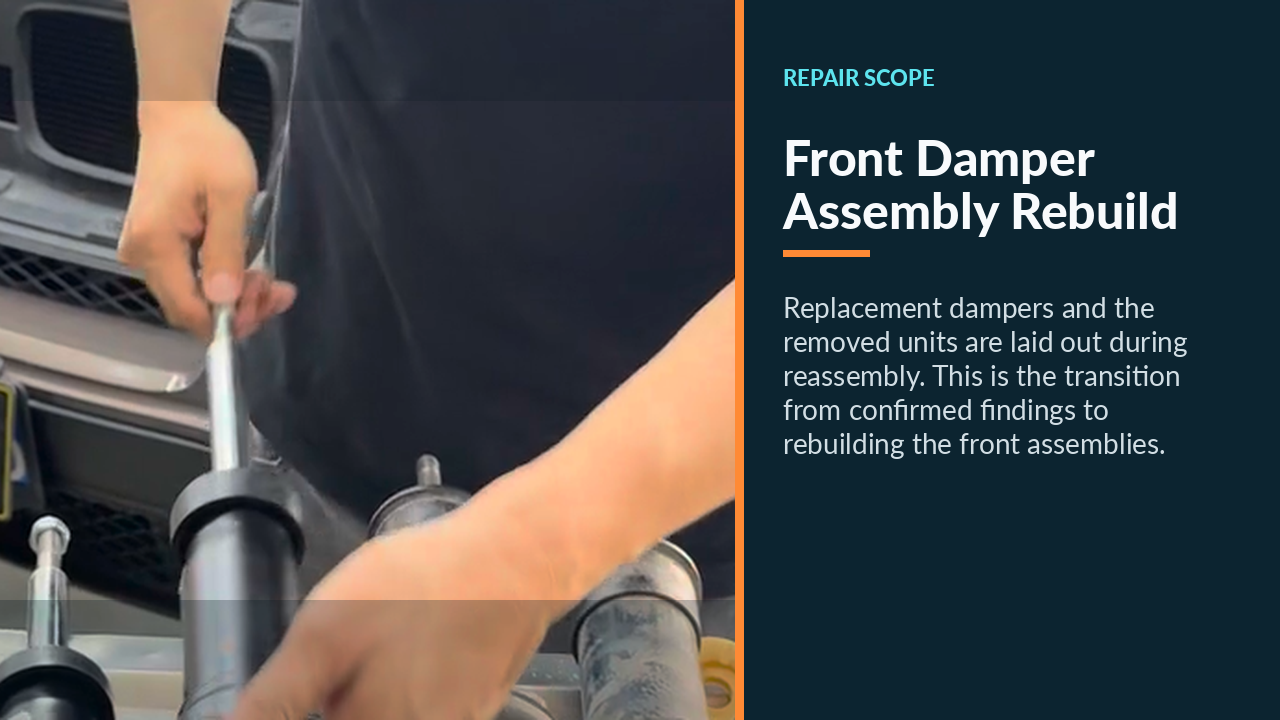
The case record documents removal, parts inspection and comparison, component replacement, reassembly, and refitting. It does not report part numbers, fastener-reuse rules, tightening values, support points, or an alignment result, so none are supplied here.
Stop boundary: A front damper assembly retains spring energy. Do not loosen the center shaft nut or separate a loaded assembly without the vehicle-specific procedure, secure vehicle support, and appropriate spring-handling equipment. If those conditions are unavailable, stop before assembly disassembly and use a qualified workshop.
Reassembly restored the vehicle to a testable state
After the replacement parts were fitted, the front damper assemblies were rebuilt and installed back on the X5. A post-assembly check followed. That is the restoration work actually reported; the case does not claim an unrecorded calibration or alignment.
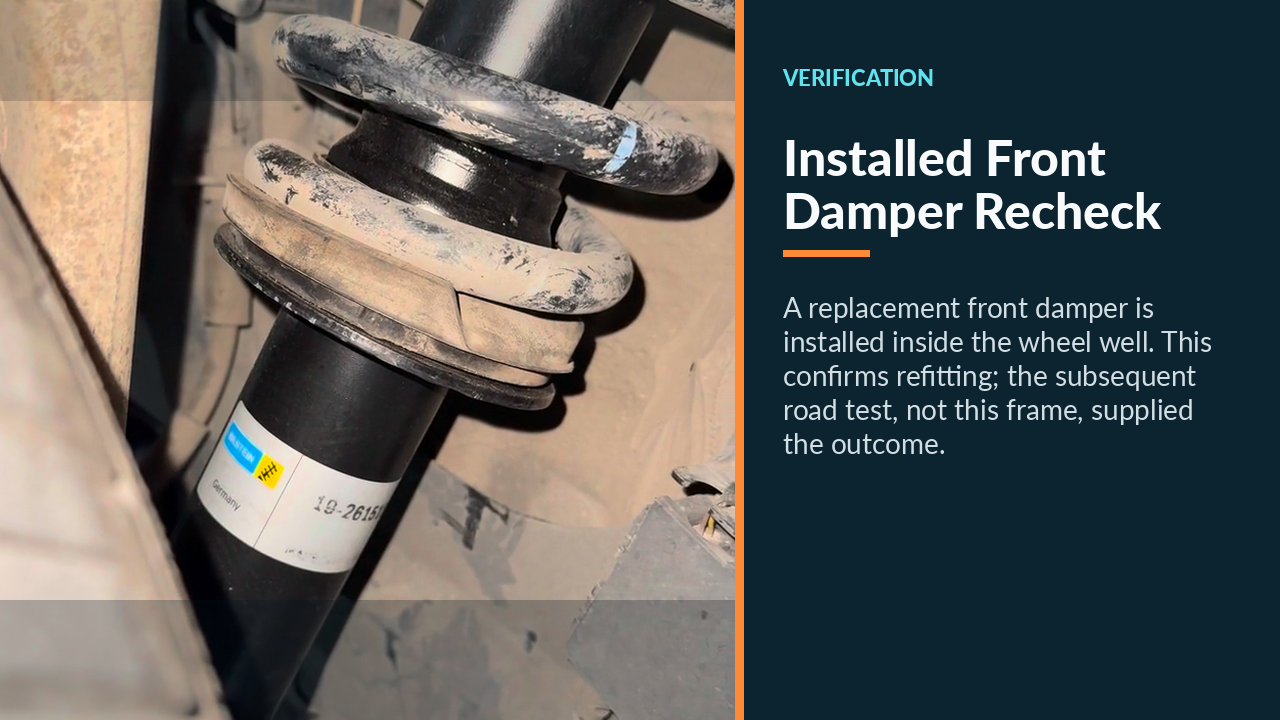
The road test closed the original complaint
The verification was a post-repair road test, not a static claim based on the new parts. During that test, the original impact-type chassis noise was no longer present. The vehicle’s support and rebound as it traveled over undulating road surfaces were also reported to have returned to normal.
That result checks both branches of the repair decision. Disappearance of the knock challenges the symptom attributed to the damaged top mount. Normal support and rebound under driving conditions challenges the weak motion control attributed to the old dampers. No distance or duration was reported, so the outcome should remain exactly that narrow: the recorded post-repair road test passed the original complaint and dynamic recheck.
First checks for a similar chassis knock
For another vehicle with a knock over uneven pavement, begin by reproducing the sound and narrowing its location. Inspect the upper mount and adjacent chassis joints for a condition that physically matches the noise. If damper removal is justified, do not use a dry exterior as the only health check; consider compression resistance, rebound behavior, operating feel, and left-to-right differences together. Keep accessories renewed for age or access separate from the part proven to cause the complaint, then verify the repair on the road condition that originally produced the symptom.
This X5’s damaged mount and weak dampers are one vehicle’s answer, not a universal X5 fault pattern. A different car with the same sound needs its own location evidence and component checks before the repair is copied.









Comments 0
Questions, fixes, and real-world diagnostic notes from readers.
Be the first to share a diagnostic result or ask a follow-up question.