
2015 Silverado Passenger Window Sticks: Why Both Door Harnesses Matter

Quick answer: A passenger-window fault can involve connections on both sides of the truck. A temporary improvement after moving a door is a clue to record, not a reason to keep slamming it.
Keep clear of the glass and side-airbag wiring. Do not force probes into connectors, spray them with a guessed treatment or use repeated door impacts to restore operation.
For an accessible but obscured inspection area, an articulating camera such as the AUTOOL SVB308 can preserve a visual record. Connector condition still needs the appropriate electrical and physical checks; a photograph cannot establish contact quality under load.

In this guide
Record the temporary recovery
An intermittent window can look completely normal by the time the truck reaches the workshop. A short description of the last failure helps preserve what the technician can no longer see. Note which switch was used, whether other functions changed and whether ordinary door movement coincided with recovery. Do not try to manufacture the event again.
ALLDATA’s Silverado case describes a 2015 truck whose passenger window recovered with door movement. Fuse-supply checks were satisfactory. Water-damaged terminals were found in both front-door wiring areas; repairs restored operation. The account does not identify how the water entered.
The passenger switch does not work in isolation
The place where a symptom is noticed need not contain every component that supports the function. A window operated from more than one control involves relationships beyond the local button. The exact arrangement must come from the truck’s wiring information, not an assumption that the driver’s door and passenger’s door are electrically independent.
This explains why inspecting both sides can be reasonable without turning the job into a search everywhere. Ask the technician to identify which paths connect the affected controls and window function. The diagram should define the inspection scope. Nearby unrelated wiring is not automatically suspect just because it shares a door cavity.
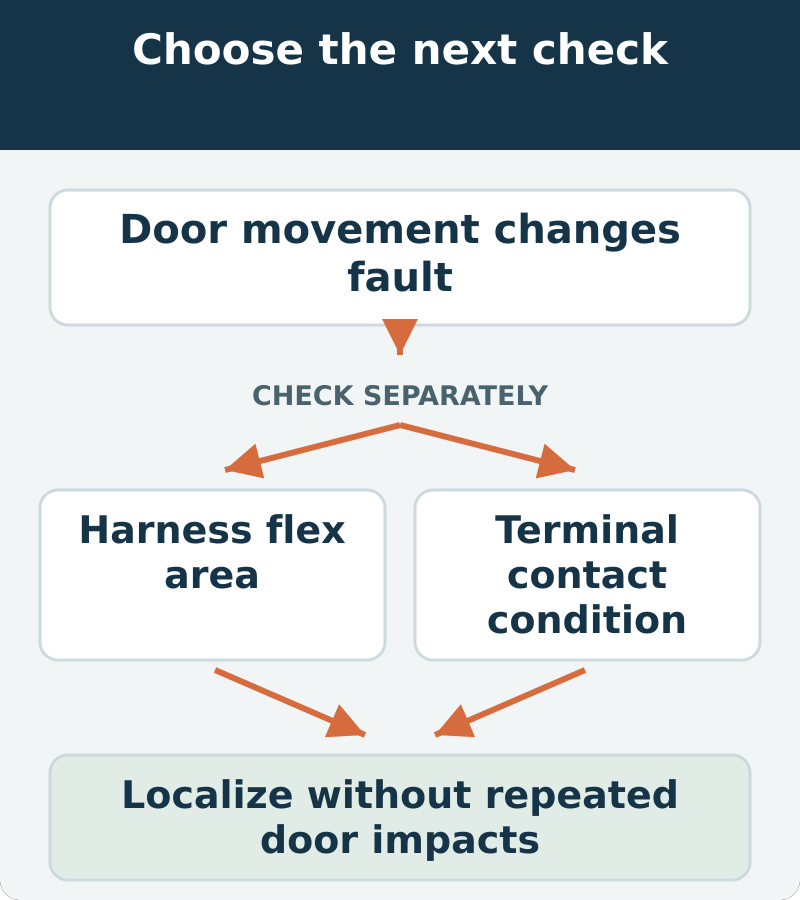
What a powered fuse leaves untested
A satisfactory check at a fuse answers a question at that location and under that condition. It does not verify every downstream connection or the complete path while the window is being asked to operate. That is why a technician may continue electrical diagnosis even after showing that a fuse is intact and supplied.
For the owner, the useful distinction is between presence and delivery. Was the required support merely seen upstream, or was its delivery to the relevant load assessed appropriately? A repair record that identifies the test location is more informative than the broad phrase “power good,” especially when the complaint appears and disappears with changing conditions.
Inspect damage without spreading it
Connector assessment is not improved by forcing a larger probe into a small contact or repeatedly separating a damaged connection. The inspection method must preserve the contact geometry and any seals, while allowing the technician to evaluate what has actually failed. An improvised check can add a new problem to the original one.
Ask for a documented distinction between visible contamination, damaged metal, compromised insulation and an electrical finding. These observations may support different repair scopes. A clear close-up can make the explanation easier to understand, but it should be accompanied by the appropriate assessment rather than used as a dramatic substitute for one.
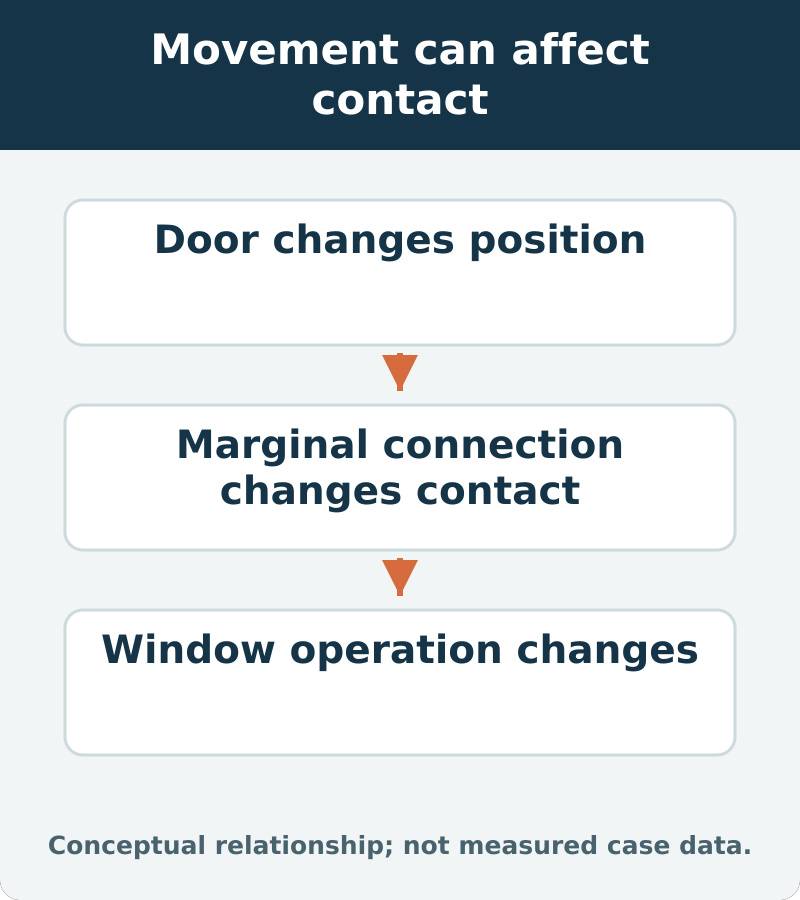
Stop the next round of water damage
Restoring a connection addresses today’s electrical fault. Protecting it from another exposure is a separate part of a durable repair. If moisture is implicated, ask what was checked about the entry route, connector protection and the surrounding door assembly. The answer should be based on the truck in front of the technician.
The published case cannot establish a common leak location or a failure rate for all Silverados. If the entry cause remains unknown, say so in the record. That uncertainty is a reason for a sensible follow-up plan, not permission to blame a particular seal or authorize broad replacement of every water-adjacent component without inspection.
Check both doors and the window safety functions
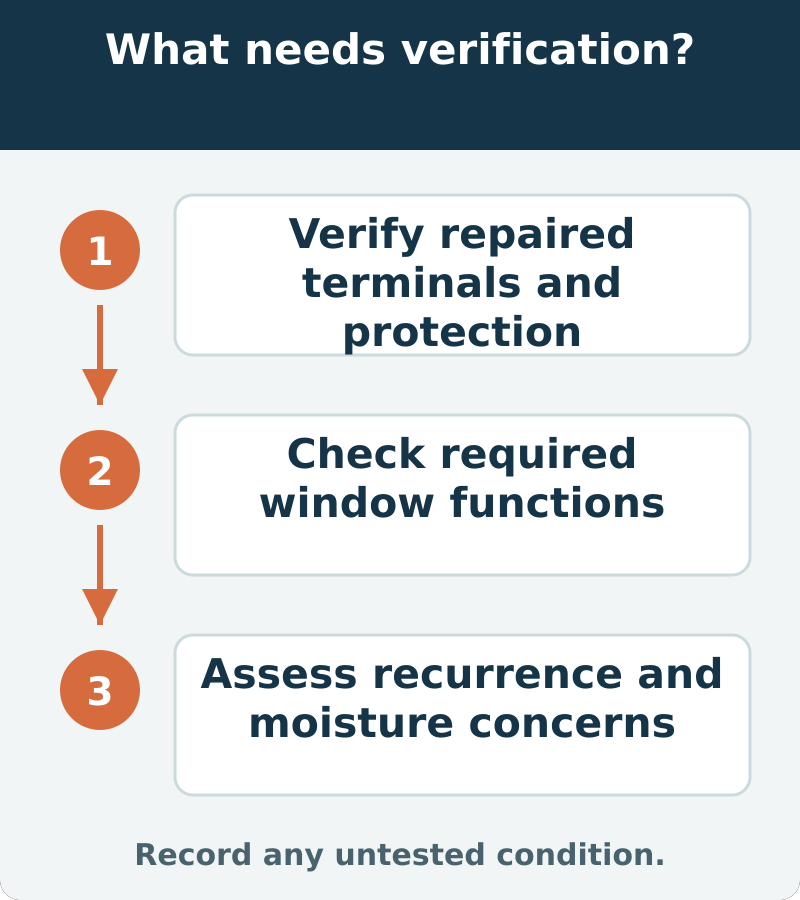
Before collection, have the workshop confirm operation from the applicable controls, normal door movement, complete window travel and the required protection or initialization checks. Reassembly matters: the final test should reflect the vehicle as it will be used, with wiring secured and the door finished, not only an open-door workbench state.
Keep the findings and any agreed moisture follow-up with the invoice. If operation becomes intermittent again, report the circumstances and arrange service rather than reviving it with a slam. The useful result is a reliably operating window and a documented repair of its supporting connections—not a temporary trick that gets the glass moving once more.










Comments 0
Questions, fixes, and real-world diagnostic notes from readers.
Be the first to share a diagnostic result or ask a follow-up question.