
2006 Dodge Ram Delays First Engagement After Sitting: Check for Converter Drain-Back

Quick answer: A delay on the first engagement after an overnight rest is not the same complaint as a late upshift on the road. This Ram case involved a cooler-line check valve.
Does the truck hesitate before it first takes drive, or does it stay in a lower gear too long once moving? Those are different complaints. Never raise engine speed to force engagement; an unexpected take-up can move the vehicle abruptly.
Where the diagnostic procedure calls for hydraulic measurements, a transmission-pressure tester such as the AUTOOL PT650 can support a correctly matched port, range and adapter. A pressure test alone does not prove a particular check valve leaks.
This case concerns a 2006 Ram 2500 5.9L diesel automatic. The exact transmission and service procedure must be confirmed from the truck’s identification, not inferred from a general article.
In this guide
First engagement or first upshift?
Begin with the driver’s sequence. Was the truck stationary when drive was selected? Did it pause before beginning to pull? Or had it already moved normally and then delayed an upshift? Using the same phrase for both can send a workshop toward the wrong operating condition.
Describe the event without assigning a transmission diagnosis. Note whether it follows overnight parking, a shorter stop or every selection. Include whether reverse behaves differently, but do not deliberately repeat a hazardous maneuver to collect more detail.
An accurate intake description can save a visit. If the complaint needs an overnight rest, a warm truck arriving after a drive may not be ready for the most useful observation.
Why the parked interval matters
A system’s state after a long rest can differ from its state after running. That makes the interval before the symptom relevant evidence rather than background detail.
For a suspected fluid-retention problem, the technician needs to determine whether the behavior fits that explanation and what other causes remain possible. The observation “better after the first engagement” narrows a question; it does not name the failed part by itself.
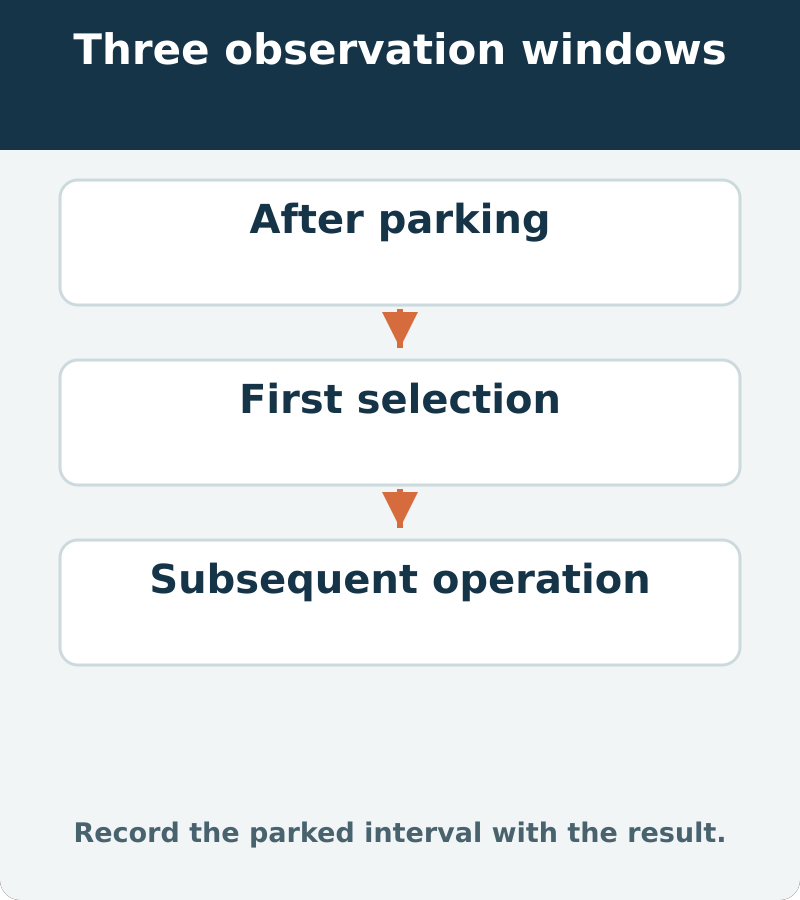
Ask the shop to record the starting condition before changing fluid, resetting anything or dismantling components. Work that alters the initial state may be necessary, but preserving the baseline first makes its effect easier to interpret.
The repair was in a cooler line
In ALLDATA’s 2006 Ram case, delayed first engagement after overnight parking led to a leaking converter drain-back check valve in the cooler line. Replacing the line assembly containing the valve resolved the complaint. The account supplies no pressure readings or measured engagement times.
That is a reason to include the relevant external fluid path in a suitable investigation before assuming the transmission needs internal rebuilding. It is not a reason to prescribe the same line to every truck with a delay.
The governing information is the actual circuit and application. Avoid adding an unverified transmission designation, universal time limit or pressure figure just to make a short account sound more complete.
What hydraulic measurements can add
A pressure measurement can help assess a hydraulic requirement under defined conditions. Its value depends on the measuring point, fluid state, commanded range and applicable specification.
It cannot answer every question about where fluid moved while the truck was parked. A technician should explain how a proposed measurement distinguishes competing possibilities and whether a separate retention or component assessment is required.
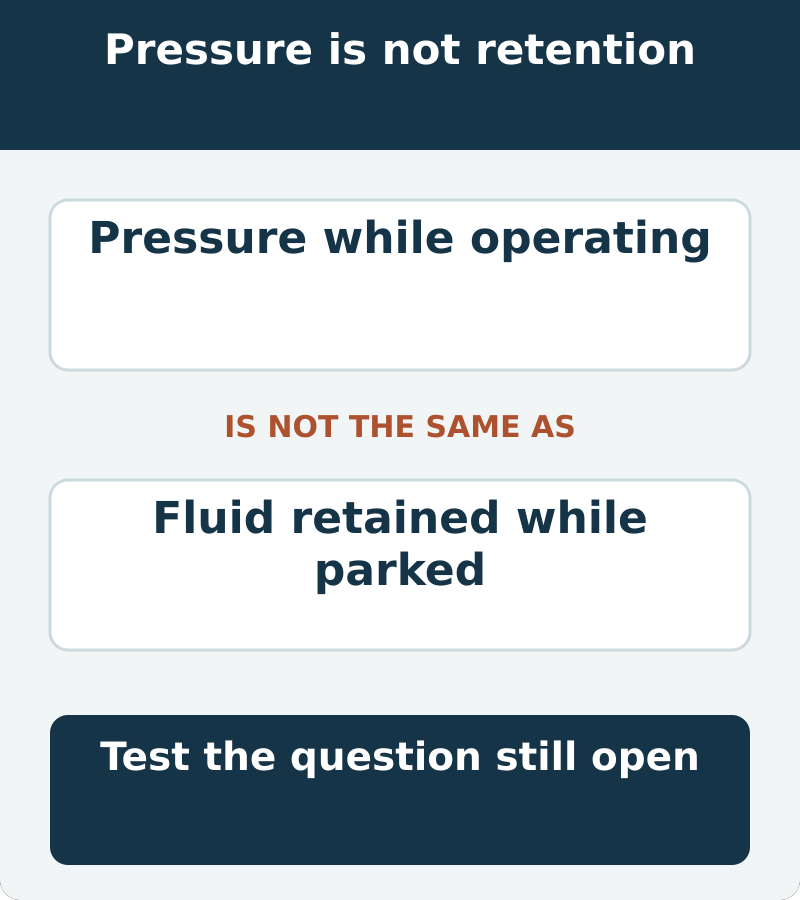
This distinction prevents an instrument reading from becoming a parts verdict without an intermediate explanation. A passing result may be valid for its test while leaving the overnight complaint unresolved. A failed result may require localization before any particular assembly is condemned.
Underbody access and fluid connections belong in a secure professional setup. Do not improvise a gauge connection or route a fluid hose into the cab to watch it while driving.
Agree on the evidence before approving a rebuild
Ask what has established an internal failure and what external or application-specific checks have been completed. A large repair may ultimately be appropriate, but its justification should be more specific than “it hesitates in the morning.”
A useful authorization names the next uncertainty. It can distinguish diagnostic access from approved replacement and specify when the workshop will contact you if the finding differs from the expectation.
Fluid maintenance and mechanical repair should also remain distinct. An additive or exchange does not establish that a leaking valve now seals. If maintenance is recommended, ask what requirement it addresses and how that differs from the cause of the complaint.
There is no need to argue that the cheapest possible part must be the answer. The aim is to make the repair decision proportional to the evidence, while avoiding both premature rebuilding and unsupported shortcut treatments.
Keep the truck overnight for the final check
Plan the final observation before collection. If the original delay followed an overnight rest, an immediate warm engagement after service does not recreate it.
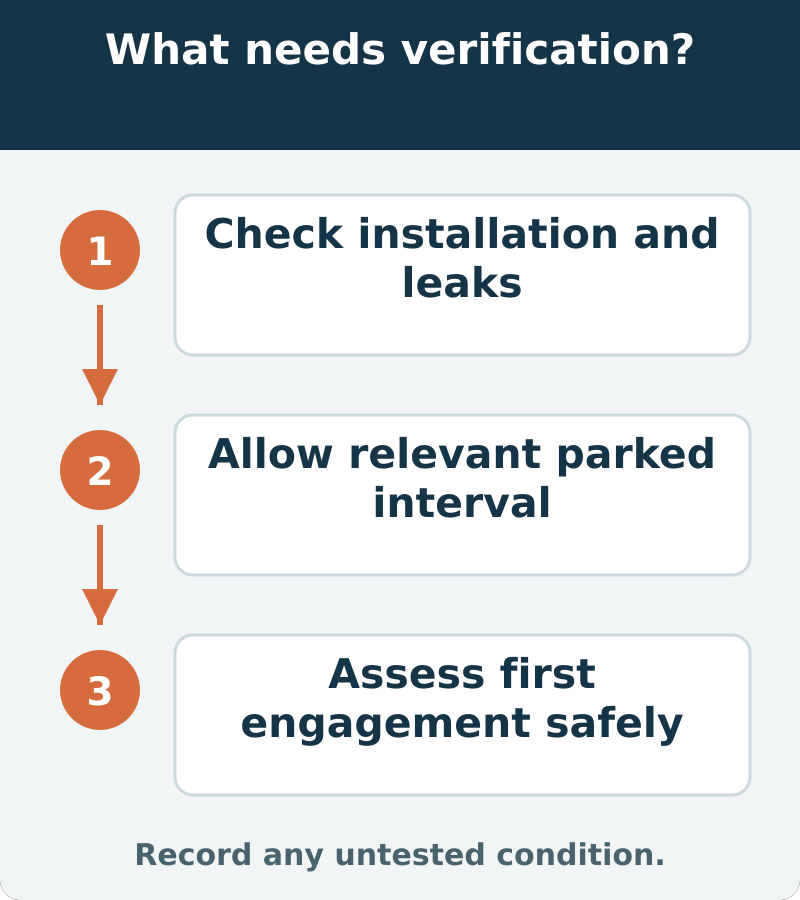
Request the required installation and leak checks, then a safe assessment under the relevant initial condition. Record the interval and observed behavior without inventing a universal acceptable delay. If that observation is still pending, leave it pending on the handover record instead of allowing a warm result to stand in for a cold one.









Comments 0
Questions, fixes, and real-world diagnostic notes from readers.
Be the first to share a diagnostic result or ask a follow-up question.