
BMW 530Le B48 Coolant Leak: Water-Pump Seal and Weep-Hole Repair

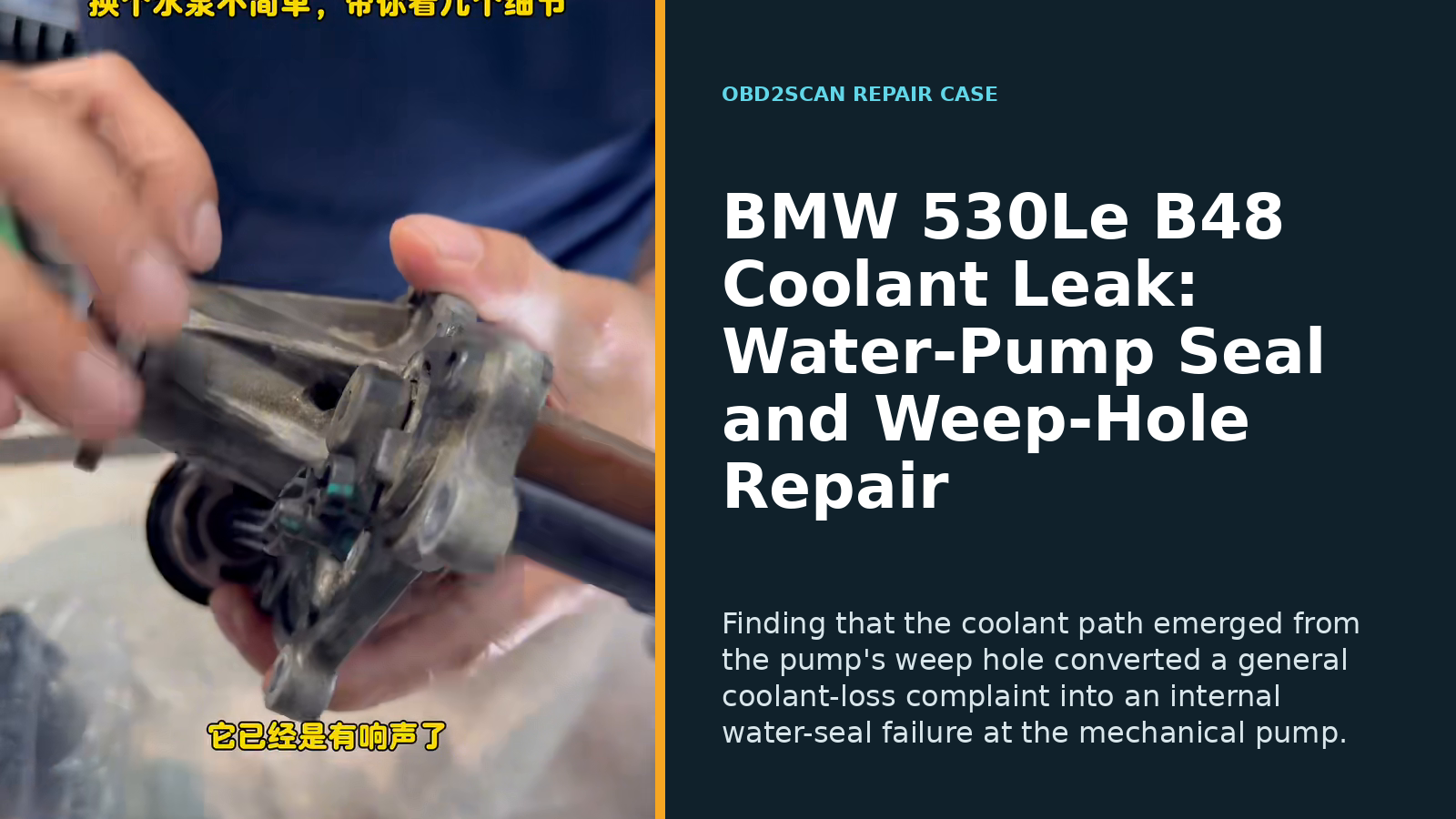
This BMW 530Le with a B48 engine—year, chassis, and mileage not reported—came in with a coolant leak that was difficult to see in place. The source localized the loss to coolant emerging from the mechanical water pump’s weep hole. It identifies an aged internal water seal as the fault, reports replacement of the pump and cooling-system air evacuation, and presents pressure retention plus normal warm temperature response as the staged acceptance outcome.
Those facts matter because the pump’s aluminum exterior did not rule out an internal sealing failure. No warning message, coolant-loss rate, trouble code, overheating event, or previous repair history is reported.
Case at a glance
| Item | This case |
|---|---|
| Vehicle | BMW 530Le; B48 engine; year, chassis, and mileage not reported |
| Complaint | Coolant leakage described as concealed in place |
| Turning point | Coolant was traced to the water pump’s weep hole |
| Confirmed fault | Aged internal mechanical water seal in the pump |
| Repair | Replace the belt-driven mechanical pump; prepare its sealing interface; reinstall |
| Restoration | Evacuate air from and fill the cooling circuit |
| Acceptance | Pressure-retention check, then warm coolant-temperature response after air removal |
| Not reported | Test duration, trace data, road test, or long-term follow-up |
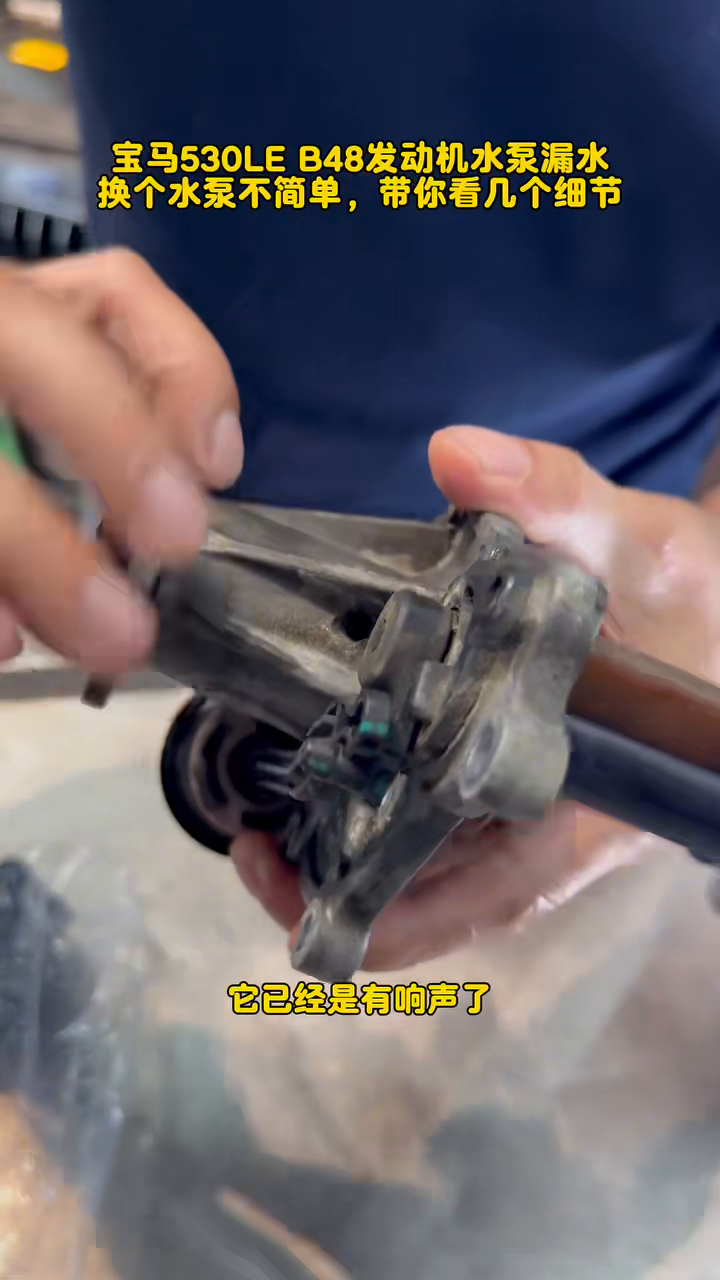
The leak hid inside an aluminum pump
The complaint started as coolant loss, not as proof that a pump had failed. A similar symptom can originate at a hose joint, expansion tank, thermostat or heat-management housing, radiator, or another seal. The source’s useful clue was location: leakage appeared at the pump’s weep hole, a deliberate drainage path from the shaft-and-seal area.
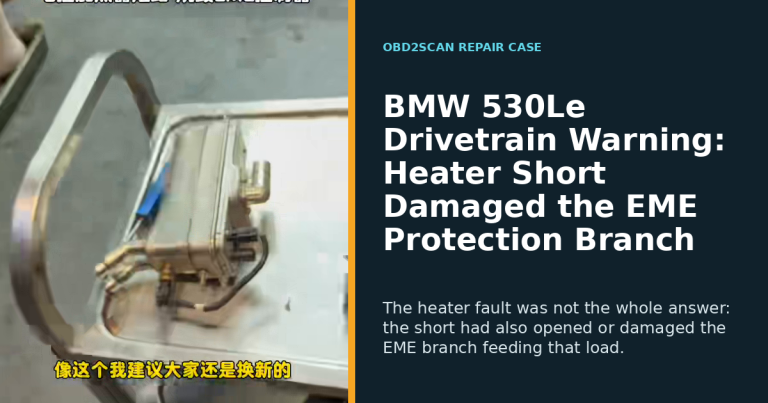
That changed the meaning of the wetness. The source explains that the internal mechanical water seal had aged, allowing coolant to enter the shaft area and leave through the weep hole. The aluminum housing could remain structurally intact while the dynamic seal inside it failed. Hybrid operating pressure variation is offered by the source as a possible aging influence; it is not presented as a measured root cause on this vehicle.
The video also labels the removed pump as noisy. That supports concern about its mechanical condition, but there is no dial-indicator reading, shaft-play measurement, or sound recording suitable for a threshold. The confirmed diagnostic chain remains coolant loss, weep-hole localization, and the source’s internal-seal finding.
The weep hole changed the repair scope
Once the leak path was localized, replacement stayed at the mechanical pump. The source does not say that a hose, thermostat unit, radiator, or hybrid-specific cooling component was replaced. It also does not publish a part number, so another 530Le needs exact build or VIN selection rather than a copied visual match.
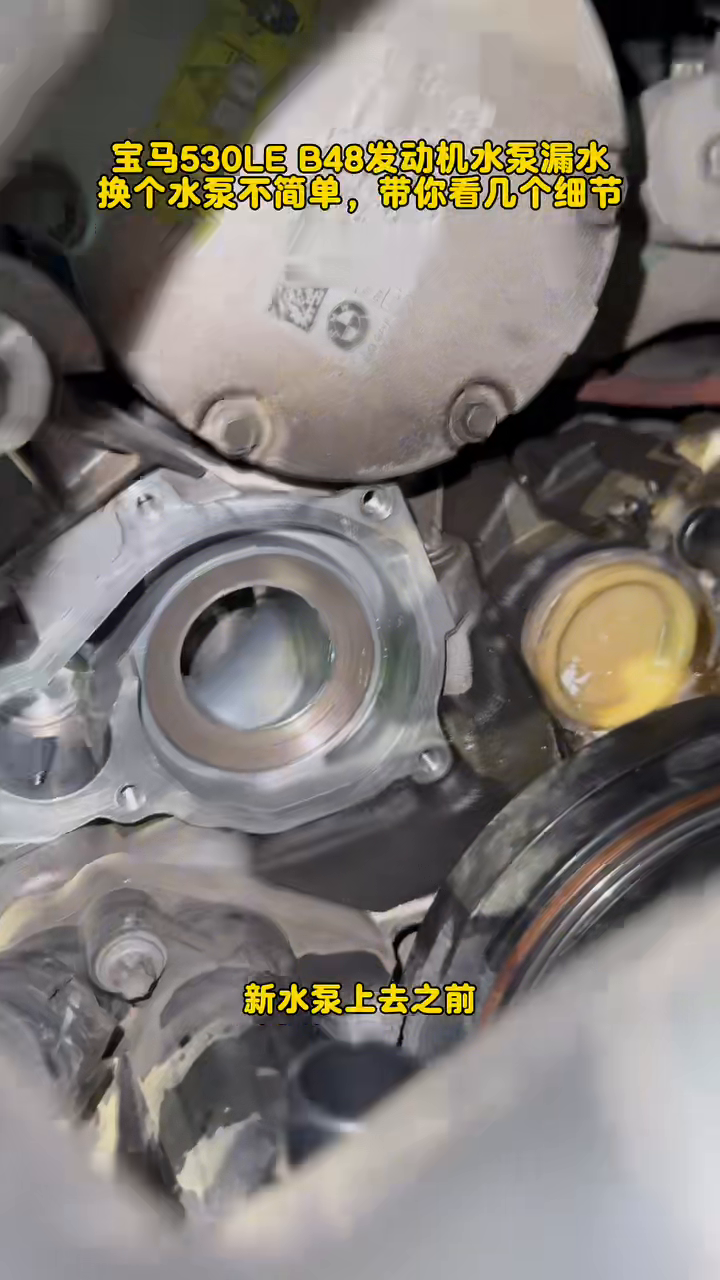
This is hazardous access, not an owner-side trial procedure. Stop before opening a hot or pressurized cooling circuit or working beside an exposed belt drive. Coolant release, vehicle support, belt unloading, pump access, fastener replacement or reuse, tightening sequence, filling, bleeding, pressure testing, and temperature monitoring must follow exact-vehicle service information.
A clean sealing face mattered as much as the new part
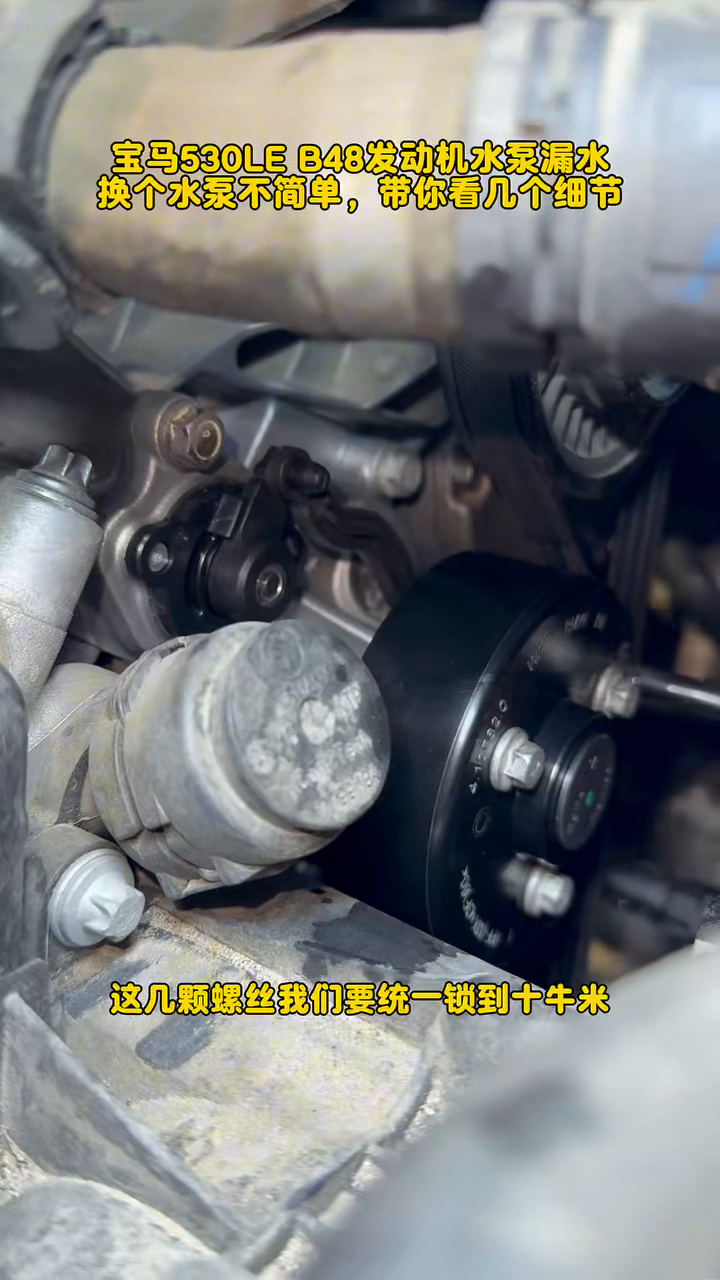
Removing the failed pump left its sealing land exposed. The source reports cleaning away aluminum oxidation and old seal residue so the new seal would contact the intended surface. The video then shows preparation of the sealing interface before the replacement pump is seated.
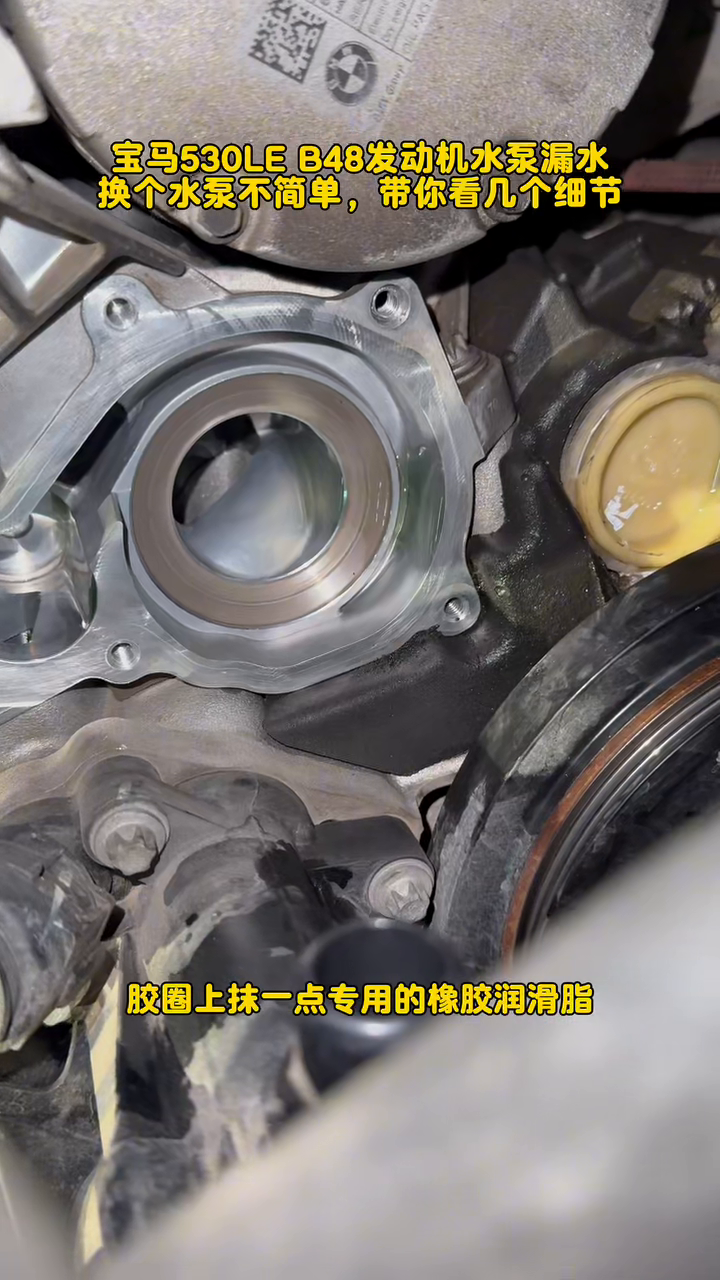
This is an important division between case fact and reusable instruction. Cleaning and seal preparation were part of this repair. The product, quantity, surface tolerance, bolt condition, and complete tightening method are not available in the working source package. Isolated torque text on the source page is therefore not reproduced here as a universal B48 instruction.
Installation finished only after cooling-system restoration
A bolted-on pump did not yet return the cooling circuit to service. The source reports cleaning the work area, evacuating air from the system, and filling it. On a circuit with multiple thermal-management paths, trapped air can undermine both circulation and later temperature observations, so restoration belongs inside the repair story rather than as an afterthought.
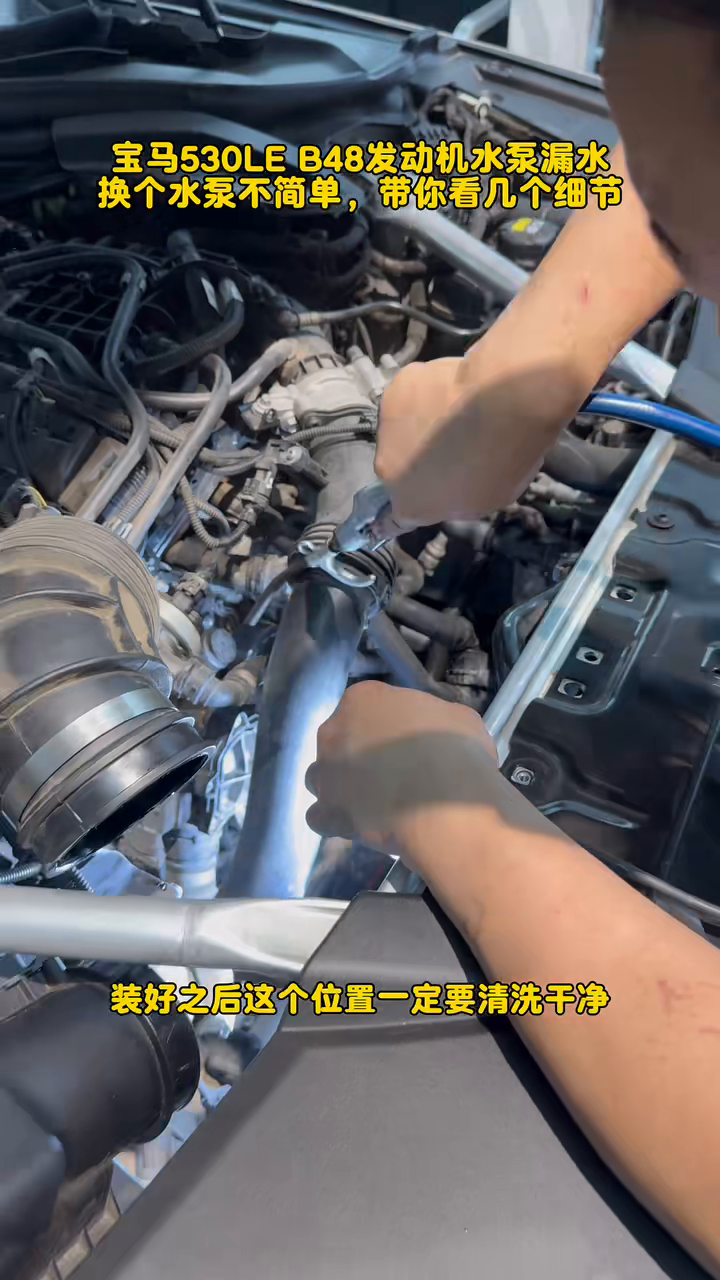
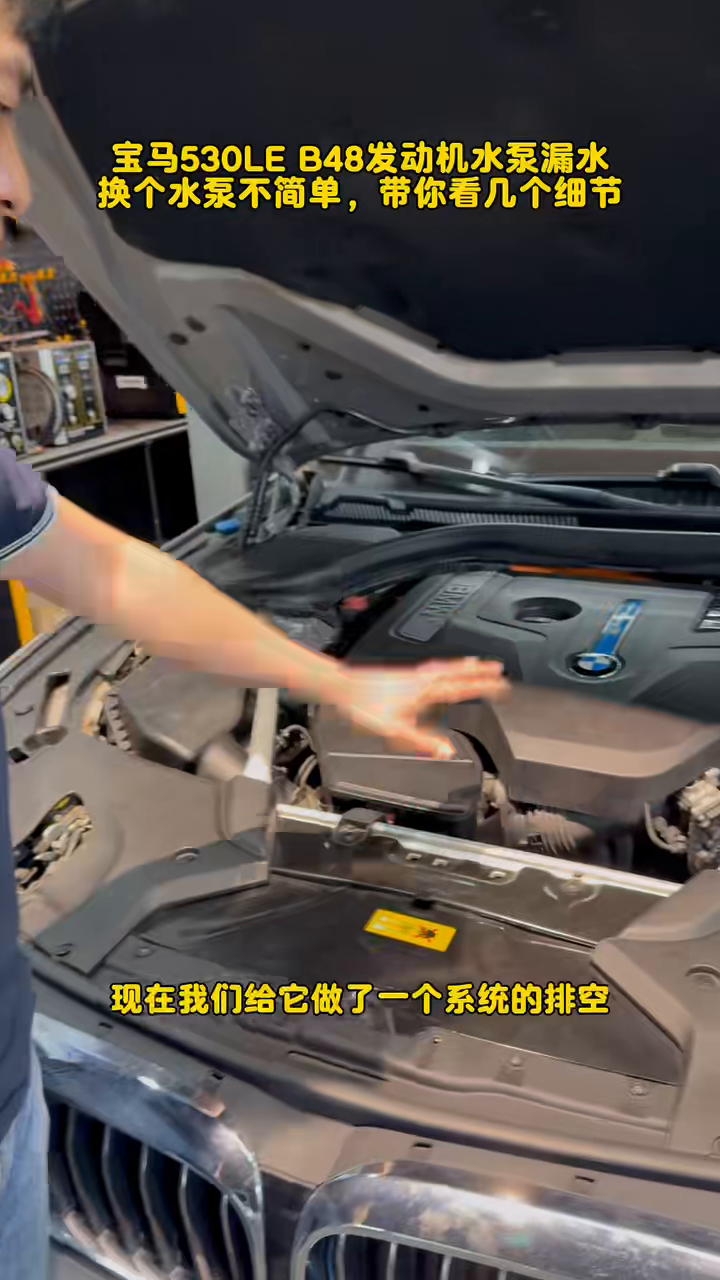
The source prints an evacuation target, but it does not provide the complete equipment configuration, fill connection, coolant specification, valve state, or exact vehicle sequence needed to apply that number safely. For a similar vehicle, use the correct service method and coolant specification rather than treating the video as a bleeding procedure.
The source closes the case in two stages
The published acceptance section challenges the original complaint first: after filling, the cooling system is pressure checked for retention. That is the relevant immediate test because another loss at the pump interface or weep hole would leave the initial coolant-leak complaint unresolved. The source provides a pressure figure, but not the complete test setup, cap boundary, duration, or a recorded pressure trace; those omissions prevent that figure from becoming a reusable instruction here.
The second stage is thermal. After air removal, the source calls for warm operation, observation of electronic thermostat behavior, and confirmation that coolant temperature returns to its normal range. Together, pressure retention and normal warm response form a transparent staged acceptance result. No road-test account, next-day level check, later inspection, or long-term leak-free claim is reported, so the evidence supports immediate acceptance only.
First checks for another concealed coolant leak
Begin cold: record the coolant level and where residue or wetness first appears, then inspect the reservoir, caps, hoses, joints, radiator, pump area, and thermal-management housings without assuming the largest visible component is at fault. Safely reproduce or pressure-test the complaint using exact-vehicle limits, watch the pump’s drainage path, and distinguish a nearby runoff trail from discharge that actually begins at the weep hole. If the pump is confirmed, verify the correct replacement, inspect and prepare the sealing interface, restore the cooling circuit with the prescribed fill and air-removal process, then repeat a leak-retention check and observe temperature behavior.
That sequence transfers; the part diagnosis does not. A BMW with coolant loss but no confirmed weep-hole origin may have a different failure, and this case does not establish durability beyond its published immediate acceptance stages.


Comments 0
Questions, fixes, and real-world diagnostic notes from readers.
Be the first to share a diagnostic result or ask a follow-up question.