
2014 BMW 525Li Poor A/C Cooling: Restricted Drier Damaged the Compressor

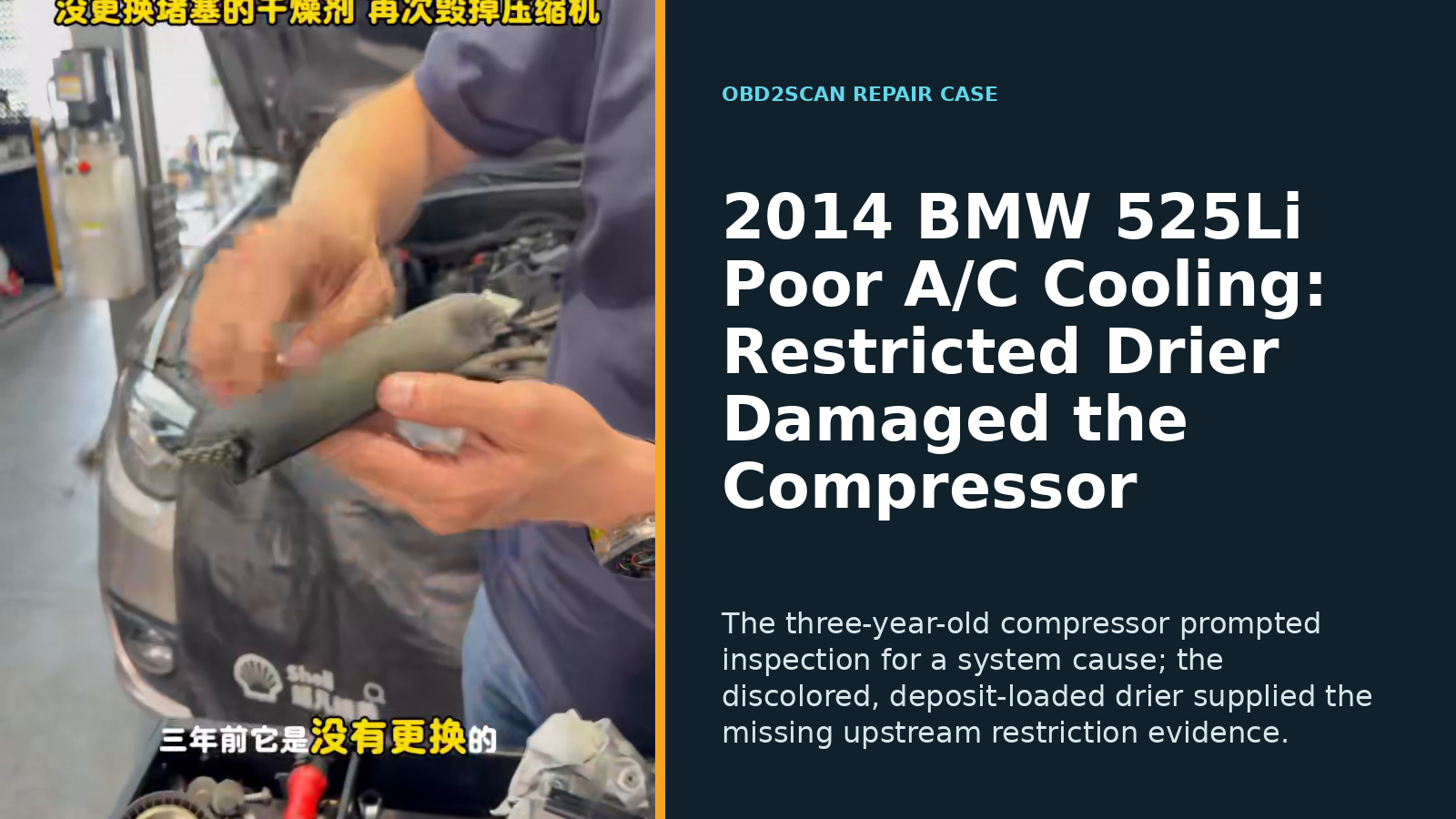
A 2014 BMW 525Li with an N20 engine and F18 chassis arrived with very poor air-conditioning performance; its mileage was not reported. The shop diagnosed compressor valve damage from rapid high-side gauge oscillation, then found a discolored, deposit-laden condenser drier consistent with a restriction. It replaced the compressor and drier, flushed the circuit, evacuated and recharged it, then documented stable pressures and 5.4°C air at the vent.
Case at a glance
| Element | What this case establishes |
|---|---|
| Vehicle | 2014 BMW 525Li, N20 engine, F18 chassis; mileage not reported |
| Complaint | Very poor cooling, including at medium-to-high engine speed |
| First clue | High-side gauge oscillated rapidly around the reported 1.5 MPa region while the low side was described as broadly normal |
| Confirmed fault | Compressor valve damage was diagnosed, and the removed condenser drier was discolored and loaded with fine deposits consistent with restriction |
| Repair | Compressor and drier replaced; pipes, evaporator, and expansion-valve circuit flushed; heat-hardened HNBR joint seals replaced as required |
| Restoration | A/C service-machine recovery/service, reported 40-minute evacuation, and label-based refrigerant and oil charging |
| Verification | High side held in the reported 1.2–1.4 MPa range, low side near 0.2 MPa, no oscillation, and vent air reached 5.4°C |
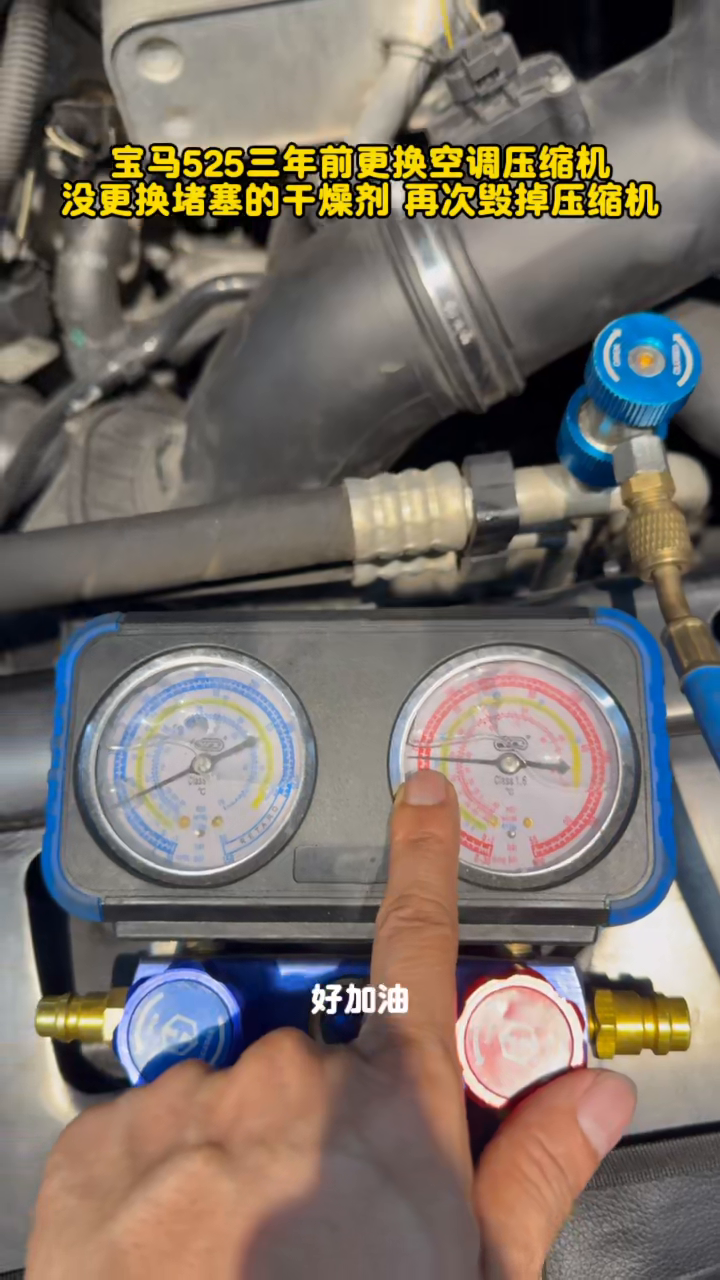
The pressure needle that changed the case
Poor cooling alone did not identify a failed compressor. Low charge, airflow trouble, compressor control, a restriction, or another refrigerant-circuit fault could produce a similar owner complaint. The workshop therefore connected high- and low-side gauges and ran the A/C under load.
The source reports the low side as broadly normal, but the high-side needle moved rapidly around 1.5 MPa. The shop treated that pulsation as evidence of failed compressor valves. That was the first confirmation in this car, not simply an inference from weak cabin cooling.
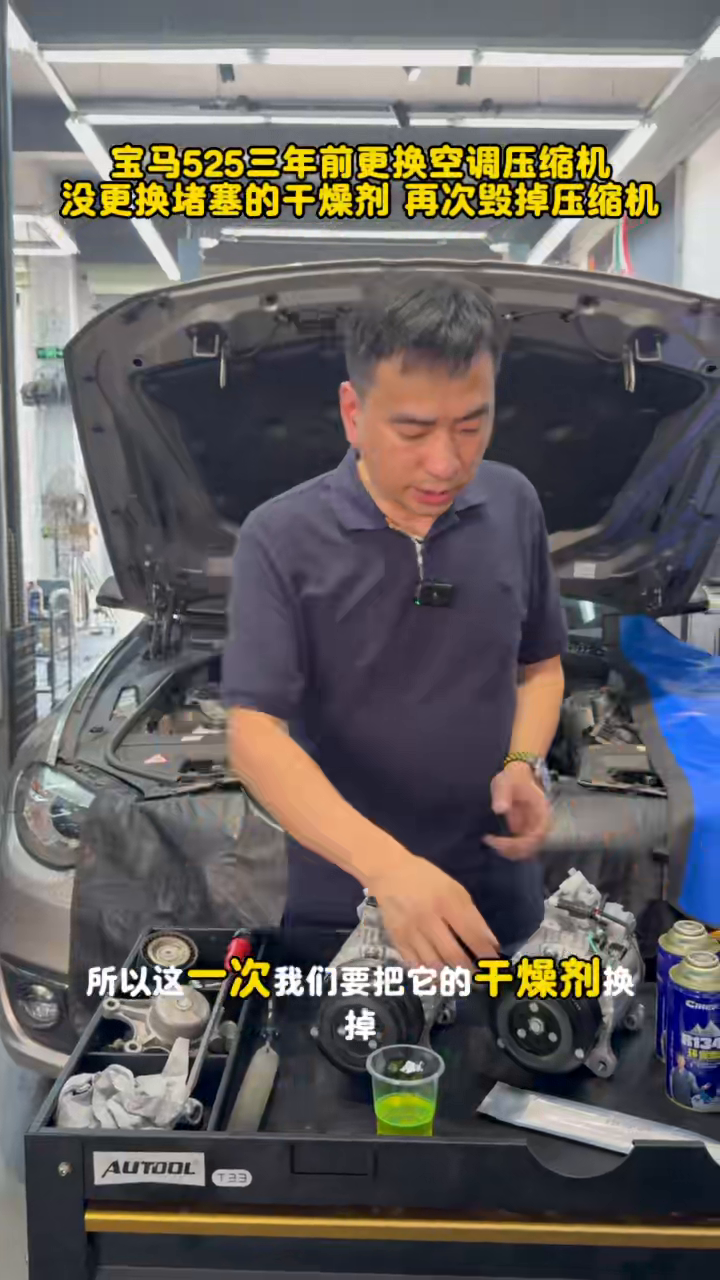
The compressor had been replaced about three years earlier. Instead of treating its damage as the end of the diagnosis, the shop asked what could have kept a relatively recent unit working under abnormal load.
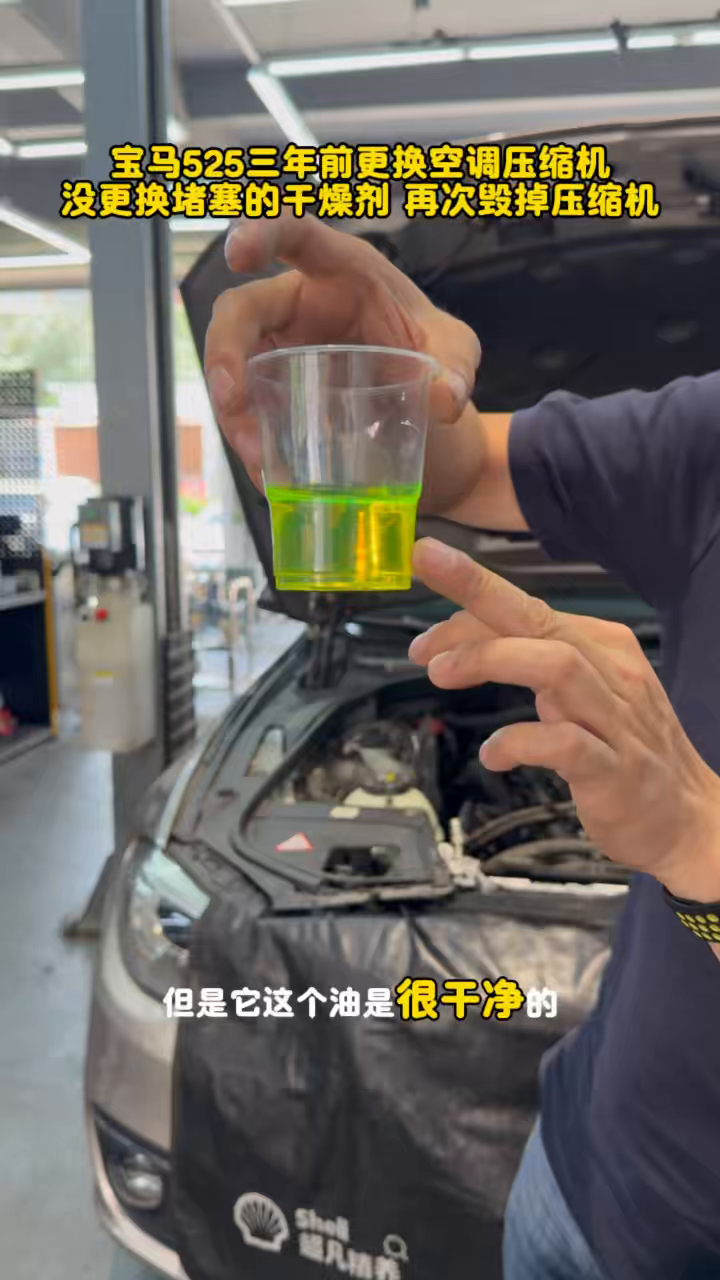
Why replacing only the compressor was not enough
The search moved to the condenser drier. Once removed, its filter element showed broad discoloration and fine deposits. Those visible findings gave the investigation a second, separate fact: the system contained a restricted drier as well as a compressor diagnosed with valve damage.
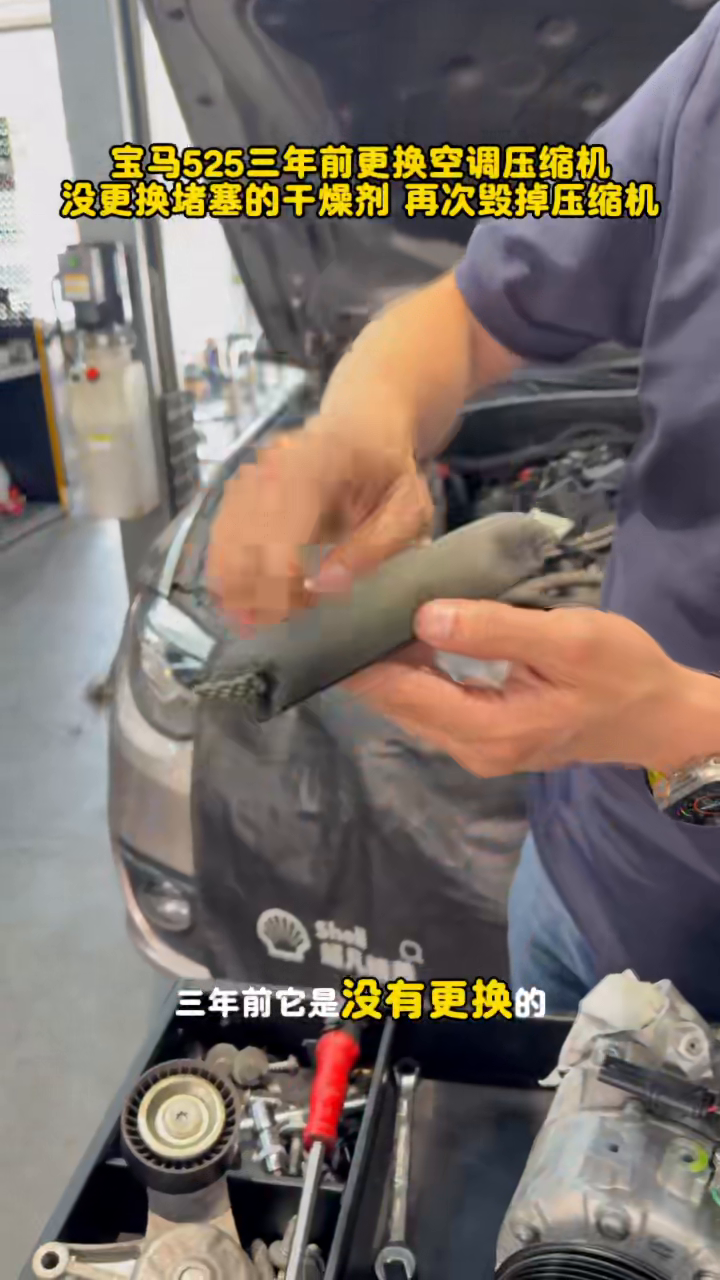
The source’s causal explanation depends on component location. It says the high-pressure sensor sits downstream of the condenser and drier. A restriction at the drier could therefore leave pressure higher upstream at the compressor outlet while the downstream sensor saw a lower value. The shop concluded that this misleading feedback allowed sustained compressor load and contributed to the valve damage.
That is the evidence chain reported for this BMW: poor cooling led to gauge testing; rapid high-side pulsation led to the compressor-valve diagnosis; the relatively recent compressor prompted a system-level search; and the removed drier supplied visible restriction evidence. The sensor-location explanation connects those findings, but the source does not provide a before-and-after pressure measurement across the drier.
Repairing the contaminated circuit
The repair addressed both the damaged component and the condition that could contaminate or restrict its replacement. The workshop removed and replaced the compressor and the old drier. It then circulated cleaning agent through the high- and low-pressure pipes, evaporator, and expansion-valve circuit to remove residue left in the opened system.
At the joints, heat-hardened HNBR seals were replaced as required and lubricated during assembly. The source does not publish the flush chemistry, acceptance criteria, individual seal count, torque values, or oil-balancing calculation, so none should be inferred from this account.
Recovery, evacuation, and label-based charging
Opening an automotive A/C circuit requires controlled refrigerant handling. The case records use of an A/C service station for recovery and service work, followed by a reported 40-minute evacuation. The system was then charged with R134a and refrigeration oil according to the vehicle label.
The source does not publish the refrigerant mass or oil quantity, and it does not document a separate vacuum-hold or leak-test result. Those values cannot be recreated from this story. The reported pressure readings are verification observations under that day’s conditions, not universal targets for every F18 or every ambient temperature.
Stable pressures and a 5.4°C vent result
After the system was restored, the high-side reading was reported stable between 1.2 and 1.4 MPa, the low side near 0.2 MPa, and the earlier high-side oscillation was absent. A thermometer at the cabin vent displayed 5.4°C during the captured function check.
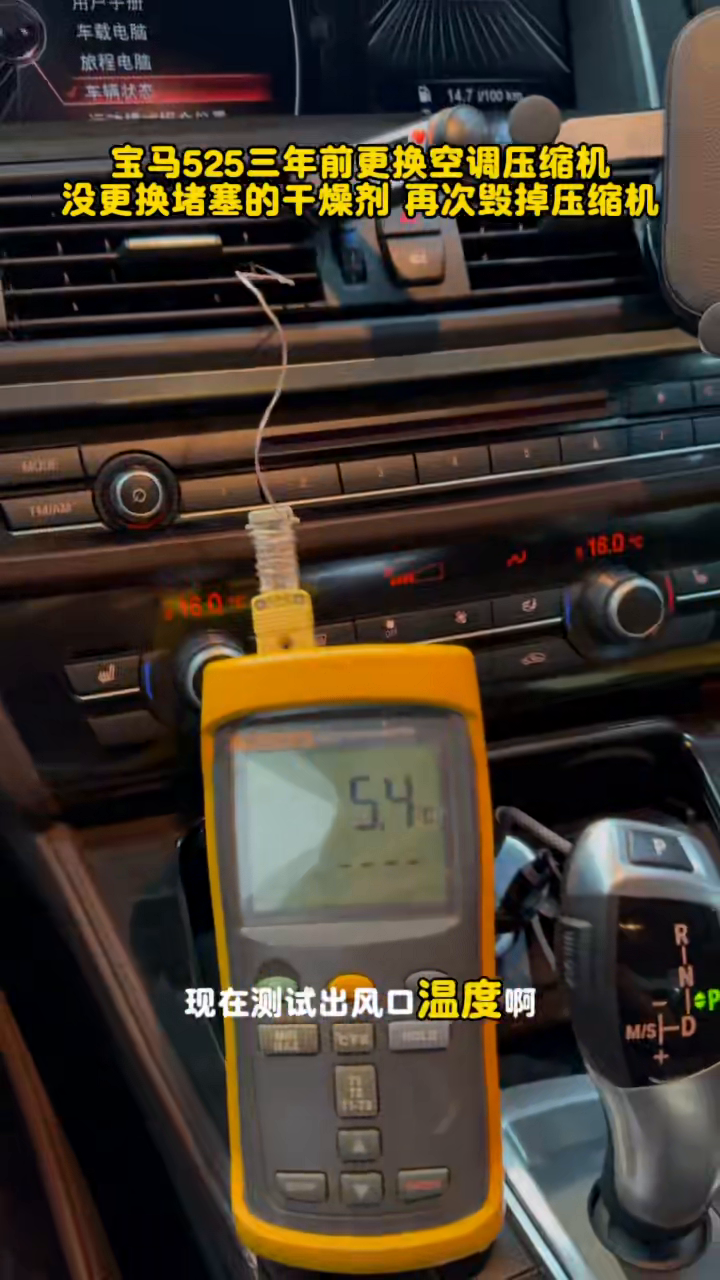
Together, those checks showed that cooling returned and the abnormal gauge behavior did not recur during the documented test. Ambient temperature, humidity, blower setting, engine speed, test duration, later refrigerant retention, and long-term compressor condition were not reported, so the result remains an immediate workshop verification rather than a durability claim.
What this case changes on a similar diagnosis
On a similar poor-cooling complaint, begin with the symptom and actual high- and low-side behavior rather than assuming a charge or compressor fault. If pulsation supports internal compressor damage, inspect for the system condition that could have caused it: drier restriction, contamination, heat rejection, and the relevant sensor’s position in the circuit. Repair the confirmed restriction and control contamination before installing a replacement compressor, then recover, evacuate, charge from exact vehicle information, and verify both pressure stability and vent performance.
Do not copy this BMW’s pressure numbers as specifications. A different vehicle, ambient condition, charge error, condenser-airflow fault, expansion-valve problem, sensor fault, or electrical control issue can produce poor cooling through another path. In this car, the answer was a damaged compressor paired with a visibly contaminated, restricted drier; that pairing must be demonstrated again before the same repair is justified elsewhere.



Comments 0
Questions, fixes, and real-world diagnostic notes from readers.
Be the first to share a diagnostic result or ask a follow-up question.