
2009 Audi A3 Remote Locking Still Fails After a Door Lock Repair: Check the Comfort Network

Quick answer: A working door lock does not prove that remote locking is healthy. In this Audi case, the remaining fault involved an HVAC control panel disrupting the comfort network.
A repair can be correct without solving every symptom. If the door now operates but the remote still does nothing, separate the working function from the missing one before paying for another lock or key.
An electrical supply check is useful before condemning a silent control unit. A circuit tester such as the MRCARTOOL B550 can support identified voltage checks in the correct mode; key adaptation and vehicle-network diagnosis still require suitable vehicle-specific equipment.
Keep a reliable mechanical way into the car while the fault is investigated. Avoid repeated key-programming attempts or random module disconnections that change the evidence or leave you locked out.
In this guide
Was the door lock repair actually a mistake?
Not necessarily. In James Etherington’s reported Audi case, replacing a tested driver-door lock restored that door’s operation, but remote locking remained inoperative. Abnormal comfort-network observations and an HVAC no-communication result prompted further investigation. Disconnecting the HVAC panel restored two-wire network behavior and permitted key programming. A replacement HVAC panel then restored communication and remote operation.
That history is more useful than the shorthand “it needed an HVAC panel.” It describes two faults affecting one customer experience. The first repair had a result worth keeping; the remaining symptom required a different investigation.
When reviewing your own invoice, ask which function was demonstrated before and after the work. “The lock is fixed” is ambiguous if one person means local door actuation and another means every remote button works from outside.
The part of the system the first repair did not test
List the commands you can safely try without dismantling anything: mechanical entry, the interior locking control and each available remote. Note which doors respond, rather than reducing everything to a single “central locking broken” complaint. Do not assume those commands use identical paths.
A working endpoint only proves that it can work through the path just exercised. It does not certify every upstream request, authorization or communication step. This distinction is especially helpful after a repair because it prevents a good local result from hiding an unfinished system-level problem.
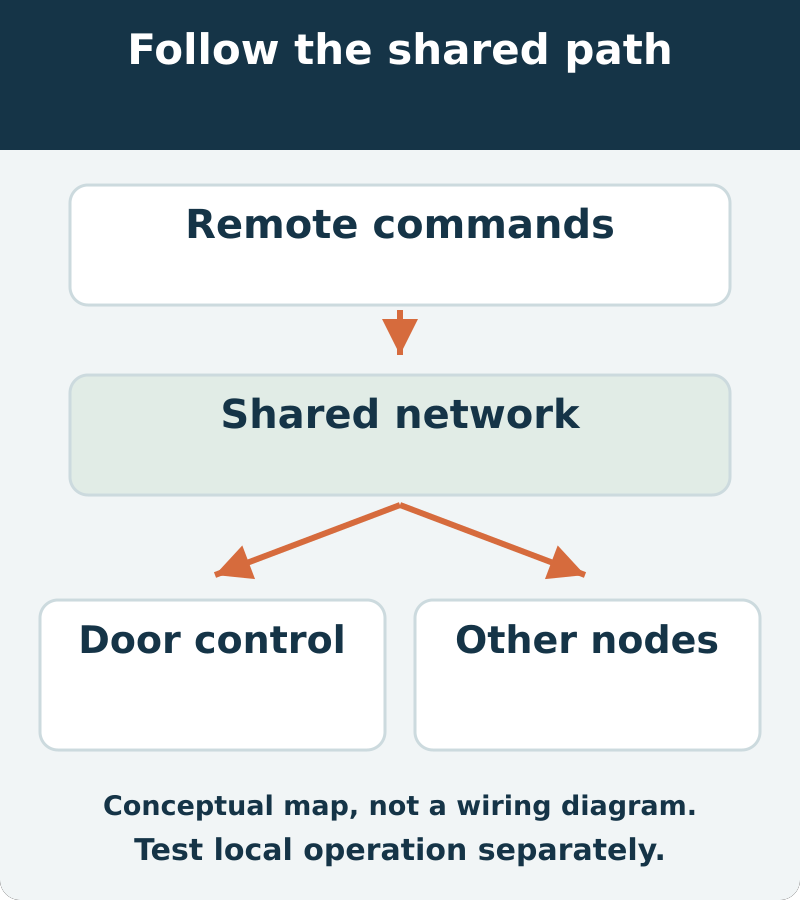
For the technician, the next useful document is the correct wiring and network information for that vehicle. For the owner, it is a short function checklist. Neither needs a guessed CAN speed or a pin number copied from a different model.
Why an offline HVAC panel is a clue, not a verdict
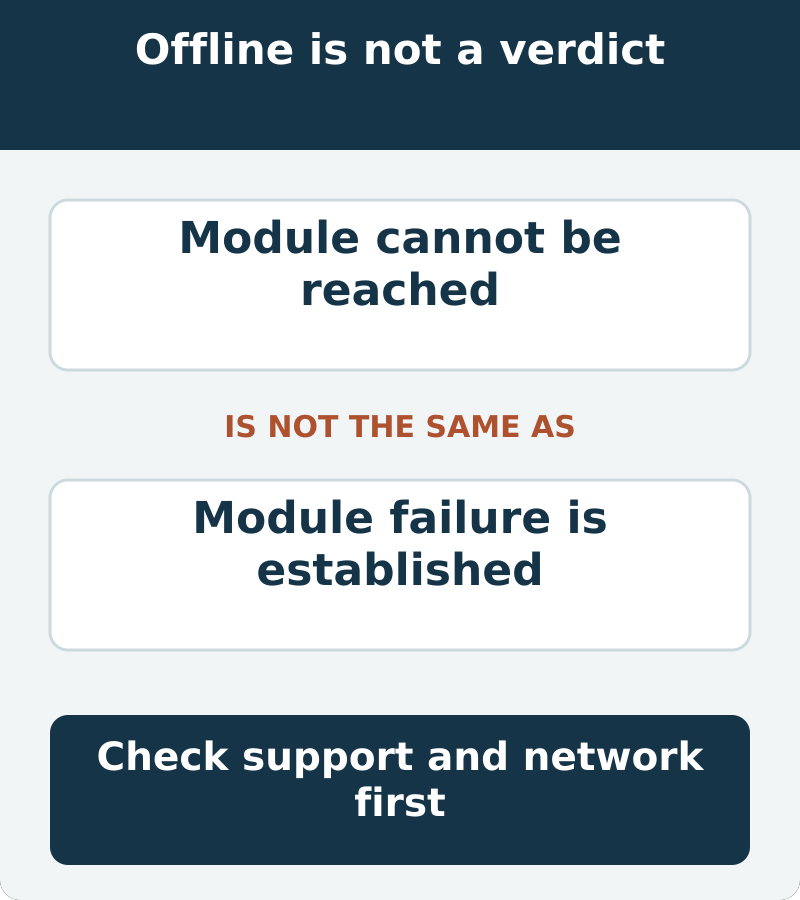
“No communication” describes a failed conversation. It does not identify why the conversation failed. The device may lack a usable supply or ground; a connector or network branch may be damaged; the test equipment may not support the expected function. A defective device is another possibility, not the definition of the message.
Ask the shop to preserve the original communication report and explain which related modules remain reachable. A wider pattern can change the test priority. An isolated missing device and several devices failing together should not automatically receive the same repair estimate.
The published account does not spell out every HVAC supply test. For a new diagnosis, those checks should be established using the applicable service procedure before a replacement is authorized. They are a reasonable requirement to ask for, not extra work we can claim the original technician performed.
What a careful isolation test changes
Isolation is valuable because it changes a defined part of the system and lets the technician compare the result. It is much less informative if several connectors, settings and power states change at once.
Before the test, record the symptom and the relevant network observations. Identify exactly what the approved procedure permits disconnecting. Afterward, compare the same observations under the required conditions. Network work belongs with a technician who can protect terminals, preserve settings and restore the vehicle correctly.
An improvement narrows the suspected branch. It still needs interpretation: disturbing a connector can temporarily change poor contact, and removing a device also removes its electrical influence. The useful conclusion is supported by the complete set of checks, not merely by “we unplugged something and it worked.”
Do not apply battery power to a communication wire, use a powered test mode on an unidentified terminal or imitate a scope connection from an unrelated car.
What to ask before authorizing another control unit
A good estimate should connect the proposed part to the remaining complaint. Ask what observation failed, what checks excluded the supporting circuit and what must happen after installation for the vehicle to recognize the replacement.
Also separate replacement from setup. A module that needs an approved configuration or adaptation step is not necessarily ready for handover just because the connector fits. The shop should identify the required functions and equipment before ordering it, not discover that requirement after the dashboard is apart.
You do not need to buy a network diagnostic tool to ask these questions. A written explanation of the failed requirement is often more useful to an owner than a long list of unexplained fault codes.
Prove that both repairs work together
The acceptance check should revisit local operation and remote operation separately, then confirm that the relevant communication and setup checks are complete. Test the available keys as applicable and confirm that the mechanical entry route remains usable.
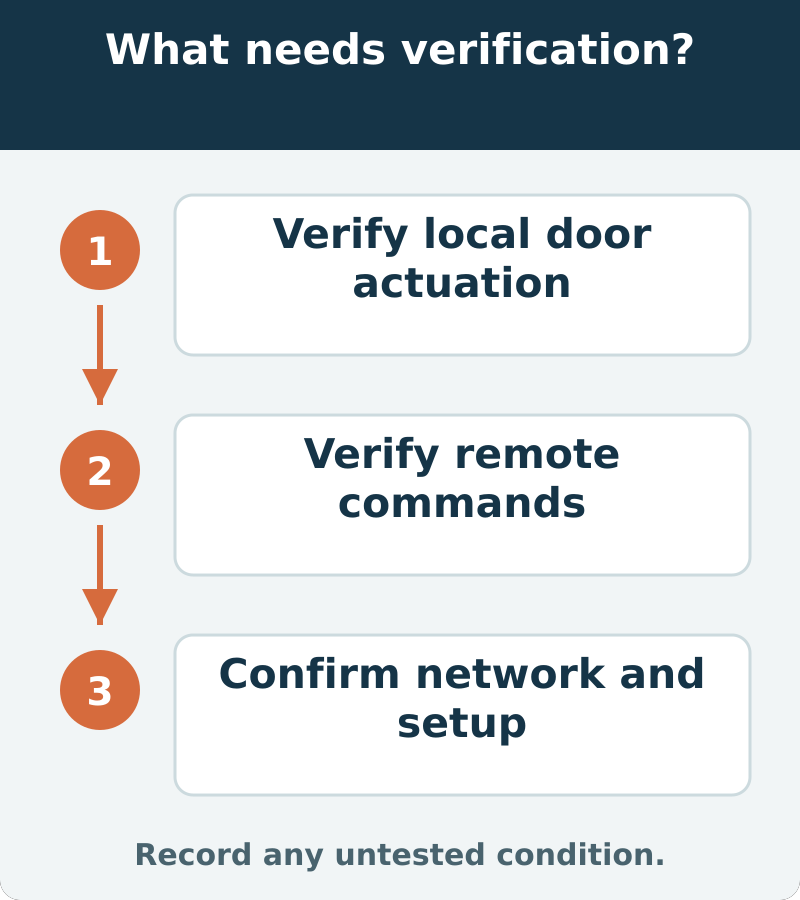
If a function was not checked, leave it marked unverified. That small distinction makes a later return visit easier to diagnose. The aim is not to prove that the first repair was wrong; it is to show exactly where the remaining fault stopped the system from working.







Comments 0
Questions, fixes, and real-world diagnostic notes from readers.
Be the first to share a diagnostic result or ask a follow-up question.