
2011 Ford Taurus Overheats Only With A/C On: Watch the Fan Across the Whole Event

Quick answer: A fan seen spinning once may stop later under a different demand. Compare physical operation, command information and electrical supply over the actual complaint sequence.
“The fan runs” needs a time attached to it. Did it run throughout the event, or only when someone first looked? A meter such as the AUTOOL DM301 can support passive supply checks at permitted points, but fan-command information and actual operation require their own interpretation. Do not approach a fan that can start automatically.
In this guide
A/C operation changes the cooling demand
Tell the workshop whether the overheating occurred with air conditioning selected, in traffic, after a particular length of operation or under another remembered condition. Those details help define the event the technician needs to assess. They do not establish a failed fan motor by themselves.
Do not continue driving through an overheating warning to compare A/C-on and A/C-off behavior. Stop safely and obtain professional guidance. Turning off a load may change the symptom without establishing that the vehicle is fit for use. The complaint needs a safe diagnostic plan, and the cooling system must be allowed to cool before any access that could release hot fluid.
Spinning once is only one point in time
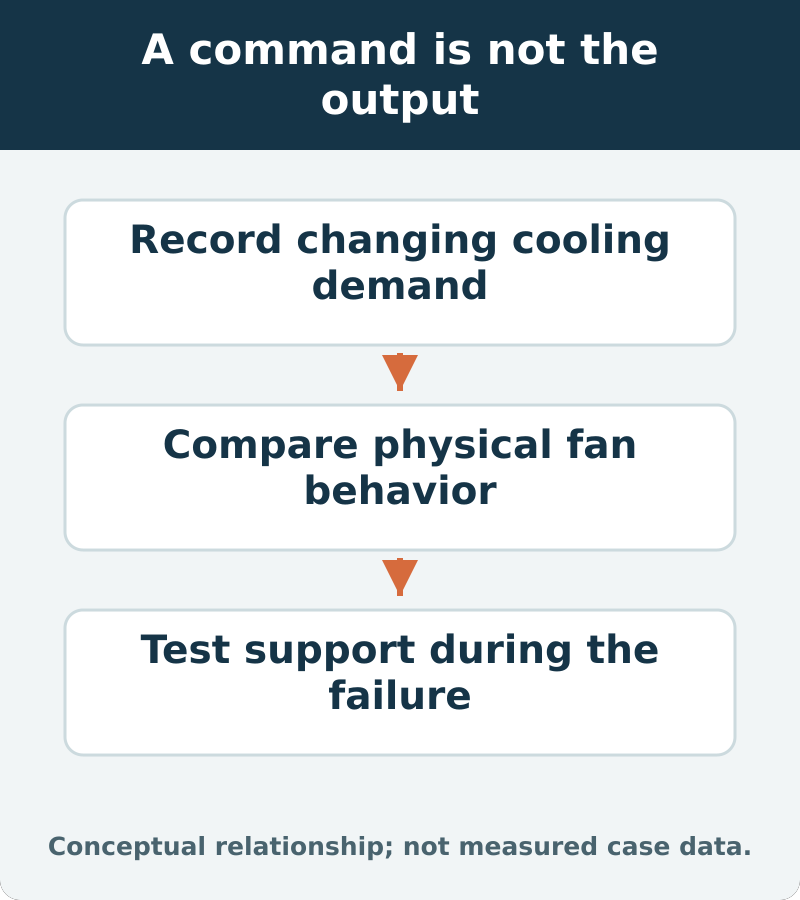
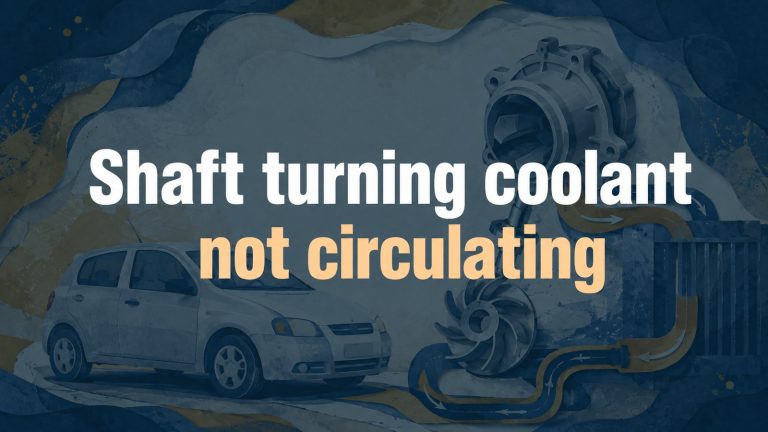
A moving fan at the beginning of an inspection answers a limited question about that moment. A later stop, a changed command or a lost supply can alter the picture. The useful record aligns the physical behavior with the relevant operating information over time.
This is a timeline, not a request for an owner to film inside a running engine bay. A qualified repairer decides how to observe safely and which conditions matter. A still photograph or a short initial glance cannot replace that sequence. When a symptom depends on duration or demand, the test needs to address that dependency rather than simply demonstrate one successful operation.
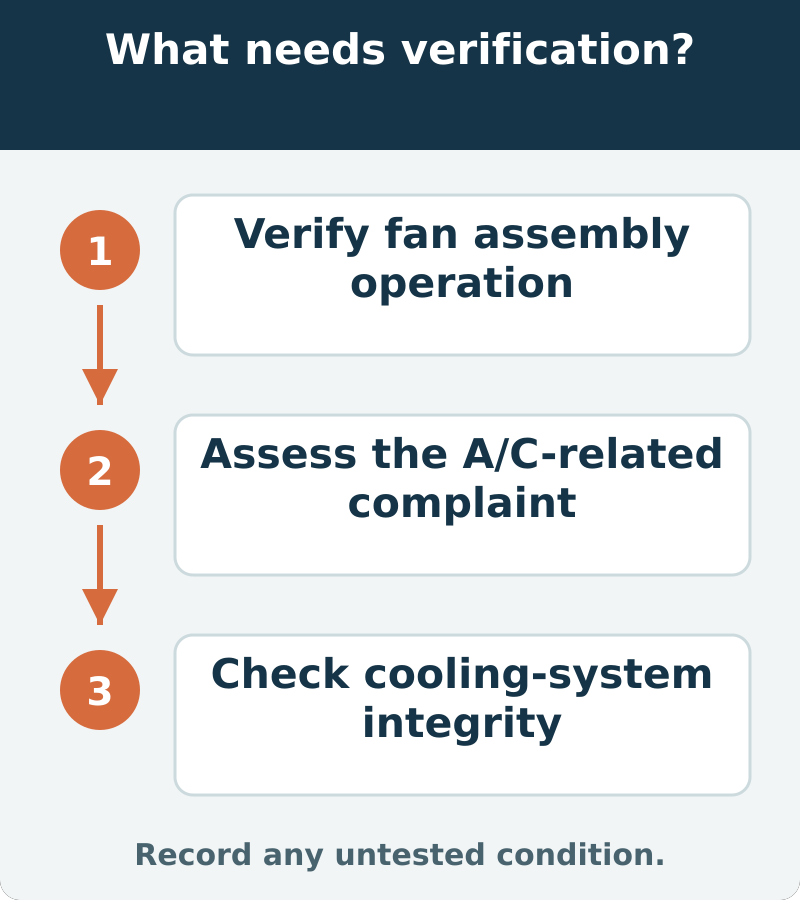
In the published ALLDATA case, the Taurus overheated with A/C on despite correct coolant level and intact powered fuses. Fan-related scan data changed as the fan later stopped. Replacing the fan assembly, including its controller, restored operation and resolved the reported overheating. The source does not isolate the motor from controller failure.
Read the PID label before interpreting its percentage
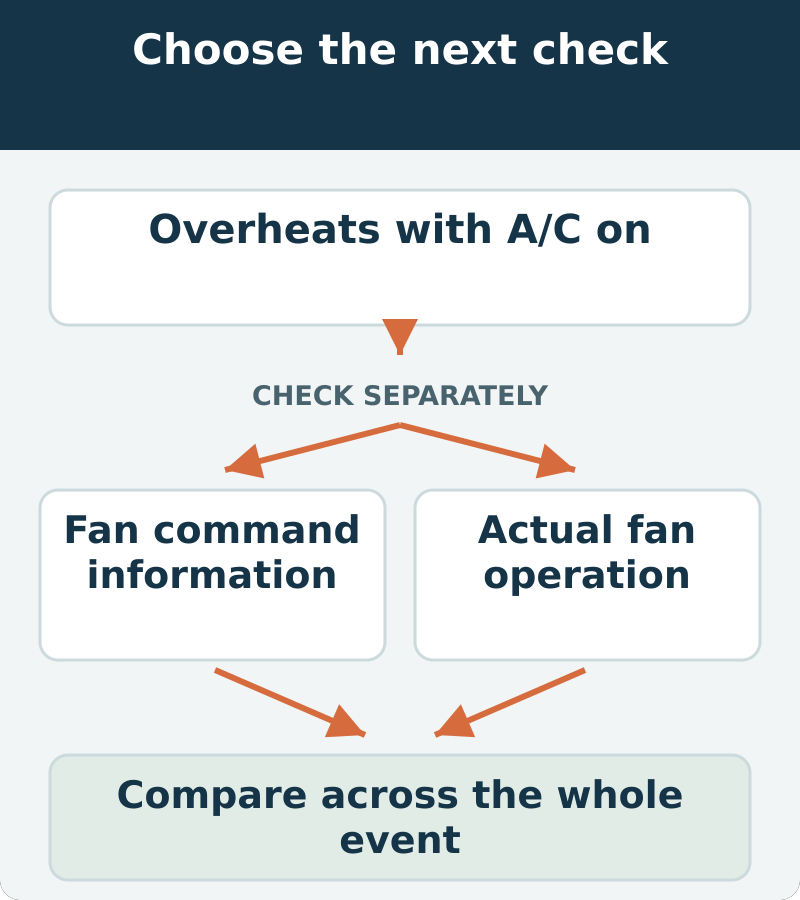
A scan-data percentage is meaningful only when you know what the parameter represents and how that system uses it. A displayed zero is not automatically proof that a motor failed or that the controller removed its command. Labels, scaling and operating strategy matter.
Ask the technician to explain whether the value describes a request, a reported state or another calculated quantity. Independent electrical or physical observations can then be compared with it. The diagram deliberately avoids a measured waveform or duty-cycle target. It teaches the relationship between demand, information and output without pretending to provide the Taurus’s exact control specification.
What the assembly replacement establishes
If an assembly containing both a motor and controller is replaced successfully, that outcome supports the assembly-level intervention. It does not necessarily isolate which internal element was defective. A repair record should say what was demonstrated rather than assigning certainty to the most familiar component.
This distinction helps when you compare an assembly quote with a proposal to replace only part of it. Ask whether that separate repair is supported, compatible and permitted for the exact design. Price alone cannot resolve an uncertainty about diagnosis or serviceability. The estimate should make clear what hardware is included and why that scope fits the findings.
Make the electrical test fit the fan design
The test arrangement must suit the fan’s circuit and current requirements. Passive voltage assessment at identified points is different from forcing power into an unknown control output. A handheld meter must not be placed in a high-current path simply because it has a current socket.
The repairer needs the correct diagram, safe access and appropriate equipment. Owners should not bridge relays, probe beside rotating blades or assume ignition-off means a fan cannot start. Ask for the result in plain language: was the required electrical support present when the physical output was wrong? The procedure and acceptable measurements remain vehicle-specific.
Finish with stable cooling in the relevant conditions
The final check should revisit the relevant cooling demand without exceeding safe limits. Ask how temperature behavior, fan operation and any remaining concern were assessed after repair. A cleared warning or a fan spinning once at collection is not the same as resolving the original sequence.
Also obtain advice about any consequences or follow-up after the overheating event. An improved cooling result does not measure every possible effect of previous heat exposure. The central lesson is temporal: a device can work at one moment and fail later. A useful diagnosis connects the request, the supporting circuit and the actual output across the period that matters.





Comments 0
Questions, fixes, and real-world diagnostic notes from readers.
Be the first to share a diagnostic result or ask a follow-up question.