
2016 Chevy Express Misfires on One Bank: Read the Injector Codes as a Group

Quick answer: Several injector-circuit codes on the same bank justify checking their shared electrical support before pricing a set of injectors.
A flashing engine warning or severe misfire needs stop-use assessment, especially while towing. Do not disturb live fuse-box connections or keep driving to provoke the fault.
Shared-feed diagnosis calls for voltage checks in the relevant operating state. An AUTOOL DM301 can support those measurements; it does not establish injector flow or provide vehicle-specific cylinder control.

In this guide
Put the cylinder numbers next to each other
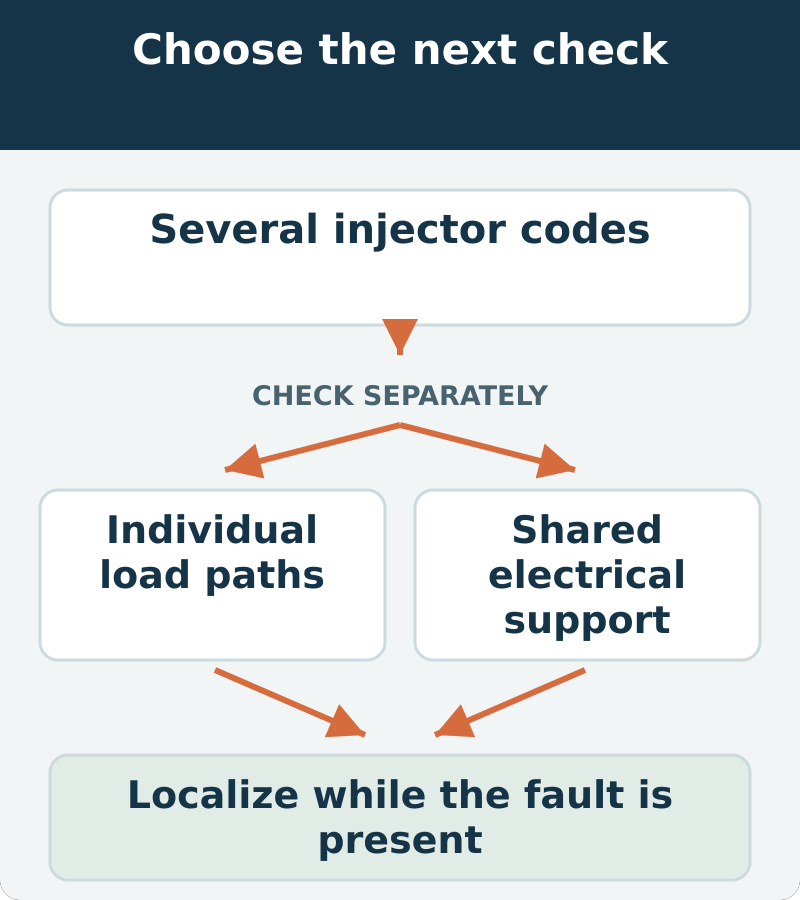
A long fault-code list is easier to use when it is organized by the function affected. Separate injector-circuit descriptions from general misfire descriptions, then place the cylinder numbers together. Look for a relationship before turning each line into a replacement part.
The relationship must come from the correct wiring and engine information. Do not assume that consecutive cylinders, one physical bank or one connector always share the same supply on every engine. The purpose of grouping is to generate a testable common-path question, not to create a shortcut that bypasses the diagram.
What the common feed adds to the story
ALLDATA’s Express account describes intermittent severe rough running with injector-circuit faults for cylinders 1, 3, 5 and 7. The fuse appeared sound. While the failure was present, movement at the fuse box changed engine behavior. Fuse-box replacement and a road test reportedly restored normal operation; the internal defect was not documented.
That pattern makes a shared electrical requirement worth checking early. It does not establish that every one-bank misfire has this cause. Ignition, mechanical and fuel-delivery problems remain possible when the evidence points toward them. Here, the circuit descriptions help determine which question should come first.
A sound fuse does not clear the box
A fuse element is one part of a larger distribution path. Its contacts, supporting terminals and upstream connections must also deliver power properly. Looking at the element, or observing voltage without the relevant demand, does not examine every one of those relationships.
Ask the technician to explain where the circuit was tested and whether the complaint was active. A stable reading after the engine has recovered may be correct but inconclusive. The useful comparison links the supply behavior to the affected loads at the same moment, with a setup that does not itself disturb the connection under investigation.
Catch the shared fault while it is active
Intermittent faults often spend most of an appointment behaving normally. The response should be a planned observation strategy rather than increasingly aggressive manipulation of the fuse box. Record the circumstances already associated with the complaint and decide which signals can be monitored safely.
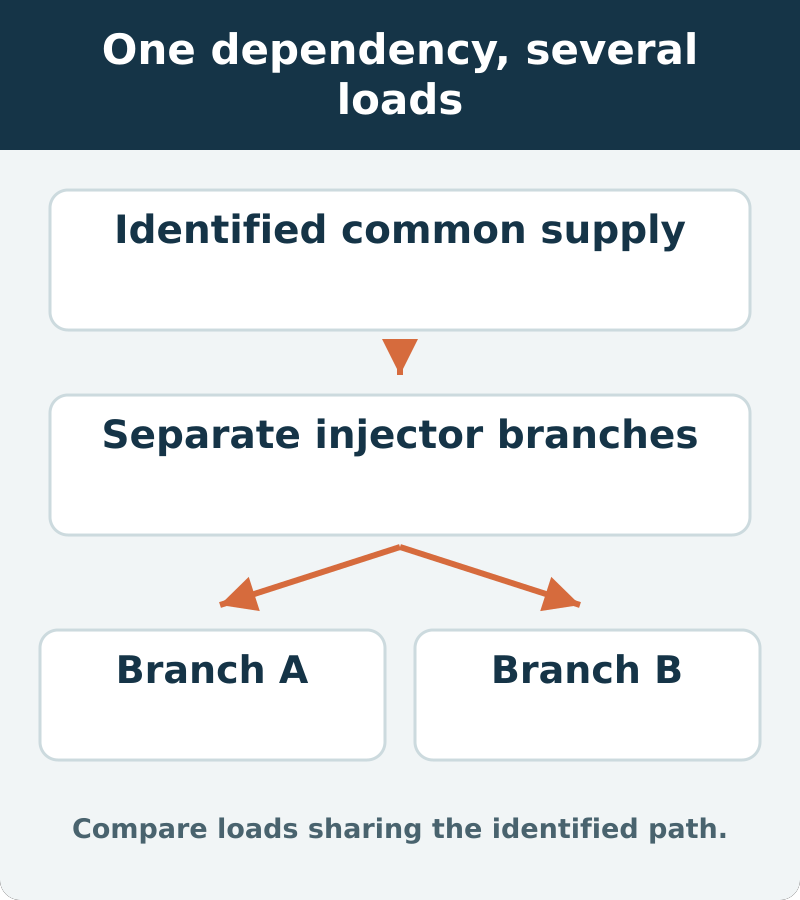
A change after moving an assembly is a localization clue. It can justify closer inspection, but it does not reveal whether the defect is an internal connection, a terminal or an attached harness. Those possibilities matter when deciding whether a repair is serviceable and how much of the assembly needs replacement.
Avoid turning a clue into a box-swapping habit
Before authorizing a distribution assembly, ask what evidence places the fault there and what adjacent connections were assessed. Also ask whether the replacement will preserve the required configuration, protection and secure harness support.
If a warning from another system appeared during the event, retain it in the record without assuming that system caused the engine problem. Multiple warnings can occur around one malfunction, but a causal link still needs support. A grouped fault list is a way to reduce unnecessary work, not a reason to erase evidence that does not fit the first theory.
Verify the van in its normal work context
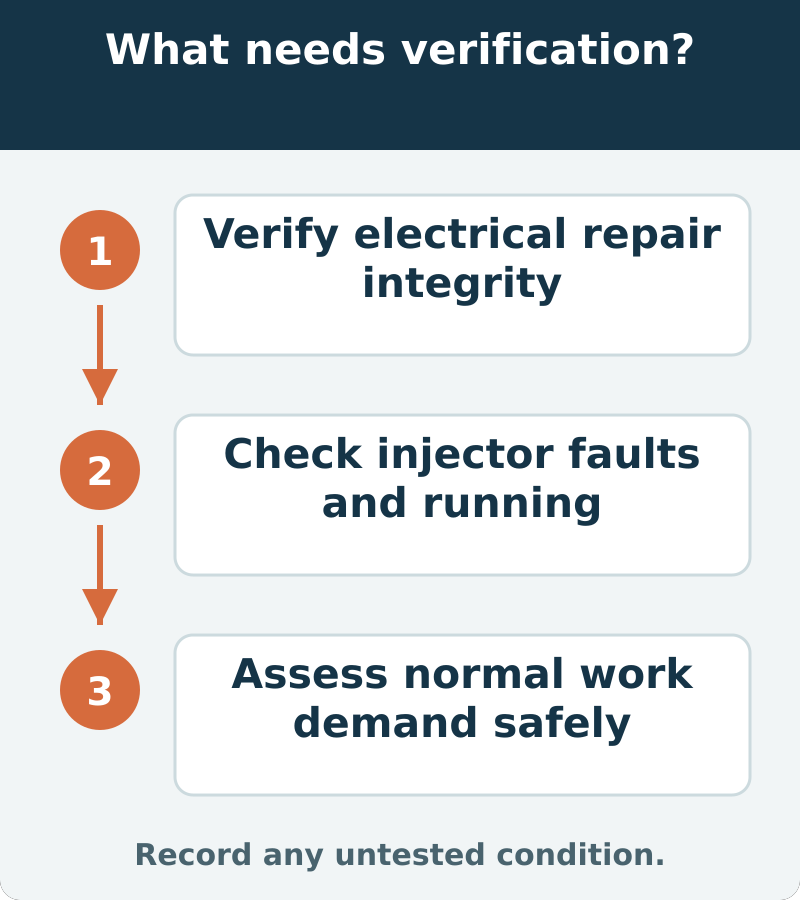
For a working van, “idles smoothly in the bay” may leave the owner’s main concern unanswered. Discuss the normal usage conditions before collection, including the circumstances in which the original complaint was observed. Any loaded evaluation must follow a safe workshop plan after the immediate fault is repaired.
Keep the grouped codes, identified electrical finding and repair details together. If the van remains smooth but a different warning returns, that record supports a focused second investigation. If the same circuit group reappears, it gives the technician a specific path to recheck rather than starting over with an injector shopping list.










Comments 0
Questions, fixes, and real-world diagnostic notes from readers.
Be the first to share a diagnostic result or ask a follow-up question.