
2003 Chevy Express Still Overheated After Cooling Repairs: Check the Airflow Side

Quick answer: New cooling parts do not establish that enough air crosses the radiator. This Express case points to fan-clutch performance, but proper repair verification must go beyond hand-spin feel.
A new water pump and thermostat do not establish that enough air crosses the radiator. Before another expensive repair, separate coolant circulation from the air path that carries the heat away.
Start with a safe visual inspection. Where an accessible gap between cooling cores is difficult to see, an articulating camera such as the AUTOOL SVB308 can help reveal hidden debris with the engine disabled and fully cool. It cannot measure airflow or prove that a fan clutch engages correctly.
If the temperature warning returns, stop safely and follow the vehicle’s overheating instructions. Do not open a hot pressurized cooling system, reach toward a moving fan or keep driving simply to make the fault more obvious.

In this guide
Stop the overheat; do not repeat it for evidence
In Abraham Torres-Arredondo’s Express case, a 2003 van with a 6.0L engine still overheated after water-pump and thermostat replacement and radiator work. Hand-spin feel seemed reassuring, but the complaint returned on a short drive. Increased fan engagement stopped overheating during the author’s check, leading to a clutch replacement recommendation. The account does not document installation and verification of the new clutch.
The useful lesson is to question what a reassuring check actually establishes. It is not permission to copy the author’s improvised clutch modification. Do not lock, glue, bend or otherwise alter a fan clutch to imitate a test.
Before the next appointment, record the conditions you already observed: traffic or open road, elapsed driving time, load, air-conditioning use and any coolant loss. Those notes help the shop plan a controlled diagnosis. They do not require another overheating event on a public road.
Cooling has a liquid path and an air path
Think of the radiator as a meeting point. Coolant brings heat to it; airflow carries heat away. Replacing a component on one side does not certify the other side, and a new part is not a test result.
The liquid-side investigation may involve the correct fill, leaks, circulation and application-specific component checks. The air-side inspection looks at the route through the cooling stack, the surrounding shroud and ducting, and the fan system. Which branch deserves priority depends on the evidence, not on which part was most recently purchased.
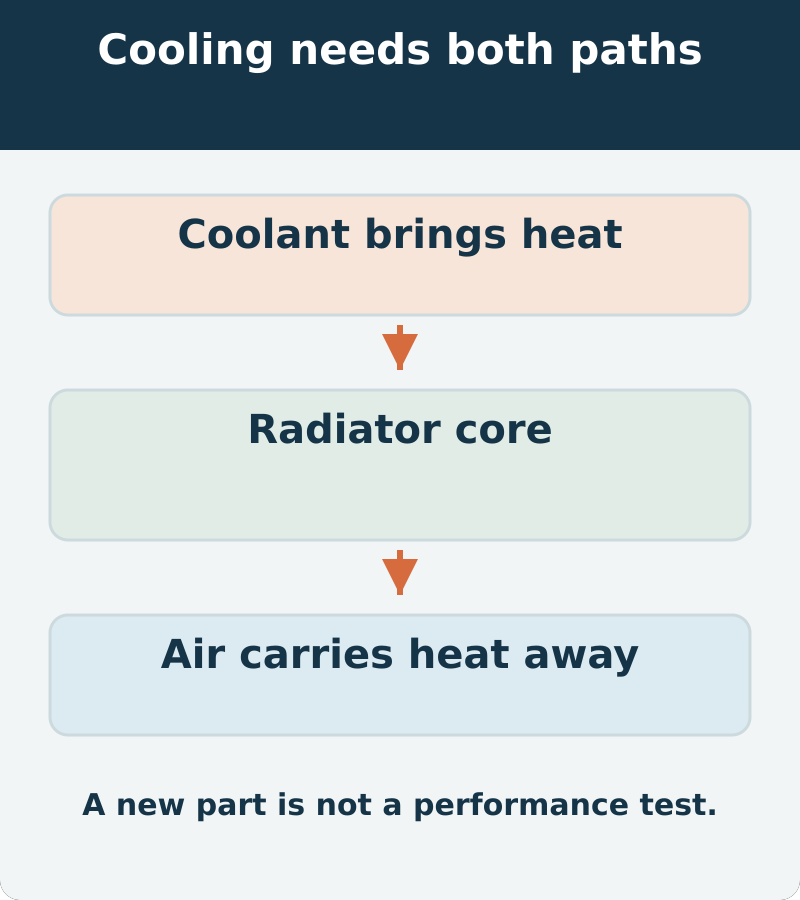
Ask the shop to identify the failed requirement before adding another component to the estimate. “Everything else is new” is not sufficient evidence for a head-gasket diagnosis—or for a fan-clutch diagnosis.
Why hand-spin feel cannot settle the diagnosis
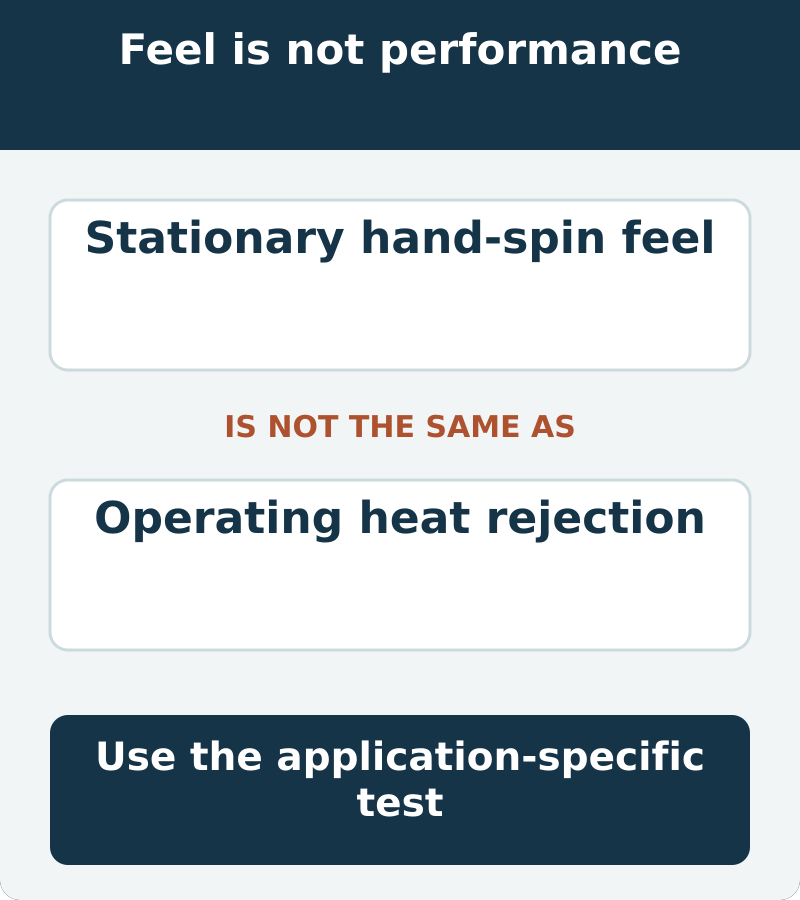
A stationary inspection and a working cooling system are different conditions. A fan that offers some resistance by hand has not demonstrated the correct response to the heat and load conditions that matter on the vehicle.
That does not make a safe engine-off inspection useless. Visible damage, interference, missing pieces or an obvious installation problem can change the next step. It means the inspection should be reported for what it is, without promoting a subjective feel into a complete performance test.
For owners, “the fan feels okay” should prompt a follow-up question: how was its required operating behavior checked? Do not attempt to stop or slow a running fan with a hand, tool, cloth or rolled paper. The risks are immediate, and the result is not a substitute for the approved diagnostic method.
A thermal clutch reacts to radiator-exit air
The temperature sensor reading on a scan tool is not the same thing as the air temperature reaching a thermal fan clutch. Hayden’s thermal-clutch diagnosis guidance explains the importance of air passing through the radiator and of the surrounding airflow path.
That relationship matters when apparently conflicting observations appear together. Hot coolant does not, by itself, tell you exactly what air is reaching the clutch’s sensing area. Restrictions, missing ducting or an incorrect installation can affect the system the clutch is supposed to respond to.
Inspect the cooling stack and shroud under safe, cooled and disabled conditions. Use the current procedure for the actual fan system before drawing a conclusion from engagement behavior. Do not apply a universal temperature, speed ratio or sound level from a different application. Remove inspection equipment before the engine is started.
What a sensible repair authorization includes
Ask for the vehicle’s confirmed configuration, the observed failure and the checks that support the proposed remedy. If a clutch is being replaced, the correct application and the surrounding installation matter as much as the name of the component.
Also ask which possibilities remain open. No visible oil contamination does not conclusively rule out a combustion-related cooling fault. Likewise, coolant circulation observed at one moment does not settle every question about cooling capacity under load. Additional testing should follow the remaining evidence, not a blanket assurance that one quick check excluded an entire category of faults.
You should be able to understand why the shop is taking the next step. A concise explanation might identify an obstructed air path, an installation defect or an operating fan response that failed the applicable test. Each supports a different repair and a different verification requirement.
Verify the installed repair, not an improvised test
The final check should evaluate the actual approved repair with the cooling system correctly assembled. Confirm the required fluid and leak checks, fan-system operation and a controlled assessment relevant to the original complaint. Do not continue a test into overheating to prove persistence.
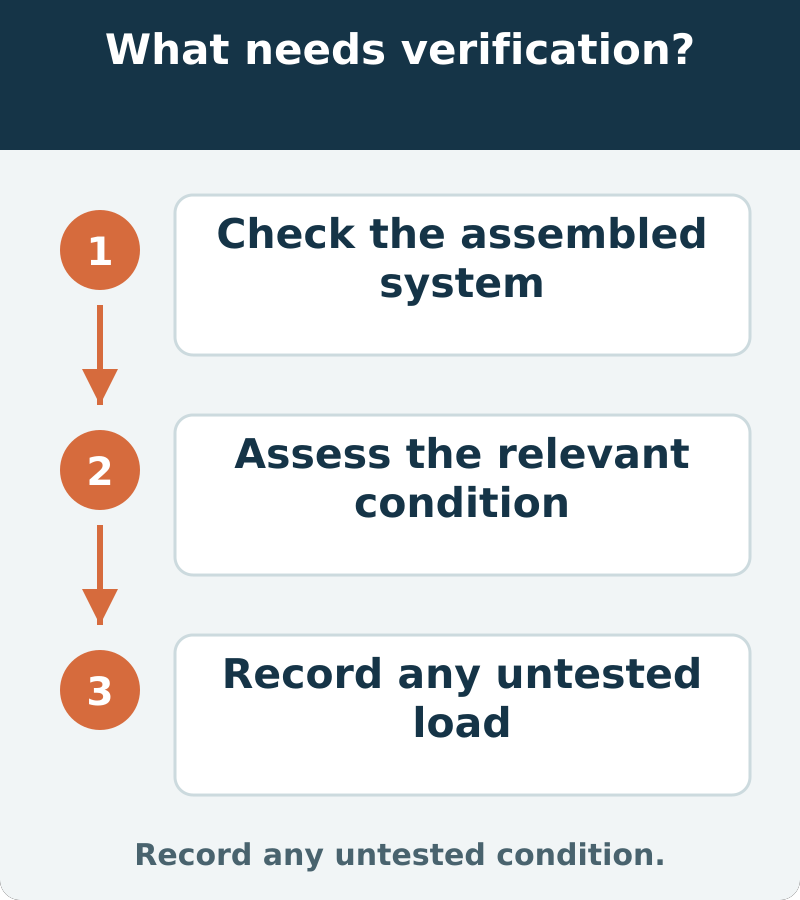
If the original load or temperature condition has not been safely assessed, record that limitation. An improvement during diagnosis is a useful clue; a documented result with the correct replacement installed is the evidence needed for a completed repair. That is the difference between finding a promising direction and handing back a van with a defensible cooling-system result.










Comments 0
Questions, fixes, and real-world diagnostic notes from readers.
Be the first to share a diagnostic result or ask a follow-up question.