
2026 Ram 1500 Dripping Brake Fluid? Stop and Inspect the BSCM2 Fittings

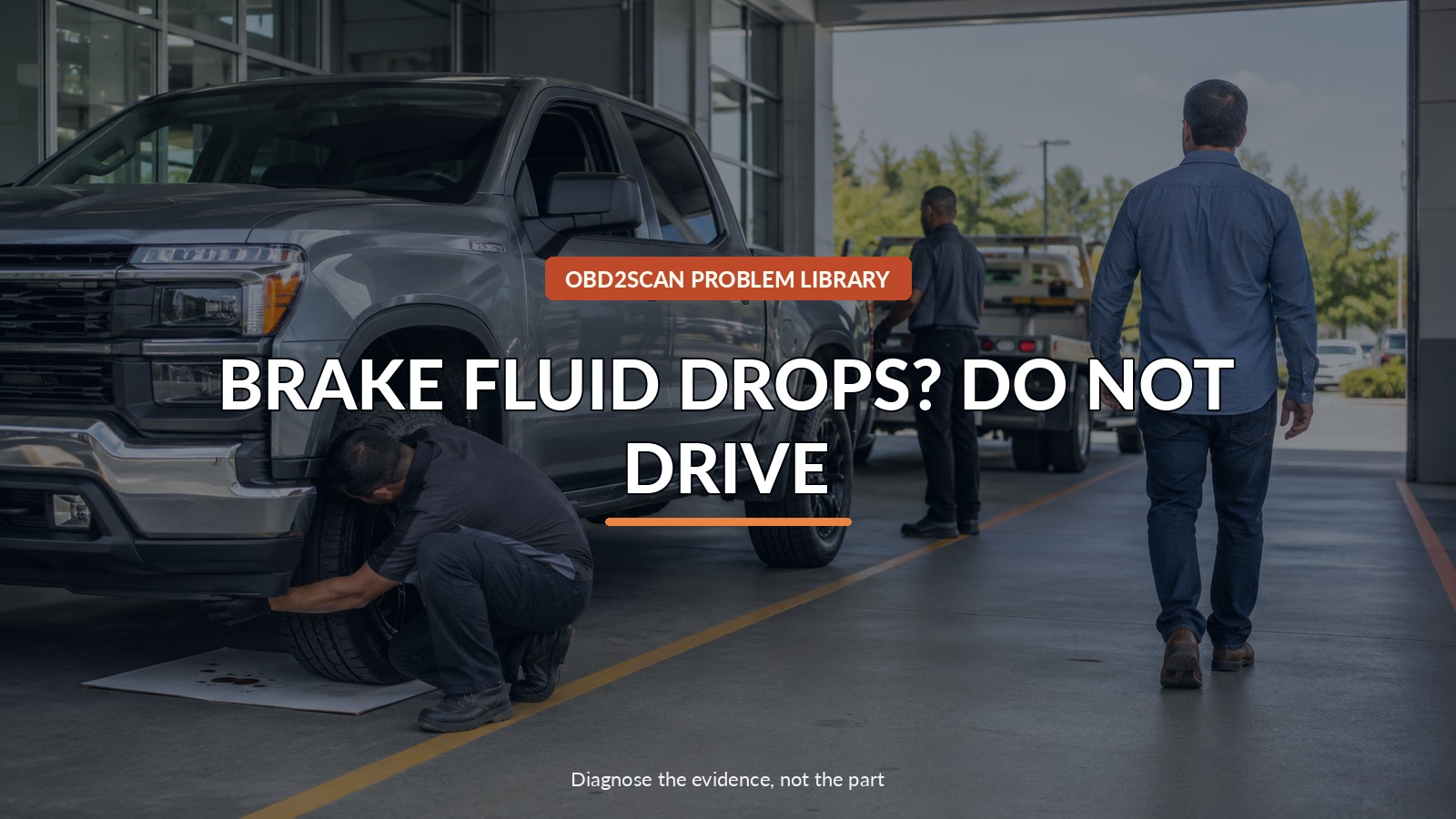
Brake Fluid Drops? Do Not Drive
Do not drive if brake fluid is suspected, the reservoir is low, the brake warning is on or pedal feel has changed; arrange a tow. Save a photo and clean-cardboard location map without touching or tasting the fluid. For a covered 2026 Ram 1500 with SJH, Stellantis identifies two BSCM2 line fittings that may be under-torqued and directs the shop to tighten them to the current specification, restore the correct fluid level and verify the hydraulic system.
After the leak is repaired and the hydraulic system is bled by a qualified shop, controlled pressure comparison can help verify that service restored the circuit. A tool such as the AUTOOL PT660 may support that post-repair check. PT660 can support a qualified shop’s left/right hydraulic pressure comparison after the leak has been safely repaired and the specified adapters and procedure are known; it cannot identify fluid on the ground, tighten BSCM2 fittings, prove the system is leak-free, bleed air, evaluate active-brake functions or make the truck safe to drive.
Clear or amber drops under a truck can be harmless A/C water, but a changing brake pedal makes that assumption unacceptable. This guide begins with the decision to tow, then follows the first wet point to two line fittings instead of naming the whole brake system from the puddle. Work backward from consequence to source: protect people first, identify the fluid without touching it, locate the highest fresh wet point and only then apply the narrow Ram bulletin.
Quick answer: Do not drive with suspected brake-fluid loss; map the drip and have a shop trace the highest fresh wet point to the BSCM2 fittings.
In this guide
- Make the drive-or-tow decision first
- Capture the drip location on clean cardboard
- Separate condensation from suspected brake fluid
- Check VIN, build dates and SJH
- Trace wetness to the BSCM2 fittings
- Use the current torque procedure
- Restore fluid and verify hydraulic integrity
- Confirm pedal feel and active-brake functions before release
Make the drive-or-tow decision first
Do not drive if the brake pedal feels softer, travels farther, a red brake warning is on, fluid is below minimum or fresh liquid is visible near brake components. Park on level ground, avoid pressing the pedal repeatedly and arrange a flatbed or appropriate tow. Do not taste or rub an unknown fluid; brake fluid damages paint and irritates skin and eyes. Keep children and animals away. A normal pedal at one moment does not make an active hydraulic leak safe for a road test.
Capture the drip location on clean cardboard
Without crawling under an unsupported truck, slide clean cardboard beneath the parked vehicle and mark tire positions. Note color, smell from a safe distance, viscosity, location and whether the spot grows after a pedal application by a technician. Water that appears after A/C use is usually clear, odorless and evaporates without an oily edge, but location alone is not proof. Photograph the reservoir level and warning lamps. Do not add fluid simply to make the warning disappear; the falling level is evidence of where the sealed system has lost volume.
Separate condensation from suspected brake fluid
TSB 05-003-26 concerns certain 2026 Ram 1500 vehicles built from May 1 through June 4, 2026 and equipped with the relevant brake-control configuration, including sales code SJH. Confirm the build record and equipment by VIN. A 2025 truck, Ram HD or vehicle outside the window needs its own current leak diagnosis. Check for later revisions or safety actions; a technical bulletin does not itself define recall or warranty status.
Check VIN, build dates and SJH
With the truck safely supported under the service procedure, a technician should start at the highest fresh wet point rather than the lowest drip. Clean only enough to see new fluid, then inspect reservoir, master cylinder, ABS/brake control unit, lines, unions, hoses and calipers. The bulletin focuses on the two brake-line connections at the BSCM2. Fluid can track along a line and drip elsewhere, so a clean source joint is stronger evidence than a stained crossmember.
| Finding | Meaning | Safest next step |
|---|---|---|
| Soft pedal, warning or low reservoir | Hydraulic integrity may be lost | Do not drive; tow |
| Clear water only after A/C use | Condensate is plausible | Confirm it evaporates and brake state is normal |
| Freshness begins at a BSCM2 line fitting | Bulletin branch is plausible | Verify VIN/build, then service the joint |
| Fluid returns after specified repair | Seal/line/other source unresolved | Stop testing on road and reopen diagnosis |
Trace wetness to the BSCM2 fittings
Confirm the correct fittings and use a calibrated flare-nut tool and current service information. The bulletin specifies tightening the two BSCM2 brake-line fittings to 35 N·m (26 lb-ft), but this is not a roadside instruction: access, support, contamination control and hydraulic handling matter. Do not overtighten in an attempt to compensate for a damaged flare or port. If a line, thread, seat or module shows damage, stop and follow the appropriate replacement procedure instead of forcing the joint.
Use the current torque procedure
Restore only the specified new brake fluid from a sealed container and keep petroleum products, dirt and moisture out of the reservoir. Bleed the affected circuit using the Ram sequence and scan-tool functions where required. Never reuse drained fluid. A pressure or pedal test can confirm operation after repair, but it cannot certify that a damp fitting has stopped until the joint is cleaned, stressed under the specified test and reinspected. Protect painted surfaces immediately if fluid was spilled.
Restore fluid and verify hydraulic integrity
Before moving the truck, confirm a firm pedal, correct reservoir level, no warning messages and no fresh wetness during a controlled pressure hold. Inspect all serviced joints, not only the two named in the bulletin. The first dynamic test belongs in a controlled service area at walking speed, followed by another leak inspection. Do not enter traffic if pedal reserve, pull, ABS behavior or warning state is abnormal. Braking verification must be conservative because a static pass cannot reproduce every vibration and pressure cycle.
Confirm pedal feel and active-brake functions before release
Recheck the cardboard and reservoir after the first heat cycle and again the next day. Record the starting and ending fluid levels rather than relying on memory. If drops return, the level falls or a warning reappears, tow the vehicle back and provide the source photographs. Do not retighten repeatedly; recurrent leakage may indicate a damaged sealing surface or a different source. Clean documentation also distinguishes leftover wash fluid from a genuinely active leak.
The puddle does not get the final vote—the brake pedal and fresh source do. A covered 2026 Ram 1500 with new wetness beginning at a BSCM2 line fitting has a focused service path, but the vehicle stays off the road until the circuit is correctly serviced, bled and proven dry under pressure.






Comments 0
Questions, fixes, and real-world diagnostic notes from readers.
Be the first to share a diagnostic result or ask a follow-up question.