
Mercedes S320 M276 Cold-Start Rattle: Bank 2 Intake Cam Adjuster Replaced

A Mercedes-Benz S320 with an M276 engine arrived with a metallic rattle lasting about one to three seconds immediately after a cold start; its year, chassis and mileage are not reported. The noise disappeared as the engine warmed, while DTC P002177 identified a Bank 2 intake-cam position deviation and inability to reach the commanded position. Inspection confirmed an internal Bank 2 intake cam-adjuster fault, the adjuster was replaced with timing retained, and the source reports that repeated cold starts no longer reproduced the rattle.
Case at a glance
| Item | This S320 |
|---|---|
| Vehicle | Mercedes-Benz S320; year and chassis not reported |
| Engine | M276 |
| Mileage | Not reported |
| Complaint | One-to-three-second metallic rattle immediately after a cold start, gone when warm |
| Diagnostic evidence | P002177, Bank 2 intake cam position deviation / commanded position not reached; removed adjuster inspection |
| Confirmed fault | Internal mechanical failure of the Bank 2 intake camshaft adjuster |
| Repair | Bank 2 intake cam adjuster replaced while engine timing was locked/aligned |
| Restoration | Engine reassembled and timing-related fault memory cleared |
| Verification | Multiple cold starts reportedly completed without the original short rattle |
The cold window made the complaint reproducible
The important word in the complaint was not simply “noise”; it was “cold.” The rattle existed only during the first seconds after startup, before the symptom disappeared with warmth. Recording that window prevented a quiet warm engine from being mistaken for a no-fault result.
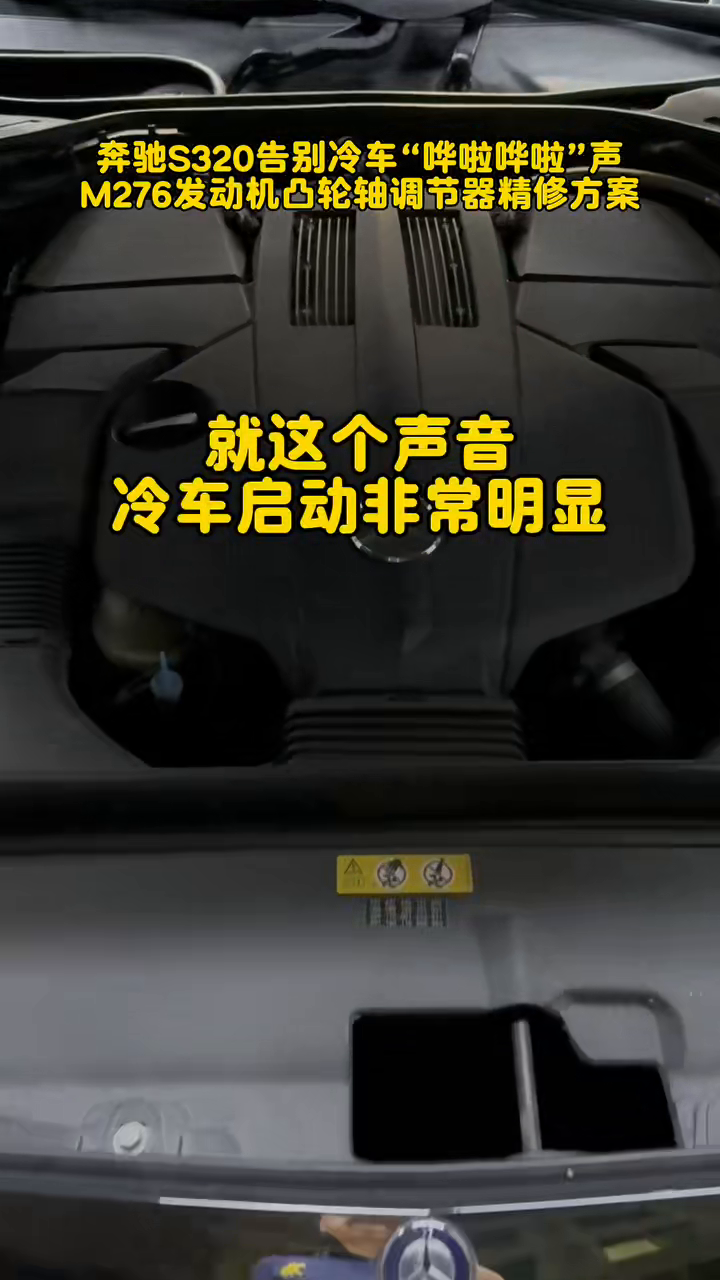
The workshop did not condemn every timing component from sound alone. A cold-start metallic rattle can involve oil-pressure delay, chain control, an adjuster, or another accessory. The scan result supplied the directional evidence needed to move from a broad noise complaint to one bank and one control function.
P002177 narrowed the noise to Bank 2 intake control
P002177 was reported as Bank 2 intake camshaft position deviating from the target and not reaching its commanded position. That code did not prove which internal piece had failed, but it connected the transient noise with an intake-cam control problem on Bank 2.
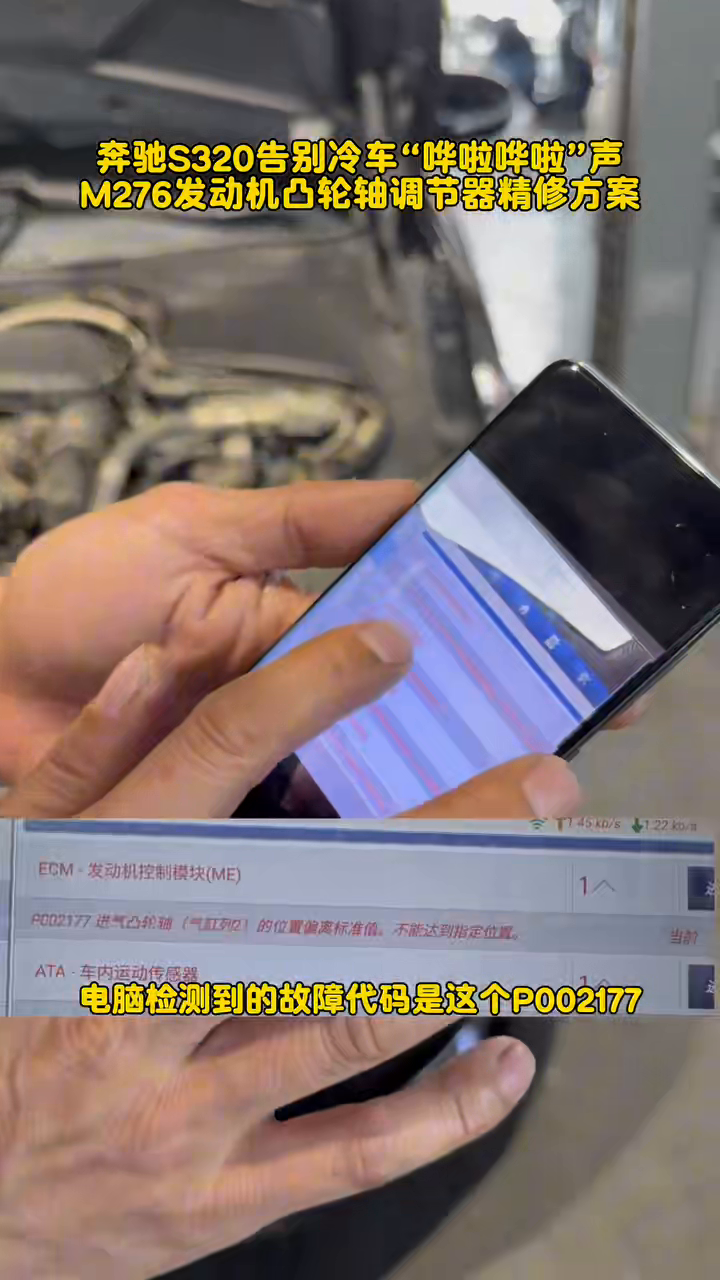
This is where suspicion and confirmation separate. Before removal, the adjuster was a candidate supported by the noise window and bank-specific code. Confirmation came only after the relevant mechanism was exposed and examined.
The removed adjuster supplied mechanical evidence
The media shows the removed adjuster over the engine, then closer views of its internal face and locking area. It is compared with another component and inspected with a camera. Those views document component-level examination rather than a scan-to-parts jump.
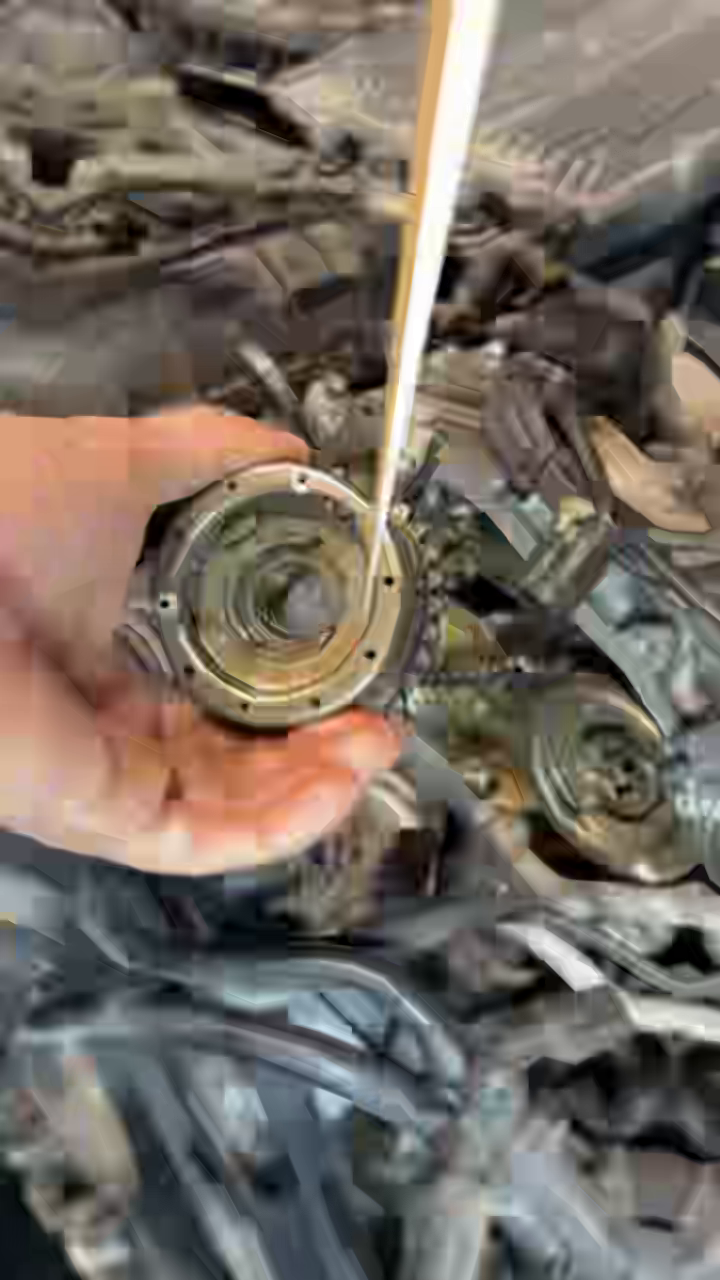
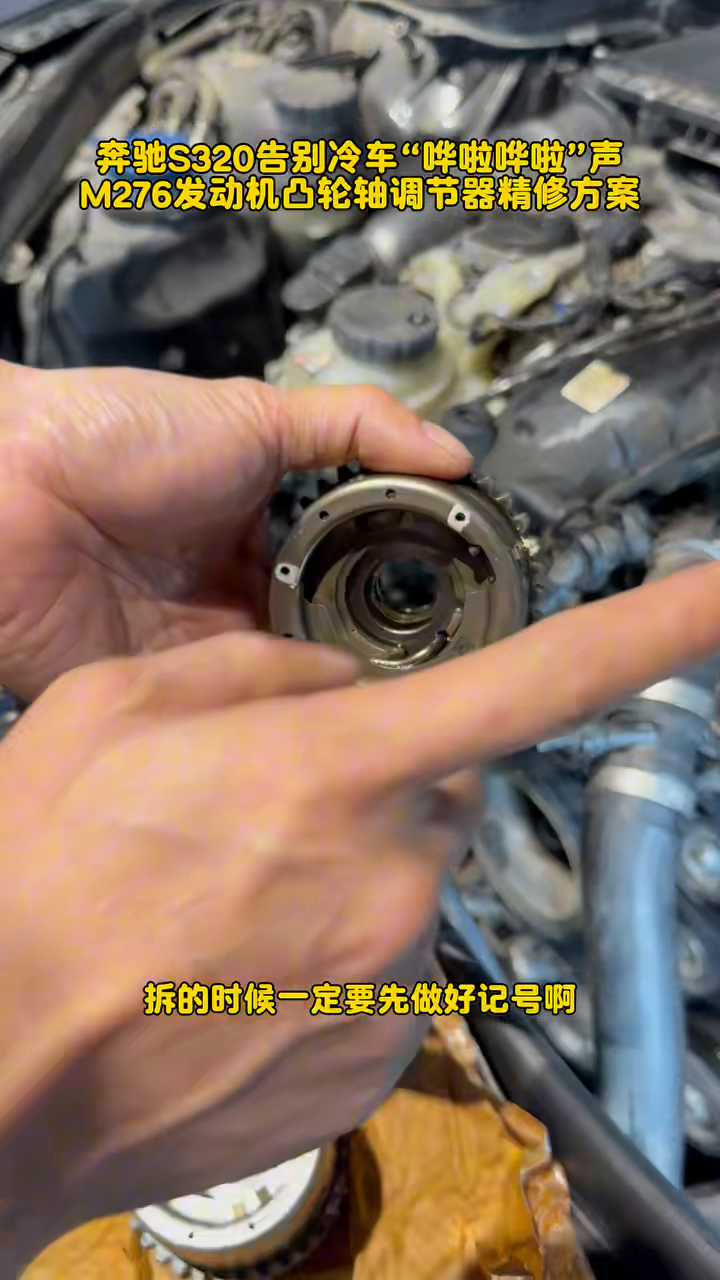
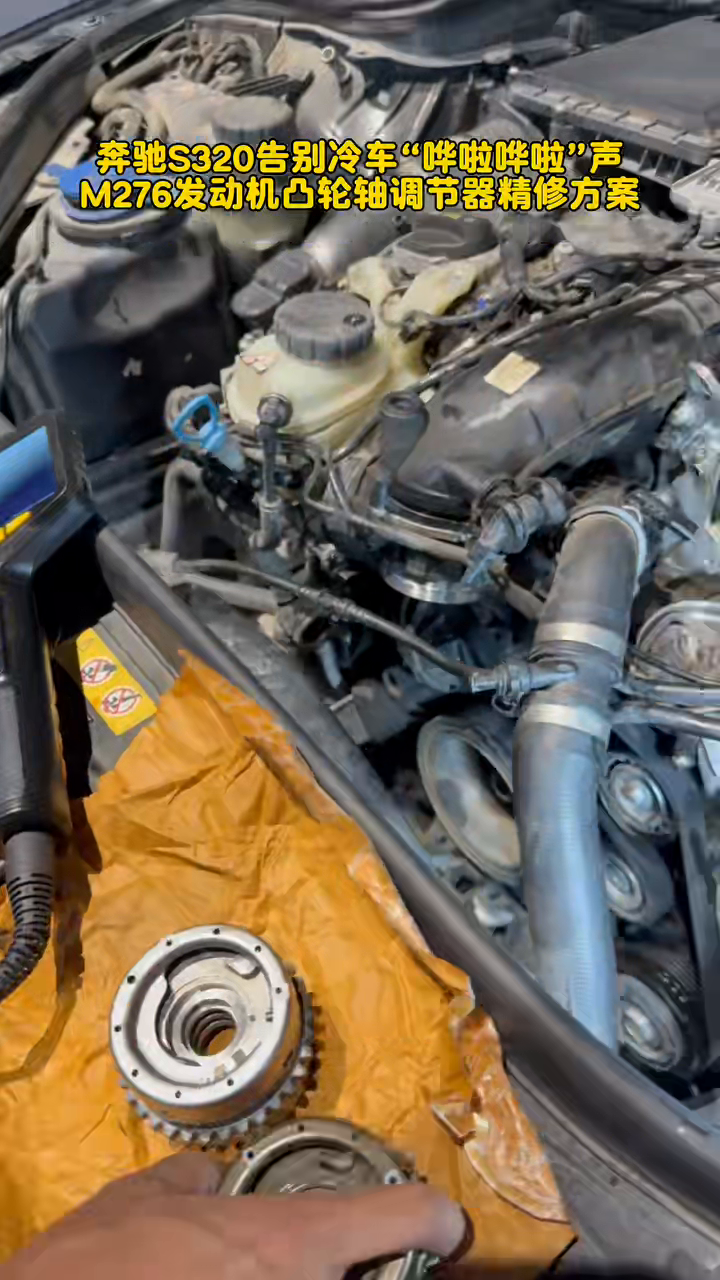
The source attributes the fault to internal mechanical failure of the Bank 2 intake adjuster. It does not report oil-pressure measurements, commanded-versus-actual scan data, chain elongation values or a quantified locking-pin test. Those missing data keep the claim narrow: this adjuster was confirmed and replaced in this case; the article does not announce a universal M276 failure pattern.
Timing was retained while one adjuster was replaced
Cam-adjuster replacement is not a generic remove-and-refit job. The repair involved exposing the timing area, locking and aligning the crankshaft/camshafts to the exact engine procedure, replacing the Bank 2 intake adjuster, and reassembling the engine. Timing retention is the safety-critical boundary: losing synchronization can cause a no-start or mechanical contact.
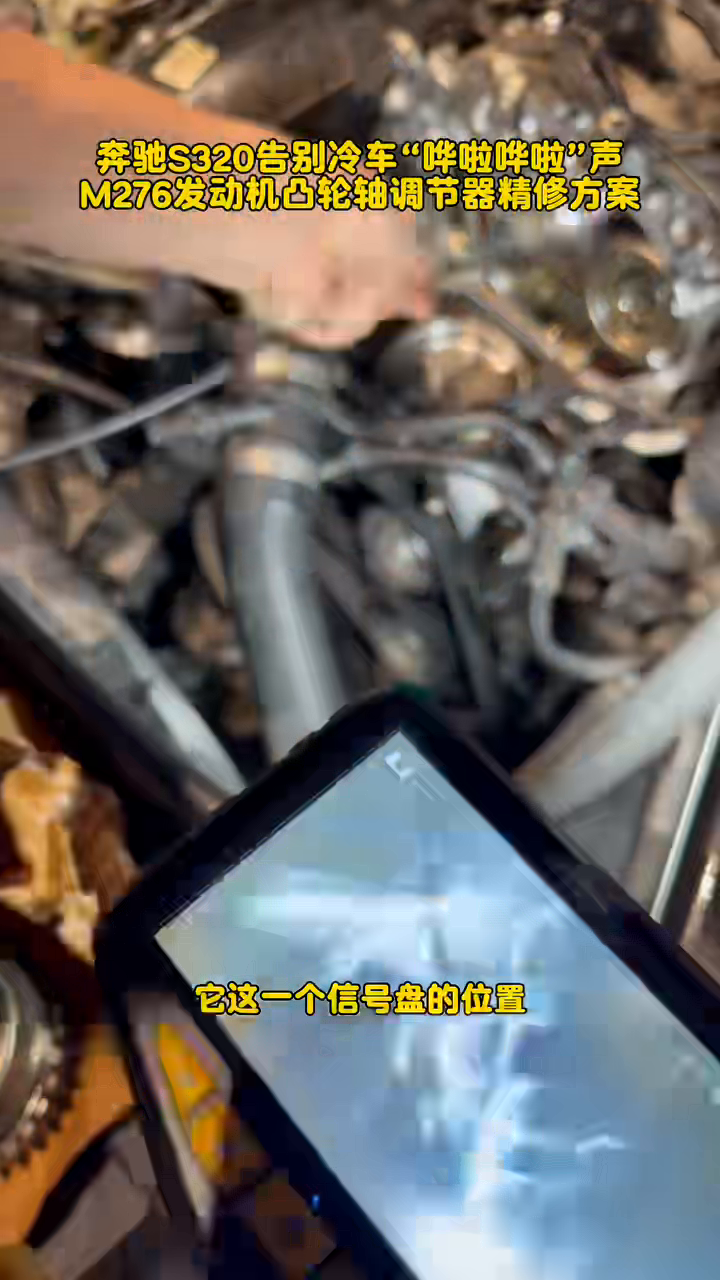
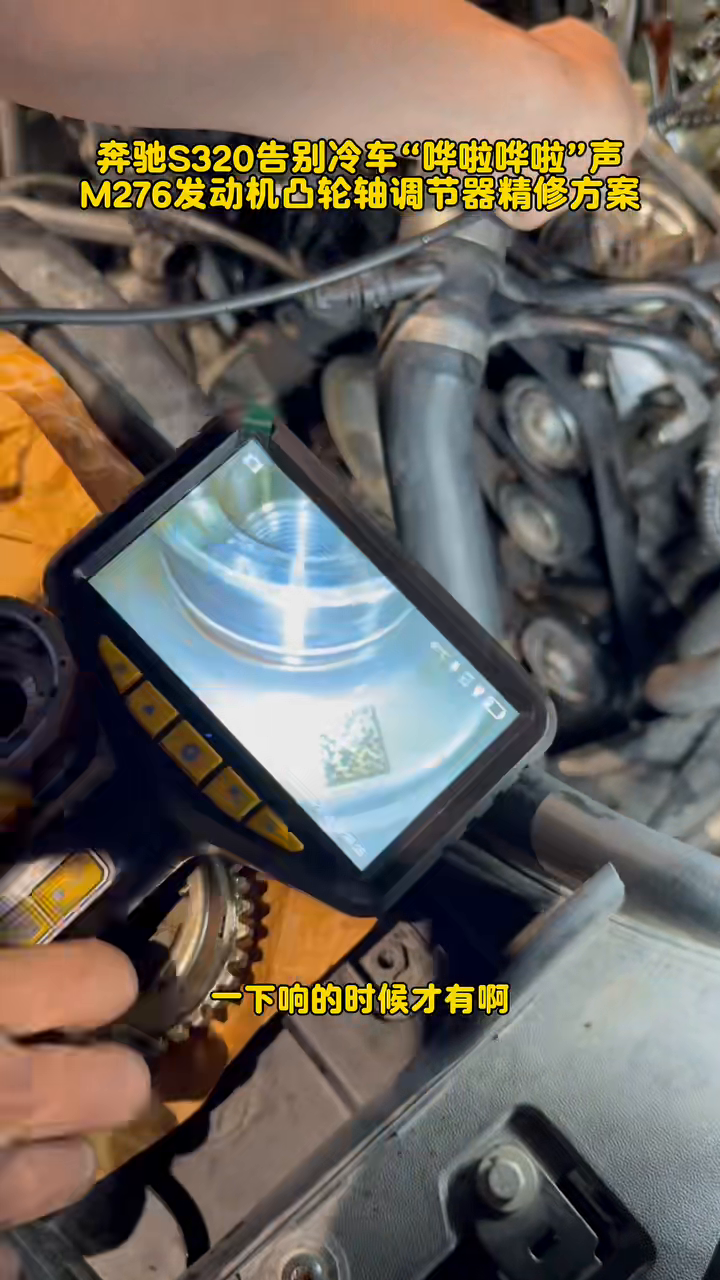
No timing-tool identifier, crank position, torque, angle, bolt-reuse rule, sealant instruction or part number is reported. This R3 repair belongs with a technician who has current Mercedes service information for the exact engine/build; the case is diagnostic evidence, not a stand-alone timing procedure.
Multiple cold starts provided the closing test
After reassembly, the source reports clearing timing-related fault memory and repeating cold starts. The original one-to-three-second rattle did not return. Recreating the cold condition matters more than a single warm idle because the warm engine had already been quiet before repair.
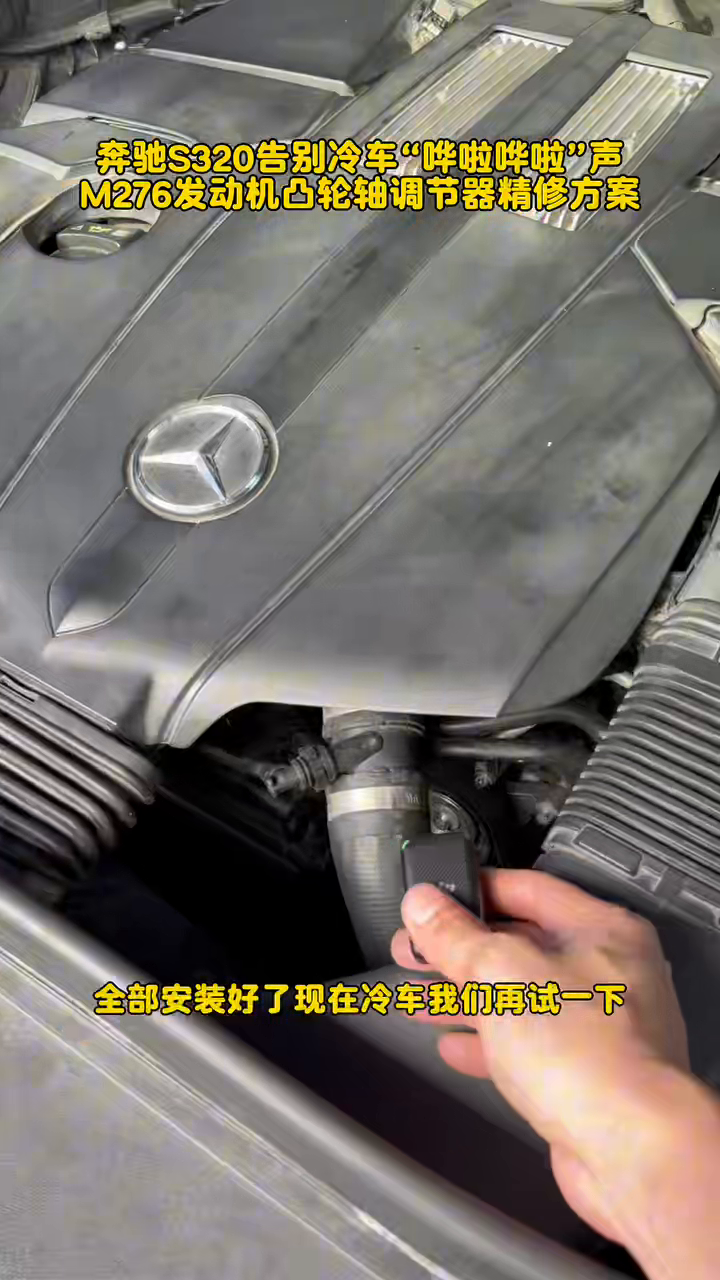
That is same-condition verification at the reported symptom level. It is not a long-term durability promise, and the source does not provide the final rescan text or cam-position data. A later cold start and scan would be sensible maintenance triggers if noise or a timing fault returns.
A transferable diagnosis, with a strict timing boundary
For a similar complaint, capture the first cold start before warming or clearing codes. Record the noise duration, scan every control unit, and compare the affected bank’s commanded and actual cam position before invasive work. A bank-specific fault plus component-level evidence can justify a focused repair.
Do not copy this adjuster decision from sound or engine family alone. Oil supply, electrical control, chain condition and exact build procedures can change the answer, and timing work must follow the VIN-specific locking and tightening process.


Comments 0
Questions, fixes, and real-world diagnostic notes from readers.
Be the first to share a diagnostic result or ask a follow-up question.