
2021 BMW iX3 No A/C: A Cracked High-Pressure Pipe, Not a Failed Compressor

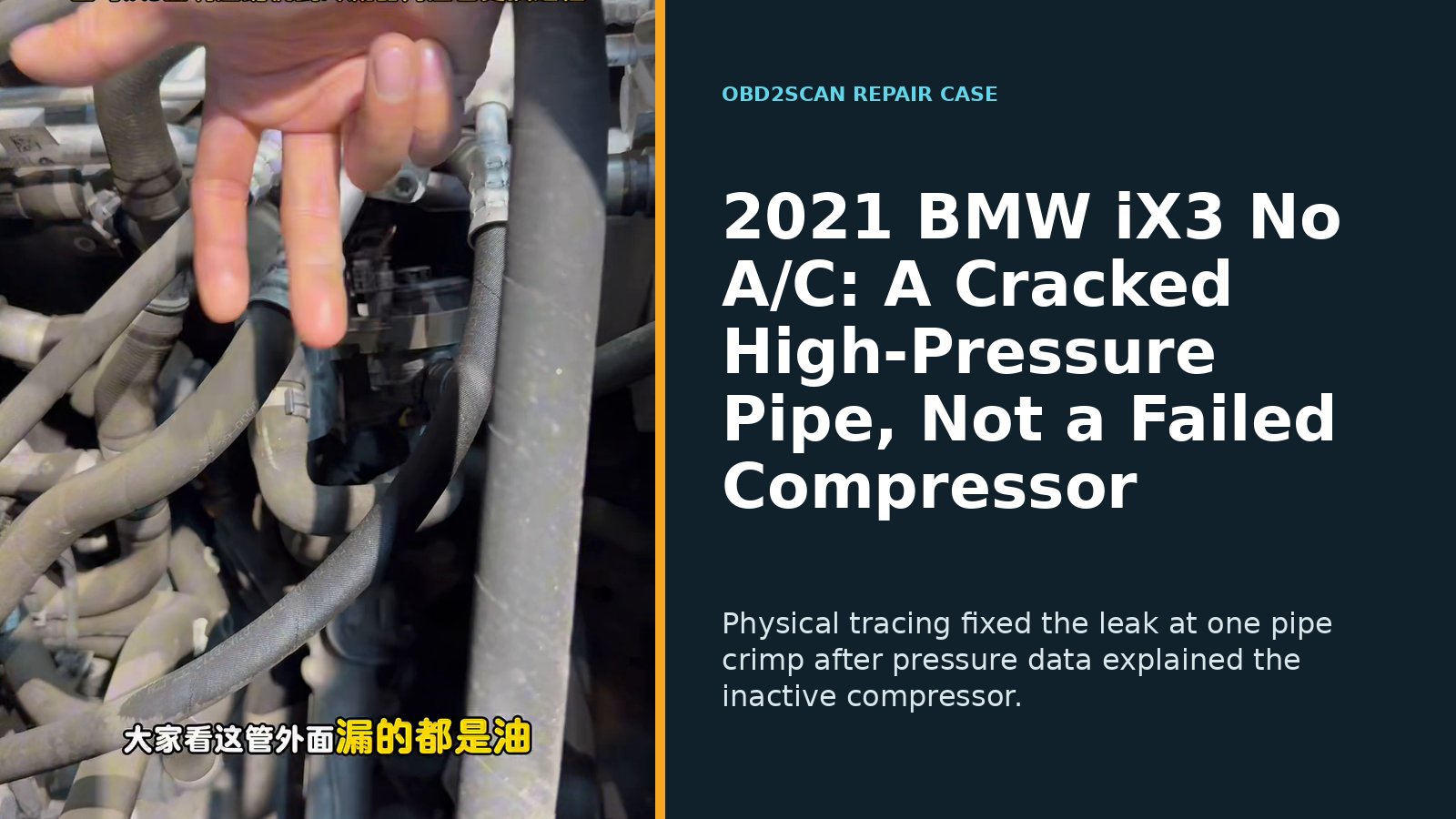
A 2021 BMW iX3 with 45,000 km arrived with no air conditioning; no more specific drive-unit designation was reported. The compressor request was at zero, but low refrigerant pressure redirected the inspection from “failed compressor” toward “why is the system undercharged?” Dye and nitrogen testing confirmed a crack at the high-pressure pipe crimp, after which the shop replaced that pipe and its seals, restored the recorded oil and label-specified charge, and measured about 5.3°C at the outlet in a static check.
Case at a glance
| Item | This iX3 |
|---|---|
| Vehicle | 2021 BMW iX3 |
| Mileage | 45,000 km |
| Complaint | No A/C |
| Initial clue | Compressor request/duty at zero |
| Confirming evidence | Low system pressure, then dye/nitrogen trace at a cracked high-pressure pipe crimp |
| Repair | High-pressure pipe from compressor outlet toward condenser inlet, plus connection seals |
| Restoration | Correct POE oil replenished as recorded; system evacuated and charged from the vehicle label |
| Verification | Static outlet display about 5.3°C; road and heat-soak results not reported |
Zero request did not sentence the compressor
The scan display made the electric compressor look inactive, but it did not say why. When refrigerant pressure is too low, compressor operation may be withheld to protect the hardware. That made the zero request a clue in the sequence, not confirmation of an internal compressor failure.
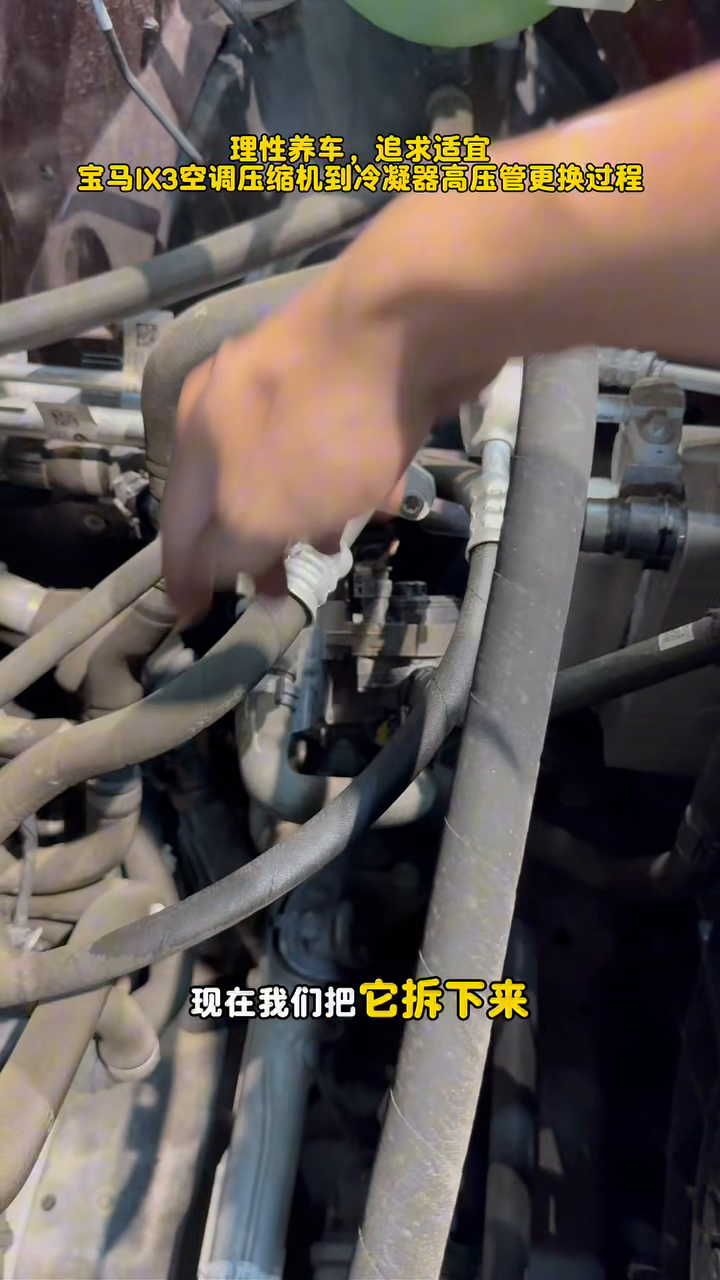
The next result was low system pressure. An undercharged system can explain both no cooling and an inhibited compressor, but “low” still does not identify where the charge escaped. The workshop therefore moved from scan data to a physical leak search.
The trace stopped at one crimp
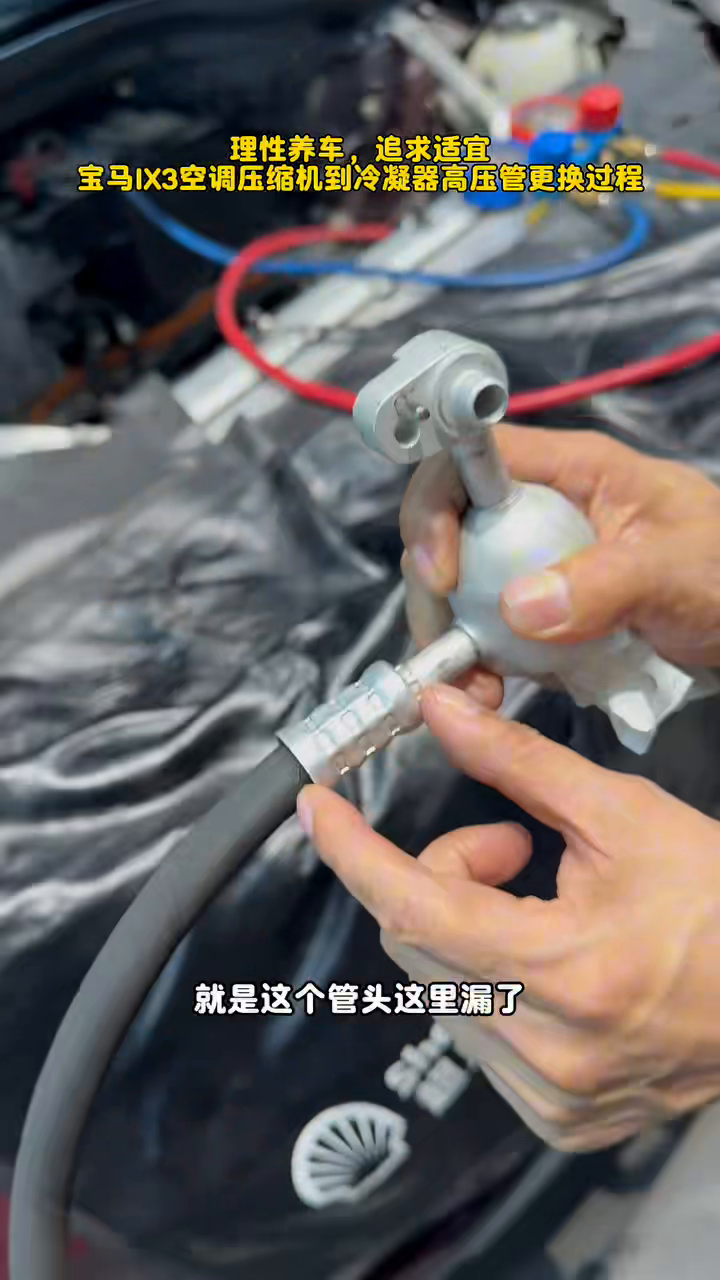
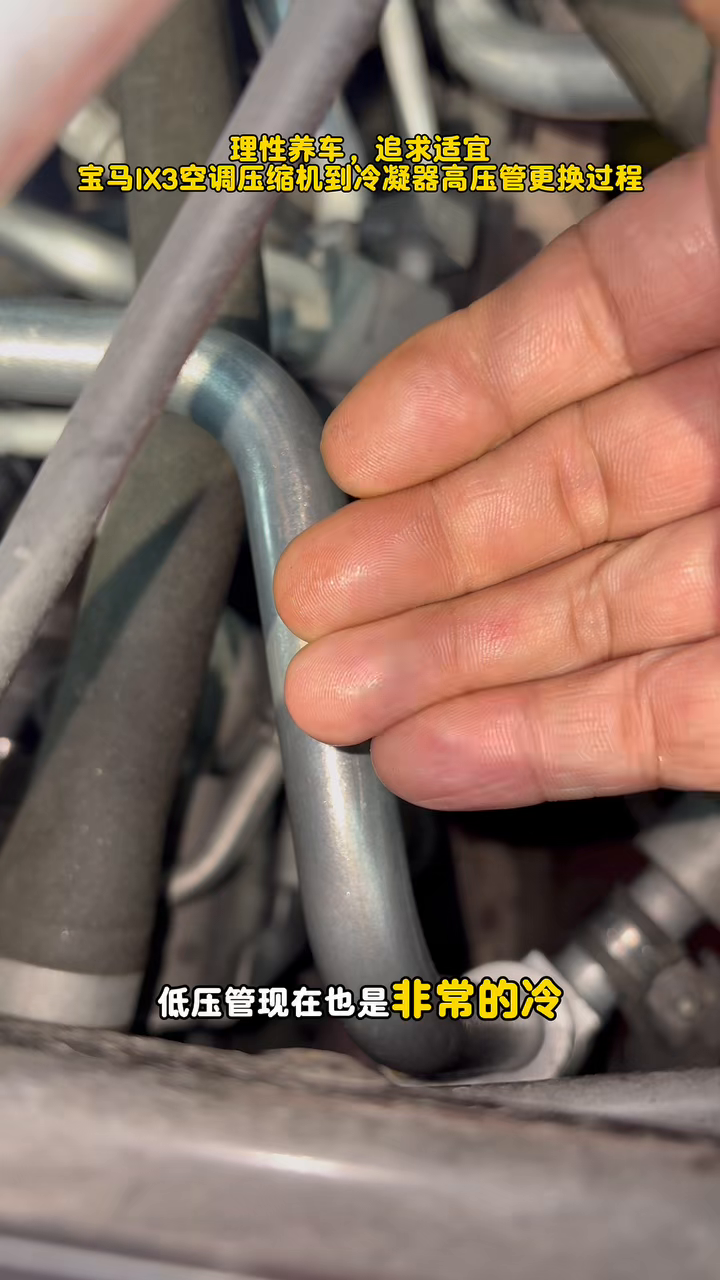
Dye and nitrogen were used to follow the leak, and the decisive location was the crimp on the high-pressure pipe running from the compressor outlet toward the condenser inlet. The close frame shows the suspect crimp/pipe area; the source account supplies the confirmation that a crack there leaked under test.
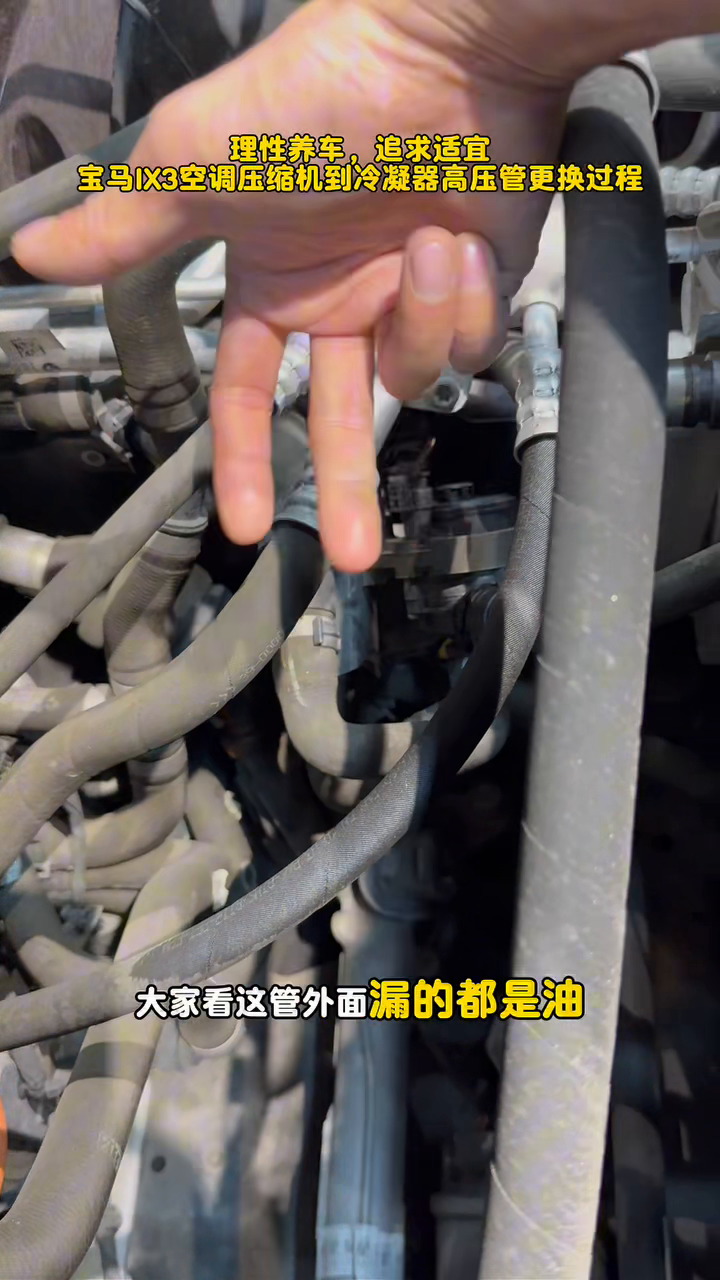
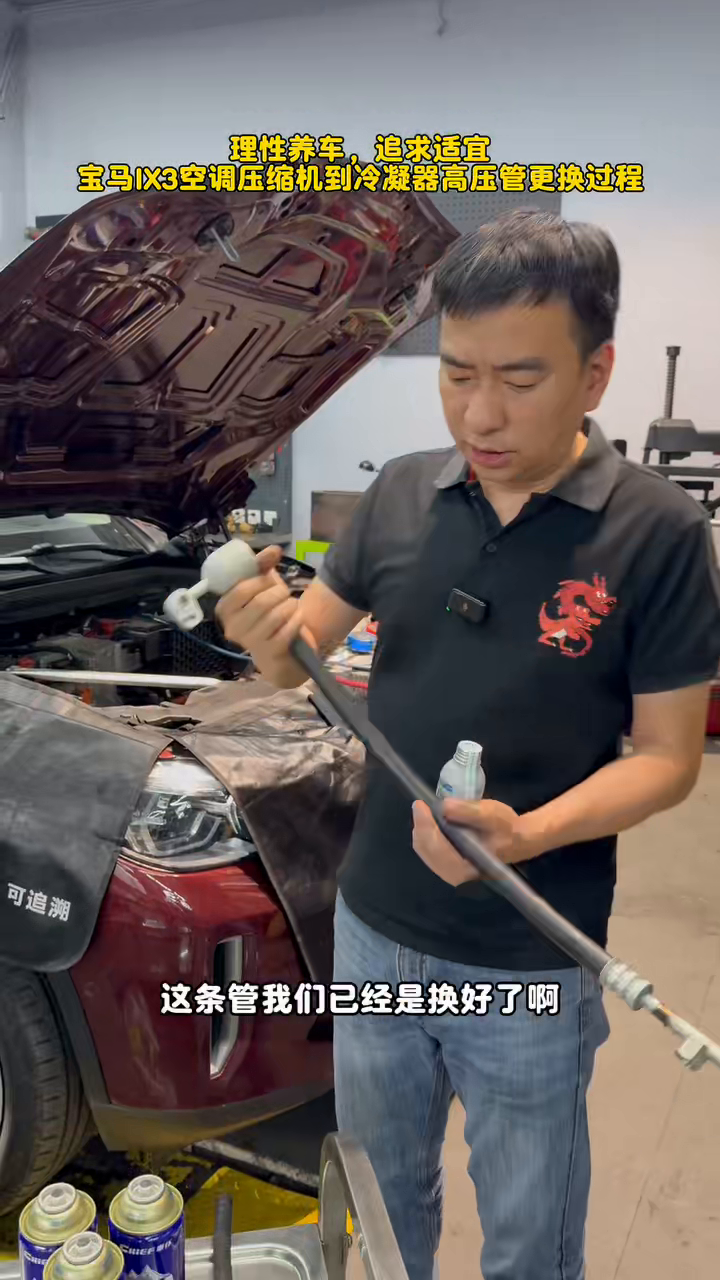
Suspicion and confirmation remain separate here. Low pressure suggested a leak; the trace test fixed that leak to this crimp. Neither the inactive compressor nor low pressure alone could have supplied that location.
The repair removed the leaking path
Access was opened around the pipe route, the cracked high-pressure pipe was removed, and the replacement was compared and installed between its compressor-side and condenser-side connections. Connection seals were renewed rather than reusing a seal that had already been disturbed.
Because this line connects to a high-voltage electric compressor, opening the refrigerant circuit or working at that compressor first requires the exact iX3 de-energization procedure, lockout/tagout and absence-of-voltage verification. That work belongs with personnel qualified for both EV high-voltage and refrigerant service; the source does not provide the procedural details.
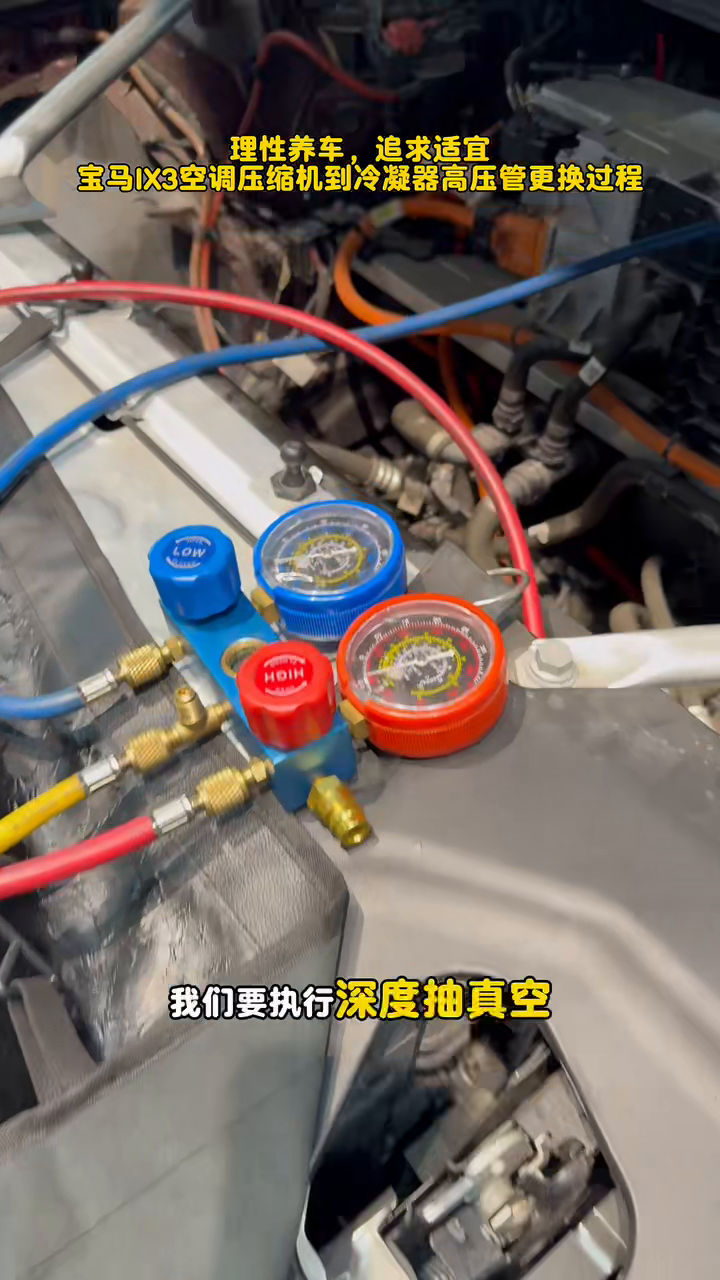
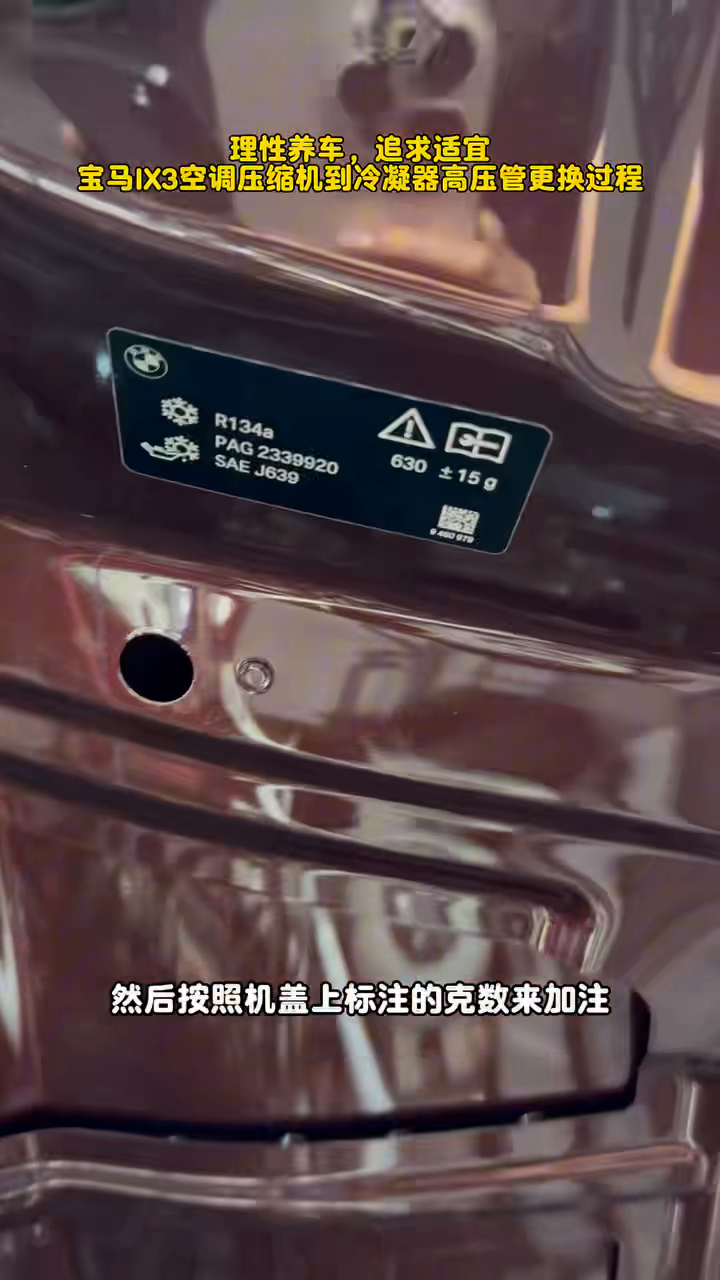
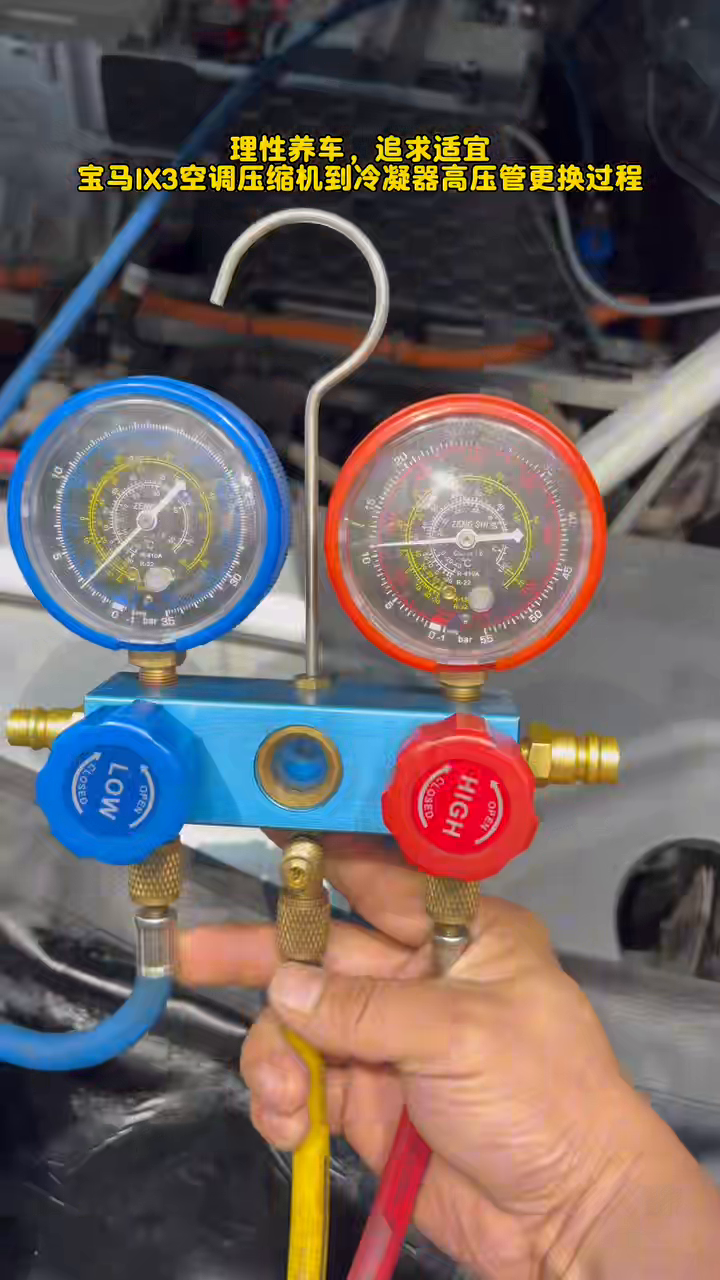
Oil, vacuum and charge restored the system
The source records replenishing the correct POE oil, then evacuating and charging the system according to the vehicle label. It does not report the refrigerant family, charge mass, oil quantity, evacuation target, or hold time, so none is reconstructed here.
A service station such as the AUTOOL LM708 refrigerant service station is relevant to the recovery, vacuum/leak-check workflow, charging, and separate PAG/POE weighing tasks performed in this case. It cannot identify which crimp is cracked; that conclusion came from the vehicle’s pressure loss and physical trace test.
A cold static outlet closed only the workshop condition
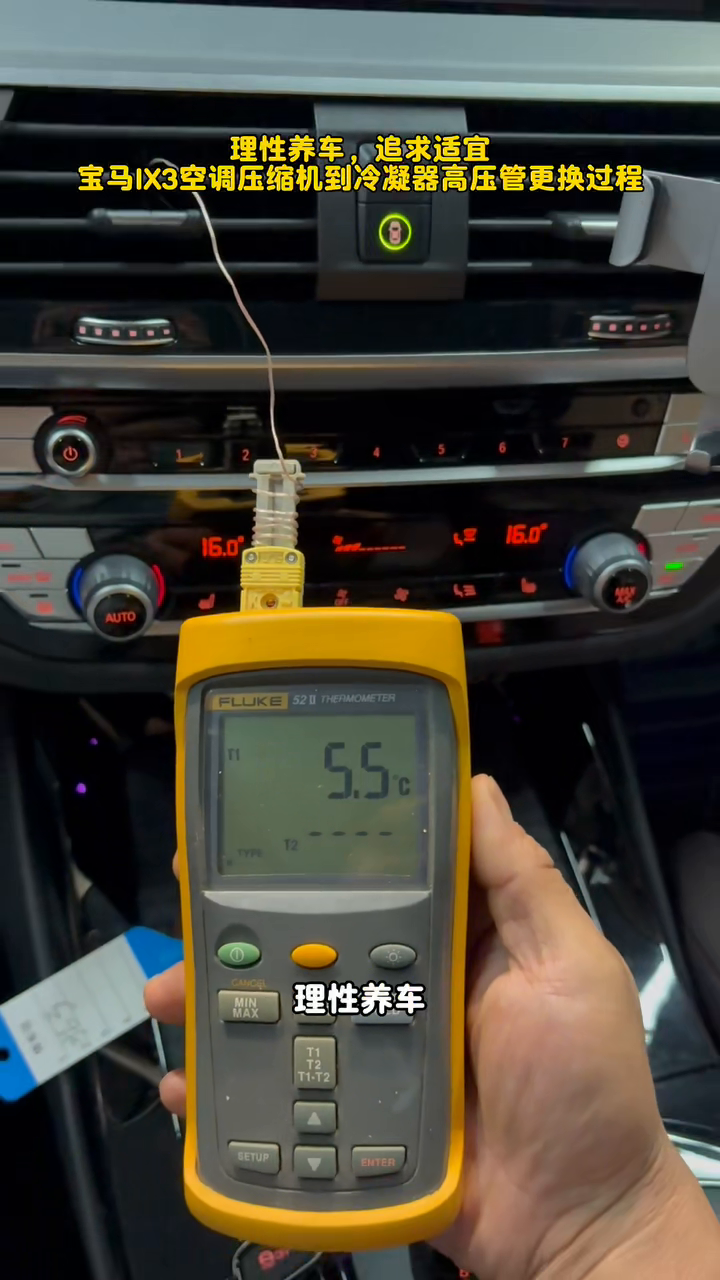
With service complete, the outlet display in the video reads about 5.3°C, consistent with the source’s reported 4–6°C static result. That answers the immediate no-cooling complaint under the recorded workshop condition. The source gives no road distance, extended heat soak, or later leak recheck, so the verification is classified as static only.
For another iX3 with no A/C and zero compressor request, record pressure first, determine whether a protection condition is active, and use a trace method to locate any loss before condemning the electric compressor. Do not copy this pipe replacement when charge is correct, the leak appears elsewhere, or compressor command is absent because of a different electrical or thermal-management fault.


Comments 0
Questions, fixes, and real-world diagnostic notes from readers.
Be the first to share a diagnostic result or ask a follow-up question.