
2017 Mercedes GLC 300 Ground Leak: Three Separate Fluid Paths Repaired

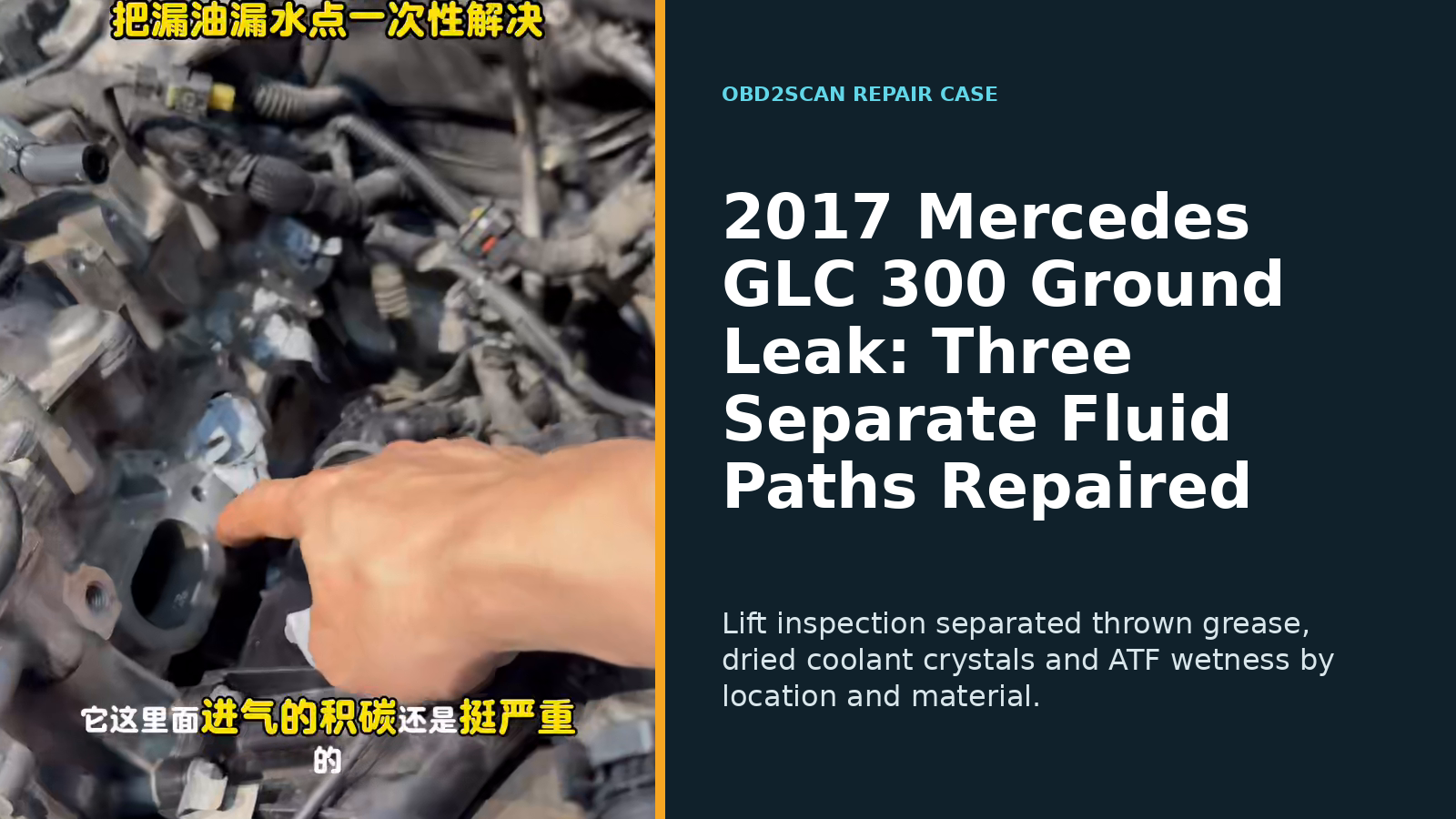
A 2017 Mercedes-Benz GLC 300 (W253, M274, 9G-Tronic) with about 315,000 km came in after the owner found oil-and-water-like residue beneath it. Lifting the SUV did not reveal one shared failure: both front outer CV boots had thrown grease, the heater-valve housing carried coolant crystals, and the transmission pan/seal area was seeping ATF. Each path received its own repair, followed by coolant and transmission restoration and a reported 20 km mixed-condition road test with the serviced interfaces remaining dry.
Case at a glance
| Item | This vehicle |
|---|---|
| Complaint | Mixed-looking residue under the parked vehicle |
| Drivability | Owner reported no obvious power problem |
| Confirmed findings | Torn left and right outer CV boots; leaking heater-valve housing; seeping 9-speed transmission pan/seal |
| Repairs | Rebooted serviceable outer joints; replaced heater valve; replaced integrated transmission pan/filter |
| Restoration | Repacked joints, vacuum-tested/filled cooling system, filled and temperature-set transmission fluid, ran reported initialization |
| Verification | 20 km reported road test and dry post-test interfaces |
“Oil and water” was a location clue, not one diagnosis
Residue on the ground can merge after dripping or being carried rearward by airflow. The inspection therefore worked from material and location rather than assuming a single root cause. Once raised safely, three patterns became distinguishable.
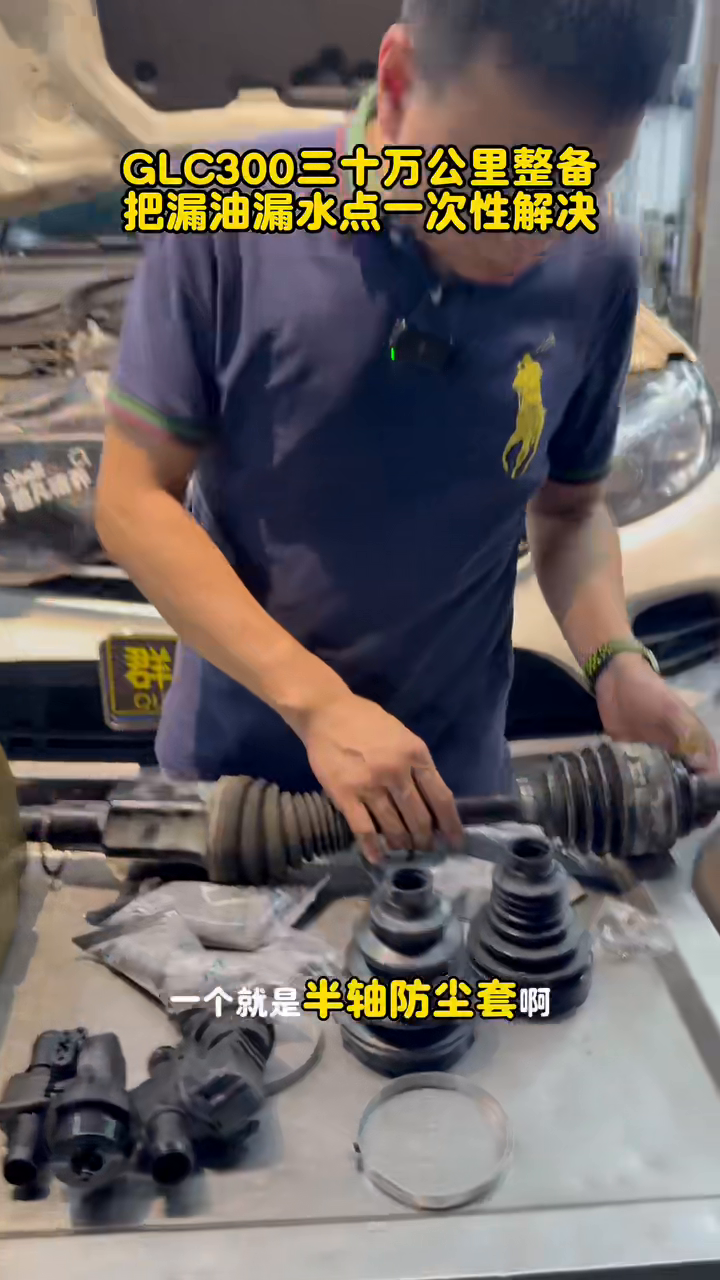
At both front wheels, the outer rubber CV boots were physically torn and grease had been flung outward by rotation. Near the firewall, pale crystallized residue traced back to the heater-valve housing, consistent with dried coolant. Separately, a broad wet film was present around the transmission’s plastic pan/seal interface. These findings coexisted, but none explained the others.
The CV joints were inspected before the repair scope was chosen
A split boot does not automatically prove that the joint itself is reusable. The source reports removing the front axle assemblies, cleaning old grease and contamination from the outer joints, and checking the ball/contact surfaces for mechanical damage. No damage was found in that inspection, so the repair boundary remained boots, grease and clamps rather than complete axle assemblies.
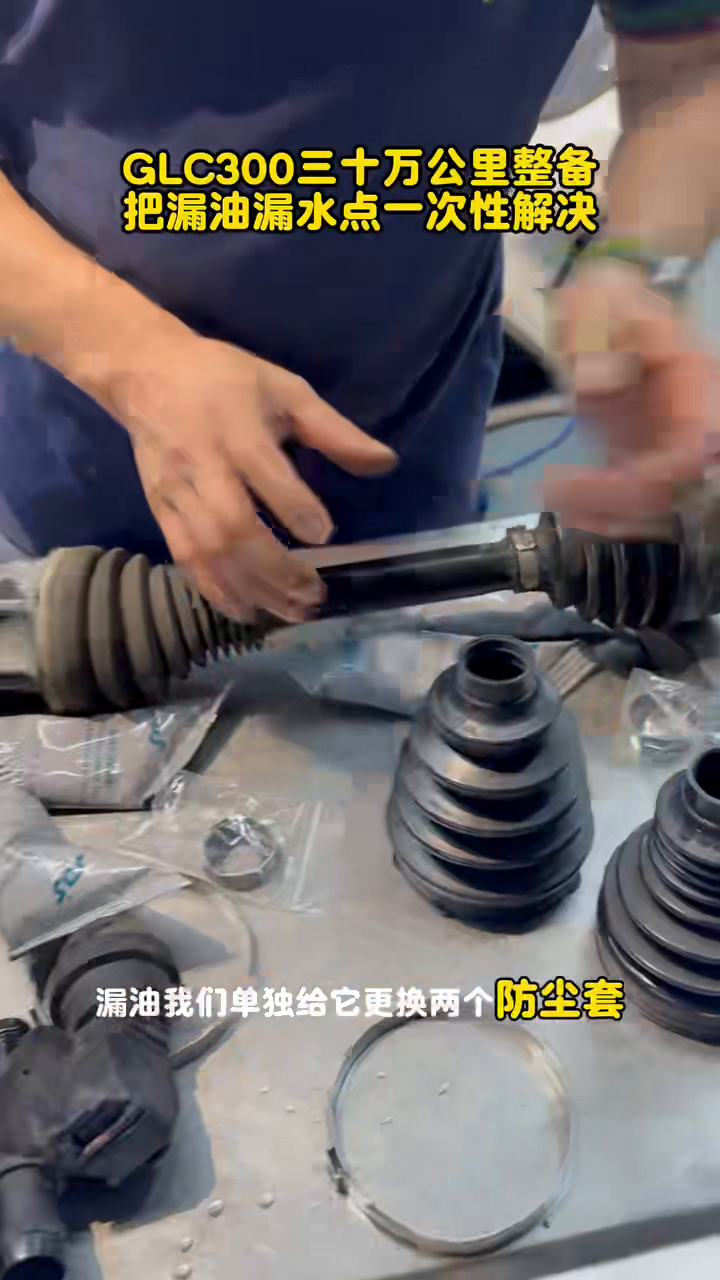
The joints were repacked and fitted with new boots and clamps. Grease quantity, boot specification, axle fastener replacement and torque were not reported. Those are vehicle-specific assembly decisions, not values to infer from a video.
Coolant crystals identified a second, independent leak
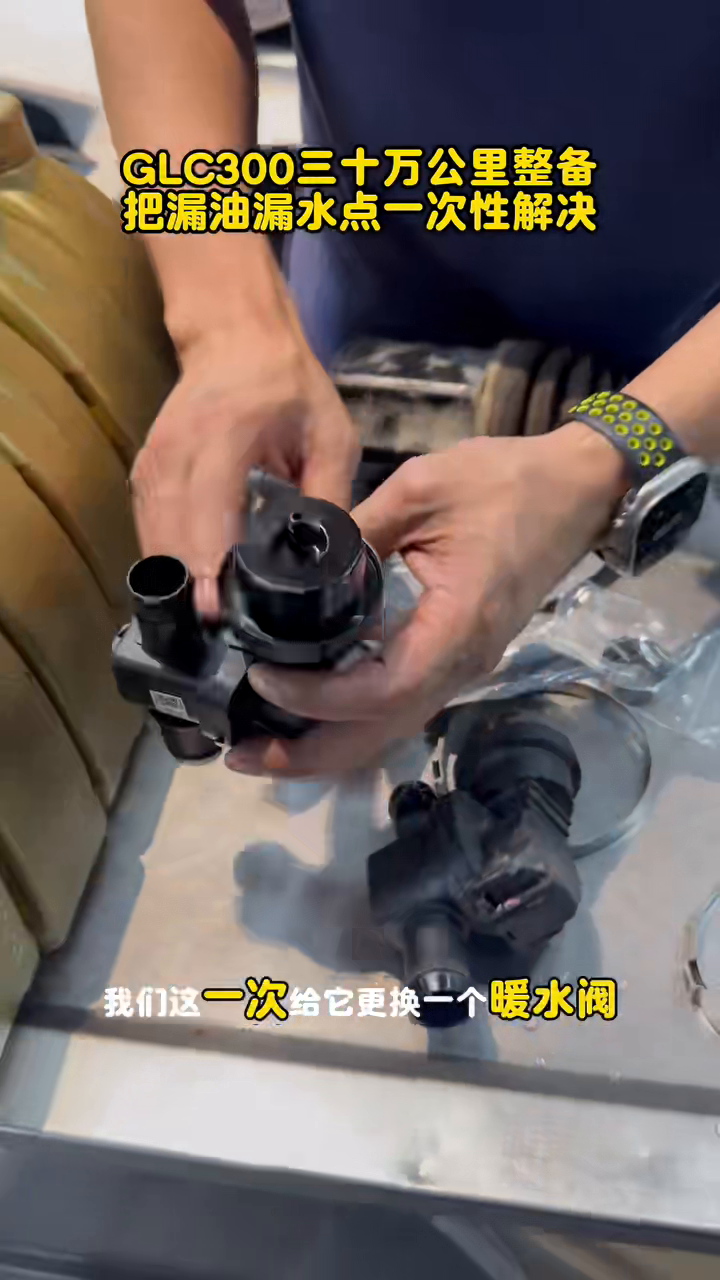
The heater-valve housing showed a visible path of dried coolant. The valve was removed carefully because aged plastic connections can be fragile, the mating pipe connections were cleaned, and a replacement valve was installed.
The shop then used a vacuum step both to check the opened cooling circuit and to refill it while limiting trapped air. A cooling-system service tool such as the AUTOOL SC301 fits that specific evacuation-and-refill task; it does not locate the heater-valve leak by itself or replace the hot reinspection. A similar repair should also return to cold level, circulation and cabin-heat output, while this source documents vacuum refill and post-road-test dryness.
The transmission pan required a fluid-level restoration step
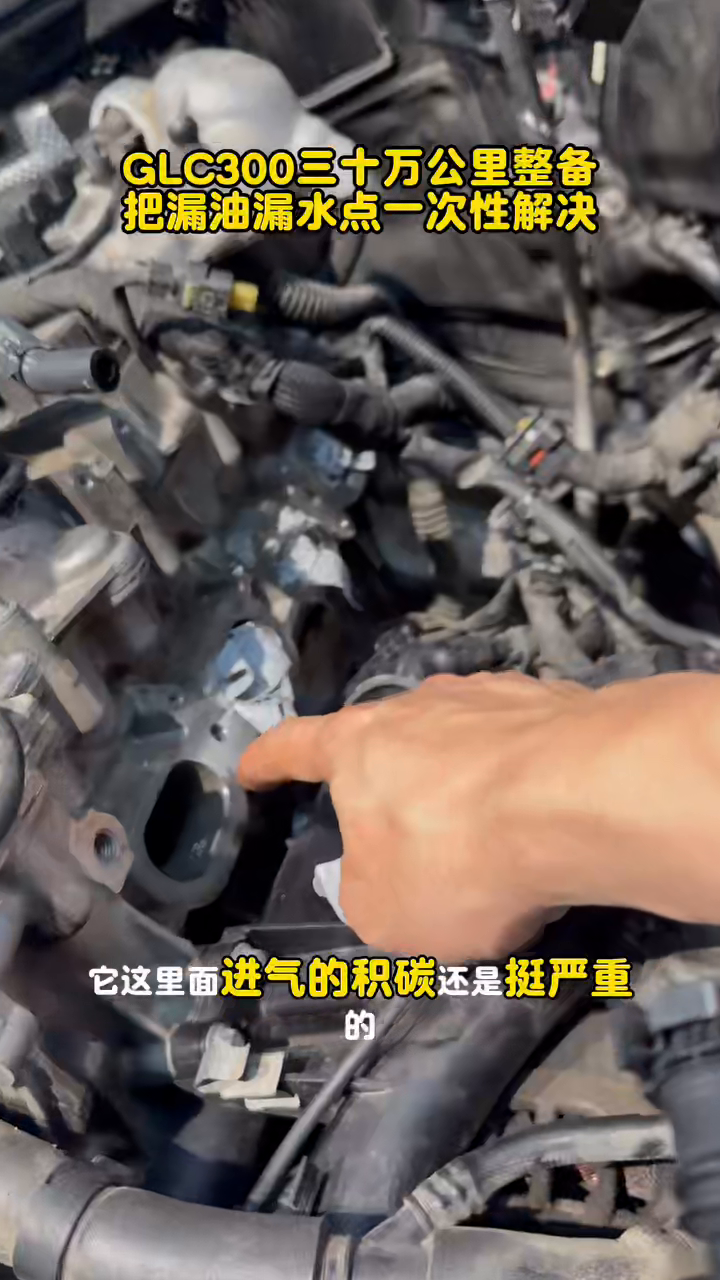
The transmission finding was treated as a sealing and fluid-service problem, not as proof of an internal shift fault. The source reports removing the aged integrated plastic pan/filter, cleaning the aluminum mating surface and installing a replacement pan/filter assembly. Fluid meeting Mercedes 236.17 was then added, with level checked in the applicable temperature-controlled procedure.
No universal fill quantity, temperature window or bolt sequence is repeated here. The exact 9G-Tronic variant and current Mercedes service information govern those values. After service, the source also reports clearing historical faults and monitoring transmission temperature during level setting.
One road test had three separate verification jobs
The 20 km mixed-condition drive was not simply a “car feels better” check. It challenged rotating CV boots and clamps, brought the coolant circuit through operation, and heated/circulated the transmission fluid. Afterward, the reported result was dry serviced interfaces, stable temperature behavior and normal shifting.
That closes the three repairs at the reported test level. A later cold-level check and longer seepage reinspection are not documented, so the case does not promise that every high-mileage seal elsewhere on the SUV is renewed.
A practical first check for mixed residue
Start by recording where the spot forms, then inspect above and forward of it. Thrown grease forms a radial spray near rotating components; dried coolant often leaves colored or pale crystals; ATF follows seams and airflow. Clean suspected areas only after recording the baseline, then recheck each path separately.
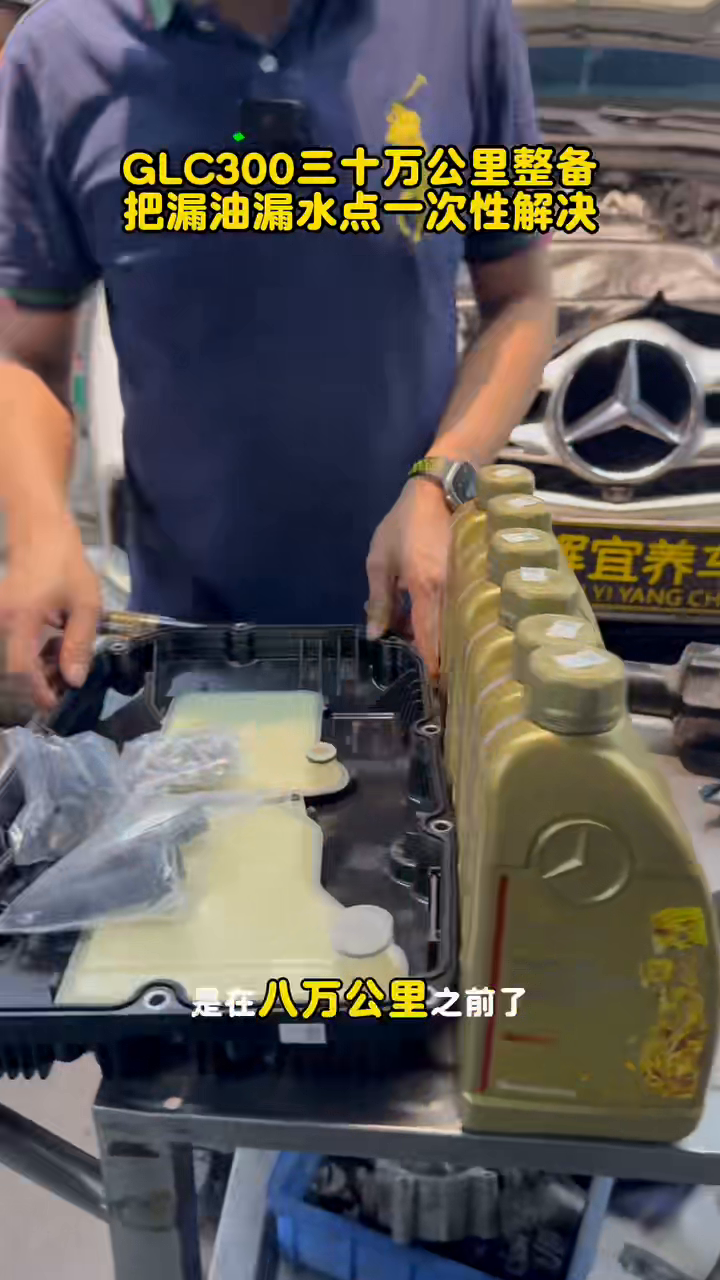
This GLC demonstrates why several faults can share one parking spot. It does not mean a high-mileage W253 automatically needs all three repairs: each component requires its own visible or measured evidence.
Why the 20 km recheck mattered to all three repairs
Each repaired path needed a different challenge. Rotation could expose a boot or clamp problem by throwing fresh grease. Cooling-system temperature and pressure could reveal seepage at the new heater-valve connections. Warm, circulating transmission fluid could show a pan seal or level problem that remained invisible when cold. The mixed-condition drive therefore served as one route with three separate inspection targets.
After the drive, the source reports dry serviced interfaces, stable temperature behavior and normal shifting. That is a meaningful same-condition recheck, but it remains specific to the recorded distance. Owners facing a similar mixed stain should first identify material and origin; replacing a transmission pan cannot cure a torn CV boot, and vacuum-filling coolant cannot verify an ATF seam.


Comments 0
Questions, fixes, and real-world diagnostic notes from readers.
Be the first to share a diagnostic result or ask a follow-up question.