
2014 BMW 525Li Engine-Bay Smoke: Valve-Cover Leak and Broken Timing Guide

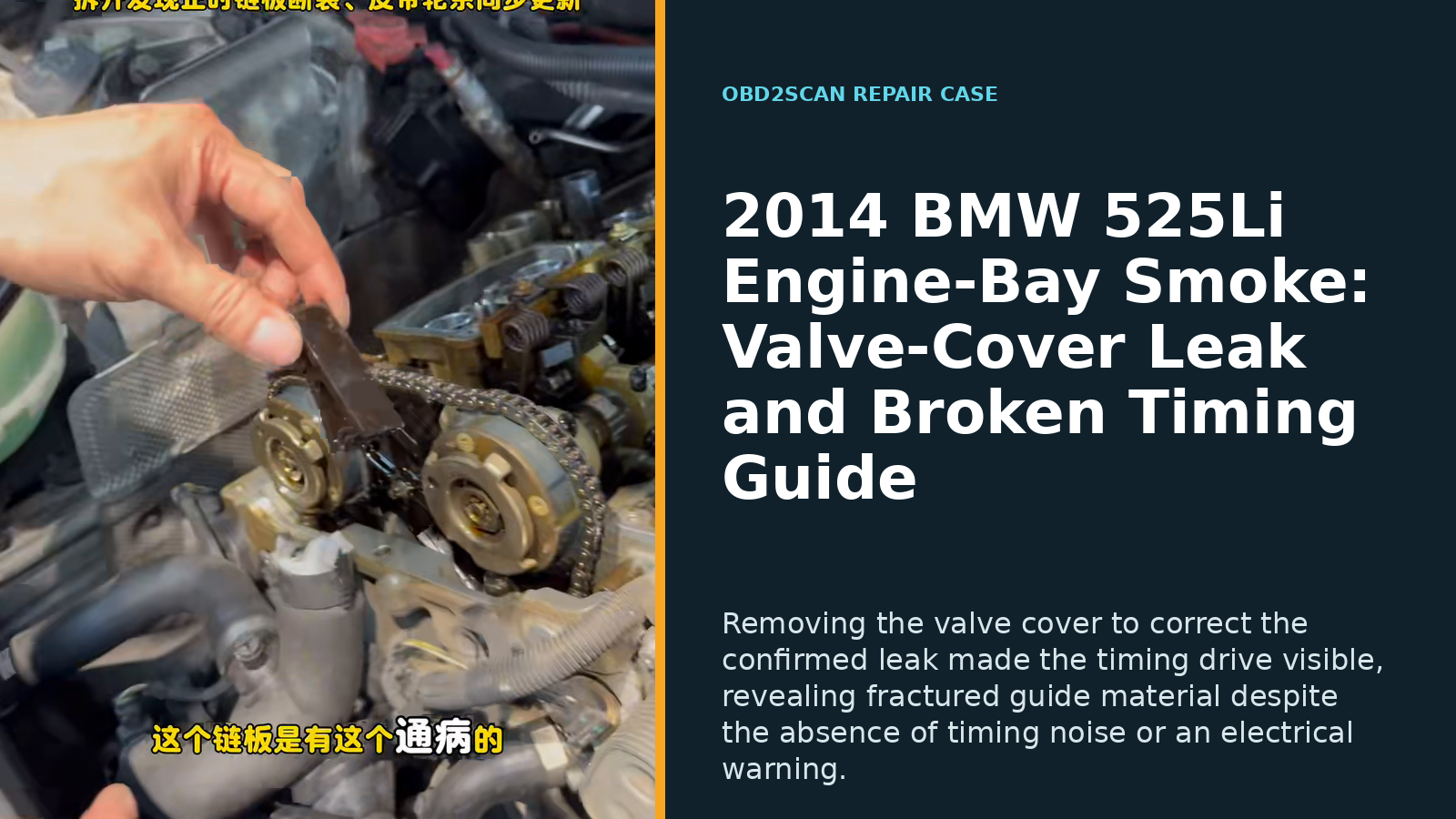
This 2014 BMW 525Li used an N20 turbocharged inline-four, but its chassis code and mileage were not reported. After driving, burnt-oil odor and intermittent white smoke came from the right side of the engine bay even though the engine ran smoothly and the accessory drive made no abnormal noise. The workshop confirmed a hardened valve-cover gasket leaking onto the hot exhaust area, then found a broken timing-chain guide during access, renewed the sealing, timing-guide, and contaminated accessory-drive parts, and completed a 30-km dynamic test with stable timing feedback and dry external surfaces.
Case at a glance
| Item | This vehicle |
|---|---|
| Vehicle | 2014 BMW 525Li, N20 turbocharged inline-four |
| Chassis / mileage | Not reported |
| Complaint | Burnt-oil odor and white smoke after driving; no abnormal engine or accessory-drive noise |
| Direct smoke cause | Hardened valve-cover gasket leaking oil onto the hot exhaust-manifold heat-shield area |
| Additional confirmed fault | Fractured plastic timing-chain guide discovered after the cover was removed |
| Repair | Valve-cover gasket and timing guides renewed; timing-area debris cleared |
| Linked condition work | Oil-contaminated accessory belt, tensioner, and idler renewed |
| Verification | Reported 30-km dynamic test; stable timing feedback and data, external areas dry |
Following the smoke back uphill
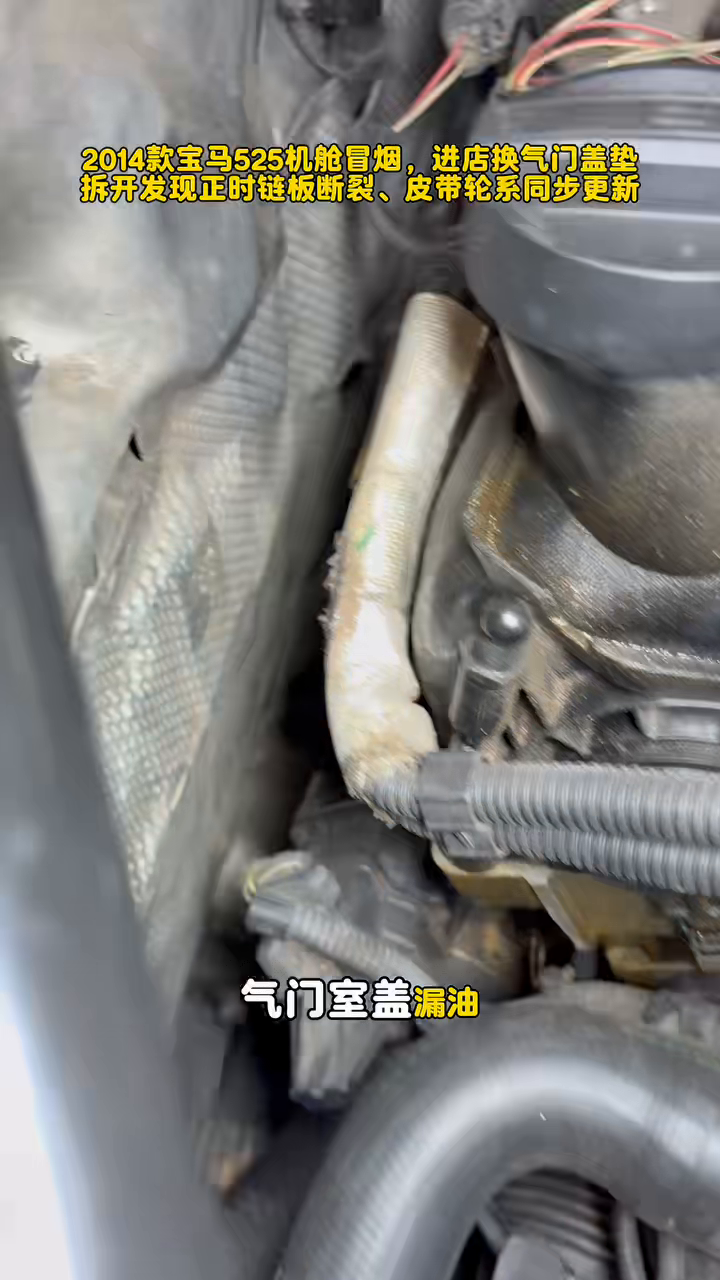
The smoke itself was a result, not a leak location. Oil had escaped at the valve-cover sealing area and traveled downward under gravity. It reached the hot exhaust-manifold heat-shield area, where the residue heated and produced the odor and visible white smoke reported after driving.
That route confirmed the hardened valve-cover gasket as the direct cause. A calm engine and silent accessory drive did not contradict it: neither mechanical knock nor pulley squeal is required for oil to reach a hot surface. The source provides no oil-loss quantity, dye-test details, or pre-repair scan.
The downward leak reached a second system
The same gravity path continued below the exhaust-side leak area. Oil had spread onto the accessory belt, tensioner, and idler. The workshop reported no abnormal pulley play or noise at that point, so these parts were not identified as the cause of the smoke and were not presented as an active bearing failure.
Oil contamination can compromise a rubber belt even while the drive remains quiet. That made the belt-system work linked damage control, separate from both the leaking gasket and the later timing-guide finding.
Opening the cover changed the case
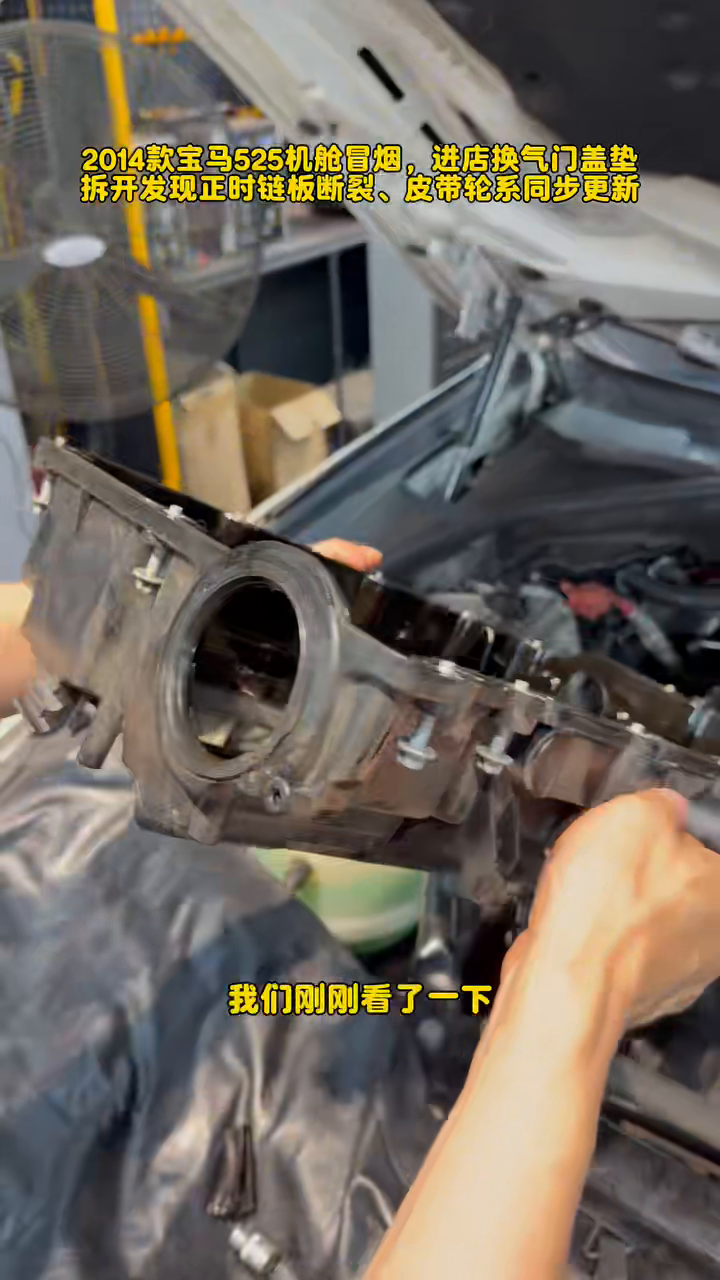
The valve cover was removed to renew the failed seal and clean its mating area. This routine access step created the diagnostic turning point because it exposed the upper timing drive for a direct recheck.
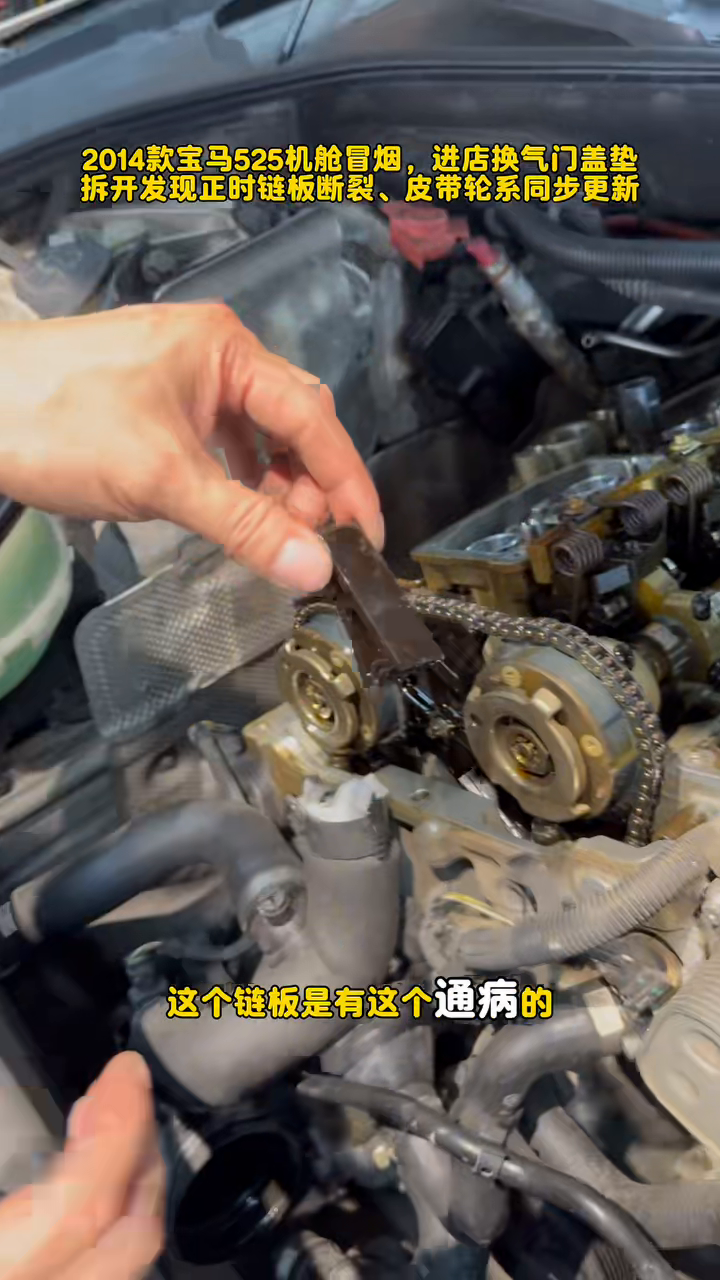
Inside, a plastic timing-chain guide was already brittle and fractured, with part of its structure broken away. The source says there had been no timing noise or electrical warning. In other words, the guide was not inferred from the smoke, and the smoke did not prove a timing problem; opening the engine for the confirmed leak made a separate physical fault visible.
Three repair decisions, kept separate
First, the valve-cover and cylinder-head sealing surfaces were cleaned and degreased, and a new valve-cover gasket was installed. Second, with engine timing locked, the fractured guide material was removed, debris was cleared from the timing area, and the guide and tensioning components were renewed.
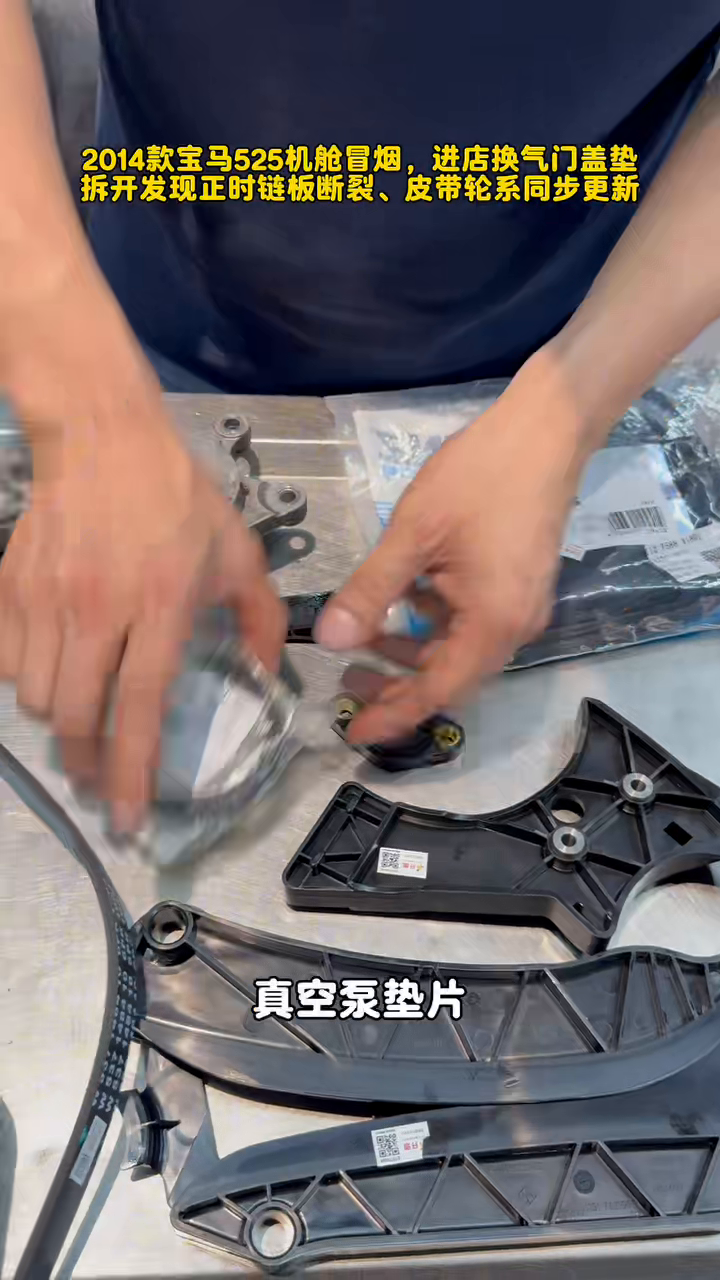
Third, the contaminated accessory belt, tensioner assembly, and idler were replaced. This did not prove that the quiet pulleys had failed internally; it addressed parts the oil had reached.
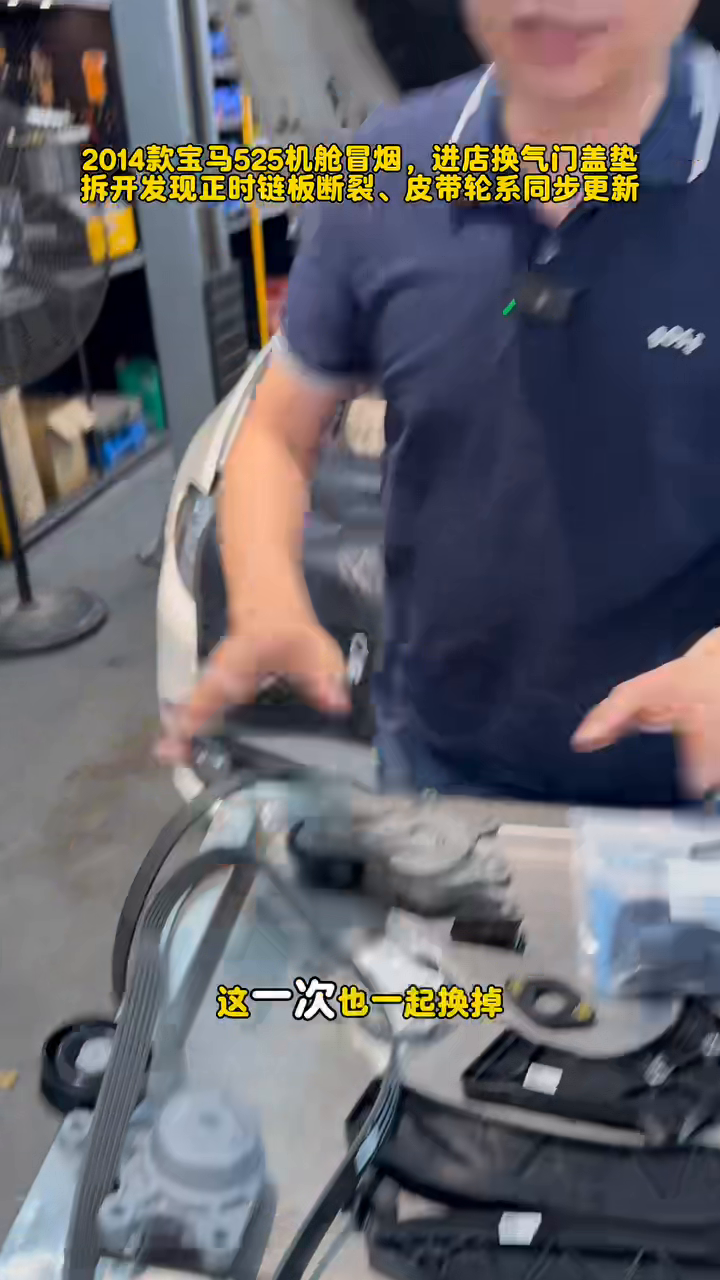
No VIN-specific part numbers, timing fixtures, tightening values, fragment inventory, or lower-engine debris inspection are published. Those missing details prevent this case from serving as an installation recipe.
The stop point is engine timing
Locking camshaft and crankshaft position, releasing a timing drive, controlling debris, and restoring phase are engine-damage-critical operations. Stop before that work unless the exact vehicle has been identified and the correct BMW service information, timing fixtures, verification method, and qualified working conditions are available. A misplaced chain or unrecovered fragment can turn a repair into internal engine damage.
The source says the timing was locked and the guide system renewed, but it does not disclose the specifications needed to reproduce that work safely.
Cleaning and reassembly restored the systems
Residual baked oil was cleaned from the exhaust area so it would not masquerade as a continuing leak. The valve-cover and timing assemblies were restored, and the accessory drive was reassembled and aligned.
The source reports a 30-km dynamic road test after assembly. During that test, timing-phase feedback and engine data were described as stable, while the external sealing surfaces and accessory-drive area remained dry. This challenged the original complaint under driving conditions and checked both timing operation and the repaired leak path.
The evidence is still bounded. No numerical timing-angle log, post-test smoke image, defined inspection interval, later mileage, or owner follow-up is provided. The result therefore supports a successful 30-km workshop verification, not unlimited long-term durability.
First checks when another engine bay smokes
Stop safely and avoid hot components. Once the engine is cool, establish the highest wet point, trace oil downward, and identify the hot surfaces and rubber drive parts it reached. Check oil level, preserve fault evidence, and do not treat silence as proof that adjacent systems are healthy. If access exposes the timing drive, inspect visible guides before closing it.
This case applies where inspection confirms the same valve-cover-to-exhaust leak path, visible guide fracture, and accessory contamination. Another BMW can smoke from a different seal, fluid, or hot-surface route; the visible symptom alone does not justify replacing its timing guides or accessory drive.


Comments 0
Questions, fixes, and real-world diagnostic notes from readers.
Be the first to share a diagnostic result or ask a follow-up question.