
Ram 1500 Classic DS vs. New-Body DT: Name the Truck Before Parts

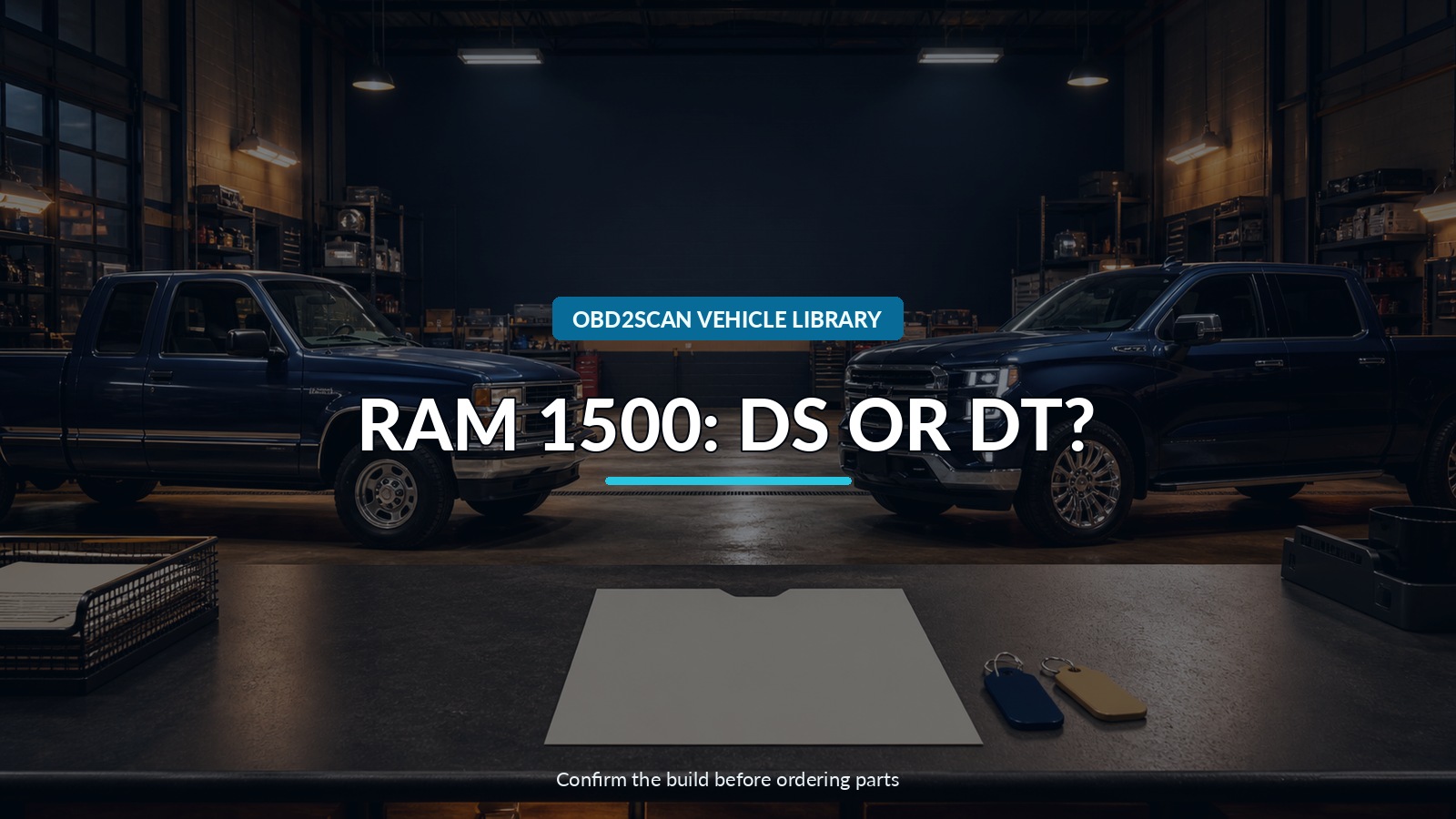
Conceptual identity-verification scene: Ram 1500: Ds Or Dt?
A parts ticket that says “2019 Ram 1500” has two blank checkboxes. One is the carryover Ram 1500 Classic, internally called DS. The other is the redesigned fifth-generation Ram 1500, called DT. FCA sold both body styles for the 2019 model year, and the Classic continued beyond that launch year. Until DS or DT is confirmed, the ticket is not ready for a part number.
Use the factory model name, VIN/build data and driver-door label to close the first checkbox. Then add cab, box, wheelbase, engine, transmission, 4×2/4×4, axle and relevant work equipment. If you are evaluating a used truck, a compatible AUTOOL used-car diagnostic tester can provide an electronic VIN or module-record cross-check on supported vehicles; the physical VIN and Ram build record still decide DS/DT and factory configuration.
Keep both tickets open until those records agree. The wrong move is to let a familiar engine, grille or seller title choose the body family and then build the rest of the order on that assumption.
Quick answer: A same-year Ram 1500 may be the carryover Classic DS or redesigned DT. Confirm the factory model/VIN record first, then cab, box, powertrain, drive, axle, and build.
In this guide
Open two catalog tickets
The overlap is easier to manage when you refuse to merge it:
| Factory family | Public model wording | What the branch establishes | What remains open |
|---|---|---|---|
| DS | Ram 1500 Classic | Carryover body/catalog family | Cab, box, engine, drive, axle, build |
| DT | Ram 1500 | Redesigned fifth-generation body/catalog family | The same configuration fields |
The 2018 FCA release explicitly identifies the 2019 Classic as DS and the all-new truck as DT. This is stronger evidence than a dealer listing that drops the word Classic or describes either truck as “new body.”
Use the model name to close DS or DT
Look for Classic badging and the older cab, front-end, lamp, bed and dashboard architecture. Compare them with the distinctly redesigned DT body and interior. Those cues are fast enough for a parking lot or auction photo set.
Then read the evidence that does not unbolt easily. Match the windshield VIN to the certification label and factory build description. Use the NHTSA VIN Decoder as a second record, not as a replacement for Ram/Mopar build data. If the label says one thing and the listing another, correct the ticket before continuing.
Add cab, box and wheelbase
DS/DT is only the fork. Record Regular, Quad or Crew Cab as applicable, then the exact box and wheelbase. Cab and bed combinations change frames, driveshafts, fuel systems, brake lines, steps, tonneau covers, body pieces and many commercial upfits.
Do not accept “short bed” without a measurement or factory description. Marketplace language is inconsistent, and a photograph can hide the difference. The certification and tire/loading labels also help preserve payload and gross-weight context that a trim badge cannot provide.
Decode the powertrain and work equipment
Copy engine and transmission from the build data and underhood labels. Record 4×2 or 4×4, axle information and any equipment relevant to towing, brakes, cooling, suspension or electrical service. An engine name such as 5.7L HEMI does not tell you whether the truck is DS or DT because an engine family can appear in both catalog branches.
Fleet and commercial trucks deserve extra care. Snowplows, service bodies, trailer wiring, auxiliary power, suspension changes and aftermarket controllers can alter the installed system without changing the VIN. Keep factory build and current upfit on separate lines.
Audit repaired and upfitted trucks
Grilles, bumpers, lamps, tailgates, badges, beds and infotainment units are replaceable. A DS can wear custom pieces that imitate a newer truck; a DT can lose identifying trim after repair. Photograph the component and its interfaces instead of forcing the visual story to match the listing.
For a used part, request the donor VIN, DS/DT family, cab/box, production date, powertrain and the complete part number. “Fits 2019–2022 Ram 1500” is not a defensible statement unless the application notes explicitly address Classic and new-body trucks.
Test the proposed part number
Run the OEM lookup against the complete build. Check supersessions, production ranges, connector views and left/right position. Compare the returned number with the installed part. A superseded number can be correct; an unexplained different connector or mounting pattern is a stop condition.
For modules, also verify software/configuration requirements. A physically matching controller may need programming and may not support the truck’s option set. Electronic VIN data can reveal a donor module, which is useful evidence but not permission to relabel the truck.
Keep a photograph set with the ticket: full truck, windshield VIN, certification label, cab/box side view, underhood label, axle or option evidence and target component. Protect the full VIN in any public copy. The packet lets a remote counter challenge a wrong DS/DT branch before shipping and records an upfit that could disappear from a short written estimate.
Issue one unambiguous order line
A complete ticket reads: “U.S. 2020 Ram 1500 Classic, DS, Crew Cab with factory box/wheelbase verified, production date and VIN recorded, 5.7L/automatic, 4×4 and axle confirmed, upfit documented, installed part number photographed.” A DT line should identify DT just as plainly.
The extra word Classic prevents many wrong branches. The rest of the line prevents the mistakes that remain after the branch is correct.


Comments 0
Questions, fixes, and real-world diagnostic notes from readers.
Be the first to share a diagnostic result or ask a follow-up question.