
2019-2023 vs. 2024+ Hyundai Santa Fe: Confirm the Redesign and Powertrain

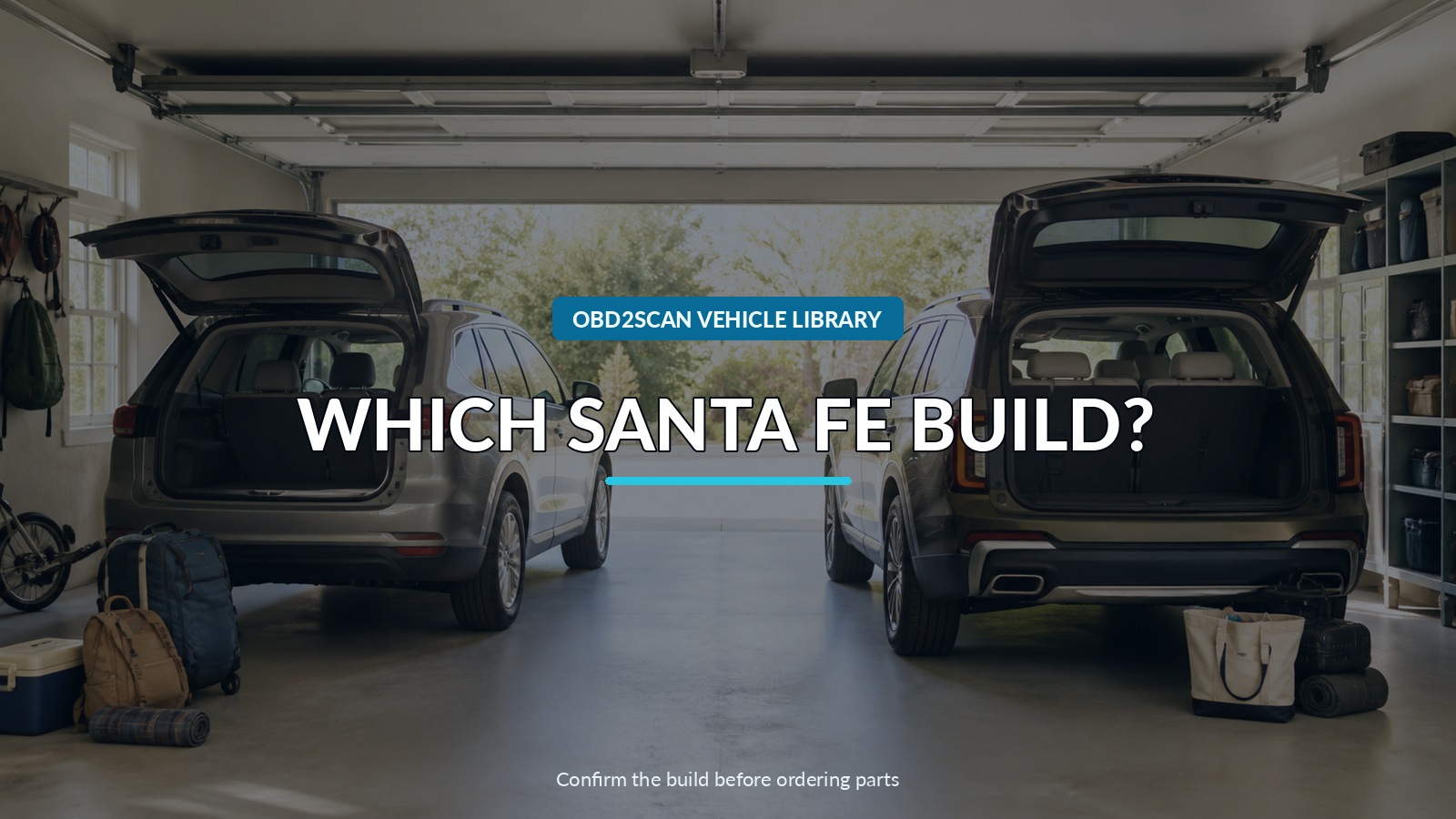
Conceptual identity-verification scene: Which Santa Fe Build?
Two Santa Fe shapes can now occupy the same family garage. The rounded 2019–2023 U.S. Santa Fe is the fourth generation. The far squarer, longer-roof 2024-and-newer model starts the fifth. The redesign also brings a different seating and powertrain decision tree, so “Santa Fe” and a model year are only the first two fields of a service handoff.
Use the body to orient yourself, then read the VIN, driver-door label and Hyundai build data. Record seating, gasoline/hybrid/plug-in configuration where applicable, engine, transmission, front- or all-wheel drive, trim, production date and the exact hardware involved in the job.
The household handoff should remain calm and literal. A dramatic redesign is easy to see; the useful result is a quiet list of facts another shop can verify.
Quick answer: The 2019–2023 U.S. Santa Fe is generation four and 2024+ begins generation five; then confirm seating, gas/hybrid/plug-in configuration, drive, build, and installed equipment.
In this guide
Meet the two family-garage shapes
| U.S. model years | Generation | Quick visual orientation | Identity still needed |
|---|---|---|---|
| 2019–2023 | Fourth | Softer roof/body profile; two-row U.S. package | Exact year, gas/hybrid/PHEV, engine, drive, trim, build |
| 2024 onward | Fifth | Square profile, long roof, distinctive H-themed lighting | Three-row/seating detail, gas or hybrid, drive, grade, build |
Hyundai describes the 2019 model as an all-new fourth generation and the 2024 as an all-new fifth generation. This U.S. timeline should not be applied blindly to Santa Fe vehicles first sold in another market.
Walk from the liftgate to the labels
Begin at the rear. The 2024 redesign’s upright liftgate, broad horizontal surfaces and different cabin proportions make it easy to separate from the preceding vehicle. Continue around the lamp graphics, side glass and dashboard. Note the third-row seating on the newer U.S. generation rather than assuming every Santa Fe is a two-row crossover.
Then move to evidence that repairs cannot easily restyle. Match the windshield VIN to the certification label. Copy production month, tire/loading data and the factory model description. Use the NHTSA VIN Decoder as an independent identity check, then reconcile it with Hyundai data.
Count seats, not assumptions
Seating affects trim, interior, restraint, carpet, HVAC and body-service choices. Record the actual number and layout of seats and compare them with the build record. A folded or removed third row is current condition, not proof that the vehicle was built without one.
For used interior parts, request the donor VIN, row and seating position, upholstery code, restraint connector and photographs. “2024 Santa Fe rear seat” is not a complete donor description.
Name gas, hybrid or plug-in hardware
The 2019–2023 generation spans conventional gasoline versions and, in later years, hybrid and plug-in hybrid branches in the U.S. The redesigned 2024 U.S. launch uses gasoline and hybrid configurations. Availability changes by model year and market, so identify what the individual vehicle contains rather than making a generation-wide powertrain statement.
Photograph the underhood emissions label and fuel/charge-door area. A plug-in charging inlet is strong evidence for the PHEV branch; a hybrid badge is only supporting evidence because tailgates and emblems are replaceable. Do not open or probe high-voltage components to identify the system.
Add engine, transmission or hybrid drive configuration and front- or all-wheel drive. Powertrain choice can change cooling, braking, electrical, exhaust, fuel, underbody and suspension parts even when the exterior body is familiar.
Reconcile labels after repairs or imports
A collision repair can install a different liftgate, bumper, lamp or badge. An imported vehicle can carry equipment not described in a U.S. brochure. Keep market, VIN/build identity and installed hardware as separate evidence layers.
At the component, copy the complete number and suffix, connector count, mounting pattern, side and any calibration label. If the OEM catalog returns a different revision, verify the supersession rather than assuming the newer-looking part is correct.
Make the handoff job-specific
Body and electrical work needs camera, radar, lamp, parking-sensor and connector information. Brake work needs wheel size and installed caliper/rotor details. HVAC and interior work needs seating and row. Powertrain work needs the complete gas/hybrid/PHEV branch, engine family, drive and emissions-market record.
Seller fitment language such as “2019–2024 Santa Fe” crosses a full generation change. It may be legitimate for a truly generic accessory, but it is a warning flag for structural, mechanical or electronic parts. Read the exclusions and compare hardware.
Keep tire and loading information with the handoff when wheels, suspension, towing or family-carrying equipment is involved. The fifth-generation vehicle’s larger three-row package should not be treated as a stretched fourth generation. Roof carriers, mats, cargo covers, trailer equipment and rear HVAC/interior components need the exact body and seating record just as mechanical parts do.
Prepare the service handoff
A useful line reads: “U.S. 2022 Santa Fe, fourth generation, VIN/build and production date verified, Hybrid AWD, five-seat configuration and trim recorded, installed component number photographed.” A 2024 line should state fifth generation and the actual seating layout.
The garage walkaround makes the redesign obvious. The completed handoff makes the car serviceable without relying on that first impression.



Comments 0
Questions, fixes, and real-world diagnostic notes from readers.
Be the first to share a diagnostic result or ask a follow-up question.