2015-2020 vs. 2021+ Ford F-150: Identify the Exact Truck Build

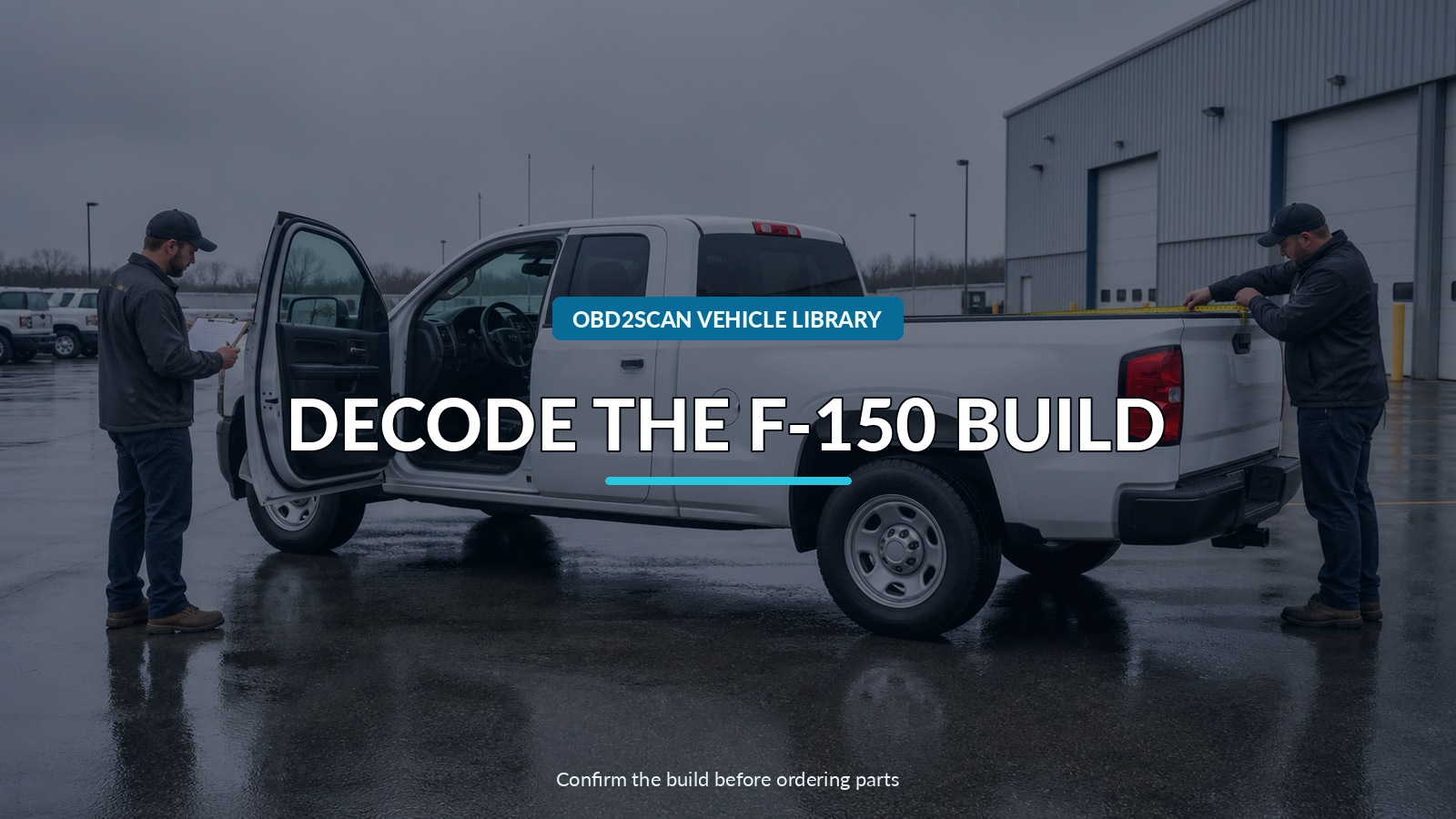
Conceptual identity-verification scene: Decode The F-150 Build
An F-150 order should begin like a work-truck build sheet, not a beauty contest. In the U.S., 2015–2020 trucks belong to the thirteenth generation and the redesigned 2021 begins the fourteenth. That split gets you into the correct family; cab, box, engine, transmission, drive, axle, payload, brake, and towing equipment finish the identification.
Start with the VIN and driver-door certification label. Add the tire/loading and axle information, then obtain the Ford build record. Measure or decode the cab and box instead of accepting an abbreviated fleet listing, and compare the installed component number on any truck that has been upfitted or repaired.
The goal is one transferable build line. “2021 F-150” is a search query. “2021 SuperCrew, 145-inch wheelbase, 4×4, engine and transmission recorded, axle and production date verified” is the beginning of a parts decision.
Quick answer: Separate the 2015–2020 thirteenth-generation F-150 from the 2021+ fourteenth generation, then record cab, box, wheelbase, engine, transmission, drive, axle, packages, and installed hardware.
In this guide
Put the generation break on the first row
Ford’s 2015 F-150 launched the aluminum-alloy-body thirteenth-generation truck. The 2021 model introduced the next generation. A broad comparison looks like this:
| Model years | Working generation | Use it to separate | Still record |
|---|---|---|---|
| 2015–2020 | Thirteenth | Earlier body/electrical/catalog family | Cab, box, wheelbase, powertrain, axle, packages |
| 2021 onward | Fourteenth | Redesigned body/interior/electrical family | The same build details plus production splits |
Do not let “aluminum body” become the sole test because both ranges use extensive aluminum body construction. Grille, lamps, tailgate, and screen layout help a walkaround, but labels carry the build.
Copy the door label before measuring anything
Photograph the full certification label squarely. Keep the VIN private in public posts, but preserve it in the work order. Record the production month/year, gross weight information, tire data, and other identifiers printed for that truck. Check the windshield VIN and paperwork for agreement, then use Ford or the NHTSA VIN Decoder to cross-check the encoded description.
On fleet vehicles, look for upfitter labels as well. An auxiliary body, snow-plow preparation, service crane, altered suspension, or non-factory electrical system can change the component you are actually servicing even when the base VIN is correct.
Build the cab-box-wheelbase line
Write cab and box as separate fields. Regular Cab, SuperCab, and SuperCrew do not imply one box length, and a listing’s “short bed” wording may not match the catalog’s dimension. Measure when the truck or documentation leaves doubt. Wheelbase is a valuable cross-check because it ties cab and box choices to a physical dimension.
For body, exhaust, driveshaft, fuel, brake-line, camera, step, and bed-accessory jobs, this geometry can be more important than trim. Photograph mounting locations and the old part number before ordering long or expensive components.
Record the powertrain and axle as hardware
F-150 engine choices change within and across generations. Record the actual engine code or build description, transmission, 2WD or 4WD, transfer-case details where relevant, and axle information. Do not translate an EcoBoost badge into a displacement. Do not assume a trim level establishes axle ratio or towing package.
The door-area labels, build sheet, and physical hardware should agree. For a differential, driveshaft, hub, brake, or towing-related order, add axle, wheel size, brake package, payload/towing equipment, and installed part number. A modified truck may require both the original build identity and the current hardware identity.
Treat visual clues as dispatch information
The redesigned 2021 cabin, front treatment, lighting, and tailgate options can separate the generations quickly. Use that observation to select the correct owner manual or catalog. Then verify. Collision repairs can install different grilles and lamps; aftermarket screens can imitate a later interior; tailgates and beds are readily swapped.
If a visual cue conflicts with the VIN/build record, investigate whether the truck was rebodied, repaired, upfitted, or simply advertised incorrectly. Do not solve a conflict by choosing whichever evidence is easier to read.
Make the parts request job-specific
A complete base line includes market, model year, production date, VIN, generation, cab, box, wheelbase, engine, transmission, drive, and axle. Add wheel/tire, brake, payload, towing, camera, lighting, or option evidence according to the job.
For used parts, require donor VIN/build information and a legible component number. “Fits 2015–2020 F-150” may still hide cab, box, engine, axle, or connector exclusions. For 2021-and-newer trucks, production-date and software/electrical revisions can make a broad generation claim equally weak.
Close the work-truck build sheet
A successful entry might read: “U.S. 2019 F-150, thirteenth generation, SuperCrew/box/wheelbase verified, production date photographed, engine/transmission/4×4/axle recorded, original component number matched.” Keep the source photographs with the estimate.
That line protects the owner, parts seller, and technician. It also makes later work faster because the truck’s identity no longer depends on the last person remembering which grille it had.




Comments 0
Questions, fixes, and real-world diagnostic notes from readers.
Be the first to share a diagnostic result or ask a follow-up question.