
2011-2019 vs. 2020+ Ford Explorer: Confirm the Platform Reset

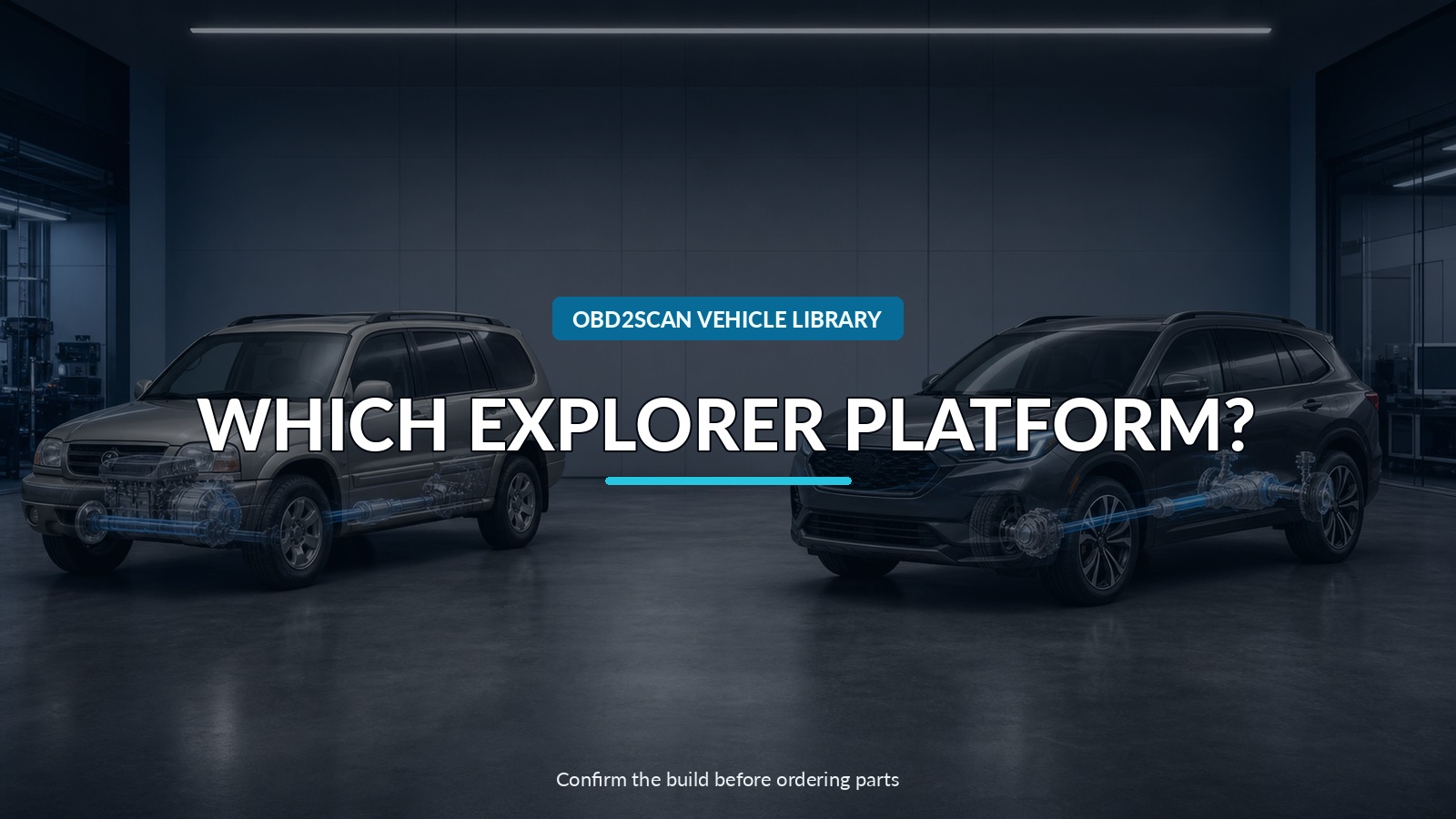
Conceptual identity-verification scene: Which Explorer Platform?
The most important 2020 Ford Explorer change is difficult to see in a listing photo: the vehicle moved to a rear-wheel-drive-based architecture. U.S. 2011–2019 Explorers form the front-wheel-drive-based fifth generation; 2020 onward is the rear-wheel-drive-based sixth. That platform reset changes the starting catalog before engine, transmission, driven wheels, seating, grade, tow equipment, production date, and installed hardware are added.
Do not begin with the grille. Begin under the floor, where the architecture tells you which Explorer family you are dealing with. Then walk back outward to the body, labels, powertrain, and exact component.
For a used-vehicle intake, a compatible AUTOOL used-car diagnostic tester can add an electronic VIN or stored-module cross-check on supported Explorers. It cannot authenticate the physical VIN, replace Ford build data, or prove every option on the vehicle.
Quick answer: U.S. 2011–2019 Explorers are fifth generation and front-drive based; 2020+ is sixth generation and rear-drive based. Verify the individual engine, drive, build, and equipment.
In this guide
Start under the floor, not at the grille
| U.S. model years | Working generation | Architecture orientation | Identity fields still open |
|---|---|---|---|
| 2011–2019 | Fifth | Front-wheel-drive based; FWD or 4WD depending on build | Engine, transmission, grade, tow/brake/suspension equipment |
| 2020 onward | Sixth | Rear-wheel-drive based; RWD or four-wheel drive depending on build | The same fields, plus hybrid/ST and running changes where applicable |
The terms FWD, RWD, 4WD, and AWD are often used loosely in advertisements. Record the factory wording and the actual hardware rather than translating one seller’s vocabulary into another generation.
The VIN and certification label establish the vehicle. Ford build data should then name the model, engine, drive, and major equipment. A body shape is a fast orientation cue, not the authority.
Walk back through 2011–2019
The fifth generation arrived for 2011 and remained through 2019, with styling and technology updates inside that span. A later grille, lamp shape, or infotainment system may narrow an early versus late build, but it does not make the vehicle sixth generation.
Confirm whether the Explorer is front-wheel drive or equipped with its generation’s four-wheel-drive system. Record the exact engine rather than “V6 Explorer,” because naturally aspirated and EcoBoost configurations, performance versions, cooling, emissions hardware, exhaust, and controls can differ. Add transmission, tow package, wheel/brake equipment, and production month.
If the job concerns a module, camera, lamp, or body harness, identify driver-assistance equipment and connector details. A fifth-generation parts listing covering nine model years still needs production and option notes.
Step into the 2020 platform reset
Ford described the redesigned 2020 Explorer as built around a new rear-wheel-drive architecture. That is more than a handling story. Driveline layout, engine installation, transmission, underbody packaging, suspension, exhaust, fuel system, and many service procedures follow the new platform.
The sixth generation also branches into different engines and grades, including performance and hybrid configurations in relevant years. “2020+ Explorer” therefore remains incomplete. Record the exact model description, engine, drive system, transmission, seating, grade, tow equipment, and build date.
Visual signs include the newer dashboard, proportions, lighting, and body surfacing. Use them to challenge an inaccurate listing, then let the labels and Ford record close the question.
Record drive, engine, and tow hardware
Architecture is not the same as driven wheels. A rear-wheel-drive-based sixth-generation vehicle may be built with rear-wheel drive or a four-wheel-drive system. A front-wheel-drive-based fifth-generation vehicle may be front-wheel drive or equipped with its own four-wheel-drive arrangement. Write both the generation architecture and the individual vehicle’s drive configuration.
Tow equipment can change cooling, wiring, hitch, axle, brake, and calibration considerations. Record the factory package and verify the installed hitch and connectors. Do the same for police, fleet, and performance configurations; a badge or used-car description is not sufficient.
At the component, capture the full engineering or service part number, revision, connector count, mounting pattern, left/right position, and any calibration identifier. The build record describes the original vehicle. The component tells you what survived repairs and replacements.
Cross-check a used Explorer
Compare the VIN at the windshield, certification label, title, and Ford build result. Use the NHTSA VIN Decoder as another identity route. If a scan reports a different VIN, do not choose one automatically; investigate module replacement, programming history, data-entry error, or physical identity concerns.
Look under the hood for emissions and engine evidence. Inspect suspension, brake, camera, and tow equipment relevant to the purchase or repair. Save photographs of labels and part numbers before clearing codes or disconnecting modules.
A used-vehicle scan can reveal system faults and module records on supported models, but it cannot prove collision quality, mechanical condition, title history, or factory option completeness. Keep those inspection routes separate.
Hand off one platform-complete record
A strong line reads: “U.S. 2018 Ford Explorer, fifth generation/front-drive-based platform, VIN and build month verified, engine/transmission and 4WD configuration recorded, tow and brake equipment checked, installed part number photographed.” A 2021 line should state sixth generation/rear-drive-based platform and then the individual RWD or four-wheel-drive build.
The invisible platform change is the key. Once it is named, the visible hardware and documentary evidence can travel together to the parts desk or buyer.


Comments 0
Questions, fixes, and real-world diagnostic notes from readers.
Be the first to share a diagnostic result or ask a follow-up question.