
2010-2024 vs. 2025+ Toyota 4Runner: Identify the Generation

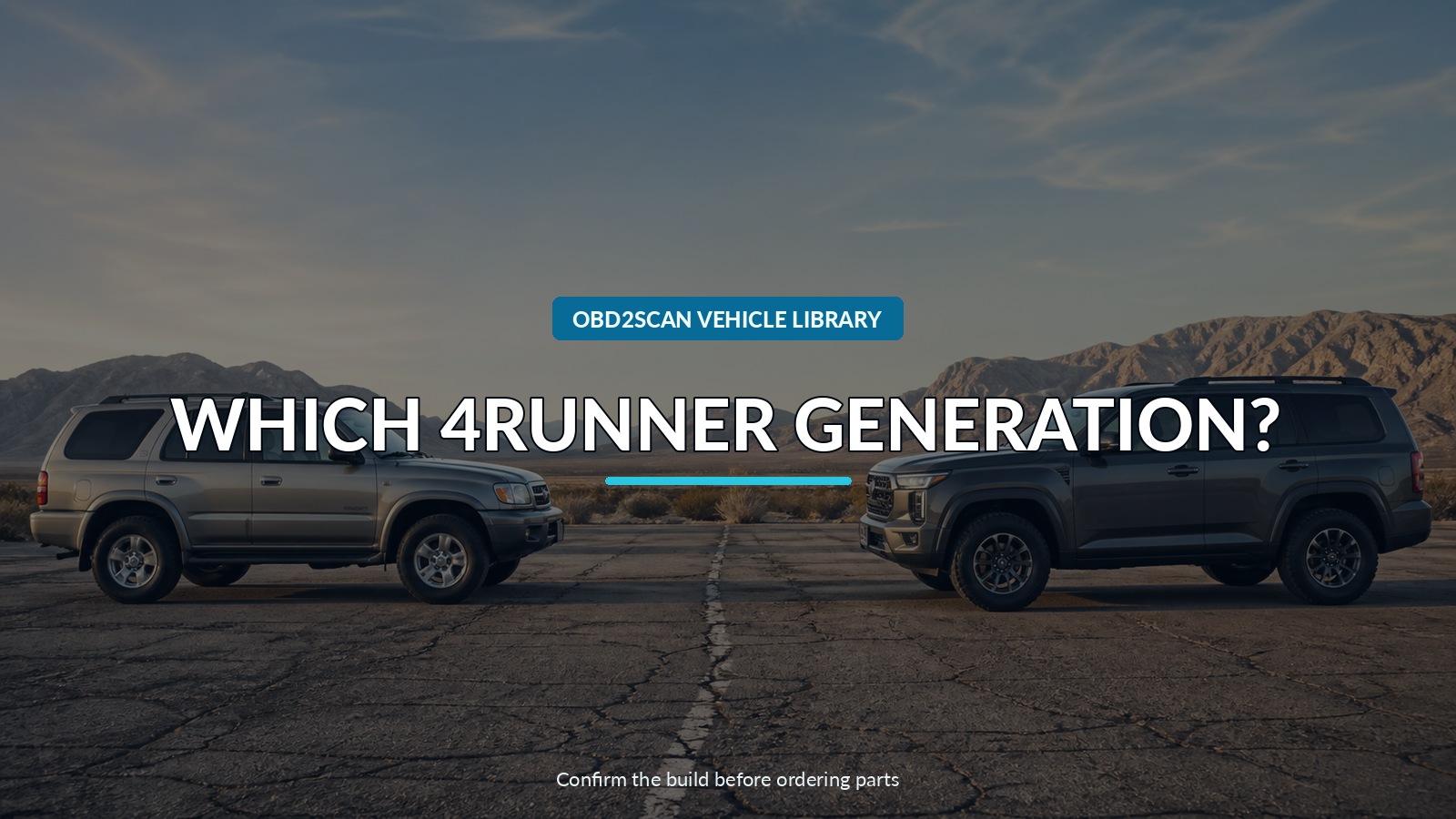
Conceptual identity-verification scene: Which 4Runner Generation?
The sharpest modern Toyota 4Runner dividing line is the 2025 model year. In the United States, 2010–2024 is the fifth generation; the all-new 2025 model begins the sixth. That one line is excellent for choosing a catalog family, but it does not identify the engine or hybrid system, transmission, drive system, seating, grade, options, production date, or part installed today.
Think of 2025 as a fault line rather than a complete answer. Stand on the correct side first. Then let the physical VIN, certification label, Toyota build record, emissions label, powertrain hardware, and old part number settle the rest of the job.
The guide therefore moves from calendar to vehicle: establish the generation, test the visual clues, then build a configuration line that can survive a handoff to a shop or parts counter.
Quick answer: U.S. 2010–2024 4Runners are fifth generation and 2025+ begins the sixth; verify VIN/build, powertrain, drive, grade, seating, and installed hardware.
In this guide
Stand on the 2025 fault line
| U.S. model years | Generation | Powertrain orientation | What the year does not settle |
|---|---|---|---|
| 2010–2024 | Fifth | Primarily the familiar 4.0L V6-era U.S. family | 2WD/4WD, grade, third row, production split, options |
| 2025 onward | Sixth | 2.4L turbo gasoline or i-FORCE MAX hybrid where offered | Exact powertrain, grade, seats, suspension, electronics |
Toyota itself describes the fifth generation as 2010–2024 and the sixth as beginning in 2025. That official map prevents a common error: treating a late fifth-generation appearance package as the next generation, or assuming an early sixth-generation truck is simply a facelift.
Record the model year from the vehicle rather than a listing title. A vehicle sold or first registered in a later calendar year can still belong to the earlier model year.
Read the redesign without trusting it
The sixth-generation body is squarer and more technical in its detailing, with a thoroughly different cabin and switchgear. Its stance and front-end treatment usually separate it quickly from a fifth-generation truck. These cues are useful when sorting auction photographs or a crowded service lot.
They are not final proof. 4Runners often receive aftermarket grilles, bumpers, lamps, roof racks, suspension, wheels, skid plates, and badges. Collision repair may also change the most obvious visual cue. Photograph the modifications, but do not translate them into a factory grade or generation.
Compare the windshield VIN with the driver-door certification label. If they agree, use the VIN to obtain Toyota model/build information and cross-check it with the NHTSA VIN Decoder. The build month matters because a catalog can split components inside one model year.
Name the powertrain branch
On a fifth-generation U.S. truck, record the exact engine designation, transmission, and 2WD or 4WD configuration. Do not order from “fifth-gen 4Runner” alone. Cooling, exhaust, fuel, axle, transfer-case, and control components may follow more specific build fields.
On a sixth-generation vehicle, explicitly distinguish the turbocharged gasoline configuration from i-FORCE MAX hybrid hardware where offered. The hybrid system changes electrical, cooling, braking, packaging, and powertrain branches. Use labels and Toyota service information; do not touch orange high-voltage components for identification.
An engine cover or tailgate badge is supporting evidence. The emissions label, factory build data, installed connectors, and component numbers carry more weight, especially after a swap or collision repair.
Carry grade, seats, and drive
Write down the factory grade and then verify the equipment that matters to the job. TRD-branded appearance pieces do not prove a TRD configuration. Four-wheel-drive controls, differential equipment, suspension hardware, wheel/brake package, camera and driver-assistance equipment, and tow hardware should agree with the build record.
Seating is another quiet branch. Some fifth-generation configurations offer a third row, while the sixth-generation package changes the cabin and powertrain choices around the model. Seat count can affect trim, restraints, wiring, carpet, and rear interior parts. Inspect the actual mounting and belt hardware rather than relying on a seller’s “five passenger” description.
For body and accessory parts, add roof equipment, door position, side, color/finish where relevant, and connector count. A broad “2010–2024” application may be honest for one simple item and far too broad for a lamp, module, camera, brake component, or suspension part.
Reconcile modifications and late builds
A lifted fifth-generation truck with a later-style grille is still identified from its VIN/build record, then documented as modified. A sixth-generation truck with removed hybrid badging is still identified from factory and underhood evidence. Keep “factory identity” and “current installed configuration” as two separate lines until they agree.
For used parts, request the donor VIN, model year, production date, grade, engine or hybrid identity, drive system, and a clear photograph of the complete part number. Compare connector shape, mounting points, dimensions, and revision suffix. “Fits all 4Runners” is not a fitment method.
If the VIN says one configuration and the component says another, pause the order. The mismatch may reveal a prior repair, conversion, or catalog error. Choosing the more convenient answer only hides the evidence the next technician will need.
Write the order-ready 4Runner line
A transferable line reads: “U.S. 2023 Toyota 4Runner, fifth generation, VIN/build month verified, grade and seating recorded, 4.0L powertrain and 4WD confirmed, installed component number photographed.” For a sixth-generation hybrid, state “i-FORCE MAX” explicitly and add the relevant high-voltage safety context without handling the system.
The model-year fault line gets you into the correct generation. The completed configuration line gets the correct part, service information, appraisal, or donor decision.



Comments 0
Questions, fixes, and real-world diagnostic notes from readers.
Be the first to share a diagnostic result or ask a follow-up question.