
2023–2026 Audi P0456, P0442 or P00EF? Check the Fuel-Cap Seal

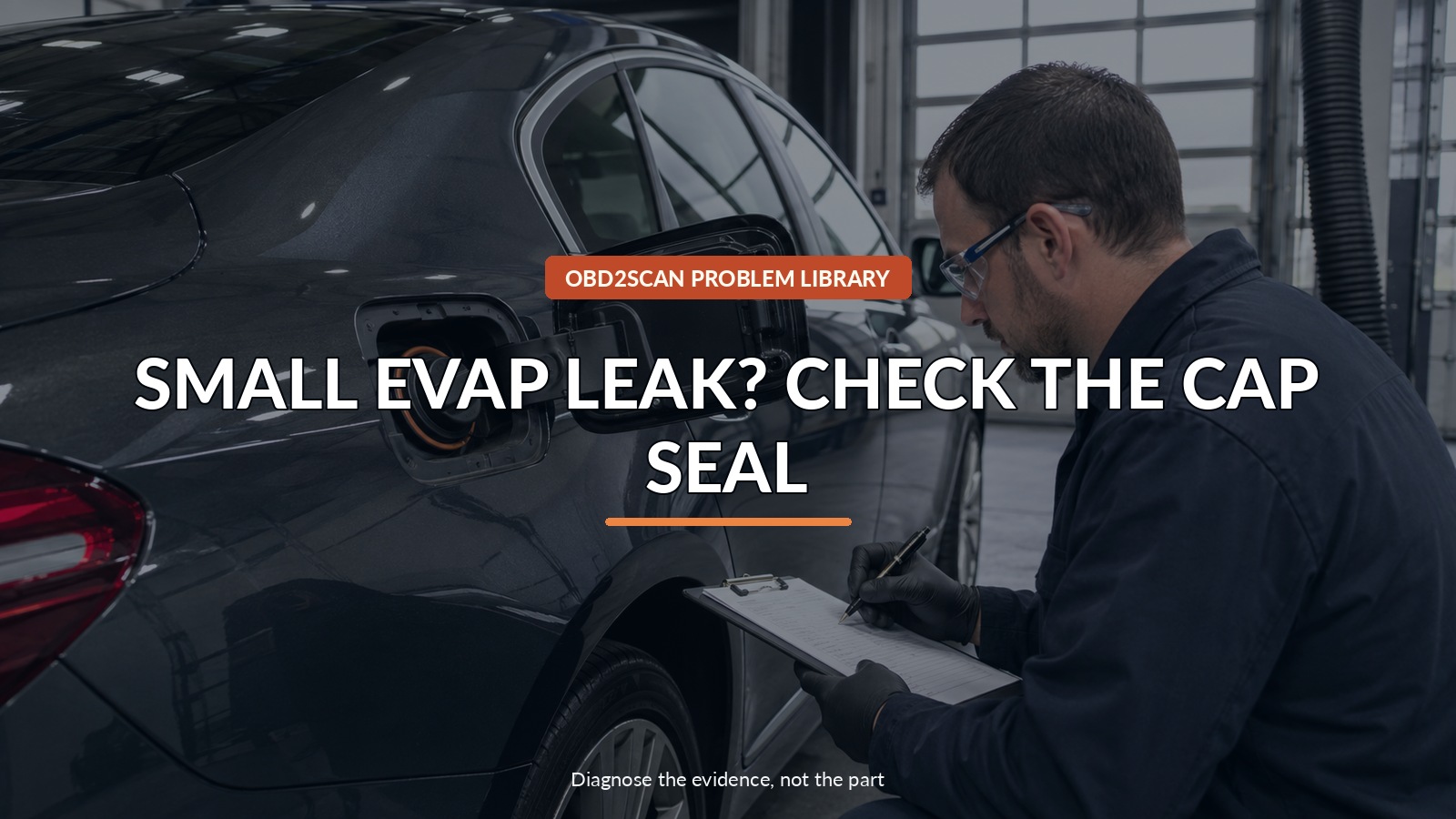
Small Evap Leak? Check The Cap Seal
Save P045600, P044200 or P00EF00 before touching the cap. On a 2023–2026 combustion-engine Audi, the current bulletin says to inspect the fuel-cap seal for a twist and seat it correctly; if the complaint returns, replace the cap. If the seal is already seated or the monitor fails again, continue normal EVAP diagnosis rather than assuming every small leak is at the filler.
If the cap seal is correctly seated and the code returns, a regulated low-pressure smoke test can make the next invisible leak visible. The AUTOOL SDT203 is one possible shop route for that later branch. SDT203 can introduce regulated diagnostic vapor into a compatible EVAP system through the current Audi test point and help quantify or locate a remaining leak; it cannot make air/oxygen safe around fuel vapor, choose test pressure, prove P00EF is caused by the cap, run the Audi monitor or authorize smoke testing on a system the procedure excludes.
A very small EVAP leak can trigger a very large parts search. Audi’s low-cost first checkpoint is visible at the fuel door: an orange cap seal that may be twisted or rolled instead of sitting flat. Use a cap-first, smoke-second sequence. It respects the simplest known failure without letting a corrected-looking cap erase the need for a drive-cycle result.
Quick answer: Photograph the orange cap seal, reseat it if twisted and require a completed EVAP monitor before escalating to cap replacement or smoke testing.
In this guide
- Save the exact Audi-format code
- Confirm an internal-combustion 2023–2026 vehicle
- Inspect the orange seal before cleaning anything
- Reseat a twisted seal without damaging it
- Replace the cap only if the complaint returns
- Confirm a remaining leak before chasing components
- Smoke-test only at Audi’s pressure and test point
- Run the monitor and inspect the cap one last time
Save the exact Audi-format code
Treat raw fuel odor, visible liquid fuel or wetness near the tank as a stop condition. Move away from ignition sources, do not operate switches unnecessarily and arrange qualified inspection. When there is only a MIL, save P0456, P0442 or P00EF00 with status and freeze-frame before clearing. Record the last refueling, whether the cap clicked, fuel level and whether the lamp followed a very full tank. EVAP monitors run under specific conditions, so a code may appear long after the event that created it.
Confirm an internal-combustion 2023–2026 vehicle
Audi TSB 2078916/3 covers specified 2023–2026 Audi combustion-engine vehicles and this particular code family. Confirm VIN, engine/fuel system and the latest Elsa information. Similar tiny-leak codes can arise from hoses, valves, canister, tank seals or testing conditions. An Audi badge plus P0456 does not prove the cap seal is twisted, and a plug-in hybrid or other configuration may have different pressure-management logic.
Inspect the orange seal before cleaning anything
With the vehicle parked, engine off and away from flames, open the fuel door and remove the cap. Inspect the orange sealing ring in bright light. It should sit evenly in its groove without a rolled edge, twist, nick, swelling, dirt or missing section. Photograph the entire circumference before moving it. Do not pry with a sharp pick or apply grease unless Audi specifically approves it; either action can damage or contaminate a good seal.
Reseat a twisted seal without damaging it
If the seal is merely twisted and undamaged, reseat it uniformly in the groove as the bulletin illustrates, then reinstall the cap until correctly secured. Inspect the filler-neck sealing surface for debris or damage. Do not stretch the ring or use a universal replacement O-ring. A cracked, cut, hardened or permanently distorted seal is different from one that has rolled out of position and should follow the current parts procedure.
| Observation | What it supports | Next action |
|---|---|---|
| Orange seal visibly rolled but intact | Known cap condition is plausible | Reseat evenly and run monitor |
| Seal damaged or distorted | Reseating is not a durable repair | Follow cap replacement guidance |
| Code returns after documented reseat | Cap branch remains active | Replace VIN-correct cap as directed |
| Code returns after cap/monitor proof | Leak may be elsewhere | Regulated EVAP diagnosis |
Replace the cap only if the complaint returns
Clear the DTC only after the original scan is stored, then complete the applicable readiness/drive-cycle process without overfilling the tank. A cap that looks flat today has not passed until the EVAP monitor runs and the code stays away. Keep the date, fuel level and readiness status. An immediate no-code result in the service bay may simply mean the monitor has not executed. Avoid repeated manual code clearing, which resets the very monitor needed for verification.
Confirm a remaining leak before chasing components
If P0456, P0442 or P00EF00 returns after a documented reseat, the bulletin directs replacement of the fuel cap in the scoped condition. Match the VIN-correct cap and inspect the new seal before installation. Repeat the monitor verification. Do not replace purge valves, leak-detection modules or the canister just because they are common EVAP parts. If the cap replacement does not resolve the code—or if the seal was never twisted—move to the current pressure/smoke and component test plan.
Smoke-test only at Audi’s pressure and test point
A smoke test must use an EVAP-safe machine, regulated pressure and the manufacturer’s connection method; shop air or excess pressure can damage the system. Test with suitable fuel level and command valves only through approved procedures. Inspect filler neck, cap interface, vapor lines, canister and valve connections while considering wind and temperature. Smoke at the service-port adapter can be a setup leak, so prove the machine and connection before naming a vehicle part.
Run the monitor and inspect the cap one last time
Close with two records: the physical cap result and the completed monitor result. Confirm no fuel odor or wetness, the cap is secure, readiness has run and the code remains absent. If a small leak persists, give the next technician the seal photos, cap part/replacement status, monitor dates and smoke-test setup. That record prevents a second cap-first visit from replacing the same simple part while the real leak remains elsewhere.
Start at the cap because Audi identified a real, visible failure there—not because every small EVAP leak is a loose cap. To verify the simple fix, keep a full-circumference photo, complete the careful reseat and wait for the monitor to run. A returning code then earns the cap-replacement or smoke-test branch without a cart full of guesses.



Comments 0
Questions, fixes, and real-world diagnostic notes from readers.
Be the first to share a diagnostic result or ask a follow-up question.