
2011 Peugeot 5008 Stalls in Reverse After a Ground Was Cleaned: Check the Other Connection

Quick answer: Cleaning one end of an electrical return path does not establish the whole path. A starter complaint and transmission-related faults can justify checking the remaining connections before replacing shift-control parts.
A complete return-path assessment can keep a transmission estimate tied to evidence. An AUTOOL DM301 can support passive voltage measurements at suitable low-voltage points; it does not identify the correct ground route or replace a vehicle-specific loaded-circuit procedure. Leave starter and transmission testing to a qualified repairer.

In this guide
- One cleaned joint is not the complete return path
- Why a transmission code does not settle the repair scope
- Test the path under the conditions that matter
- Restore connections without adding improvised shortcuts
- Verify starting and reverse selection separately
- Keep unresolved symptoms visible in the job record
One cleaned joint is not the complete return path
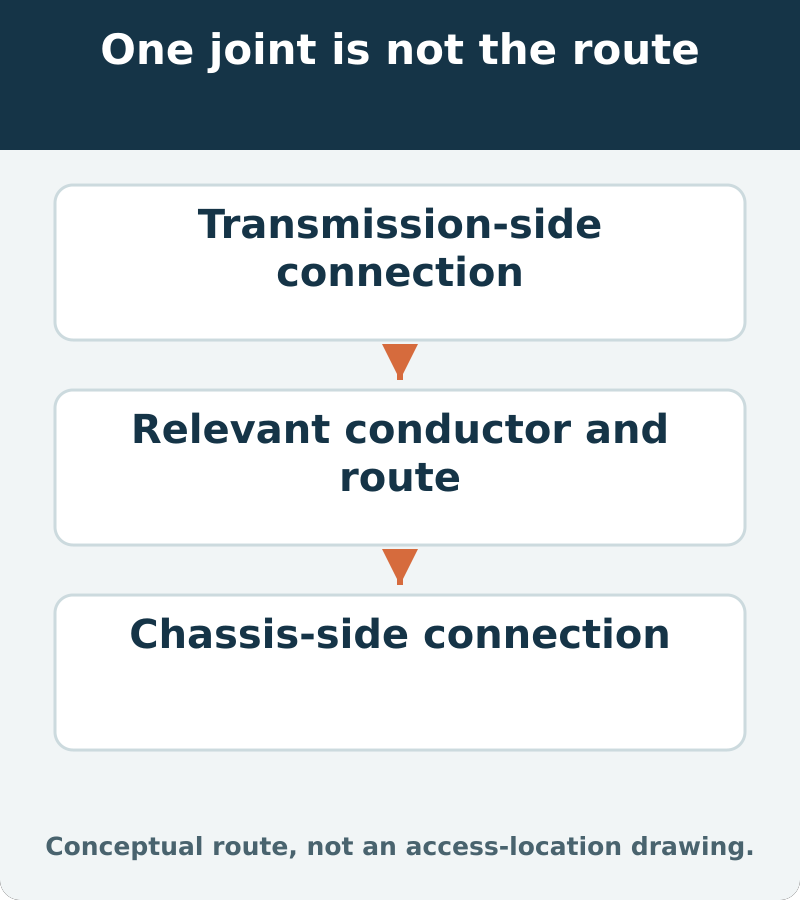
A ground path is a route, not just the bolt someone last cleaned. A sound connection at one point does not establish the condition of the remaining connections and conductor. That is the important distinction when a repair changes visible corrosion but not the complaint.
Ask which connection was serviced, which other points belong to the relevant route and how the whole path was assessed afterward. This gives the next repairer something more precise than ground already done.
Do not respond by adding an improvised jumper or ground strap. That can alter the circuit without locating the original defect and may introduce its own hazards. The correct routing and permitted repair method need to come from the vehicle’s service information.
Why a transmission code does not settle the repair scope
A transmission-related code identifies a diagnostic concern within its reporting context. It does not automatically establish that an internal shift-control component is the failed part. Electrical support and the exact diagnostic procedure still matter.
Keep the starter complaint visible alongside the reverse-selection stall. They are two reported symptoms that may help define the investigation, but their coexistence is not proof of a shared cause on every 5008.
Ask how the proposed work accounts for the full complaint and what supports going beyond electrical-path assessment. If a solenoid or transmission repair is recommended, its evidence should remain distinguishable from the presence of the code alone. The helpline example below is a lead to evaluate, not a completed repair record for your vehicle.
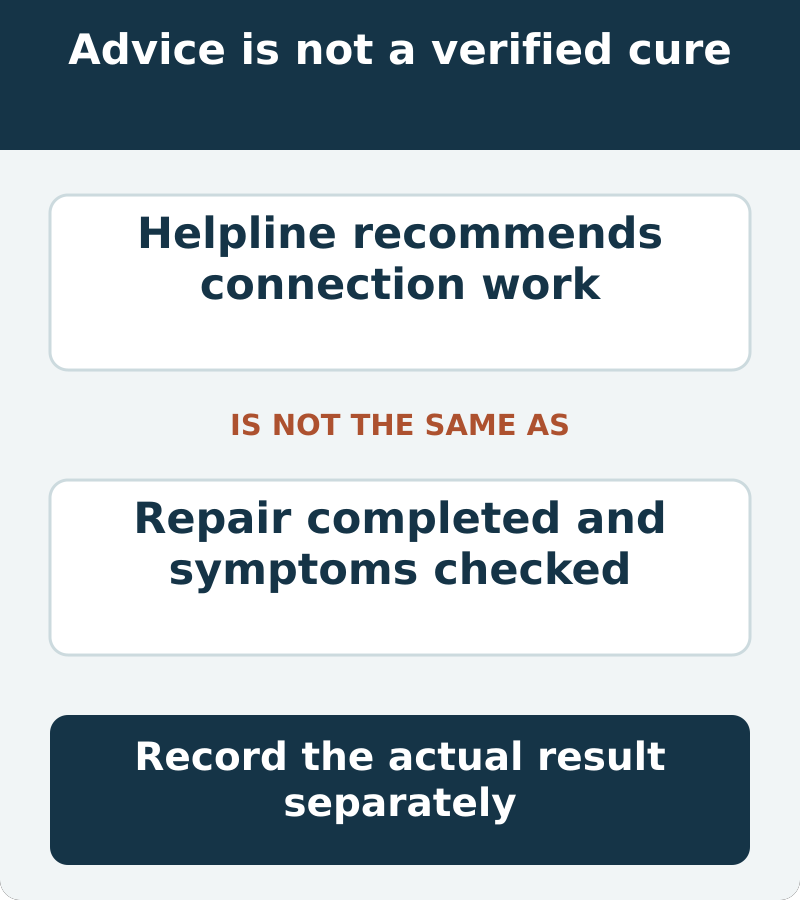
In the Professional Motor Mechanic / Autodata published helpline answer, a workshop reported intermittent starter failure, reverse-selection stalling and P0972/P0975 on a 5008. Cleaning the transmission ground had not helped. Autodata identified a further corroded chassis-side connection and advised restoring both points. The published answer does not narrate a completed post-repair verification.
Test the path under the conditions that matter
Electrical connections can behave differently when a circuit is required to do work than when it is merely inspected at rest. A useful assessment therefore needs the permitted operating conditions, suitable measurement points and the correct interpretation for the circuit.
The owner-facing question is whether the workshop tested the relevant path in a way that could reveal the suspected problem, not whether it obtained any voltage reading. Ask what part of the route the measurement covered and whether it included the previously unaddressed connection.
This is not a starter-bypass or repeated gear-selection exercise. Unexpected starting failure and stalling require a controlled workshop plan with the vehicle secured appropriately. Do not try to reproduce the event in traffic or while someone works near moving components.
Restore connections without adding improvised shortcuts
A connection repair may require attention to more than an exposed surface. The repairer needs to assess the affected terminal, conductor, fastener and mating area using the applicable procedure, then restore the intended protection and retention.
Ask which parts were serviceable and which required replacement. Do not substitute an arbitrary bolt, additional cable or internet torque figure for the vehicle-specific method. Access and electrical isolation requirements also need to be followed; the historical advice is not a battery-removal tutorial.
If only one point has been cleaned again, ask what evidence established the condition of the rest of the route. Repeating visible work can leave the same unanswered question unless the complete path is included in the assessment.
Verify starting and reverse selection separately
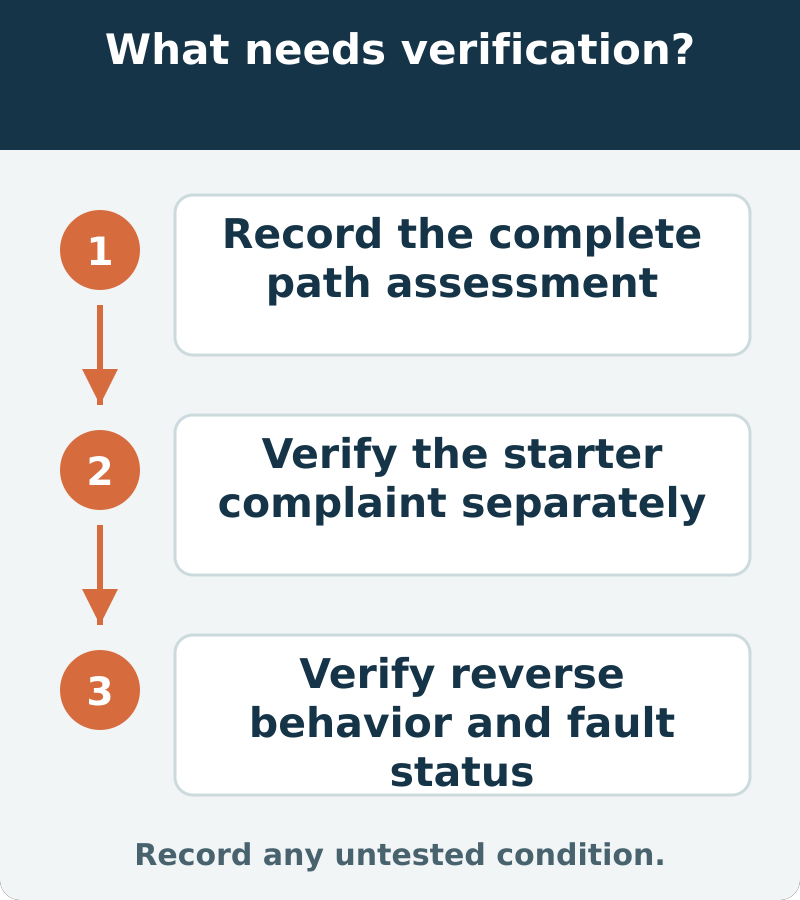
The final check has two distinct targets: the intermittent starter complaint and the behavior during reverse selection. Improvement in one does not prove the other has been resolved. Ask the shop to state which conditions were safely assessed and whether either symptom remained.
Fault status belongs alongside those functional results. A cleared memory with an unresolved stall is not a complete repair, and a successful start does not settle the transmission-related concern.
Importantly, the published helpline answer does not describe a workshop carrying out the advice and then verifying a cure. The verification map here shows what a completed job would need to establish; it is not a claim that those checks or a successful outcome were reported in the source.
Keep unresolved symptoms visible in the job record
If the fault remains intermittent or could not be reproduced, retain that limitation rather than converting a plausible connection finding into certainty. Agree on the next safe diagnostic step and how a recurrence should be reported.
The service record should identify the exact points inspected, work actually completed, test scope and separate results for the two complaints. That gives a later investigation a usable starting point and prevents the phrase ground repaired from closing an unfinished question.
The lesson is about repair scope: one clean joint is not evidence for an entire sound return path. Follow the relevant route, support any component recommendation with findings and verify each original symptom before describing the job as resolved.










Comments 0
Questions, fixes, and real-world diagnostic notes from readers.
Be the first to share a diagnostic result or ask a follow-up question.