
2018 Malibu Hard Start and P0340: The Sensor Cannot Read a Target That Is Not Moving

Quick answer: A camshaft-sensor fault can reflect missing mechanical motion, not just failed electronics. When a new sensor changes nothing and a fuel-pump-area noise remains, the mechanical target deserves investigation.
Visual access can help explain a signal fault. An articulating inspection camera such as the AUTOOL SVB308 can record a safely accessible target with the engine cool and disabled; it cannot establish timing or replace mechanical checks. Remove the probe before any movement.
In this guide
Start with the noise as well as the code
If your Malibu cranks for too long and makes an unfamiliar mechanical noise, the useful first question is not which sensor to buy. It is whether further cranking is appropriate. Stop repeated attempts and arrange assessment, particularly when the noise appeared with a loss of power.
Give the repairer a short chronology: when starting changed, when the noise appeared, which warning arrived first, and which parts have already been replaced. A recording made from a safe position can preserve the sound, but do not run the engine just to obtain one. Keep the full diagnostic report rather than a cropped photograph of P0340 alone. Related observations can change the direction of the investigation.
A sensor needs something to observe
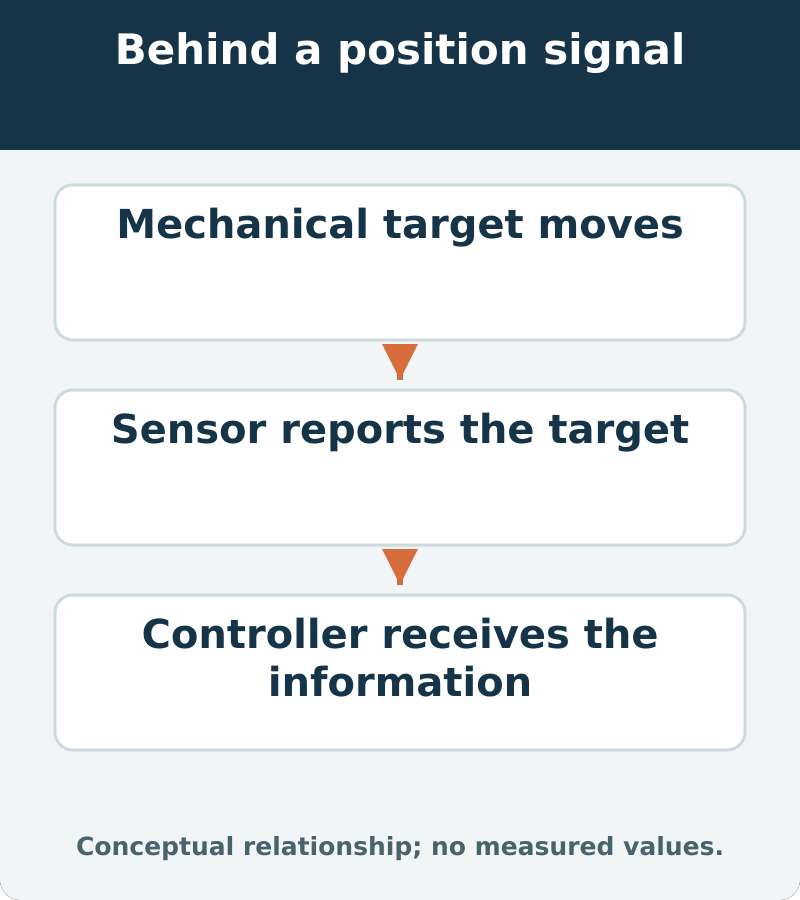
Think of a position-sensing system as three linked questions. What is the mechanical target doing? Does the sensing circuit describe that activity correctly? Does the controller receive information it can use? A fault named after the sensor does not answer all three.
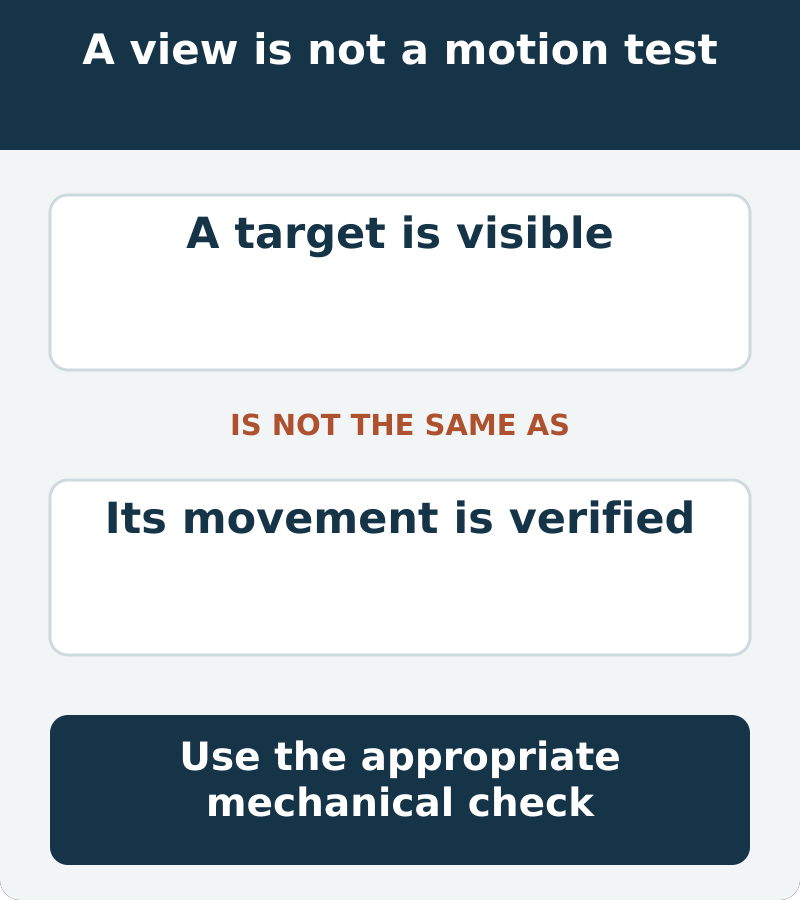
A new sensing head cannot create movement in a stationary target. Equally, seeing a target through an opening does not prove that it moves correctly, stays attached, or remains synchronized with the rest of the engine. Those are separate checks. This distinction prevents an electrical label from narrowing the inspection too soon: the component reporting an abnormal condition may be working within a mechanically abnormal system.
In the ALLDATA published case, the Malibu had extended cranking, low power, noise near the high-pressure pump and three fuel/cam-related codes. Replacing the pump and intake cam sensor did not help. A stationary trigger wheel led to discovery of a broken camshaft. Camshaft replacement restored starting and running, with no reported returning codes.
Why two new parts did not answer the question
An unsuccessful replacement is information about the result of that repair, not automatic proof that the old part was healthy. The car may have had more than one fault, the test may have missed a shared cause, or the new part may need its own installation check.
Ask the workshop to explain what each earlier replacement was intended to correct and what changed afterward. If neither starting nor the noise changed, that needs to be visible in the next test plan. The relevant decision is whether there is fresh evidence for another electrical repair or a reason to inspect the source of the signal. Repeating the same parts-based guess with a different brand does not add that evidence.
What inspection must establish before more cranking
Before approving further engine operation, ask what the mechanical inspection has established and what remains uncertain. A useful explanation distinguishes a visible defect, a movement finding and any additional condition that needs access or disassembly to assess. They need not all be answered by the same instrument.
This is not a borescope-while-cranking exercise. Probes and loose equipment must be clear before mechanical movement, and the correct engine procedure determines whether and how movement is permitted. High-pressure fuel equipment also belongs within qualified service. A photograph can make a finding easier to understand, but the repair decision should not depend on an unexplained close-up with no component identification.
From the broken part to a complete repair scope
Finding a broken component answers where a defect exists; it does not necessarily explain why it broke or describe every affected part. Before agreeing to the repair scope, ask which related areas have been inspected, which checks require further access and what would change the estimate.
Keep confirmed work separate from contingencies. For example, a quote can identify the established mechanical repair while reserving additional work for documented findings, rather than presenting every nearby component as automatically damaged. Conversely, replacing only the most visible broken piece may leave important questions unanswered. The objective is a supported scope for this engine, not the smallest possible parts list or a prediction based on another vehicle’s outcome.
What a useful final check should confirm
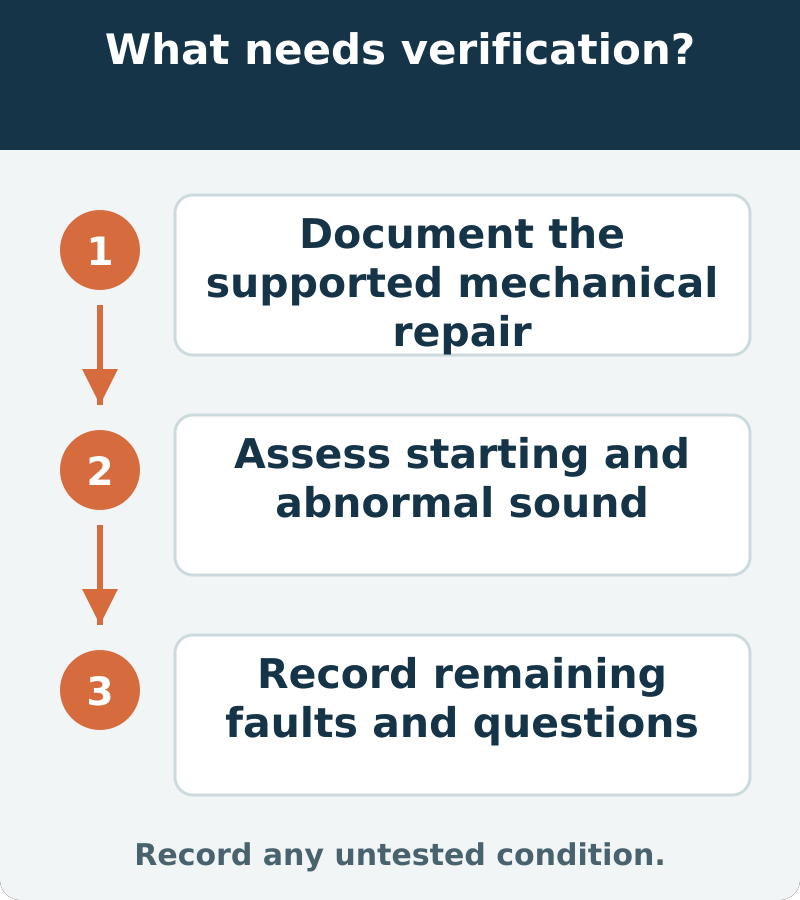
The completion check should return to all the original complaints: starting behavior, abnormal sound and usable engine operation. A cleared fault memory alone does not answer those questions. Ask what checks were made after assembly and whether any related code or symptom remained.
The historical repair result is encouraging for the reported car, but it is not a guarantee for another Malibu. Your service record should identify the finding, the work actually performed and the conditions of the final assessment. If the engine still sounds abnormal or remains difficult to start, treat that as unresolved work rather than a reason to keep trying it at home. A successful repair explanation connects the physical finding to the restored behavior.









Comments 0
Questions, fixes, and real-world diagnostic notes from readers.
Be the first to share a diagnostic result or ask a follow-up question.