
2013 F-250 Has Boost and Exhaust Warnings: Repair the Air Leak Before Pricing the Aftertreatment

Quick answer: A code cluster can cross intake and exhaust systems. Confirm an obvious boost leak first, then reassess the remaining faults with normal air delivery restored.
When a diesel presents intake, boost and exhaust warnings together, the first useful decision is the order of investigation. An articulating camera such as the AUTOOL SVB308 can help inspect a concealed joint. Plan visual work on cooled, disabled equipment. A clear picture is useful documentation, but establishing pressure tightness takes a separate, appropriate test.
In this guide
Sort the complaints by what the engine needs
Start with the driver’s complaint, not the length of the code list. Was there a sudden loss of pulling power, an audible change, a warning during towing or a gradual deterioration? Give the repairer the existing record without deliberately loading the truck again.
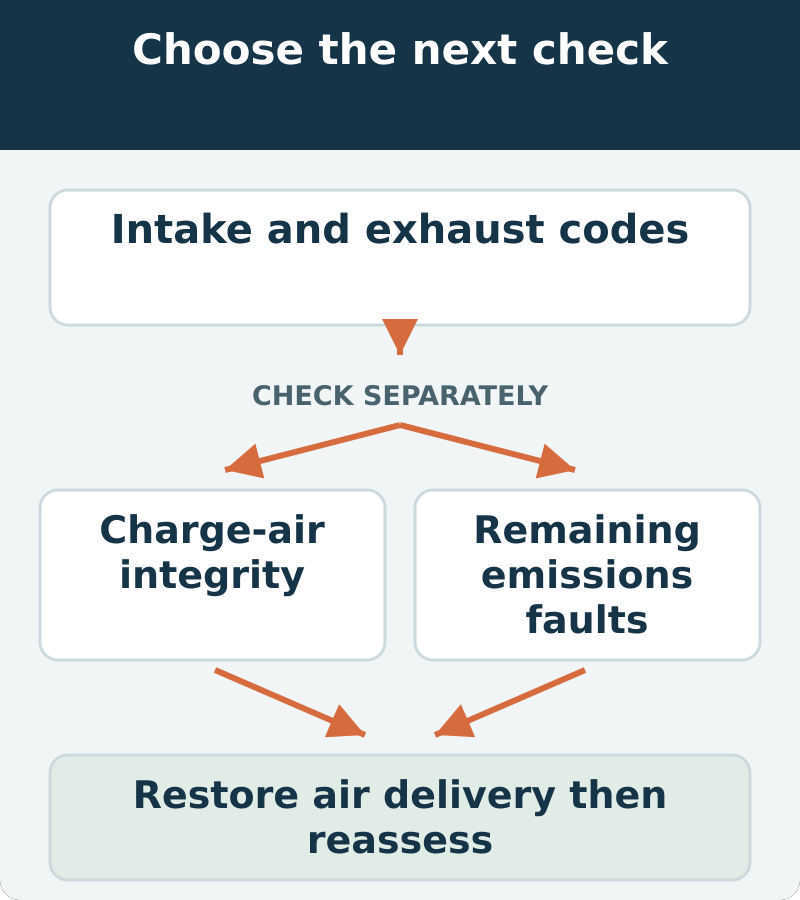
Then ask the workshop to group the faults by system and by the conditions in which they appeared. Several codes do not automatically mean several independent failed assemblies. Neither does one visible defect prove that every other code is harmless. An organized first-fault plan should identify what needs correction now and what will need reassessment afterward.
Why the air path comes before an expensive exhaust estimate
Before authorizing expensive exhaust-system work, ask whether the engine’s air-delivery path has been assessed. If an obvious fault prevents that path from behaving normally, interpreting downstream performance without addressing it may be premature.
This is a sequencing argument, not a claim that an air leak always explains an emissions warning. The workshop must still decide which tests and repairs are supported on this truck. A good estimate can therefore have a defined first stage and a decision point for further work. That is more useful than either replacing everything on the code list or promising that one pipe will solve every warning.
In the published ALLDATA case, this F-250 stored boost, airflow, EGR and aftertreatment faults. Inspection located a cracked charge-air pipe and a leaking quick-connection seal. Both pipe assemblies and seals were replaced. Power returned and the reported road check produced no returning codes; complete emissions-monitor results are not provided.
Look at pipes and joints as separate leak opportunities
A pipe wall and its connection are different inspection targets. Looking at the broad visible surface may miss the underside of a joint, a displaced seal or a section hidden by another component. The inspection record should identify what was actually accessible and what remained unconfirmed.
Images can help explain a proposed repair, especially when the owner cannot safely see the area. They do not quantify leakage under operating conditions. Any pressure or functional testing must use the correct equipment, limits and vehicle procedure. Do not invent a test pressure from another engine or inspect near a running fan, hot exhaust or moving belt.
What the first repair should establish
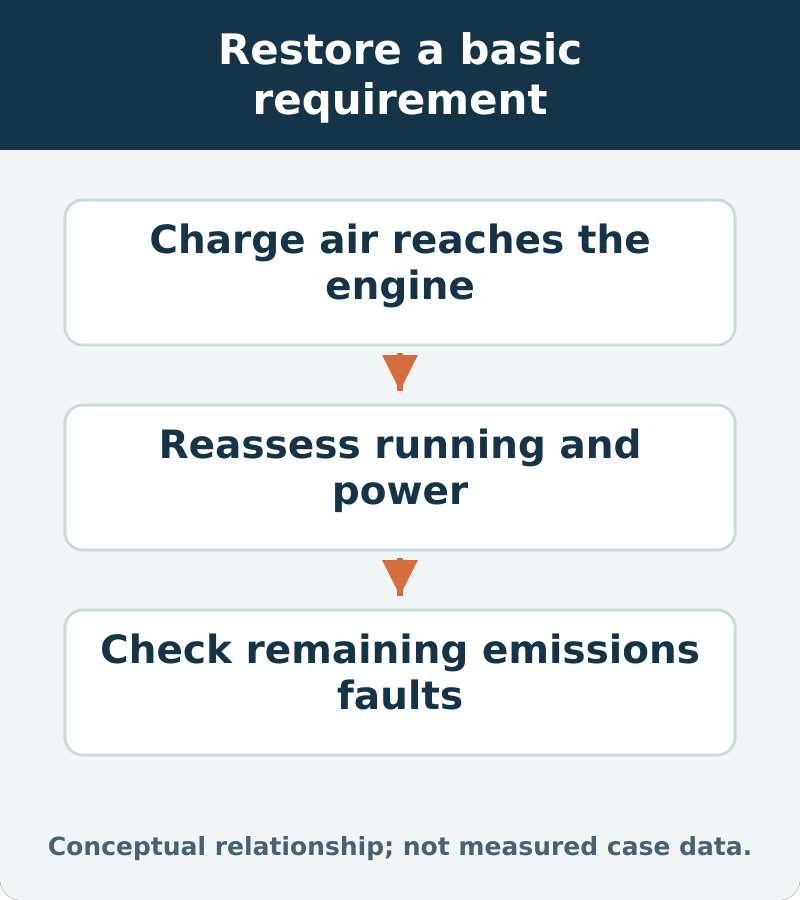
The first repair should have a stated purpose: restore the identified part of the air path and verify that correction by an appropriate method. Ask which associated seals, joints and supports are included, rather than assuming that a replacement pipe automatically renews every interface.
Also agree on the next decision. If power improves but a warning remains, will the shop continue with the applicable diagnostic routine? Defining that point in advance avoids confusing a successful first repair with a promise of complete resolution. It also makes a staged authorization easier to understand, because each additional step depends on what the restored system shows.
Reassess any warning that remains
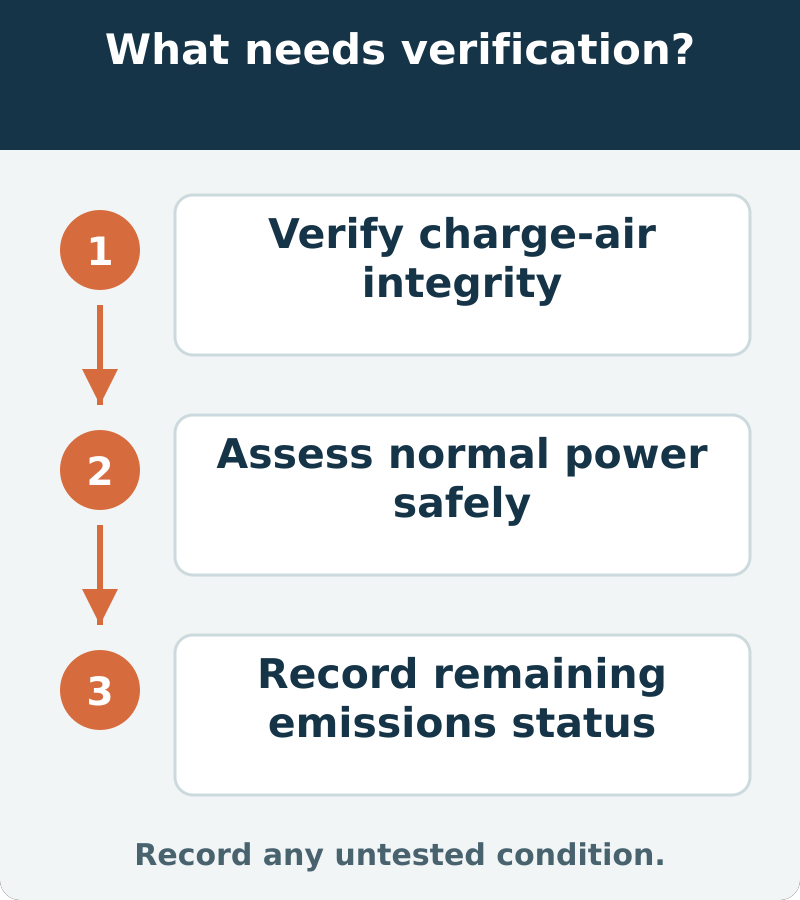
A remaining fault needs its own evidence. It may be related, independent or only assessable after the initial condition is corrected; the code list alone cannot settle that. Ask about current fault status and the relevant monitor results rather than assuming that a cleared lamp means every check has completed.
Do not request forced regeneration as a general cleanup step. Whether it is appropriate depends on the actual vehicle condition and the manufacturer’s procedure. A short successful road check is useful, but it should not be inflated into a published guarantee about every emissions monitor or the long-term condition of the aftertreatment hardware.
Return to work only with a documented result
Before returning to towing or demanding work, collect the repair description and the workshop’s assessment of normal power, warning status and any outstanding checks. Ask what to do if the same complaint returns, particularly if the original event involved severe power loss.
For a fleet, record the symptoms and the specific air-path repair in the maintenance history. That helps the next technician distinguish a recurring joint problem from an unrelated exhaust complaint. The useful saving here is diagnostic order: establish a sound starting condition, then judge the remaining evidence. It is not a reason to ignore an expensive system simply because a cheaper defect was also present.








Comments 0
Questions, fixes, and real-world diagnostic notes from readers.
Be the first to share a diagnostic result or ask a follow-up question.