
2018 Suburban Transmission Runs Hot on Long Trips: Check What Connects It to the Cooler

Quick answer: A replacement transmission still depends on the external cooling path. A fault that appears after hours deserves investigation beyond a short workshop warm-up.
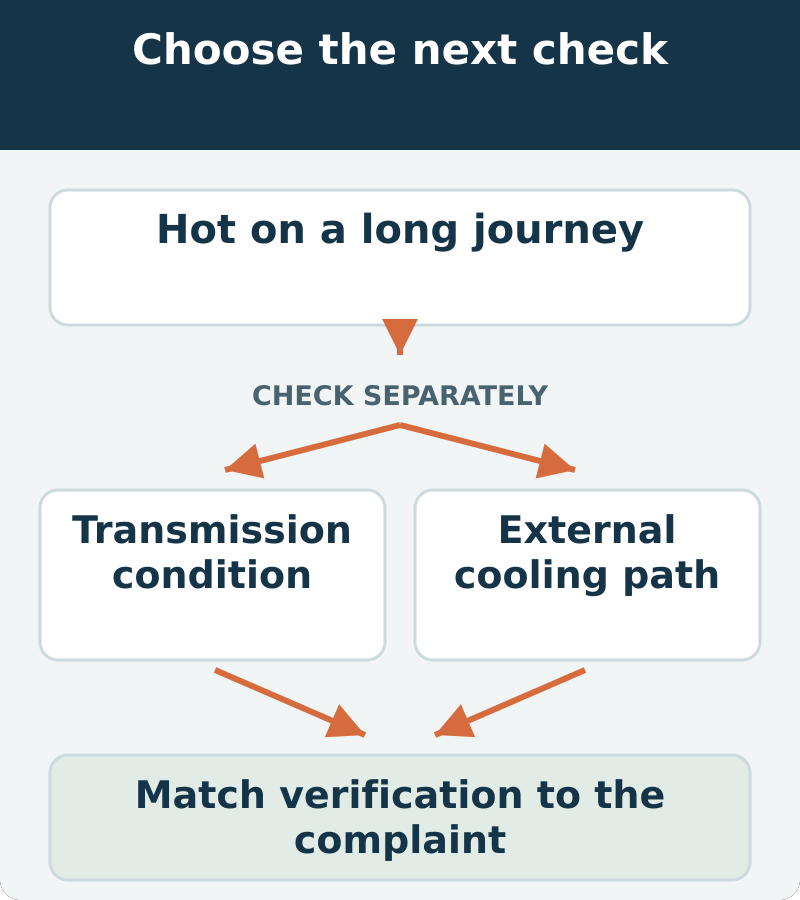
Before another transmission estimate, look at the journey. A fault that appears late in a long drive contains information that a short neighborhood test may never reproduce. The question is not simply whether the replacement unit is new. It is whether heat can leave it through the complete cooling system when the vehicle is used as intended.

In this guide
Tell the shop how long the trip lasted
Give the workshop the elapsed driving time, approximate route conditions, load and the warning you actually saw. Distinguish a temperature display that rose from an explicit overheating message or a change in shifting. Existing photographs taken safely by a passenger may help; do not use a phone while driving.
Do not set off on another long trip merely to gather better evidence. Once overheating or loss of drive occurs, the safe-use decision belongs with the repairer. The information already available can help plan a controlled verification. Time under load is part of the complaint, not a reason to keep operating through a warning.
What a replacement transmission leaves unchanged
The word “transmission” on an invoice may describe the replacement assembly, not every external line, cooler or temperature-control component. Ask what was retained, inspected, cleaned or renewed. Do not assume an omission simply because the invoice uses a broad description; request the detail.
This separates a warranty question from a diagnostic question. The shop may need to determine why the system overheats before responsibility for a particular component can be settled. Knowing the boundaries of the earlier job gives that discussion a useful starting point. A recently replaced major assembly can still depend on supporting hardware that was already in the vehicle.
A full cooler can still be isolated
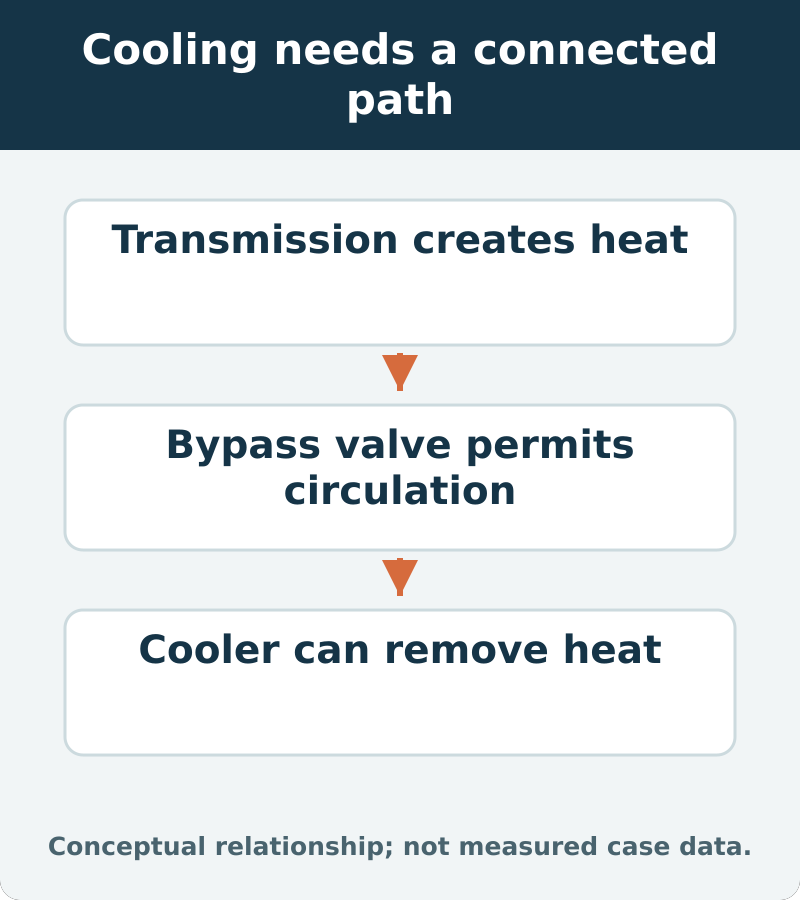
A cooler can be physically present while the fluid path to it is restricted or controlled incorrectly. The relevant question is flow through the intended route, not merely whether the cooler looks undamaged from outside.
Think of a radiator behind a closed gate: its surface area cannot help fluid that does not reach it. This is a conceptual explanation, not a drawing of the Suburban’s exact passages. Testing must follow the applicable service information. There is no universal opening temperature or safe shortcut in this article, and deleting or bypassing temperature control is not an appropriate substitute for establishing what failed.
In the published ALLDATA case, the Suburban overheated its transmission on extended trips despite recent replacement. The thermal bypass valve contained a broken plastic guide and stuck closed. Replacing that valve was followed by the owner reporting substantially cooler operation over another long journey. The source does not document a complete long-term durability assessment.
Was the supporting system included in the repair?
Ask the service adviser to describe the cooling-path checks in the language of the work order. Was the external temperature-control hardware considered? Were retained components assessed under the replacement supplier’s requirements? Is there a documented reason to suspect another internal transmission problem?
These questions do not require you to prescribe a part or challenge every earlier decision. They help distinguish an incomplete diagnosis from a genuinely new fault. They also make estimates easier to compare: two prices for “transmission work” may cover very different investigations, supporting parts and verification. The scope matters more than a reassuring label such as fully rebuilt.
Plan a safe verification with the workshop
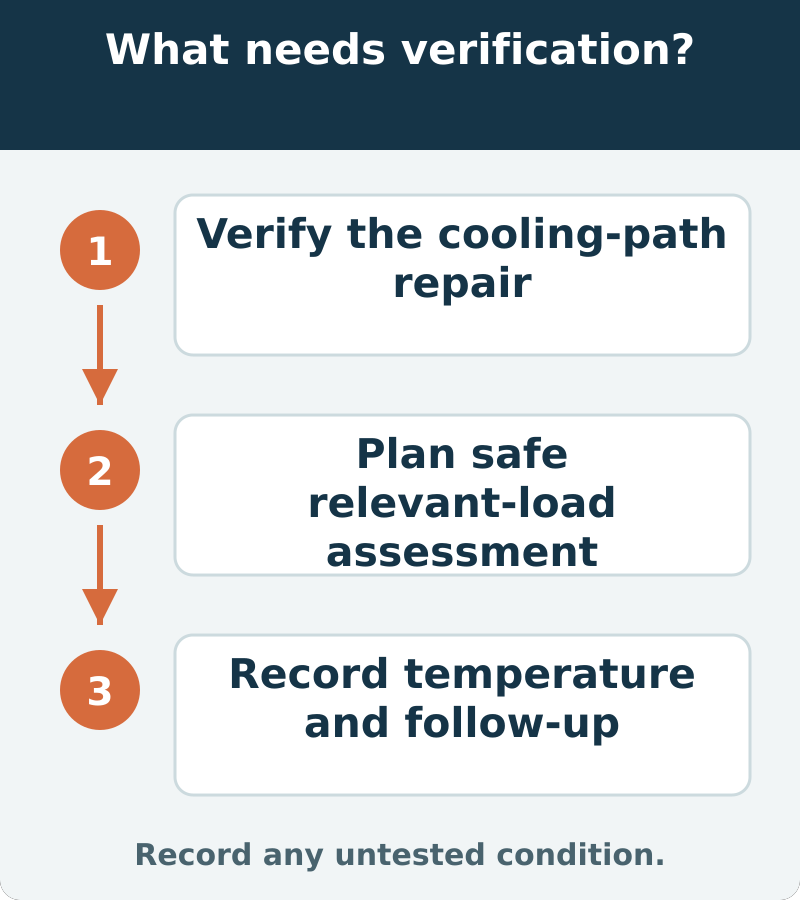
A useful verification plan should fit the complaint without exposing the owner to another overheated roadside stop. Ask how the workshop will assess operation over the relevant conditions and what limits will end the test. A brief stationary warm-up may answer some questions without answering the original long-trip concern.
Also ask whether previous overheating creates any additional inspection or follow-up requirement. A lower operating temperature after a repair is encouraging, but it is not a measurement of every internal component’s remaining life. Keep those two conclusions separate when discussing warranty coverage or planning heavy use.
Before the next long journey
Collect the repair description, the observed result and the instructions for any returning warning. Confirm that the shop has addressed the cooling route, not simply cleared the display or advised another trip. If a follow-up visit is recommended, schedule it before a journey where recovery would be difficult.
The practical lesson is a scope question: what connects the replacement assembly to the rest of the vehicle? Asking it early can prevent a long-trip symptom from being reduced to a short-test reassurance. It also gives you a clearer basis for deciding when the Suburban is ready for the travel you actually use it for.








Comments 0
Questions, fixes, and real-world diagnostic notes from readers.
Be the first to share a diagnostic result or ask a follow-up question.