
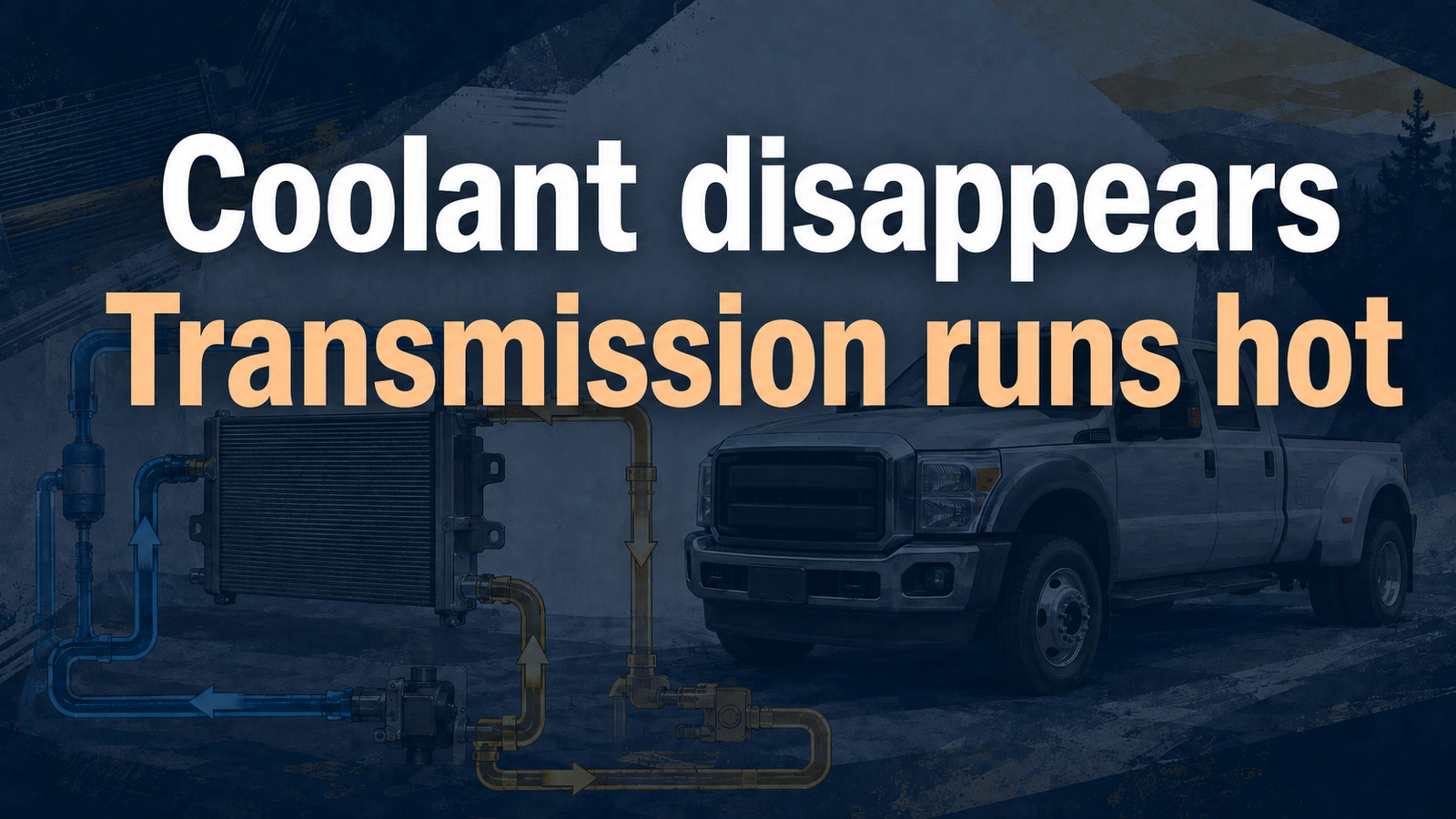
2014 Ford F-450 Transmission Runs Hot While Coolant Disappears: Follow the Secondary Cooling Circuit

Quick answer: A full transmission-fluid reading does not clear the system that removes its heat. Coolant loss without a puddle also leaves internal leak paths open.
Overheating and unexplained coolant loss require stopping and assessment. Never open a hot cooling system or keep towing to reproduce a temperature warning.
Once safe access is established, an articulating camera such as the AUTOOL SVB308 can help document an accessible hidden passage. A visual inspection complements the specified cooling-system tests; it does not measure leak rate or prove pressure integrity.
In this guide
Two observations belong on the same job card
An owner may report coolant loss at one visit and a transmission-temperature complaint at another. Put both on the same work order if they concern the same unresolved period. The technician needs the chance to consider a relationship before either symptom becomes an isolated parts diagnosis.
That does not prove a shared cause. Record the timing, ordinary load conditions and any fluid additions or previous work without combining them into a guessed explanation. The useful intake record contains observations that can be compared with the actual cooling layout. A statement that “the transmission must be worn out” can prematurely hide the second symptom that changes the investigation.
Transmission fluid level answers only one question
The correct fluid-level check is important, but level is not the same as heat-removal performance. A system can contain the expected amount of fluid while a separate requirement for controlling its temperature remains unresolved. The assessment must follow the vehicle’s actual cooling relationships rather than stopping at the dipstick or level procedure.
ALLDATA’s F-450 case describes a 2014 6.7L truck with coolant loss and transmission overheating, without an obvious external leak or coolant in its oils. Coolant was found in the charge-air cooler’s air passages. Cooler replacement was followed weeks later by a report of no further cooling trouble; no temperature log was supplied.
No puddle does not mean no coolant leak
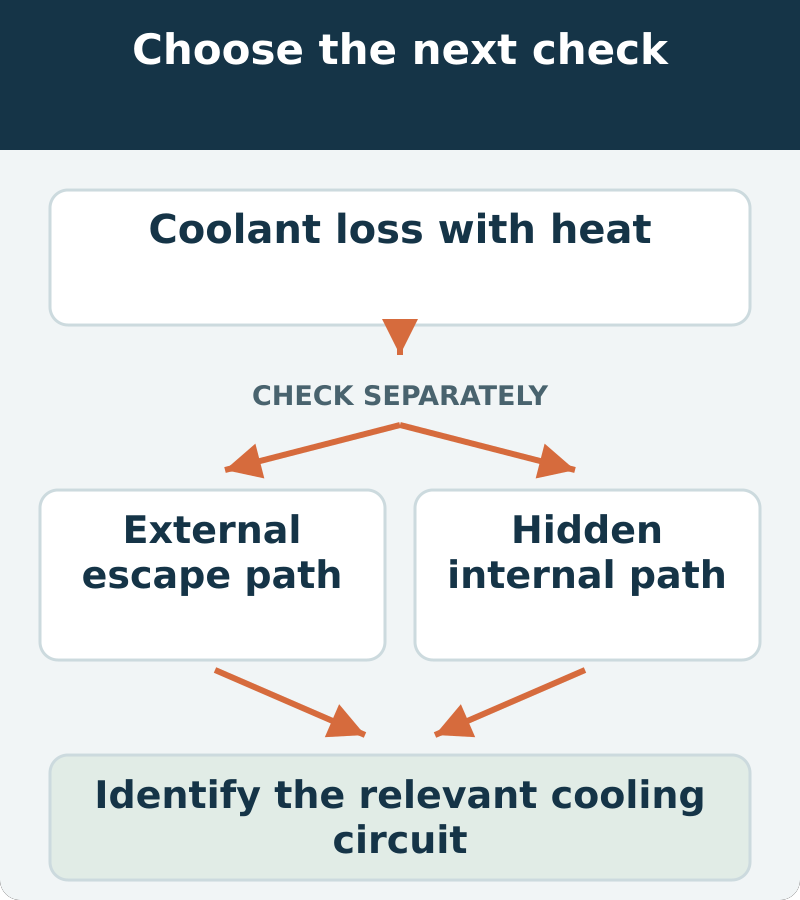
A dry parking spot answers whether fluid was visibly collecting there under the observed conditions. It does not establish that the cooling system retained everything it should. Likewise, an oil inspection that finds no obvious coolant addresses one possible destination, not every destination an internal leak could reach.
This is a useful way to interpret negative findings: each closes only the path it actually assessed. Ask which routes remain open in the identified system and what test can distinguish them. Do not jump directly from “no puddle” to a head-gasket diagnosis, or from “oil looks normal” to permission to keep adding coolant indefinitely.
A cooler separates two paths that must stay separate
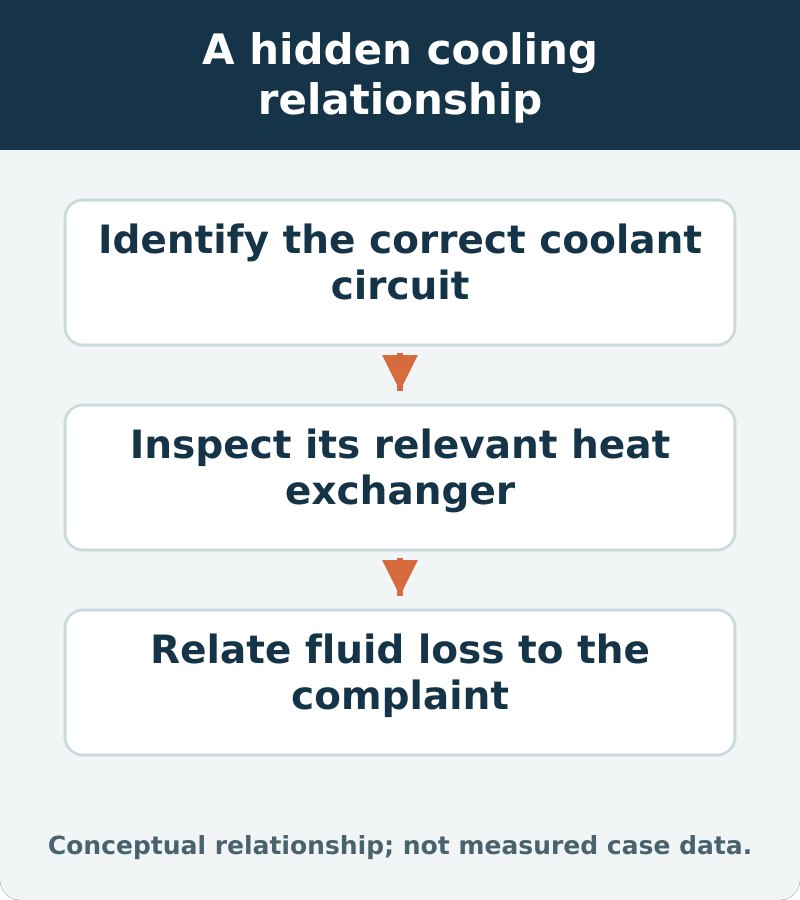
A heat exchanger permits heat transfer while keeping its intended fluid or air paths separate. If that separation is compromised, the receiving side may offer evidence even when an external inspection is unrevealing. Which side and which component deserve attention depends on the actual layout and diagnostic findings.
The illustrations here explain that relationship; they are not the truck’s plumbing diagram. Confirm the secondary-circuit arrangement from service information for the exact application. A component list copied from another year can be misleading, and a generic cooling sketch cannot supply the pressure limits, connection points or isolation sequence required for safe testing.
Plan the repair around the full cooling circuit
Once a leak is localized, the repair plan should account for the affected circuit’s required restoration, filling and verification procedures. Replacing the identified component is not the same as demonstrating that the completed system is ready for service. Any additional contamination or damage must be assessed from actual findings rather than assumed from a dramatic failure story.
Ask what evidence supports the component replacement and which related operations are required by the service procedure. Avoid improvised pressure tests or guessed refill shortcuts. The owner’s role is to obtain a clear repair scope and completion standard, especially when the truck normally works under loads that make an unresolved heat-removal problem consequential.
Follow coolant retention as well as transmission temperature
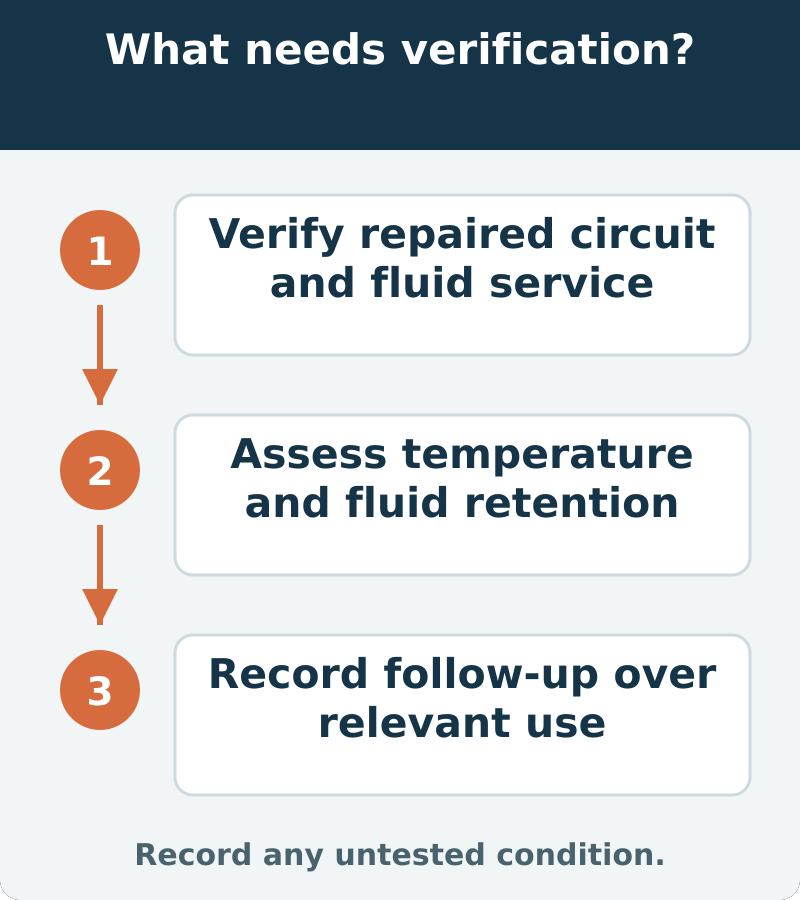
The original complaint had two parts, so verification should address both. The workshop should perform the permitted cooling and operating checks, then state what was observed about retention and temperature behavior. A symptom-free owner report afterward adds useful follow-up but is not a substitute for a temperature trace or pressure result that was never recorded.
Before returning to towing or heavy work, understand any limitations and the agreed follow-up. If coolant disappears or a temperature warning returns, stop safely and arrange assessment. The practical lesson is to investigate where heat goes and where coolant can go—not to condemn a transmission merely because its fluid is full while its temperature is not under control.










Comments 0
Questions, fixes, and real-world diagnostic notes from readers.
Be the first to share a diagnostic result or ask a follow-up question.