
2016 VW Jetta P1250 With Misfire Codes: Ask About Fuel Level Before Ordering Coils

Quick answer: Misfire codes accompanied by a low-fuel code need context from the event. A refueling history can change the next diagnostic step without excusing an active misfire.
A flashing warning, severe rough running or stalling requires stopping and professional assessment. Never deliberately run the tank low to reproduce the fault.

In this guide
Ask what was happening when the codes set
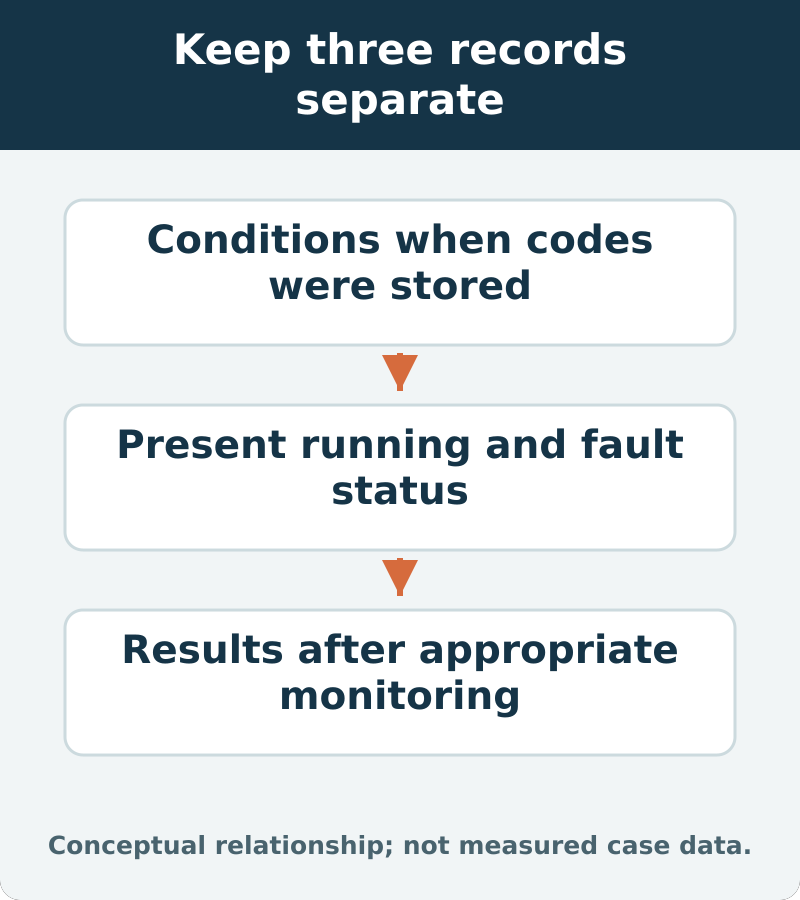
The most useful information at the first appointment may come from the driver, not a parts catalogue. Was the tank unusually low when the warning appeared? Was the car running poorly then but normal now? Had it already been refueled before the scan? Those answers help connect stored information to an event rather than treating the current state as the only state that ever existed.
The conversation should be nonjudgmental. An honest account of ordinary use is evidence, not an admission that every fault must be the owner’s responsibility. Record what is known and leave uncertain details uncertain. A guessed fuel level presented confidently can send the diagnosis in the wrong direction just as easily as an omitted one.
| When | Useful information |
|---|---|
| At the fault | Known fuel level, running behavior and saved event data |
| At the visit | Current symptoms, fault status and whether refueling occurred |
| Follow-up | Returning symptoms or codes, distinct from completed monitor checks |
Why the low-fuel entry changes the order
ALLDATA’s Jetta account describes a normally running 2016 1.4L car with P1250, multiple misfire entries and P2279. The owner reported repeated low-fuel use. After refueling, fault clearing and a road test, the owner reported a trouble-free month. The cause of the intake-leak entry was not independently established.
There is also manufacturer context: Volkswagen bulletin 2033805/4 addresses misfire entries associated with low fuel on covered gasoline vehicles. It supports checking event conditions and applicability before unnecessary component work. It is not permission to ignore an active misfire or to declare every accompanying code explained by the fuel level.
One code in this case still needs its own explanation
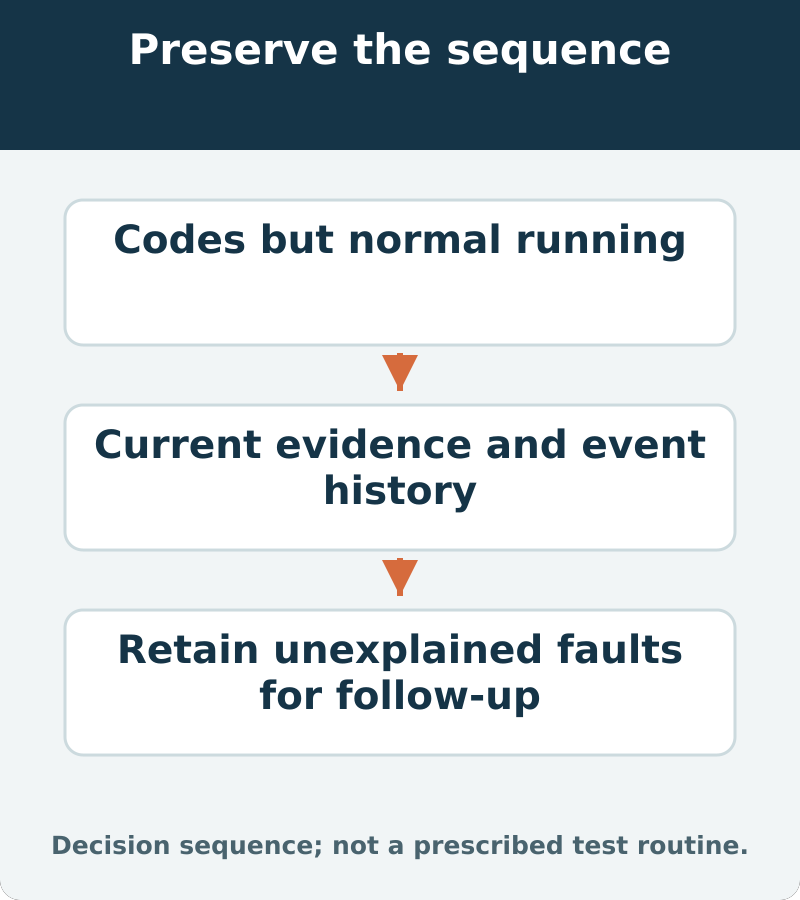
A plausible explanation for part of a fault group does not automatically explain the whole group. The intake-leak entry in the reported car deserves that distinction. If it returns, it needs the applicable diagnostic route rather than being repeatedly cleared under the assumption that the earlier fuel discussion settled it.
This is a useful rule for any crowded scan: group entries when the evidence supports a relationship, but keep unresolved ones visible. A coherent story can be attractive enough to hide an outlier. Ask which faults the diagnosis actually explains, which were historical and which require another check if they remain current or recur.
Save the evidence before clearing anything
Clearing memory changes the information available to the next assessment. Save the original entries and relevant event data first, using compatible diagnostics. A record of fault status and the conditions associated with the event is more useful than a recollection that the screen contained “several misfires.”
Ask the workshop what it intends to learn from any subsequent evaluation. If the vehicle now runs normally, the plan may differ from the plan for one currently shaking or flashing its warning. Clearing information should be part of a reasoned process with follow-up, not a way to postpone an unexplained complaint until the owner notices it again.
When coils and injectors deserve testing
Components deserve investigation when the present behavior, recorded evidence or applicable diagnostic route points toward them. A low-fuel history does not make coils and injectors immune from failure. Equally, their names should not appear automatically on an estimate just because the word “misfire” appears in the scan.
The practical question is what finding would justify the proposed test or replacement now. If rough running continues with the event context addressed, the assessment must continue. If a particular fault returns, it provides a new starting point. Let those observations decide the next step rather than either buying a complete set of parts immediately or treating refueling as a guaranteed cure.
What a useful month of follow-up tells you
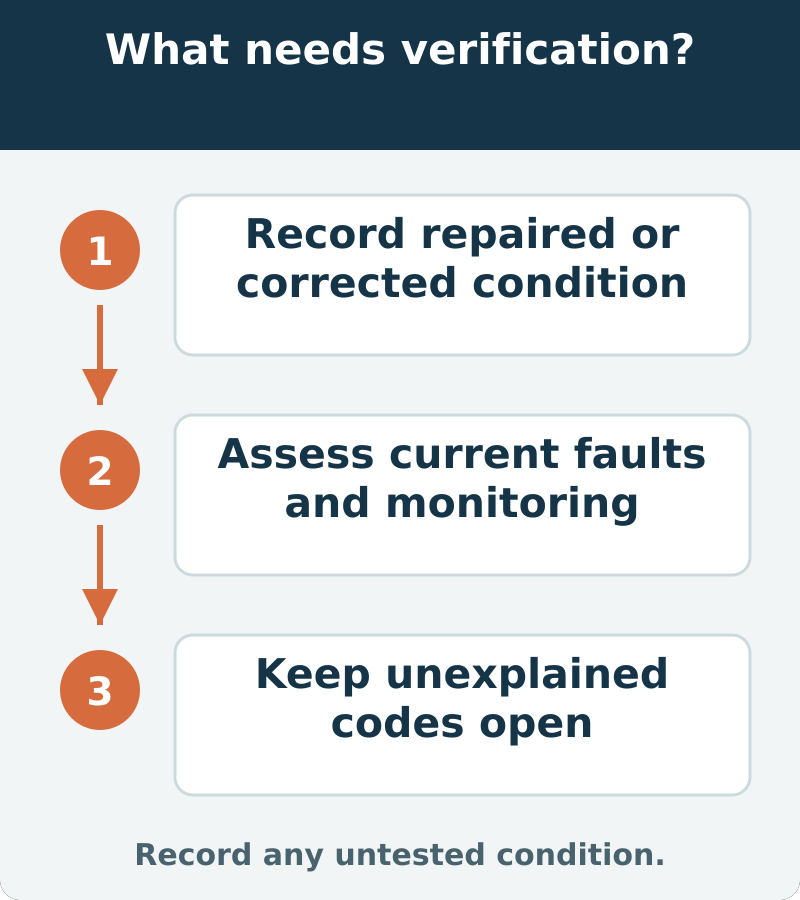
A symptom-free follow-up period provides information about the vehicle’s experience after the intervention. It does not retroactively identify an unmeasured mechanism or guarantee that every monitor completed under every required condition. Keep the owner report separate from recorded diagnostic verification; both can be useful without being the same kind of evidence.
For your own car, retain the original scan, the event history and the agreed recurrence plan. Report any return of rough running or warnings promptly and safely. The spending decision becomes clearer when the workshop first asks what happened at the time of the fault, then tests the possibilities that remain—without turning a familiar code into an automatic shopping list.










Comments 0
Questions, fixes, and real-world diagnostic notes from readers.
Be the first to share a diagnostic result or ask a follow-up question.