
2012 Kia Rio Revs When the Clutch Is Pressed: Check When the Pedal Signal Changes

Quick answer: A pedal switch can change state yet change too late. The useful comparison is between pedal movement and the controller’s recognition of that movement.
Unexpected engine speed needs a safe service assessment. Do not defeat a clutch-start interlock or adjust a switch to a guessed gap in an attempt to change driving behavior.
If the input circuit needs checking, passive electrical measurements can supplement live-state information. A MRCARTOOL B550 can assist at approved points; a compatible diagnostic tool is needed to compare the controller’s clutch indication with the physical event.

In this guide
Describe the rev rise and pedal movement together
“The revs hang” can describe different experiences. A speed that falls slowly, an actual rise and an unexpected sustained race are not identical observations. Explain what you noticed as the clutch pedal moved, whether the behavior was new and whether starting or shifting also changed. Use ordinary-use observations, not a deliberate road experiment.
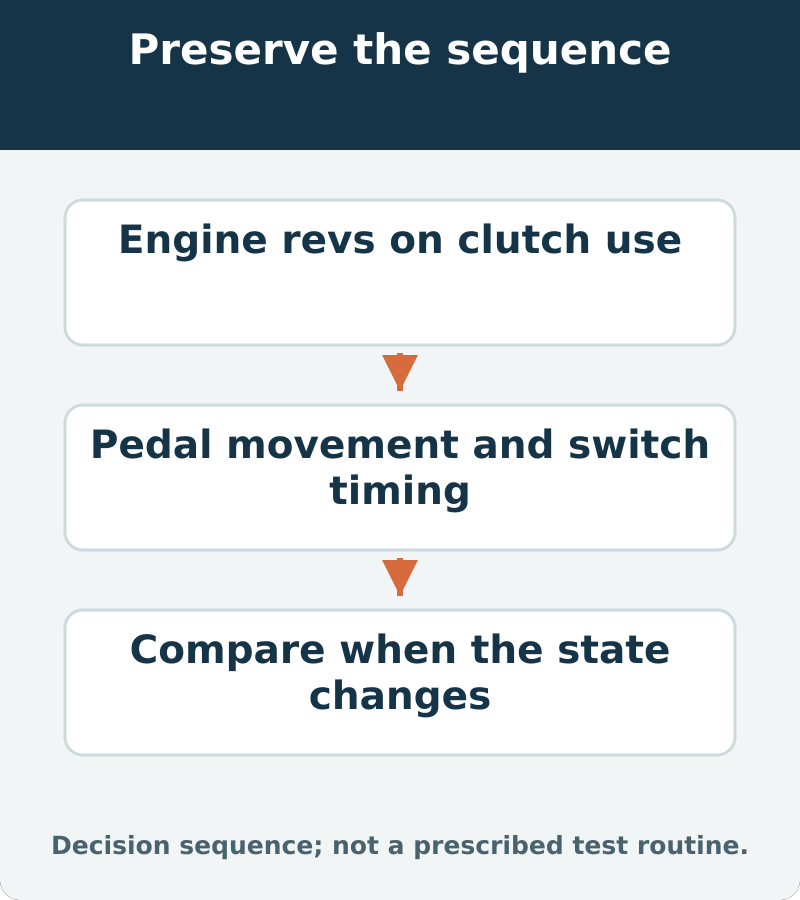
The goal is to preserve the sequence. A symptom tied to pedal operation may involve the timing of an input, but the driver’s description alone does not prove that explanation. Normal control strategy and other faults remain possibilities until the identified vehicle and its actual behavior are assessed.
A switch can work at the wrong moment
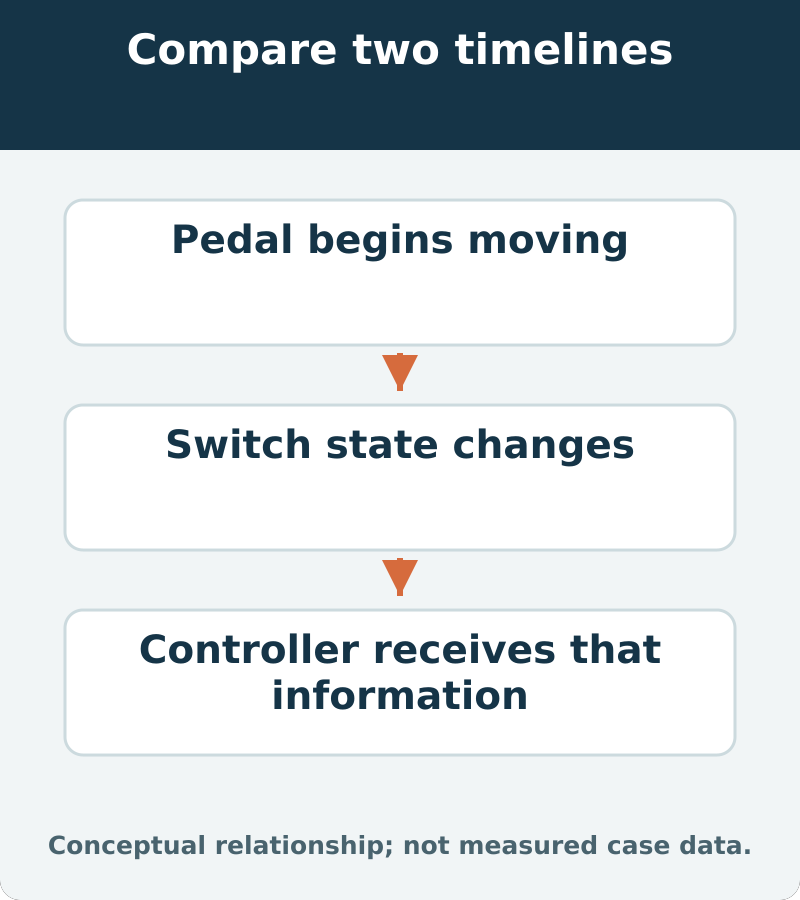
A simple yes-or-no function still has a timing dimension. Knowing that a state eventually changes does not tell you whether it changes at the point required by the system. A test performed only at the two ends of pedal travel can miss the relationship that matters between those ends.
ALLDATA’s Rio case describes a 2012 1.6L manual whose engine raced with clutch operation. No codes or obvious throttle sticking were found. The clutch-disengagement indication arrived late in pedal travel. Correcting the switch adjustment was followed by a road test without the symptom; no universal adjustment dimension was given.
What the throttle inspection left unanswered
An inspection that does not find a sticking throttle removes one proposed explanation only to the extent of the check performed. It does not show that every input involved in engine-speed control is arriving correctly. The next question should follow the unexplained relationship in the complaint rather than repeat the same mechanical inspection indefinitely.
For the owner, this helps explain why pedal information may enter a conversation that began with engine revs. The technician is not necessarily changing subjects. They may be checking whether the controller receives the event information needed to respond as intended. Ask how that proposed check distinguishes the remaining explanations on your particular car.
Compare the physical event with the reported state
The pedal position, the clutch’s mechanical behavior and the controller’s indication are related observations, not interchangeable labels. A scan parameter reporting “disengaged” is information received by the system; it is not a direct physical measurement of every part in the clutch mechanism.
The assessment should use the correct parameter, service conditions and specified relationship for the vehicle. A timing sketch can explain why an offset matters, but it should not display invented milliseconds, pedal percentages or an adjustment target. The value lies in checking whether the events agree with the required sequence, not in borrowing a number from another model’s repair story.
Adjust only to the correct specification
An adjustable part is not an invitation to tune by feel. The correct setting must preserve every relevant function, including any starting-permission relationship in the particular arrangement. Moving a switch until one symptom improves can create a different problem if the required position and checks are ignored.
Ask whether the workshop established that adjustment was the appropriate remedy, used the applicable specification and verified the related functions afterward. If hardware or mounting damage prevents the correct setting, that condition needs its own repair. The published success does not justify bypassing an interlock, guessing a gap or assuming that every car with rev hang has the same adjustable switch fault.
Check starting permission as well as driving behavior
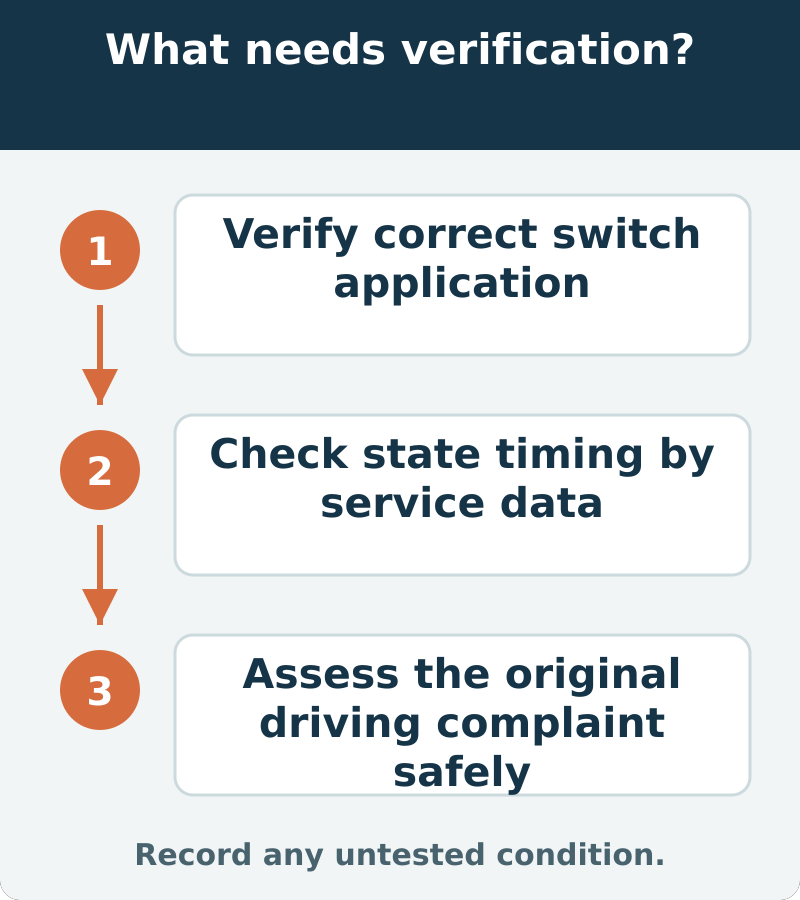
Post-repair evaluation should cover the original engine-speed complaint and the relevant pedal-input and start-permission checks specified for the car. A smoother shift alone is not proof that the entire adjustment is safe and correct. The technician should verify the finished setup without relying on the owner to discover a new starting problem later.
Keep a record of the identified input issue and the checks completed. If the behavior returns, describe the sequence again and arrange assessment rather than readjusting the switch yourself. The useful idea is small but powerful: a signal can be present and still be wrong because it arrives at the wrong point in the event.










Comments 0
Questions, fixes, and real-world diagnostic notes from readers.
Be the first to share a diagnostic result or ask a follow-up question.