
2000 Mercury Sable P0443: The Purge Valve Needed a Command, Not Another Replacement

Quick answer: P0443 points to the purge-control circuit. Voltage present at a valve does not establish that its controller can switch the circuit correctly.
Fuel-vapor systems and electronic outputs need controlled workshop testing. Do not ground an unknown wire, bypass a valve or copy a test-light connection from another vehicle.
This investigation calls for circuit measurements alongside the correct scan commands. The MRCARTOOL B550 offers passive voltage checks in its multimeter mode; it does not supply vehicle-specific purge commands.

In this guide
Read the word circuit carefully
A fault description can contain a component name without identifying that component as the failed part. Here, “purge” identifies the function being supervised, while “circuit” directs attention to the electrical path that operates it.
That distinction changes the buying decision. A valve can have a mechanical sealing problem, an electrical problem, or no internal problem at all while its wiring or controller fails. Before approving another valve, ask what observation connects the stored fault to that proposed replacement. A part name repeated on a scan screen and an estimate is not the missing evidence.
The missing half of valve operation
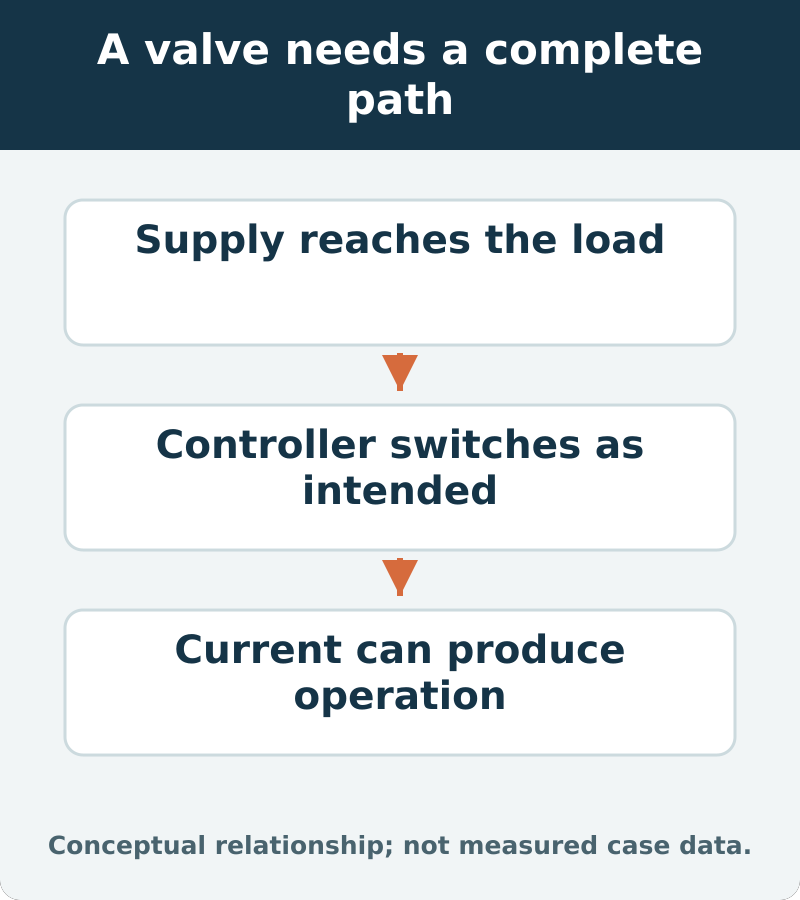
The simple model is a complete circuit: supply reaches the load, the load provides its electrical function, and a controlled return path permits current to flow. On a switched-ground arrangement, the controller changes that return path rather than simply delivering a constant positive supply.
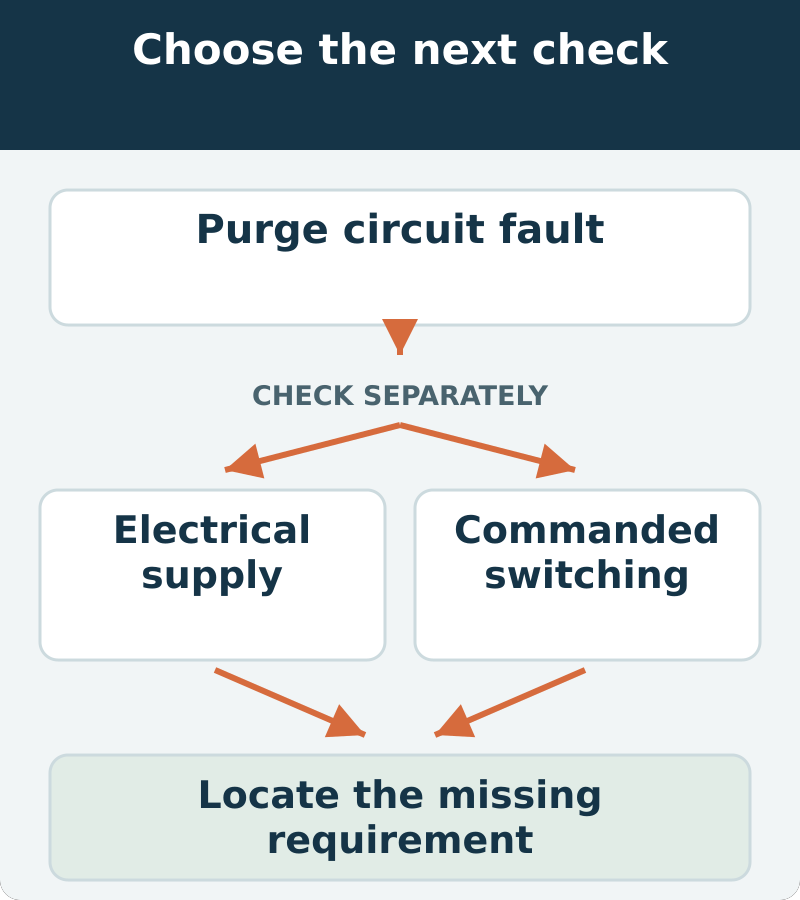
In ALLDATA’s Sable report, P0443 returned after valve replacements. During a commanded test, the expected control-side ground was absent at both the valve and PCM. PCM replacement was followed by a road test without returning codes. The brief report does not publish the complete loaded circuit and controller-support checks.
Why two positive readings can mislead
Voltage is a difference between two measurement points. A reading at each terminal relative to a reference does not tell the same story as the voltage across the load, nor does it establish current flow through that load.
The operating state matters just as much. A switched circuit observed while no operation is requested can look different from the same circuit during an active command. A useful test record therefore names the measurement points, the requested state and the response. Without that context, “there is power” can sound reassuring while leaving the central switching question unanswered.
What testing both ends establishes
Comparing the identified control path at its two ends helps distinguish a break along the route from a problem closer to the controller. The comparison must use the correct circuit and a suitable measurement method. A poor terminal contact can also sit between the apparent endpoints.
If the controller end responds but the valve end does not, the connecting path deserves attention. If neither responds, the investigation moves upstream—but not straight to a replacement computer. The command may not be enabled, the controller may lack proper support, or the circuit may be affected by another electrical condition.
Before approving a control module
Ask for a short explanation of why the controller, rather than the wiring or test conditions, is now the supported repair. It should account for the relevant feeds and grounds, connector integrity, command availability and the behavior of the output circuit.
Also ask what installation work the replacement requires. Correct part identity, programming or setup where applicable, and a subsequent functional check are separate from purchasing the hardware. A workshop with the appropriate service information can provide this diagnosis without the owner buying any instrument. The aim is a defensible decision, not a collection of unsuccessful substitutions.
Close the circuit fault and the emissions check
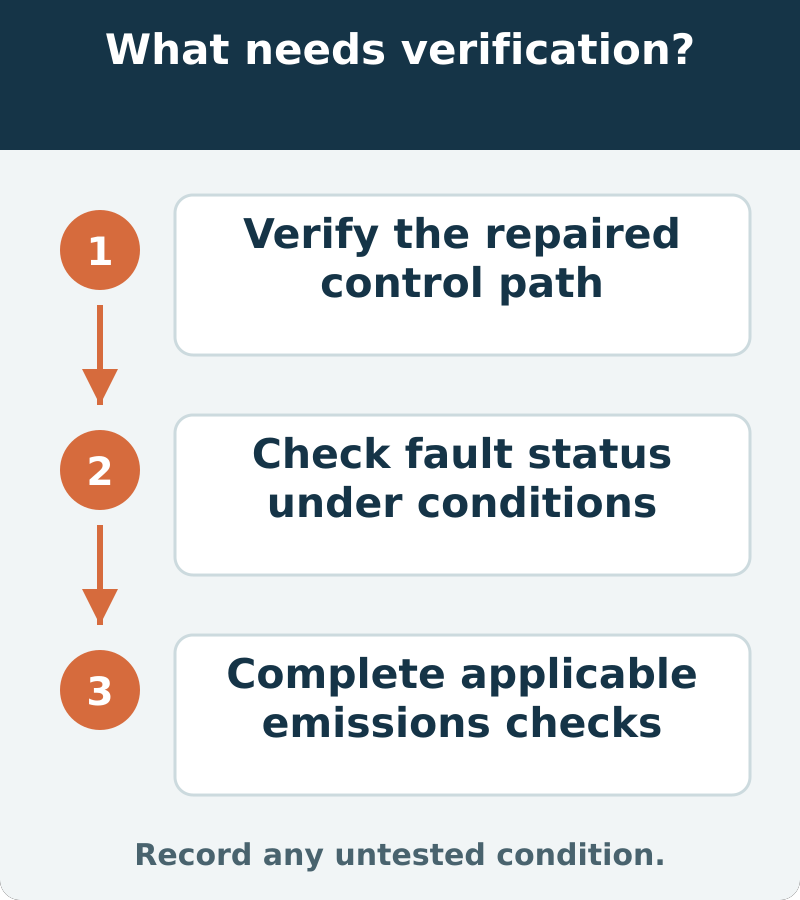
After repairing the supported fault, the immediate question is whether the valve responds correctly under the required conditions. The emissions question is broader: has the applicable self-check run, and what fault status remains?
Those results should be recorded separately. A vehicle that feels normal can still have an unresolved emissions fault; a lamp that has just been cleared has not yet demonstrated anything about the next monitor run. Take away the circuit finding, the work performed and the remaining monitoring plan. That is enough to make a return visit more focused if the warning reappears.











A question on “Why two positive readings can mislead”: What remains unproven after the check described in this section?
I would point them to this wording: “Voltage is a difference between two measurement points. A reading at each terminal relative to a reference does not tell the same story as the voltage across the load, nor does it establish current flow through that load.” The surrounding section gives it the context it needs.