
VW TSI Cold-Start Misfires: When Carbon Cleaning Must Be Measured, Not Hoped For


Bottom line: A controlled intake-carbon comparison showing why one clean reference port is more useful than an unverified chemical-treatment promise.
In this case
- Case at a glance
- The answer: the chemical step was a comparison, not a repair
- Why cold operation exposes airflow and sealing differences
- Create one clean control instead of relying on memory
- Choose the method by inspectable outcome
- Do not turn a one-time observation into a maintenance interval
- Verification needs a cold start after all cylinders are finished
- The reusable cleaning decision
- Minimum record to retain
Case at a glance
| Field | Case detail |
|---|---|
| Vehicle | Skoda using a Volkswagen TSI direct-injection engine |
| Complaint | Misfires concentrated during cold operation |
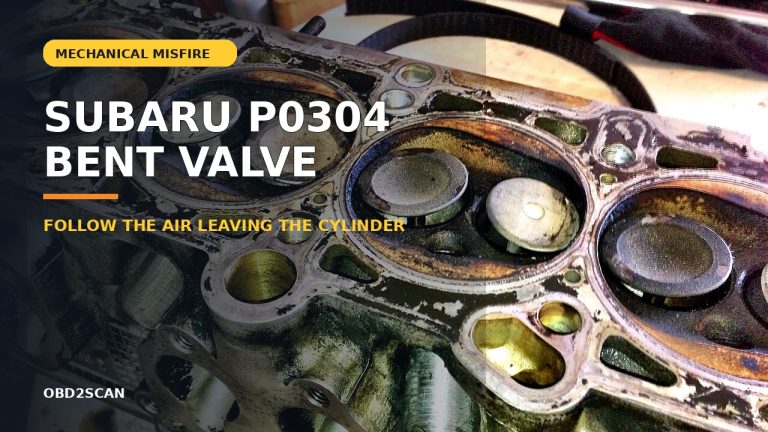
| Inspection | Heavy deposits on the backs of the intake valves |
| Comparison | One port media-cleaned; three ports received chemical treatment |
| Result | Chemical treatment removed only part of the deposit |
| Outcome | Diagnosis and comparison complete; all ports still required a proven cleaning method |
The answer: the chemical step was a comparison, not a repair
Heavy intake-valve deposits matched the cold-start misfire pattern, but the useful part of this job was the control. One intake port was cleaned to a known visual standard. Chemical treatment was then applied to the other three. Those three improved only partially and still did not match the clean port.
That result does not prove every chemical is ineffective on every engine. It proves that this application, concentration, dwell time and deposit load did not deliver a complete repair. The remaining ports still needed a method whose result could be inspected.
Evidence boundary: The numeric values in this article belong to the documented vehicle unless an official applicability statement says otherwise.
Why cold operation exposes airflow and sealing differences
During cold start, mixture preparation, fuel wall wetting, combustion speed and catalyst-heating strategies leave less margin for uneven cylinder airflow. Deposits around an intake valve can disturb the small amount of air entering one cylinder or prevent clean valve seating. As temperature and airflow increase, the same engine may become smooth enough to hide the imbalance.
Use the rough-idle diagnostic workflow to compare cold and warm misfire counters, trims, airflow, ignition and mechanical sealing. Carbon is a visual clue, not permission to skip compression or leakage checks.
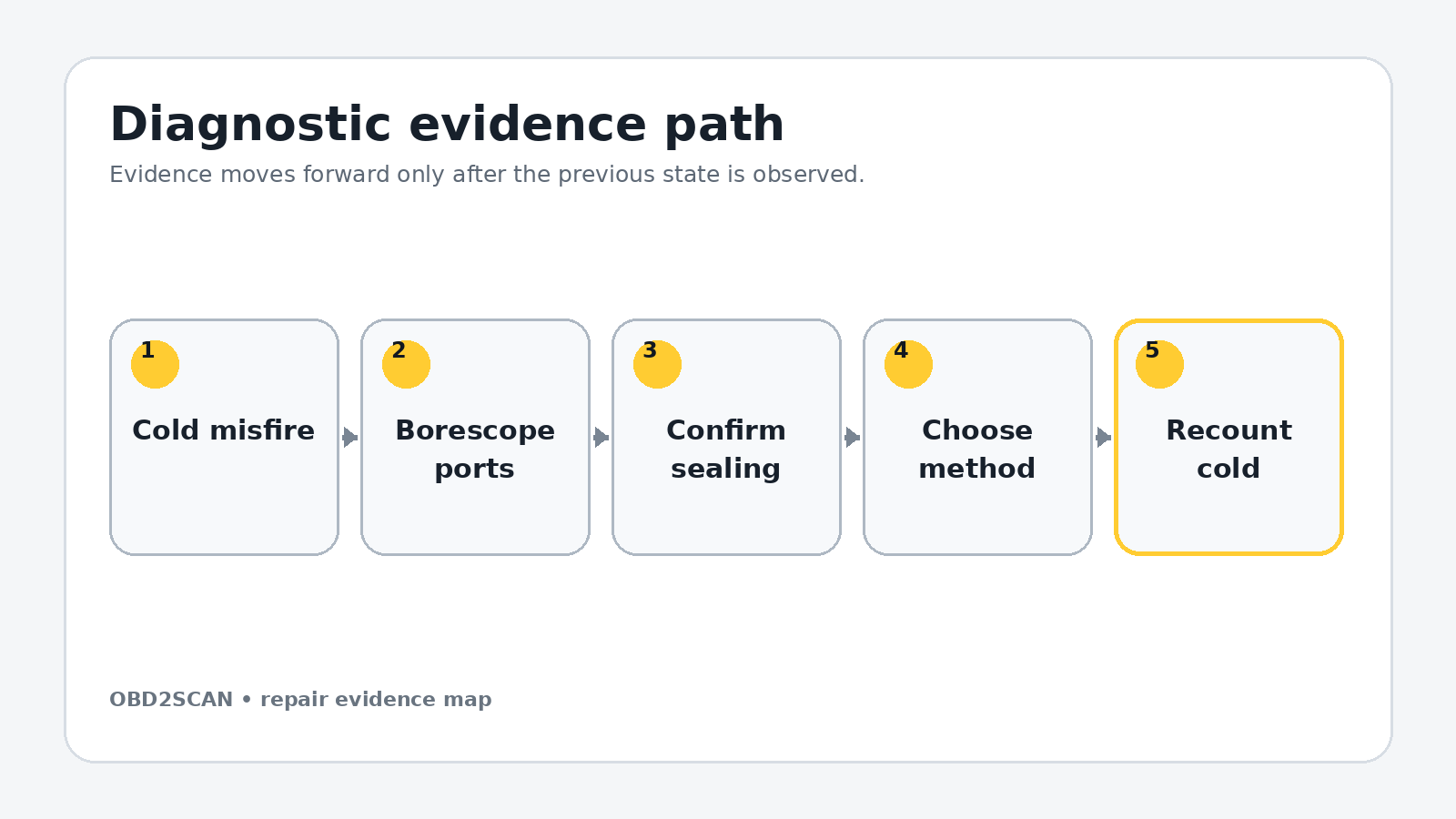
Create one clean control instead of relying on memory
Photographs taken with the same borescope, angle and lighting before and after cleaning make deposit change visible. A fully cleaned reference port establishes the result the alternative method must reach. Without that control, “looks better” can hide material still packed around the seat and stem.
Keep ports identified by cylinder. Confirm the valves in the working port are fully closed. Seal every other opening, maintain extraction and account for all media or loosened debris before rotating the engine.
Safety boundary: Use current vehicle-specific service information, approved support and the correct test load before opening a circuit or assembly.
Choose the method by inspectable outcome
A manifold-off media clean can be effective because the technician can direct cleaning energy, extract debris and reinspect the exact surface. It also introduces serious risks if a valve is open or media escapes. Hand cleaning can work but needs patience and the same debris controls. Chemical treatment may soften deposits yet should not be declared complete until the port and cold-start data agree.
The debris-controlled manifold-off cleaning plan maps the hidden connections, open-port control and reassembly checks that the cleaning product itself cannot solve.
Do not turn a one-time observation into a maintenance interval
This comparison did not establish that periodic chemical treatment prevents future deposits, nor did it establish a universal mileage for cleaning. Fuel quality, oil vapor, driving cycle, engine calibration, valve overlap and existing mechanical faults all change deposit formation.
Recommend an inspection trigger: repeatable cold misfire, cylinder imbalance, verified sealing loss or direct imaging—not a calendar promise borrowed from another engine.
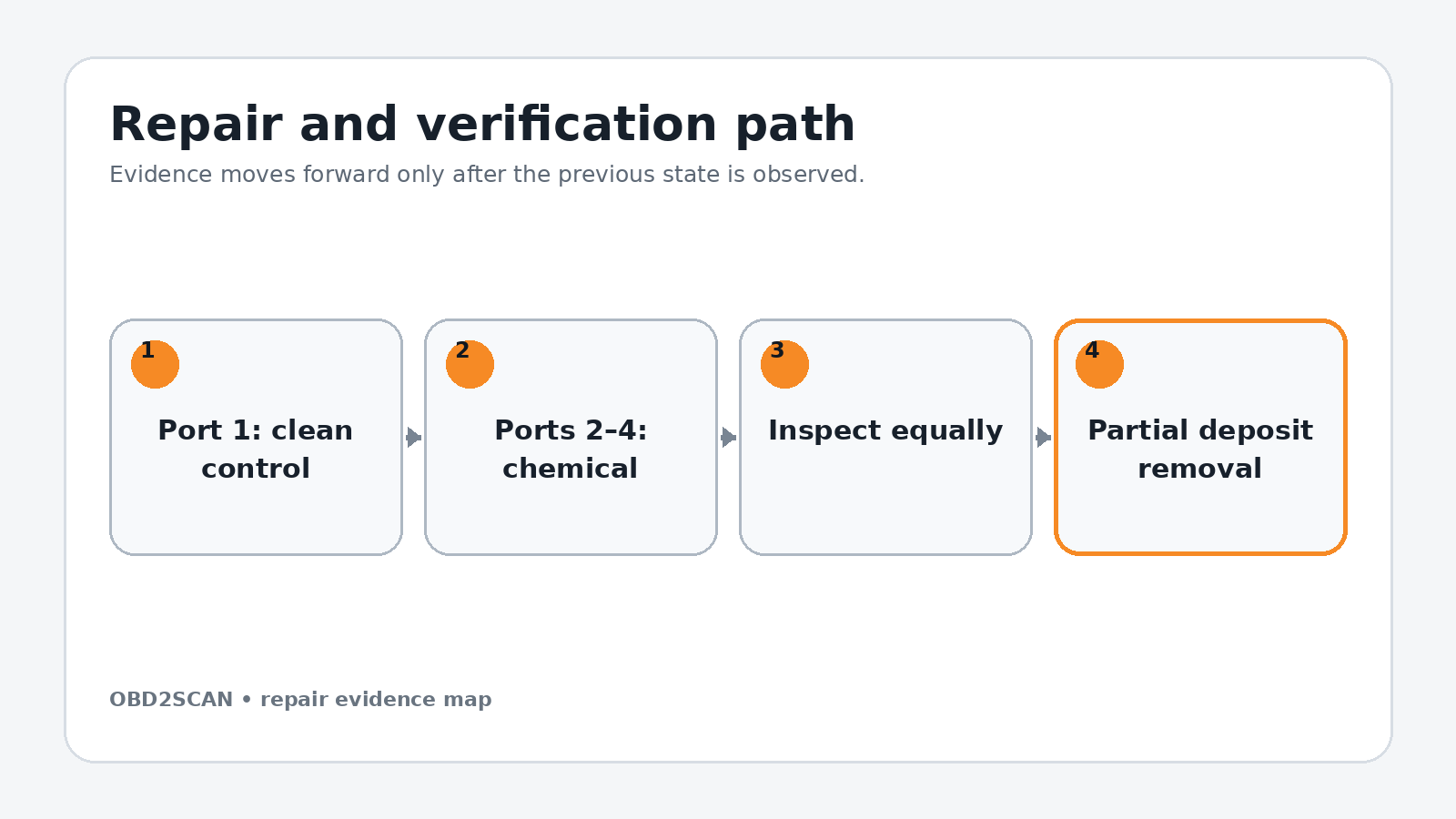
Verification needs a cold start after all cylinders are finished
A complete result would include photographs of every port, a debris-accounting check, fresh intake seals where required, a smoke or air-leak check after reassembly, and misfire counters from the next true cold start. Fuel trims and idle quality should be compared under the same ambient conditions.
Because the recorded work stopped after the method comparison, this case remains partial. It supports the diagnostic and the weak chemical result, not a full repaired-vehicle claim.
Verification boundary: A cleared code is not a result by itself. Repeat the original operating condition and retain the measured before-and-after evidence.
The reusable cleaning decision
First prove that the symptom is cylinder-airflow or sealing related. Then document the ports. Create a clean reference, test the proposed method, and compare under identical viewing conditions. If the deposit remains, change methods rather than changing the definition of clean.
The best carbon-cleaning article is not the one with the strongest product claim. It is the one that makes the result visible and repeatable.
Minimum record to retain
Keep the initial scan before clearing anything, the exact ambient and operating condition that reproduces the complaint, and one labeled result for every branch tested. Save photographs or waveforms at their original resolution and identify the measurement point, scale, engine state and tool setup. A future technician should be able to distinguish a direct observation from an inference without reconstructing the whole visit from invoices. Retain exact vehicle identification with every saved measurement.
- Heavy intake-valve deposits accompanied cold misfire.
- One port was cleaned to a visible reference state before chemical treatment of the others.
- The chemical treatment removed only part of the deposit and was not a completed repair.
- No full four-cylinder post-clean road result was available.
This comparison stops before a complete repair, so the unfinished cylinders or operating states must remain explicit. Record what changed, what did not change, and which test was repeated after the work. Also retain any programming, adaptation or calibration report and a final whole-vehicle scan. If the symptom is intermittent, define a monitoring window instead of treating one successful start or one short drive as permanent proof.






Comments 0
Questions, fixes, and real-world diagnostic notes from readers.
Be the first to share a diagnostic result or ask a follow-up question.