
Honda Pilot or Odyssey P0301–P0304? Photograph the Oil-Fouled Plug

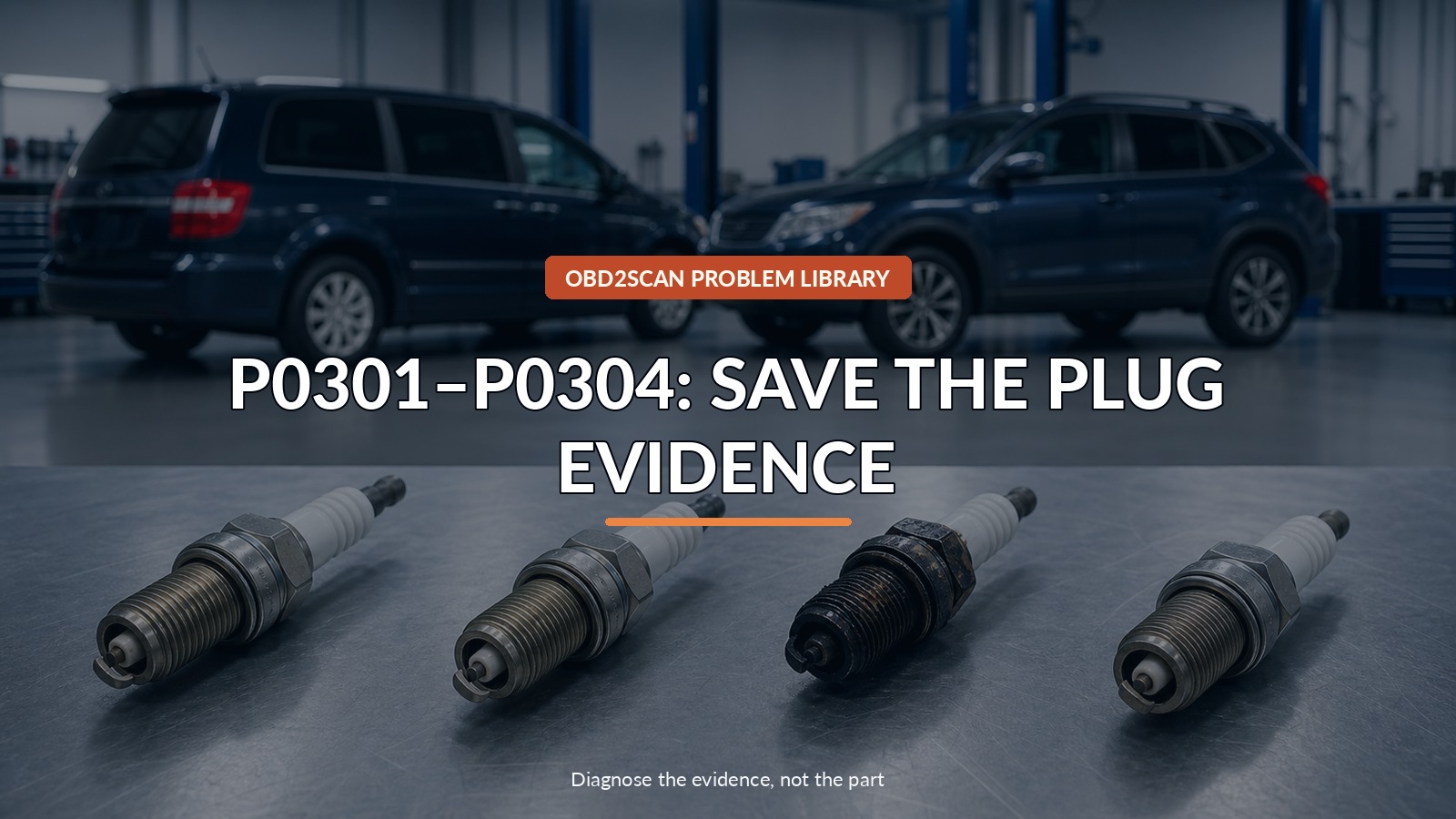
P0301–P0304: Save The Plug Evidence
A 2013–2015 Honda Pilot or 2013–2017 Odyssey with P0301 through P0304 may fall within Honda’s piston-ring misfire warranty extension. Do not erase the cylinder story. If the MIL flashes, stop loading the engine; save freeze data, label each removed plug by cylinder, and photograph its deposit before parts are swapped.
A guarded bench tester can compare whether removed compatible plugs continue to spark across the same simulated frequency. The AUTOOL SPT360 spark plug tester can support that comparative screen with its protective cover closed. It cannot reproduce cylinder pressure, diagnose piston rings, approve plug reuse, or establish Honda warranty eligibility.
Use the spark plug like an evidence bag, not a verdict. Its cylinder identity, wetness, deposit distribution, gap, tracking, and relationship to compression and oil consumption tell a story together. Cleaning it before documentation tears pages from that story.
Quick answer: Preserve cylinder identity and plug deposits, protect the catalyst, and verify Honda VIN coverage before swapping away P0301–P0304 evidence.
In this guide
- Protect the catalyst when the MIL flashes
- Keep cylinder identity attached to every clue
- Open the VIN and coverage gate
- Read plug deposits without over-reading them
- Compare spark only as a bench screen
- Separate ignition from oil-control and compression
- Build the dealer evidence bag
- Verify the cylinder, not just the lamp
Protect the catalyst when the MIL flashes
A flashing malfunction indicator signals an active misfire severe enough to threaten the catalyst. Reduce load and stop as soon as safely possible. Do not keep driving to see whether the light becomes steady, and do not repeatedly rev a rough engine in the bay.
Record whether the misfire occurs cold, hot, after a long deceleration, at idle, or under load. Note smoke, oil level, oil-addition history, fuel odor, and abnormal engine noise. Arrange towing for severe roughness, flashing MIL, low oil pressure, overheating, or mechanical knock.
Keep cylinder identity attached to every clue
Save current, pending, permanent, and history codes with freeze data. P0301 through P0304 identify monitored misfire on numbered cylinders, but they do not name a coil, plug, injector, valve, or ring.
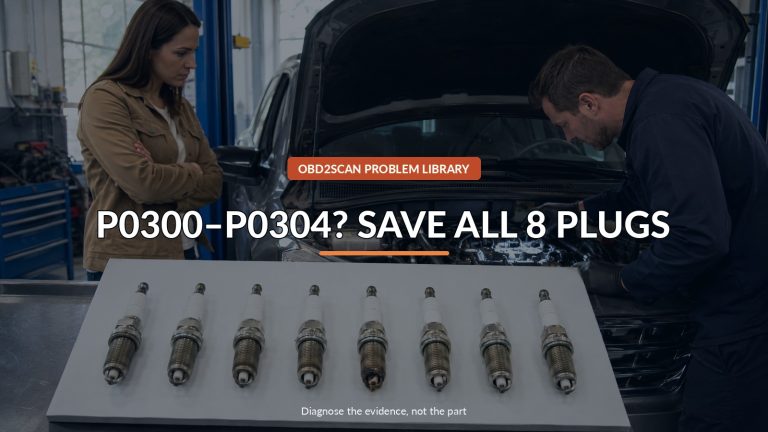
If plugs are removed under Honda’s procedure, prepare a numbered tray first. Photograph the combustion end, insulator, shell, and boot side before cleaning. Record torque feel, gap, part number, oil on threads versus firing tip, carbon distribution, and signs of flashover or cracked ceramic.
Do not mix coils and plugs simultaneously. A controlled swap changes one component and then checks whether the fault follows it; an unrecorded parts shuffle destroys cylinder correlation.
Open the VIN and coverage gate
Honda’s owner notice covers certain 2013–2015 Pilot and 2013–2017 Odyssey vehicles. It describes ring deterioration and sludge-related sticking that can allow oil to adhere to the spark plug, leading to carbon fouling and P0301–P0304. VIN and current dealer records control involvement.
The notice also contains time and mileage terms plus a special date provision that has now passed. Do not promise free repair from an archived letter. Ask Honda which current bulletin applies, whether the VIN is covered today, and what documentation is required before teardown.
Read plug deposits without over-reading them
An oil-wet or heavy carbon-fouled firing end supports an oil-control or combustion-quality branch. Dry black carbon may reflect rich mixture or repeated short running. A pale or damaged electrode raises other questions. Use Honda imagery and specifications rather than generic color charts.
| Plug evidence | Useful next comparison | What it cannot prove alone |
|---|---|---|
| One cylinder oil-fouled | Oil use, compression/leak-down, borescope, cylinder history | Piston rings are the only source |
| Carbon tracking outside ceramic | Coil boot, contamination, gap, installation | Internal oil control is healthy |
| Wet fuel smell | Spark and injector command/leak branch | Injector is mechanically stuck |
| All plugs similarly worn | Maintenance and operating history | Cause of one cylinder code |
Keep the old plugs available for dealer inspection if coverage is possible.
Compare spark only as a bench screen
Use the correct plug size and tester voltage version, close the safety cover, keep hands away from high voltage, and power off before inserting or removing plugs. Compare suspect plugs with a known reference at several supported simulated speeds. Look for intermittent or visibly weaker discharge.
Bench atmosphere is easier to fire across than a compressed cylinder. A plug that sparks on the bench can still misfire under compression, heat, mixture, or oil fouling. A plug that fails the comparison is evidence for replacement, not evidence of why it became fouled.
Separate ignition from oil-control and compression
After coil and plug evidence, compare compression and cylinder leakage under Honda conditions. Listen at intake, exhaust, crankcase, and cooling system as directed. A relative compression screen can identify imbalance but needs confirmation before internal repair.
Track oil consumption with consistent level, mileage, and top-up quantity. Check PCV and external leakage where applicable. A clean replacement plug that fouls again in the same cylinder moves the case toward a source that was never corrected.
Injector contribution and valve operation remain separate branches. Do not use a single successful coil swap to clear mechanical condition if the plug shows oil fouling.
Build the dealer evidence bag
Provide VIN, mileage, code/freeze data, flashing versus steady MIL, operating condition, oil-level and top-up history, numbered plug photographs, coil-swap result, compression/leak-down values and procedure, borescope observations if professionally obtained, previous ring or misfire repairs, and receipts.
Ask the dealer to preserve the cylinder-to-plug mapping and verify the current warranty-extension bulletin. “Changed plugs and light went away” is weak; “cylinder 3 plug oil-fouled, P0303 returned after 400 miles, compression and coverage checked” is actionable.
Verify the cylinder, not just the lamp
After the approved repair, verify cold and hot starts, misfire counters at the original load, stable oil level over a meaningful interval, clean current/pending codes, and completed catalyst monitors. Reinspect any cylinder that begins accumulating misfires before the MIL returns.
Clearing P0303 or installing fresh plugs does not verify ring repair. The original cylinder must remain stable, the new plug must not re-foul, and oil use must stay within Honda’s applicable evaluation.





Comments 0
Questions, fixes, and real-world diagnostic notes from readers.
Be the first to share a diagnostic result or ask a follow-up question.