
2024–2026 VW Atlas P0300–P0304? Check Intake-Manifold Molding Flash

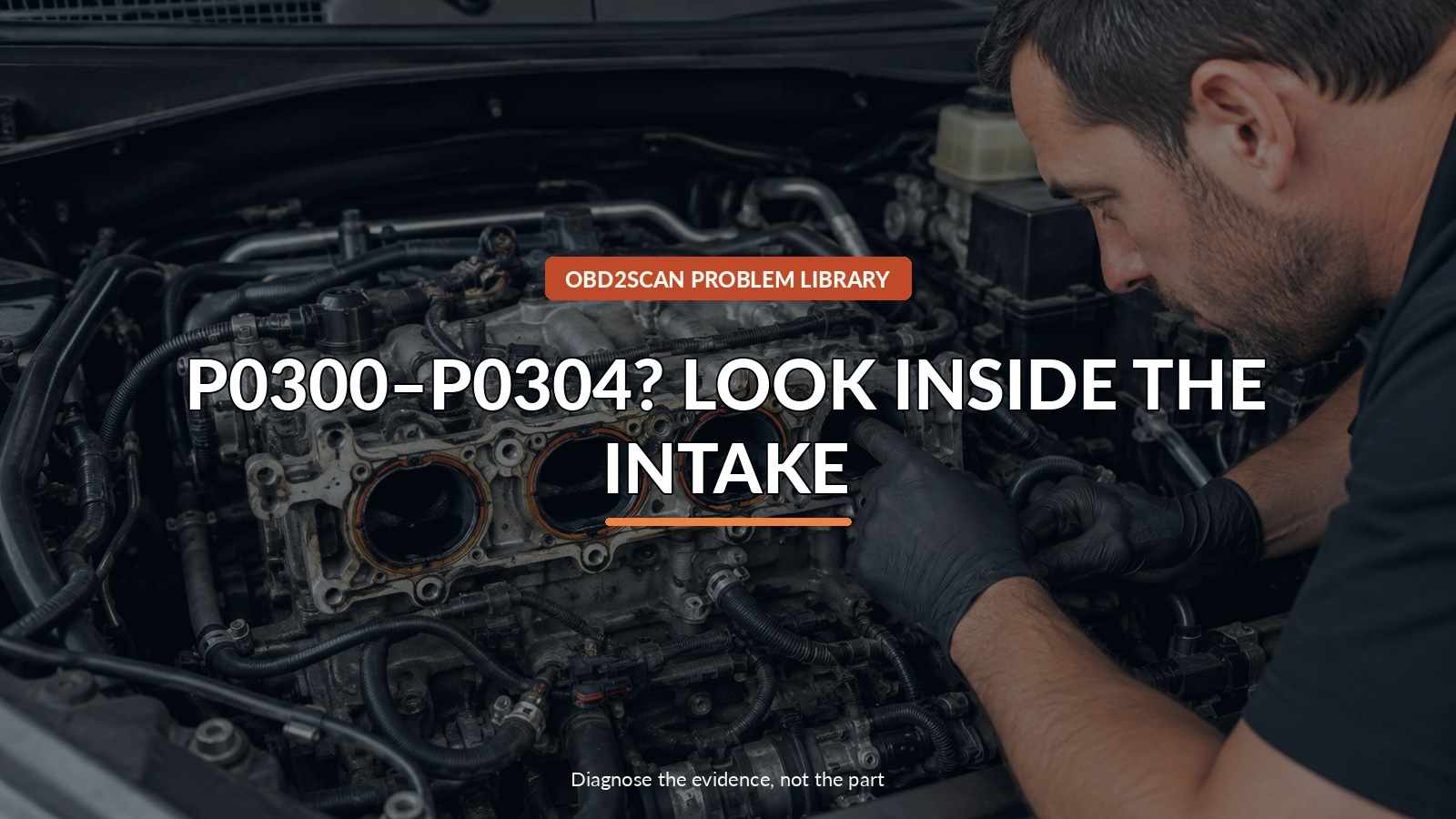
P0300–P0304? Look Inside The Intake
A flashing MIL with severe shaking can indicate catalyst-damaging misfire, so reduce load and arrange service. Save misfire counters and freeze-frame, then follow VW’s normal misfire aid. On the covered DRKB engine, if the misfire does not move after the spark plug and/or coil is swapped, VW says to inspect all four intake ports for excess molding flash before swapping injectors. If no flash blocks a port, this bulletin ends and diagnosis continues.
Once the intake manifold is removed under the service procedure, a close-focus inspection camera can document all four intake ports. The AUTOOL SVB305 is one possible visual aid. SVB305 can help document reachable port surfaces from repeatable angles after the manifold is removed through the repair manual; it cannot see reliably through every assembled runner, measure airflow restriction, keep removed plastic out of the engine, replace gasket/fasteners, run ODIS or prove that the misfire is gone.
When an Atlas misfire refuses to follow the spark plug or ignition coil, the next suspect is not automatically an injector. Volkswagen’s current path puts a flashlight and a visual obstruction check between those two decisions. Climb an elimination ladder: preserve the failing cylinder, swap only what can be safely compared, verify whether the miss moves, then earn the manifold view. Each rung should remove a hypothesis.
Quick answer: Save cylinder data, prove the misfire does not follow the plug or coil, then inspect all four intake ports before swapping injectors.
In this guide
- Respond correctly to a flashing MIL
- Save the cylinder pattern and operating load
- Confirm the DRKB engine
- See whether the misfire follows plug or coil
- Earn manifold removal before injector swapping
- Inspect all four ports for molding flash
- Remove debris without dropping it into a runner
- Reassemble, count misfires and reopen diagnosis if needed
Respond correctly to a flashing MIL
A flashing MIL, severe shaking, raw-fuel smell or substantial power loss means stop driving and arrange service; continued misfire can overheat the catalyst. Record cold or hot start, ambient temperature, fuel level, load and how long the lamp flashed. Save P0300 and every cylinder code P0301–P0304 with freeze-frame and misfire counters before clearing. A generic code description identifies combustion failure in one or more cylinders; it does not identify ignition, fuel, air or compression as the cause.
Save the cylinder pattern and operating load
TSB 2079645/3 covers certain 2024–2026 Atlas and Atlas Cross Sport vehicles with the DRKB 2.0L engine. Verify VIN, engine code and the latest bulletin revision. A Tiguan, different engine or older Atlas needs its own current test plan even if the code number matches. Also review fuel quality, maintenance history, prior repairs and any companion pressure, mixture or timing codes. Bulletin scope earns an inspection; it does not establish that every covered manifold contains excess material.
Confirm the DRKB engine
Begin with a visual ignition check: connector locks, coil boots, plug wells, oil or water intrusion and plug condition. When service information permits, move the suspect cylinder’s plug and coil to known-good cylinders in a controlled pattern, label every component and clear/adapt only after data is saved. Repeat the same operating state. If the misfire follows a component, diagnose that component branch. If it remains on the original cylinder, the ladder moves upward without buying four coils.
See whether the misfire follows plug or coil
Do not let a stationary misfire jump straight to an injector. Compare compression or relative compression, leak-down where appropriate, injector command, fuel pressure and mixture data according to the current repair manual. Look for wiring or connector changes when the harness is moved safely. A clogged injector and a restricted intake port can both leave the code on one cylinder; commanded electrical activity alone cannot prove delivered fuel, and a normal compression reading cannot prove unrestricted airflow.
Earn manifold removal before injector swapping
When plug and coil swapping does not move the fault and the other gates support it, remove the intake manifold using the Volkswagen procedure. Depressurize and isolate systems as directed, keep debris out of open ports and replace specified seals. Inspect all four cylinder-head intake ports, not only the coded cylinder. The bulletin calls for molding flashing—excess material that obstructs the passage. Use consistent lighting and capture an oriented photo of each port so normal geometry is not confused with a defect.
| Ladder rung | Result that moves diagnosis | Next rung |
|---|---|---|
| Save cylinder data | Repeatable original cylinder | Controlled plug/coil swap |
| Swap plug and coil | Misfire does not follow | Fuel/mechanical checks |
| Preliminary checks | No explanation found | Remove manifold and inspect four ports |
| Clear port images | No molding obstruction | Resume injector/mechanical path |
Inspect all four ports for molding flash
If the specified excess material is present, follow Volkswagen’s current repair direction for the affected component and clean/work controls; do not grind inside an assembled engine or allow fragments into a port. If all four views are clear, the visual branch is complete and the saved evidence should lead back to fuel delivery, sealing, deposits, wiring or control. A dark borescope shadow is not flashing, and a found obstruction does not excuse inspection for debris or damage created during manifold removal.
Remove debris without dropping it into a runner
Reassemble with correct gaskets, torque sequence and connector routing. Perform required adaptations and check for intake leaks before judging the misfire. Compare cold-start and warm misfire counters, fuel trims and idle stability with the pre-repair record. A smoke or pressure check may find a sealing leak introduced during service, but use only the specified low-pressure method. Stop the engine if the MIL flashes again rather than attempting to burn off the symptom on a long road test.
Reassemble, count misfires and reopen diagnosis if needed
A strong verification repeats the original start temperature and load, includes all four cylinder counters and confirms that no new lean or manifold-related fault appears. Recheck disturbed joints after a heat cycle. If the same cylinder continues to count, preserve the port photos and swap results; those negative findings save the next technician from repeating the ladder. Continue to injector flow, mechanical sealing or control diagnosis rather than replacing the same ignition parts in a new order.
The valuable word in this procedure is ‘before.’ Inspect the ports before an injector is sentenced, but only after the code, engine and controlled swap earn that access. A photo set of all four ports and a recorded misfire counter pattern gives the Atlas a diagnosis that can survive the next cold start.









Comments 0
Questions, fixes, and real-world diagnostic notes from readers.
Be the first to share a diagnostic result or ask a follow-up question.