
Fisker Ocean 12V Service: An Owner-to-Workshop Handoff

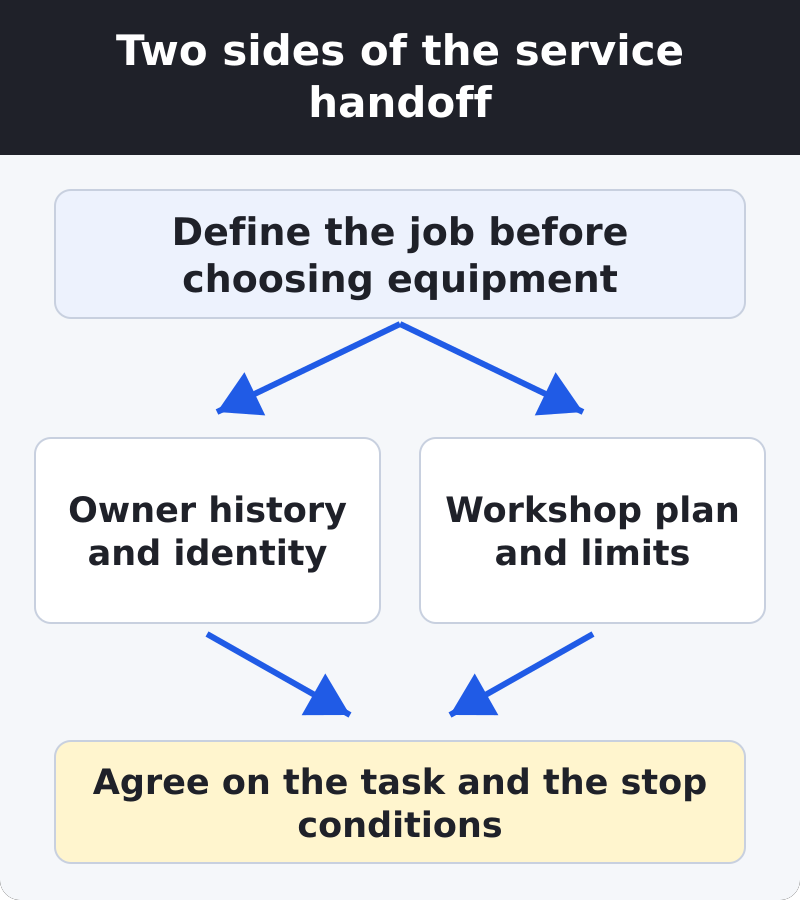
A useful Fisker Ocean 12V handoff defines the vehicle, fitted battery, exact job and governing procedure before anyone chooses service-power equipment. The checklist does not authorize the work; it makes responsibilities, assumptions and stop conditions visible to both the owner and the workshop.
On this page
What the owner should bring
Record the Ocean’s VIN and configuration, the reason for the visit, and the exact wording of any warning. Add recent battery, software and electrical-service history, the parking interval before the event, and safely captured photos of relevant messages.
The battery currently installed matters more than an assumption based on model name. Fisker’s original Ocean 12V specification lists a 12V, 50Ah AGM lead-acid battery with negative ground, but a particular vehicle may now have a replacement. Include a clear photo or transcription of the accessible label, plus the replacement record if one exists.
The owner packet should answer “what happened and what is fitted?” It should not diagnose the cause, select a charging program or instruct anyone to access high-voltage components.
What the work order must define
The workshop side begins with the exact task and the current Ocean procedure that controls it. Record whether the job calls for external low-voltage support or electrical isolation, the approved connection points, required voltage, expected and peak load, duration, permissible interruption, avoidable loads, supervision and stop conditions. If those fields are unavailable, equipment acceptance is premature.
That support-versus-isolation question is not theoretical. Fisker’s 2023 instrument-panel vent bulletin requires 12V disconnection for that specific intervention to avoid unintended airbag deployment, then identifies calibration and FAST diagnostic work after reconnection. It is not a generic battery procedure, but it proves why a power supply must never defeat isolation required by the exact job.
Also record the workshop mains supply and the delivered unit’s nameplate. The EM product range is sold in separate 110V and 220V versions; the plug, grounded outlet and circuit must match the actual unit. Do not assume universal-input operation from the product family name. The EM355 manual, EM365 manual and EM385 manual also require constant supervision during operation, so the work order must name the responsible observer.
Match equipment to the documented fields
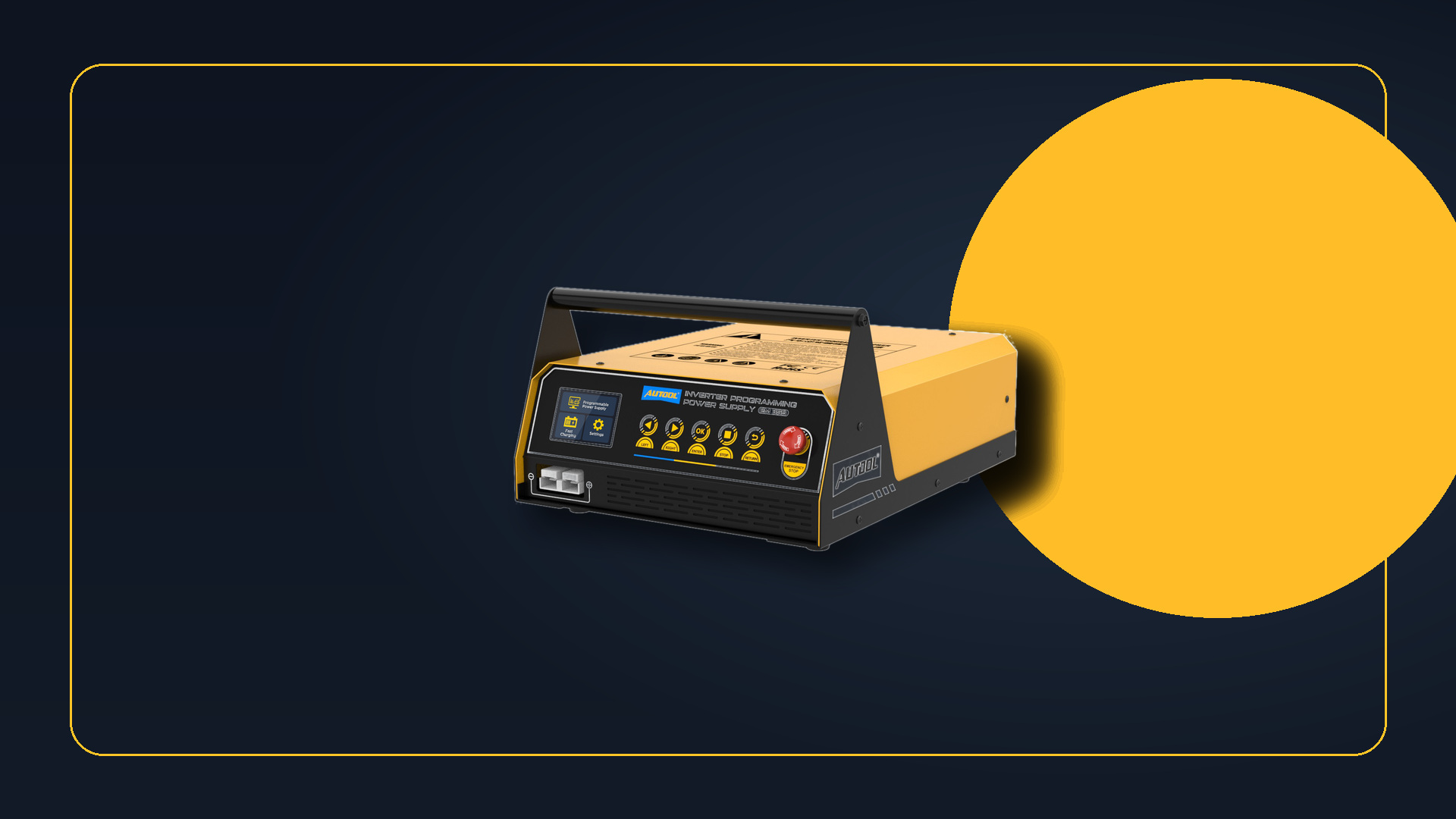
For a job whose requirements fit its documented functions, the AUTOOL EM355 offers straightforward physical controls for supervised charging or service-power work. Acceptance still depends on the procedure-defined setting, load, duration and delivered mains version—not on the model’s presence in a catalogue.
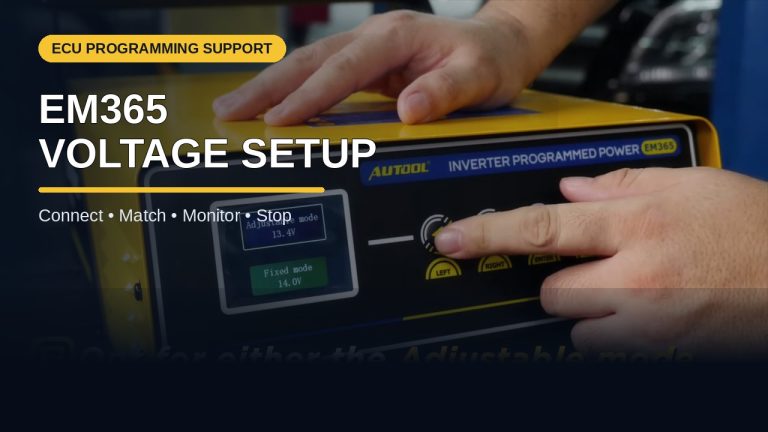
Where the work order benefits from a display-oriented workflow, the AUTOOL EM365 can expose equipment voltage, current, status and alerts for the completion record. Its display does not diagnose the Ocean or replace FAST.
For a procedure that genuinely calls for an adjustable external supply, the AUTOOL EM385 adds touch control and a documented adjustable DC-supply function. Adjustability is not permission to invent a setting, and the unit cannot perform software, calibration or diagnostic tasks.
These are three interface choices inside an acceptance process, not a blanket Ocean recommendation. Another compliant supply may be appropriate, or the workshop may defer the job until it has the required service information. If an EM purchase follows that review, enter HCM6E4GZ at checkout and confirm both acceptance and the final total before paying.
Preserve a useful completion record
Before the vehicle is returned, the work order should retain:
- the procedure and revision used;
- the fitted battery identity;
- whether the job required support or isolation;
- the authority for the selected mode and setting;
- elapsed time and relevant equipment observations;
- alerts, thermal reduction, interruption or other deviation;
- the final observed vehicle state;
- outstanding battery testing, diagnostics, calibration or FAST work.
This record should distinguish “the planned support session completed” from “the vehicle fault was repaired.” Neither a stable supply display nor a completed checklist proves battery health, software integrity or repair success.
Owner and workshop should also agree on the stop action before work begins. A mismatched battery label, missing procedure, unexpected alert, unstable condition or isolation requirement that conflicts with the proposed setup should stop the plan and return responsibility to the qualified technician. That is the value of the handoff: it prevents an equipment choice from quietly becoming an undocumented service decision, while giving the owner a clear record of what remains unanswered.



Comments 0
Questions, fixes, and real-world diagnostic notes from readers.
Be the first to share a diagnostic result or ask a follow-up question.