
Car Pulls to One Side? Separate Tires, Brake Drag, and Alignment

A car that drifts or pulls to one side does not automatically need an alignment. First check placard tire pressures and visible damage, then distinguish a true pull from an off-center steering wheel, road crown, grooves, crosswind, and a pull that appears only while braking or accelerating. A sudden strong pull, hot wheel, burning odor, loose steering, impact damage, or pull under braking is a stop-and-inspect condition.
What to do first
- Stop if the pull is sudden/severe, steering is loose, a tire is damaged, a wheel is abnormally hot, or braking changes direction sharply.
- Set cold pressures to the vehicle placard after inspecting for damage; do not use the tire sidewall maximum as the target.
- Record whether the car pulls with the wheel released briefly on a safe flat road, or only when you force the wheel visually level.
- Use the same route in both directions to reduce road-slope and wind error.
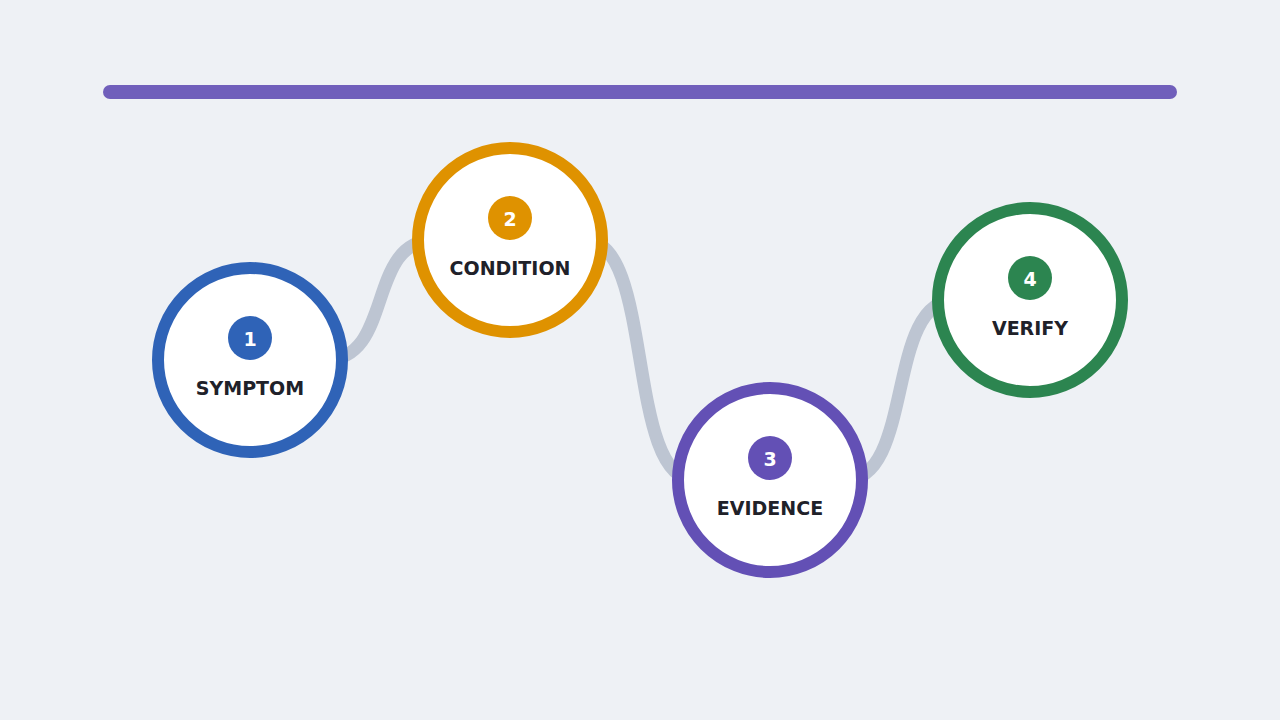
In this guide
1. What the symptom means—and does not prove
A true pull requires continuing steering correction to travel straight. An off-center steering wheel can feel like a pull because holding it visually centered steers the tires. Road crown and ruts can create drift, while tire lateral force can pull even when alignment angles measure within specification. Brake drag and damaged chassis or suspension parts must be excluded before routine adjustment.
It does not independently prove
- that toe is the cause;
- that an alignment printout excludes tire pull;
- that equal pressure excludes tire construction/force;
- that a hot wheel always has a caliper fault;
- that a centered steering wheel means all angles are correct;
- that ADAS calibration requirements are the same after every alignment;
2. Save the evidence and make only low-risk checks
- direction and strength on the same road both ways;
- cold placard pressures and tire size/brand/wear;
- braking, acceleration, speed, road groove, and crosswind effects;
- wheel temperature difference without touching hot brakes;
- impact, tire rotation/replacement, brake, suspension, and alignment history;
Preserve this record before resets, repeated starts, part swaps, or fluid additions change the condition. Related background: tire-pressure and tread check complete wheel/tire service.
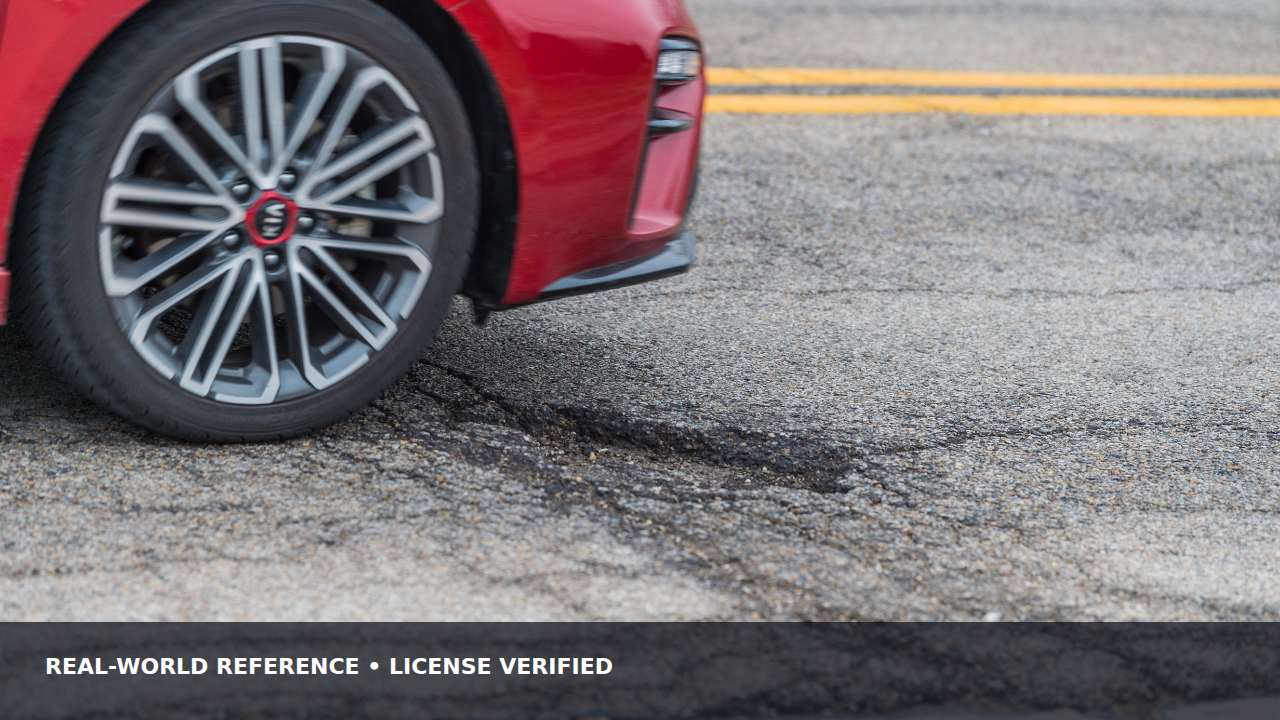
3. Use the pattern to choose the next test
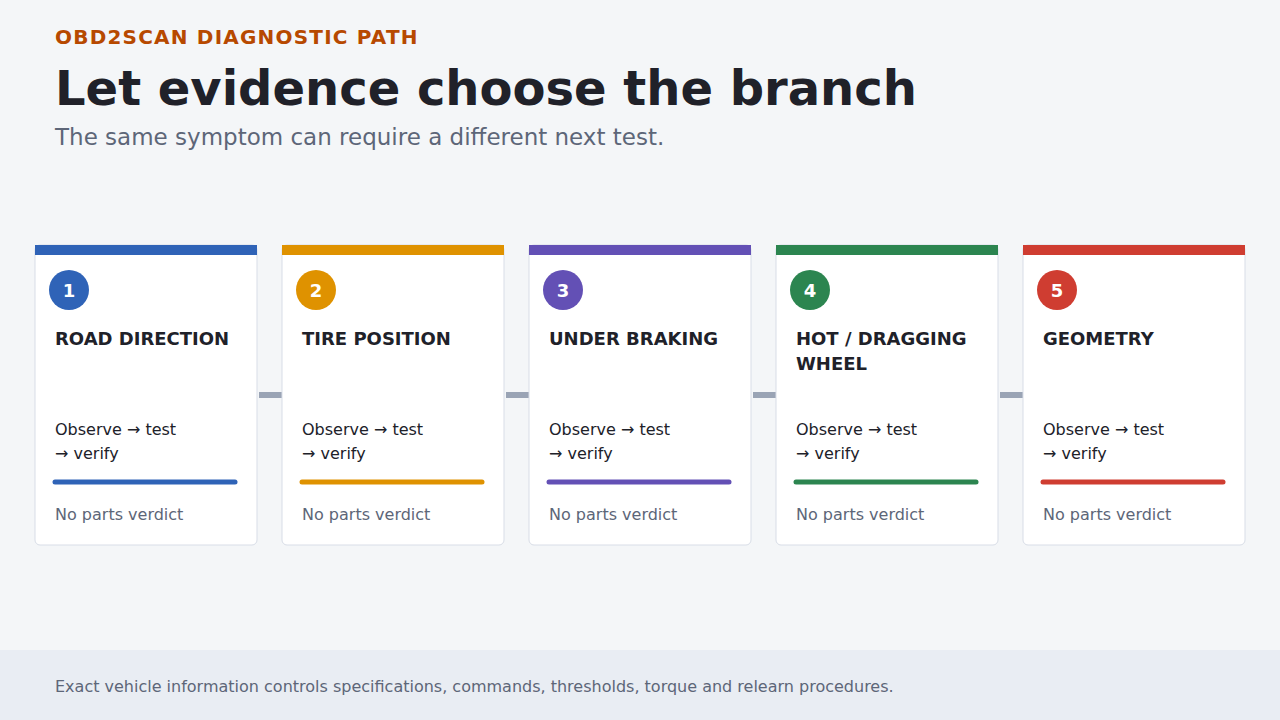
1. The pull changes when road direction or lane changes
What the pattern changes: Road crown, crosswind, grooves, or tramlining may be dominating the complaint.
Next proof: Repeat on the flattest safe road in both directions before adjusting the vehicle.
2. The pull changes after front-tire position changes
What the pattern changes: Tire lateral force/conicity can cause pull even with acceptable alignment measurements.
Next proof: A shop should check directional-tire restrictions and use a controlled cross-switch or lateral-force measurement rather than selling alignment alone.
3. The pull appears mainly while braking
What the pattern changes: Brake friction imbalance, hydraulic restriction, contamination, caliper/wheel-cylinder operation, or tire grip moves ahead of static alignment.
Next proof: Do not continue road testing; inspect the brake and tire system on both sides.
4. One wheel is hotter or drag is measurable
What the pattern changes: A restricted hose, caliper, bearing, parking-brake mechanism, or mechanical interference may create continuous force.
Next proof: Use safe lift/support and service tests; temperature difference is a clue, not permission to touch a hot assembly.
5. Tires and brakes are controlled but the true pull remains
What the pattern changes: Cross-camber/caster, ride height, shifted subframe, damaged parts, rear thrust angle, steering calibration, or body/chassis geometry becomes relevant. After tire conicity, road crown, and brake drag are controlled, the AUTOOL XC508 3D wheel alignment system can measure alignment angles and document whether geometry is actually responsible for the remaining pull.
Next proof: Measure all four wheels against exact specifications and complete required steering/ADAS calibrations after the mechanical cause is corrected.
Safety boundary
Exact service information controls specifications and invasive procedures. Fuel/refrigerant systems, hot or rotating parts, brake hydraulics, lifted vehicles, high-current circuits, pressure testing, forced commands, and road reproduction belong with trained personnel and the correct equipment.
4. Give the shop a reproducible handoff
- direction on same route both ways;
- pressures/tire construction and position;
- braking and wheel-temperature behavior;
- before/after alignment values;
- impact, ride-height, chassis and calibration findings;
Ask for the failed test and the before/after result—not only the name of the installed part. A model-specific bulletin is useful only after VIN, engine, software, code set, and symptom applicability match.
5. Verify the repair under the original condition
Return all tire pressures and positions to the documented final configuration, then repeat the same flat route in both directions at the original speed. The vehicle should no longer require abnormal steering correction, braking should remain straight, no wheel should develop abnormal drag/heat, the wheel should be centered, and alignment/calibration results should meet exact specifications.
Official and primary technical references
- GM bulletin 05-03-07-009I — General Motors / NHTSA
- GM alignment questionnaire — General Motors / NHTSA
- Hunter Road Force StraightTrak — Hunter Engineering
The useful outcome
You should finish with the original condition precisely recorded, the unsafe possibilities controlled, one failed path proven, and a repeat test showing the symptom or warning is genuinely resolved.





Comments 0
Questions, fixes, and real-world diagnostic notes from readers.
Be the first to share a diagnostic result or ask a follow-up question.